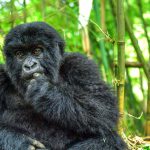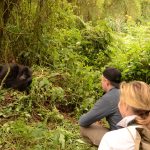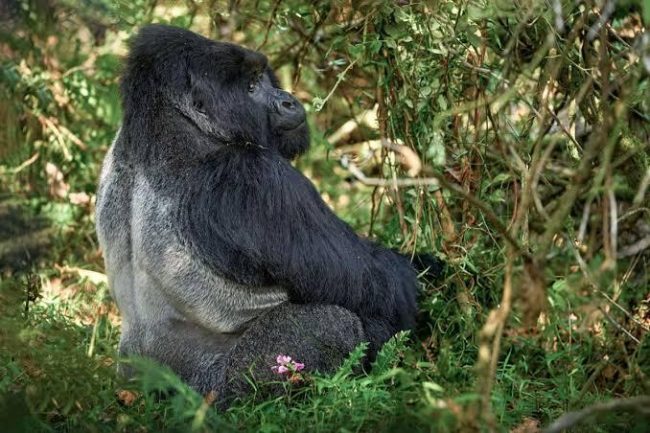
Gorilla trekking is generally considered a carefully managed, safe experience for both visitors and mountain gorillas. Gorilla trekking involves tracking mountain gorillas in their natural habitat and spending an hour in their presence. The experience is not completely risk-free because visitors enter a natural forest environment and spend time close to powerful wild animals. However, strict rules are designed to reduce risks to people while also protecting the gorillas.
Safety for Visitors.
For visitors, one of the most important safety measures is having trained guides and trackers accompany the trekking group. The day begins with a briefing at the park headquarters, where visitors receive instructions about how to behave around gorillas before heading into the forest. The guide remains responsible for directing the group and explaining what to do during the encounter. Visitors are expected to follow these instructions throughout the trek.
Mountain gorillas are wild animals, so visitors should never treat them like domestic animals. A gorilla may approach, vocalize, beat its chest, or move suddenly, but visitors are advised not to panic or make sudden movements. Rangers instruct visitors to remain still, look away, and follow the guide’s directions if a gorilla charges or vocalises at them. Keeping calm is therefore an important part of staying safe.
The forest environment itself can present challenges. Almost all the gorilla destinations are mountainous, and trekking can involve steep, muddy or slippery sections. The length and difficulty of the hike depend on where the assigned gorilla family is located. Visitors should therefore have reasonable physical preparation and wear sturdy hiking shoes. Waterproof clothing, long sleeves and gloves can also be useful because the forest contains thick vegetation and stinging nettles.
Altitude is another consideration. The gorillas live in a high-altitude environment and some visitors may find the hiking physically demanding. This is why it is recommended to walk slowly and drink plenty of water. Hiring a porter can also make the experience easier because the porter can carry a daypack and provide assistance on difficult sections of the trail.
Protecting visitors from disease.
One of the most important safety concerns is not an aggressive encounter but the possibility of disease transmission between humans and gorillas. Mountain gorillas are susceptible to some human respiratory illnesses. For this reason, visitors who are suffering from contagious illnesses such as colds or flu are required not to visit the gorillas. Visitors are also instructed to cover their mouths when coughing and turn away from the animals.
Maintaining physical distance is another important precaution. Visitors must maintain a distance of approximately 7 metres from the gorillas when tracking. The rules are designed to reduce the possibility of disease transmission and prevent visitors from putting unnecessary pressure on the animals.
Is gorilla trekking safe for gorillas?
Gorilla trekking is also designed around the welfare of the animals. The gorilla families visited by tourists have become accustomed to controlled human presence. However, this does not mean that visitors are free to approach them as they wish. Tourism is tightly regulated to reduce disturbance.
A maximum of 8 visitors is assigned to a gorilla group, and the viewing period is limited to an hour. This restriction prevents a continuous stream of tourists from spending long periods around the same family. The gorillas are also monitored by the park staff, trackers, and conservation teams.
Limiting the number of visitors is particularly important because the habitat is a sensitive ecosystem. The gorilla destinations are fragile environments that have adopted a low-volume approach to gorilla tourism by limiting numbers to protect the forests. The controlled visitor numbers help reduce human pressure on the forest and the gorillas that depend on it.
Tourists are also expected to keep their voices low, avoid sudden movements, and never litter. Eating, drinking, and smoking near the gorillas are prohibited. Flash photography is not allowed because it can disturb the animals. These seemingly simple rules contribute to making the encounter less disruptive.
What happens if a gorilla comes close?
One of the most memorable moments during trekking can be when a gorilla moves closer to the visitors. This can be exciting, but it is important to remember that the visitor should not attempt to touch the animal or move towards it.
The correct response is to remain calm and listen to the guide. If the gorilla vocalises or makes a sudden movement, visitors should avoid screaming or running away. Rangers specifically advise visitors to reduce eye contact with the primates. Visitors must also follow the guide’s instructions if a gorilla vocalises.
This is one reason experienced guides are so important. They understand gorilla behaviour and can interpret situations that might appear frightening to someone seeing a mountain gorilla for the first time.
Responsible behaviour makes the experience safer.
The safety of gorillas and visitors depends heavily on responsible behaviour. Visitors should not attempt to attract gorillas, offer them food, touch them or deliberately move closer for a photograph. They should remain with the group and follow the instructions of the guide and trackers.
Visitors should also avoid trekking when they are sick. Although cancelling a planned activity can be disappointing, protecting the gorillas from human diseases is more important. Rwanda’s conservation approach recognises that the health of the animals is part of responsible tourism.
A safe experience when the rules are respected.
Gorilla trekking involves genuine wildlife outdoor risks, but the gorilla destinations have established a structured system to manage those risks. Small visitor groups, trained guides and trackers, restricted viewing times, health precautions and behavioural rules all contribute to protecting both people and gorillas.
The responsibility does not belong only to park authorities. Visitors also have an important role. Wearing suitable clothing, preparing physically, listening to guides, maintaining the required distance, avoiding sudden movements, and staying away when sick can make the experience safer for everyone.
Beyond the experience itself, gorilla tourism contributes to conservation. This is through purchasing gorilla permits that support conservation and community initiatives, while broader conservation efforts have helped protect gorillas and their habitats.
Gorilla trekking destinations in the world
It is well known that gorilla trekking is only done in three places in the entire world. These places are under the Virunga Conservation Area. The gorilla trekking destinations include the following.
Bwindi Impenetrable National Park
This is the premium gorilla trekking destination offering an unmatched experience. Bwindi Impenetrable National Park is situated in the southwestern region of Uganda. Gorilla trekking in Bwindi takes places in the park’s four gorilla sectors. These include Buhoma, Rushaga, Nkuringo, and Ruhija.
These gorilla sectors are evenly distributed among the four compass directions of the park. Bwindi hosts the largest population of mountain gorillas in the world, totalling about 460 gorillas. The park also has the most gorilla families, totalling 50 gorilla families. However, only about 25 gorilla families are habituated and trekked daily. The park stretches about 331 square kilometers. Bwindi is a recognized UNESCO World Heritage Site designated in 1994, about 3 years after its establishment.
Volcanoes National Park
The northern region of Rwanda, specifically in Musanze district, is home to Volcanoes National Park. This park is the second most visited gorilla trekking destination and the most luxurious. It is one of the oldest parks in Africa, established in 1925. Volcanoes National Park hosts 5 of the 8 volcanic mountains of the Virunga massif, thus the name.
Approximately 300 mountain gorillas are sheltered in Volcanoes National Park. Gorilla trekking in this park is directed to the 13 gorilla families. Gorilla trekking in this park offers a scenic experience given the short vegetation cover. This gives a full view of the mountain gorillas during the gorilla trekking experience.
Mgahinga Gorilla National Park
Gorilla trekking in Mgahinga Gorilla National Park is Uganda’s second gorilla destination. The park doubles as the smallest gorilla trekking destination, stretching over 33.7 square kilometers. It is home to over 100 mountain gorillas. The park has only one gorilla family called Nyakagezi, which offers an incredible sighting. This gorilla family has one of the largest silverbacks in the whole of the Virunga Conservation Area.
Mgahinga Gorilla National Park is a modest destination with less dense vegetation and relatively gentle terrain. Hence, it is one of the best destinations for filming or photography gorilla tours. The park was established in 1991 following the sighting of mountain gorillas.
Other gorilla trekking destinations include Virunga National Park and Kahuzi-Biega National Park. Both destinations are situated in the Democratic Republic of Congo. Virunga National Park hosts about 200 mountain gorillas. However, the political instability in the country makes gorilla trekking in this park unsafe. Kahuzi-Biega National Park, on the other hand, harbors the eastern lowland gorillas. These are smaller and more agile than their cousins, the mountain gorillas, which are much bigger.
The best time for gorilla trekking
The dry season, which is experienced twice a year, is the best time for gorilla trekking. This season offers favourable conditions for outdoor activities just like gorilla trekking. It is a period characterized by dry weather, attributed to little or no rainfall and prolonged sunny days.
The dry season takes place from June to September and from December to February. However, on the other hand, gorilla trekking can be done in the wet season since the weather is unpredictable. Meaning the wet season can also have similar conditions to the dry season, depending on nature.
Ultimately, gorilla trekking is safest when visitors remember that they are guests in the gorilla’s natural home. The objective is not simply to get as close as possible, but to observe these remarkable animals without causing unnecessary stress. When the rules are respected and visitors listen to experienced guides, gorilla trekking can be a memorable experience. This is achieved by maintaining strong protections for both the people taking part and the endangered mountain gorillas.