Mabamba Swamp: Complete Guide to Shoebill Tracking and Birding in Uganda
Mabamba Swamp is one of Uganda’s most rewarding wetland destinations for birdwatchers, nature lovers and travelers looking for an unforgettable experience close to Entebbe.
Located on the shores of Lake Victoria, Mabamba Bay Wetland is best known for the Shoebill, one of Africa’s most unusual and sought-after birds. The wetland’s extensive papyrus channels create an ideal environment for exploring by small boat or canoe while searching for the Shoebill and other wetland species.
But Mabamba Swamp is more than a destination for one bird. It is an important wetland ecosystem supporting fish, local livelihoods, resident birds, migratory birds and other wildlife.
The Mabamba Bay Wetland System covers about 2,424 hectares and is dominated by papyrus and other wetland vegetation. It was designated a Wetland of International Importance under the Ramsar Convention in 2006.
For travelers arriving through Entebbe, Mabamba can also be incorporated into a Uganda safari as a half-day or full-day experience.
Where Is Mabamba Swamp?
Mabamba Swamp, also referred to as Mabamba Bay Wetland, is located on the northern shores of Lake Victoria, west of Entebbe.
The wetland stretches through a long, narrow bay connected to the main body of Lake Victoria and is characterized by extensive papyrus marshes.
Its location makes it particularly convenient for travelers staying in or passing through Entebbe.
Many excursions begin around the Entebbe/Nakiwogo area before continuing by boat across Lake Victoria toward the wetland. Once inside Mabamba, smaller boats or canoes navigate the narrow papyrus channels in search of birds.
Mabamba Swamp Shoebill Watching Entebbe is one example of a local birding experience operating around the Mabamba area.
Why Is Mabamba Swamp Famous?
Mabamba Swamp is famous primarily because it is one of Uganda’s best-known places to look for the Shoebill.
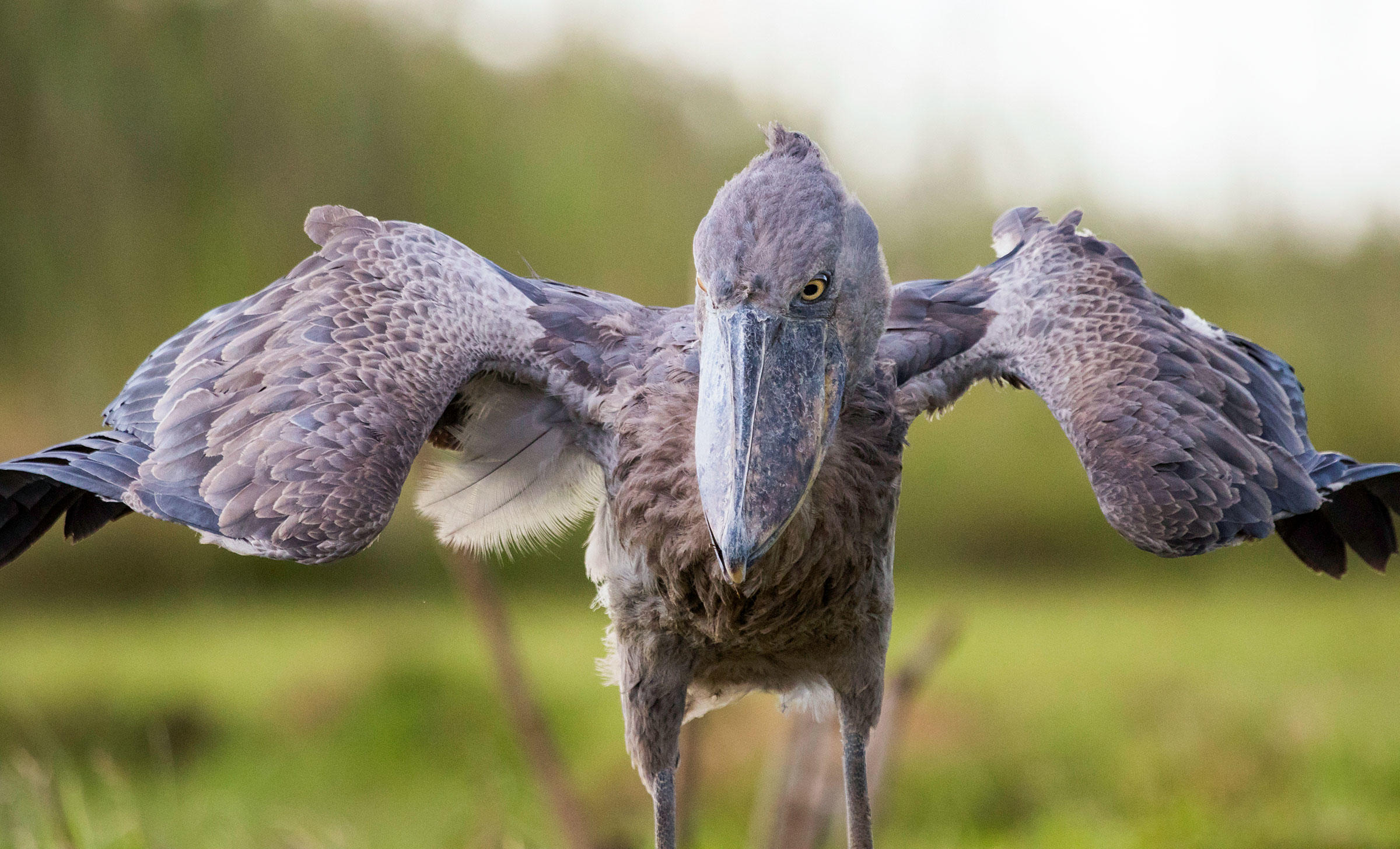
The Shoebill is a large wetland bird with a distinctive oversized bill that resembles a shoe. Its prehistoric appearance and unusual hunting behavior make it one of the most sought-after birds on African birding safaris.
The Ramsar Information Sheet for Mabamba identifies the wetland as an important habitat for the globally vulnerable Shoebill and other threatened bird species.
For serious birdwatchers, Mabamba offers something particularly special: the opportunity to search for a rare bird while traveling quietly through a beautiful papyrus wetland.
The Shoebill at Mabamba Swamp
The Shoebill is the star attraction at Mabamba.
Scientifically known as Balaeniceps rex, it is a large, distinctive wetland bird found in parts of tropical Africa.
The species is classified as Vulnerable and depends heavily on suitable wetland habitats. Uganda Wildlife Authority describes the Shoebill as a large, stork-like bird with an enormous shoe-shaped bill and an impressive wingspan.
Shoebills are ambush hunters. They can remain remarkably still for long periods before suddenly striking at prey.
Their diet can include:
-
Fish
-
Lungfish
-
Snakes
-
Frogs
-
Other aquatic prey
Their ability to stand motionless among wetland vegetation makes them challenging to find even when you are in excellent habitat.
That is why an experienced local birding guide can make a significant difference.
Shoebill Tracking at Mabamba Swamp
Shoebill tracking is usually done by navigating through the wetland in a small boat or canoe.
As you enter the papyrus channels, your guide carefully searches open patches of water, floating vegetation and the edges of the swamp.
The experience is not simply about reaching a particular location and finding a bird waiting there.
You may spend time moving slowly through the channels, listening to other birds and watching the vegetation before your guide suddenly spots the Shoebill.
When you finally see one standing quietly in the swamp, the encounter can be incredibly rewarding.
What Birds Can You See at Mabamba Swamp?
Although the Shoebill is the main attraction, Mabamba is an excellent destination for broader wetland birding.
The wetland supports numerous resident and migratory species.
Birds recorded in the Mabamba wetland system include:
-
Shoebill
-
Papyrus Yellow Warbler
-
Blue Swallow
-
African Jacana
-
Lesser Jacana
-
Goliath Heron
-
African Fish Eagle
-
African Marsh Harrier
-
African Pygmy Goose
-
Spur-winged Goose
-
Various kingfishers
-
Various herons
-
Egrets
-
Weavers
-
Waders
The Ramsar documentation specifically identifies several species of conservation concern associated with Mabamba, including Shoebill, Blue Swallow and Papyrus Yellow Warbler.
Bird numbers and species observed during a visit naturally depend on season, water levels, weather and local conditions.
Mabamba Swamp for Birdwatching
If you are interested in birdwatching in Uganda, Mabamba deserves a place on your itinerary.
Uganda is already one of Africa’s outstanding birding destinations, and Mabamba provides a completely different experience from forest and savannah birding.
Instead of walking through dense forest or driving across open grasslands, visitors explore a papyrus wetland by boat.
This gives you opportunities to observe:
-
Wetland specialists
-
Waterbirds
-
Raptors
-
Migratory species
-
Papyrus-associated birds
-
Lake Victoria species
The Uganda Wildlife Authority notes that Uganda is suitable for birdwatching throughout the year, with the country’s resident species making birding possible in every season.
Exploring Mabamba Swamp by Boat
One of the most memorable aspects of a Mabamba Swamp tour is the journey itself.
From Entebbe, the excursion can begin with a boat ride across Lake Victoria before entering the wetland environment.
As the landscape changes from open lake to papyrus-lined channels, the atmosphere becomes quieter and more intimate.
Inside the swamp, smaller boats or canoes allow guides to navigate the narrow waterways.
This makes Mabamba particularly appealing to:
-
Birdwatchers
-
Wildlife photographers
-
Nature lovers
-
First-time visitors to Uganda
-
Travelers with limited time
-
Travelers staying in Entebbe
-
Photographers looking for unusual wildlife subjects
Best Time to Visit Mabamba Swamp
Mabamba Swamp can be visited throughout the year.
However, your ideal travel period depends on your interests.
Dry Seasons
The relatively drier periods can make outdoor activities more comfortable and may provide easier travel conditions.
Uganda’s general birding conditions are often favorable from late May through September, while December and January can also offer good birding opportunities.
Wet Seasons
The wet seasons can bring greener landscapes and increased activity among some bird species.
Rain should not automatically discourage a birding trip, although weather can affect boating and visibility.
Migratory Birds
Certain periods of the year can also provide opportunities to see migratory species passing through Uganda.
For serious birders, the best approach is to plan around the specific species you want to see rather than relying only on a general “best month.”
What Is the Best Time of Day to Visit Mabamba?
An early start is generally recommended for birding.
Birds can be more active during the cooler hours of the morning, and starting early also gives you more time to explore the wetland before the day becomes hotter.
An early-morning Mabamba excursion can therefore be particularly rewarding for travelers interested in:
-
Shoebill tracking
-
Photography
-
Bird identification
-
Quiet nature experiences
Your guide can also adjust the pace depending on the weather and bird activity.
How Long Do You Need at Mabamba Swamp?
A typical Mabamba experience can be organized as a half-day excursion, particularly for travelers staying in Entebbe.
However, serious birdwatchers may prefer to spend longer in the area.
Half-Day Visit
Ideal for:
-
Travelers with limited time
-
Airport stopovers
-
Entebbe visitors
-
Travelers combining Mabamba with other activities
Full-Day Birding
Better for:
-
Serious birdwatchers
-
Wildlife photographers
-
Travelers targeting several bird species
-
Visitors who prefer a slower pace
The duration can also depend on whether you start from Entebbe or travel directly to the Mabamba area.
Mabamba Swamp and Lake Victoria
Mabamba’s location on Lake Victoria adds another dimension to the experience.
Lake Victoria is Africa’s largest lake by surface area, and the journey from the Entebbe side toward Mabamba provides an opportunity to appreciate the scale of the lake before entering the protected wetland environment.
The transition from open water to papyrus channels is one of the highlights of the excursion.
For travelers interested in nature rather than traditional game drives, Mabamba provides an excellent contrast to Uganda’s savannah national parks.
Wildlife at Mabamba Swamp
Mabamba is primarily a birding destination, but the wetland ecosystem also supports other forms of wildlife.
The Ramsar information for the site notes the presence of Sitatunga, a specialized swamp antelope associated with papyrus wetlands.
You may also encounter:
-
Fish
-
Frogs
-
Reptiles
-
Butterflies
-
Dragonflies
-
Other wetland-associated animals
However, visitors should come primarily for the birding experience rather than expecting a traditional Big Five wildlife safari.
The Importance of Mabamba Wetland
Mabamba is important not only for tourism but also for conservation and local communities.
The wetland provides:
-
Habitat for threatened bird species
-
Fish resources
-
Raw materials
-
Water resources
-
Support for local livelihoods
-
Important ecological services
The Ramsar designation recognizes Mabamba as a wetland of international importance because of its biodiversity and ecological significance.
Uganda’s Ramsar program also identifies Mabamba among the country’s internationally important wetlands.
Community Tourism at Mabamba
Mabamba is also an example of how tourism can connect conservation with local communities.
Community members participate in activities associated with guiding, boating, fishing and tourism services.
Responsible tourism can help create incentives for protecting wetland habitats while providing income to communities living around the ecosystem.
When visiting, travelers should support local guides and follow responsible boating and wildlife-viewing practices.
How to Get to Mabamba Swamp
From Entebbe
Entebbe is one of the most convenient bases for visiting Mabamba.
Many excursions begin around the Nakiwogo area before continuing by boat toward Mabamba Bay.
From Kampala
Travelers staying in Kampala can arrange a road transfer toward the Entebbe area before continuing to the wetland.
Because road traffic around Kampala and Entebbe can vary considerably, it is wise to allow sufficient travel time.
From Entebbe International Airport
Mabamba can be particularly convenient for travelers arriving in Uganda or departing the country, depending on their flight schedule.
However, excursions should be planned carefully around flight times rather than assuming the visit will always fit into a short airport connection.
Mabamba Swamp Tour: What to Expect
A typical excursion may include:
-
Pick-up from your accommodation
-
Transfer toward the Lake Victoria shoreline
-
Boat journey toward Mabamba Bay
-
Entry into the papyrus channels
-
Shoebill tracking
-
General wetland birdwatching
-
Photography
-
Return boat journey
-
Transfer back to Entebbe or Kampala
The exact sequence depends on your starting point and tour arrangement.
What to Bring to Mabamba Swamp
For a comfortable birding experience, consider bringing:
-
Binoculars
-
Camera with a telephoto lens
-
Hat
-
Sunglasses
-
Sunscreen
-
Insect repellent
-
Lightweight clothing
-
Waterproof jacket
-
Comfortable shoes
-
Drinking water
-
Extra batteries or power bank
-
Waterproof protection for camera equipment
If you are visiting during a rainy period, protecting your camera and binoculars from water is especially important.
Photography at Mabamba Swamp
Mabamba can be particularly rewarding for wildlife photographers.
The Shoebill’s large size and distinctive appearance make it an excellent photographic subject.
However, photography in a wetland requires patience.
Avoid asking boat operators to move too close to birds simply to obtain a better photograph. A responsible wildlife photographer should prioritize the animal’s welfare over getting the perfect image.
A longer lens can help you obtain detailed photographs without disturbing wildlife.
Is Mabamba Swamp Worth Visiting?
Absolutely.
Mabamba is particularly worthwhile if you:
-
Want to see a Shoebill
-
Enjoy birdwatching
-
Love wetlands and nature
-
Are staying in Entebbe
-
Have limited time in Uganda
-
Enjoy photography
-
Want an experience beyond traditional game drives
For dedicated birdwatchers, Mabamba can be one of the highlights of a Uganda birding itinerary.
For general travelers, it offers a short but memorable introduction to Uganda’s extraordinary wetland biodiversity.
Mabamba Swamp vs Other Shoebill Destinations in Uganda
Mabamba is not the only place where Shoebills occur in Uganda.
Shoebills are also associated with other wetland habitats, including areas around Murchison Falls National Park and other wetlands.
However, Mabamba is particularly attractive because of its accessibility from Entebbe and its established community-based birding experience.
Uganda Wildlife Authority identifies Murchison Falls as another excellent location for Shoebill sightings, particularly around the park’s delta wetlands.
Therefore, the best destination depends on your overall itinerary.
If you are arriving or departing through Entebbe, Mabamba can be a convenient addition.
If you are already visiting Murchison Falls, searching for a Shoebill there may be more practical than making a separate journey to Mabamba.
Combining Mabamba Swamp With a Uganda Safari
Mabamba works particularly well as part of a larger Uganda itinerary.
For example:
Mabamba + Murchison Falls
Combine Shoebill and wetland birding with savannah wildlife, Murchison Falls and the Nile.
Mabamba + Kibale
Combine wetland birding with chimpanzee tracking and Bigodi Wetland.
Mabamba + Queen Elizabeth
Combine Shoebill tracking with game drives and a Kazinga Channel boat cruise.
Mabamba + Bwindi
Birdwatchers can combine Mabamba with the Albertine Rift bird species found around Bwindi.
Mabamba + Lake Mburo
Combine wetland birding with zebras, impalas, giraffes and other wildlife around Lake Mburo.
This makes Mabamba particularly valuable for travelers who want to combine Uganda birding and wildlife.
Frequently Asked Questions About Mabamba Swamp
What is Mabamba Swamp famous for?
Mabamba Swamp is famous for its Shoebill population and excellent wetland birdwatching opportunities. It is also an internationally important wetland on Lake Victoria.
Where is Mabamba Swamp located?
Mabamba Swamp is located on the shores of Lake Victoria, west of Entebbe in Uganda.
Can I see a Shoebill at Mabamba Swamp?
Mabamba is one of Uganda’s best-known destinations for searching for Shoebills. However, because the bird is wild, sightings cannot be guaranteed.
How do you explore Mabamba Swamp?
The wetland is commonly explored by small boat or canoe through papyrus-lined channels.
How far is Mabamba Swamp from Entebbe?
Mabamba is accessible from Entebbe by boat and road depending on the route and starting point. The exact duration varies according to the departure point, water conditions and traffic.
How long does a Mabamba Swamp tour take?
A dedicated Mabamba excursion can be arranged as a half-day experience, while serious birdwatchers may choose a longer visit.
What birds can I see at Mabamba Swamp?
Besides the Shoebill, birders may encounter species such as African Jacana, Lesser Jacana, Goliath Heron, African Pygmy Goose, Spur-winged Goose and other wetland birds.
Is Mabamba Swamp good for photography?
Yes. Mabamba is particularly attractive for bird photographers because of its Shoebill and diverse wetland birdlife.
Can I visit Mabamba Swamp from Kampala?
Yes. Mabamba can be incorporated into a day trip from Kampala, although travel time and traffic should be considered when planning the excursion.
Is Mabamba Swamp suitable for non-birdwatchers?
Yes. Even travelers who are not serious birders can enjoy the boat ride, Lake Victoria scenery, papyrus channels and the possibility of seeing the unusual Shoebill.
Responsible Tourism at Mabamba Swamp
Mabamba is a fragile wetland ecosystem, so responsible tourism is important.
Visitors should:
-
Keep a respectful distance from birds
-
Avoid disturbing nesting or feeding birds
-
Follow the guide’s instructions
-
Avoid littering
-
Support local community guides
-
Avoid damaging papyrus vegetation
-
Keep noise levels low
-
Respect local communities and fishing activities
Protecting Mabamba’s wetland habitat is essential to ensuring that future generations can continue to experience its remarkable wildlife.
Plan Your Mabamba Swamp Experience
Mabamba Swamp offers one of the most distinctive nature experiences near Entebbe.
Its combination of Shoebill tracking, wetland birding, Lake Victoria scenery, papyrus channels and community tourism makes it an excellent addition to a Uganda safari.
Whether you are a dedicated birder searching for the Shoebill, a photographer looking for unusual wildlife or a first-time visitor wanting a memorable experience close to Entebbe, Mabamba deserves consideration.
At Epic Uganda Vacation, we can incorporate Mabamba Swamp into a customized Uganda safari based on your interests, available time and arrival or departure arrangements.