Tracking the Rare Shoebill Stork: A Guide to Mabamba Swamp, Uganda
Take a shoebill tour in Mabamba wetland; Mabamba is one of the must-see locations in Uganda if you want to see the Shoebill stork. It is located along the edge of Lake Victoria, which is the second-largest freshwater lake in the world. The marsh is to the north-west of the Entebbe peninsula. In addition, one of the nation’s Ramsar sites, Best birding sites in Uganda the swampland was recognized on September 15th 2006.
Commonly referred to as the “Pearl of Africa,” Uganda is a premier destination for nature enthusiasts. It is bordered by Rwanda, Kenya, Tanzania, and the Democratic Republic of the Congo. This biodiverse nation offers world-class birdwatching. Notably, the Mabamba Bay Wetland stands out as the top spot for spotting the elusive Shoebill Stork (Balaeniceps rex).
Why Mabamba Swamp is a Birdwatcher’s Paradise
Located just 60 kilometers south of Kampala in the Mpigi district, Mabamba Swamp is an Important Birding Area (IBA) recognized for its rich papyrus ecosystems. This wetland is the most accessible place in East Africa to see the rare Shoebill Stork in its natural habitat.
Our 15-Day Uganda Birding Safari frequently begins here, offering guests a chance to see one of the approximately 5,300 adult shoebills remaining on the planet.
The Shoebill Experience: What to Expect
A typical Shoebill tour in Mabamba lasts 3 to 4 hours. You will be guided by a professional birder in a safe, traditional canoe boat. The tour navigates through narrow, lily-filled channels.
-
Logistics: Reach the swamp via a 2-hour drive from Kampala via the Kisubi-Nakawuka Road, or take a scenic boat transfer from the Nakiwogo landing site in Entebbe.
-
Safety: For a smooth trip, Epic Uganda Vacation provides life jackets and expert birding guides who share fascinating facts about these prehistoric-looking creatures.
Fascinating Facts About the “Whale-Head” Bird
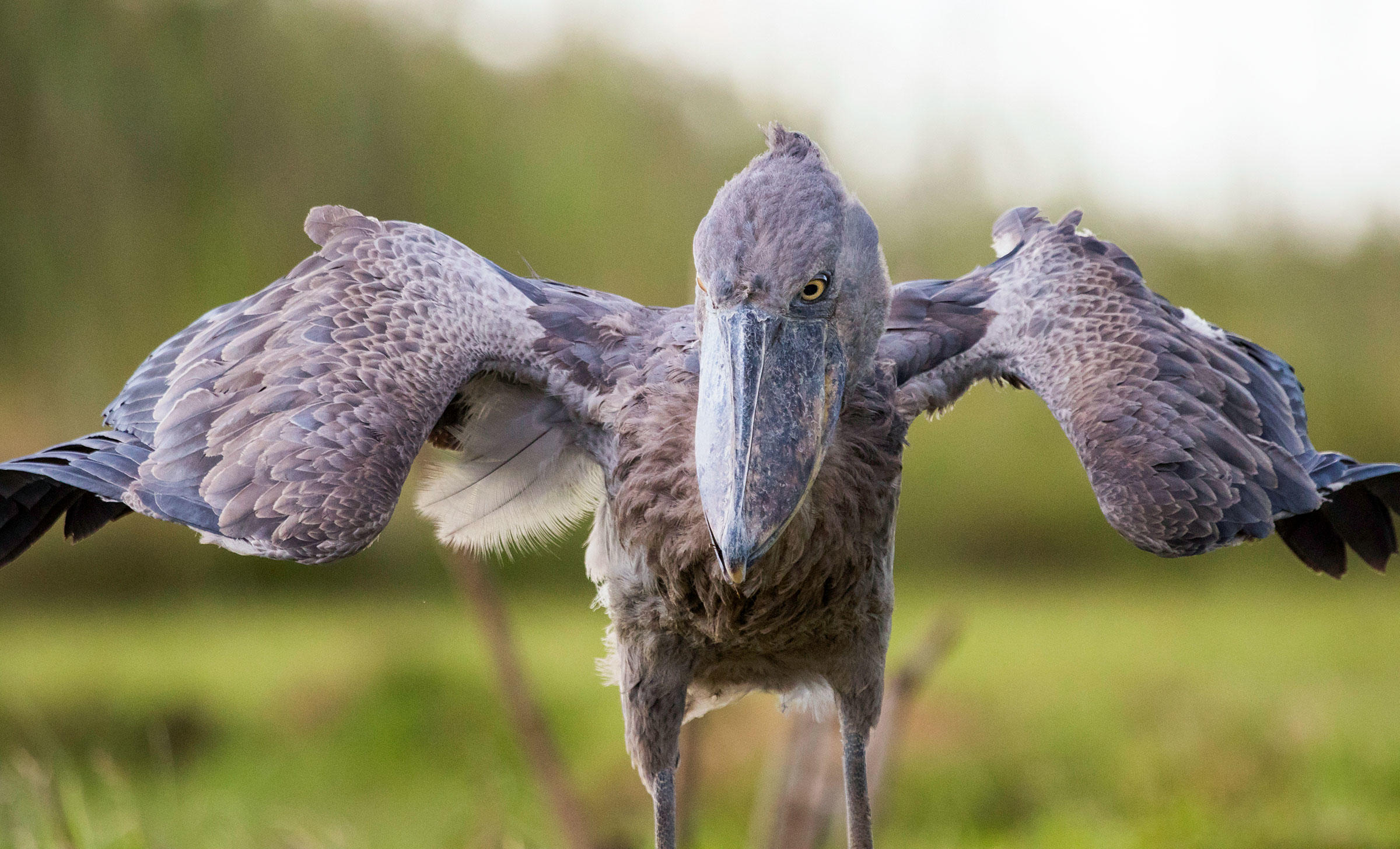
The Shoebill is a biological marvel, often compared to a dinosaur due to its unique physical traits:
-
The Bill: Its massive, shoe-shaped beak (up to 9 inches long) is designed for “clattering” and hunting large prey.
-
Size & Weight: Standing up to 5 feet tall with a wingspan of over 7 feet, an adult can weigh nearly 12.3 pounds.
-
Diet: These aggressive “stand-and-wait” hunters feed on lungfish, tilapia, catfish, and even young crocodiles or snakes.
-
Longevity: In the wild, a Shoebill Stork can live up to 36 years.
Conservation Status
Despite their docile nature toward humans—often allowing visitors to approach within six feet—their numbers are dwindling. Habitat loss and human encroachment have listed them as Vulnerable on the IUCN Red List. By booking a guided tour, you directly support the local community conservation efforts. These efforts protect these majestic birds.
Plan Your 2026 Birding Adventure
Whether you are looking for a 1-Day Mabamba excursion or a comprehensive 22-Day Grand Birding Safari, our team ensures the best photography and viewing opportunities.
Shoebill Stock Tour price.
In addition to transportation fees and other tour expenses like meals, there are three different tariff rates for shoebill trackers. Entrance fees is as follows; 15,000ugx for foreign residents, 10,000ugx for Ugandans and 25,000/= (8$) for foreign non-residents. The money collected from tourists is used for both community improvement and wetland preservation.
Additional charges include 40$ for a boat hire, per group of 4-5 people.
Best time to do Shoebill tour at Mabamba Island.
The shoebills are present and can be observed all year because the area is swampy. However, there are other months that are far more advantageous with a high likelihood of seeing many migratory species. These are late June to early July, March to May, and November. When there are fewer storms, showers, and other hazards, canoe rides are significantly safer. Also, the knowledgeable shoebill tour operators are on hand and will take guests on tours around the island for a fee. The weeklong birding activity is available during the day. Since it is ideal to see these and other bird species during the morning hours, the daily drive to Mabamba Island begins at 7:00 am.
Over 260 bird species can be found in the Mabamba Swamp, some of which migrate there during the high season. The common greenshank, Osprey, Blue-headed coucal, Grosbeak, orange weaver, Red billed fire Finch, white-shouldered Tit, Sand Martin, Mosque Swallow, African Pied wag tail, Weyns weaver, and other birds can also be seen on Mabamba Island.
Spend a whole day traveling to the Mabamba Swamp to see one of Africa’s favorite birds, the shoebill stork. The experience is amazing and the destination is secure and easily reachable from Kampala and Entebbe.