
Where Is the Best Place to See the Wildebeest Migration?
Where Is the Best Place to See the Wildebeest Migration?
The Great Wildebeest Migration is one of Africa’s most spectacular wildlife events and a bucket-list experience for safari enthusiasts. Every year, more than a million wildebeest, accompanied by hundreds of thousands of zebras and gazelles, travel across the vast plains of East Africa in search of fresh grass and water. Their remarkable journey creates some of the most breathtaking wildlife spectacles on the continent.
But where is the best place to see the wildebeest migration?
The best places to witness the Great Wildebeest Migration are Serengeti National Park in Tanzania and Maasai Mara National Reserve in Kenya. These two iconic wildlife destinations offer different stages of the migration, from the calving season in the southern Serengeti to the dramatic Mara River crossings in northern Tanzania and Kenya.
Your ideal destination depends on what you want to experience. Whether you dream of witnessing thousands of wildebeest crossing crocodile-infested rivers, seeing newborn calves on the open plains or watching enormous herds move across the savannah, choosing the right location and travel season is essential.
In this guide, Epic Uganda Vacation explores the best places to see the wildebeest migration, what makes each destination special and when to visit for the most rewarding safari experience.
1. Serengeti National Park, Tanzania – Best Overall Destination
Serengeti National Park is arguably the best place to see the Great Wildebeest Migration. Located in northern Tanzania, the park forms the heart of the Serengeti-Mara ecosystem and hosts enormous herds of wildebeest, zebras and gazelles throughout the year.
The Serengeti offers several opportunities to witness different stages of the migration. Depending on the season, visitors can experience the calving season, large herds moving across the plains, predator-prey interactions and spectacular river crossings.
One of the greatest advantages of visiting Serengeti National Park is its size. Rather than concentrating on one migration event, visitors can explore different regions of the park as the herds move throughout the year.
Best areas to see the migration in Serengeti:
-
Southern Serengeti: Famous for the wildebeest calving season.
-
Central Serengeti: Excellent for general wildlife viewing and following migrating herds.
-
Western Corridor: Known for the Grumeti River crossings.
-
Northern Serengeti: Famous for the dramatic Mara River crossings.
Best time to visit: December to October, depending on the migration stage and region.
2. Maasai Mara National Reserve, Kenya – Best for Mara River Crossings
Maasai Mara National Reserve is another outstanding destination for witnessing the Great Wildebeest Migration. Located in southwestern Kenya, the reserve is the northern extension of the Serengeti-Mara ecosystem.
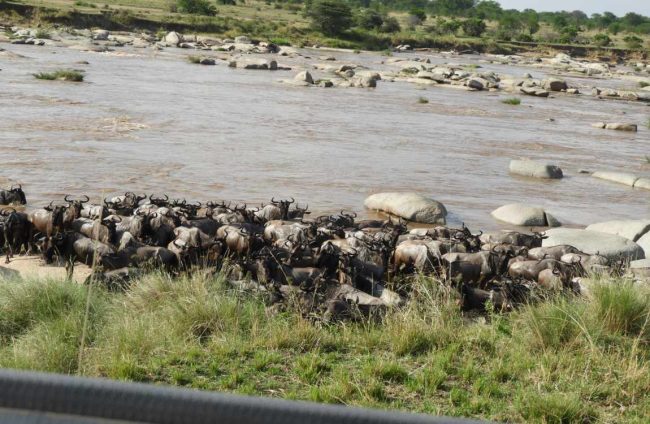
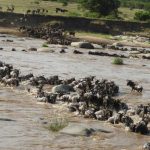
The Maasai Mara is particularly famous for the dramatic Mara River crossings, when thousands of wildebeest gather along riverbanks before attempting to cross waters inhabited by large Nile crocodiles.
These crossings are among the most exciting wildlife spectacles in Africa. Wildebeest must navigate steep riverbanks, strong currents and waiting predators as they move between Tanzania and Kenya in search of fresh grazing.
Beyond the migration, the Maasai Mara offers excellent opportunities to see lions, leopards, cheetahs, elephants, buffaloes and other wildlife.
Best places to see the migration in Maasai Mara:
-
Mara River: Famous for spectacular wildebeest crossings.
-
Talek River: Offers excellent wildlife viewing and seasonal migration activity.
-
Mara Triangle: Known for its beautiful landscapes and abundant wildlife.
-
Sand River: An important migration route along the Kenya-Tanzania border.
Best time to visit: July to October, with August and September particularly popular for migration safaris.
One important consideration is that the river crossings are unpredictable. The presence of wildebeest near the river does not necessarily mean they will cross immediately.
3. Ndutu Region, Tanzania – Best for Wildebeest Calving Season
Ndutu is one of the most rewarding places to witness the beginning of new life during the Great Wildebeest Migration.
Located between the Ngorongoro Conservation Area and southern Serengeti, Ndutu becomes an important gathering point when the herds move into the nutrient-rich short-grass plains.
During the calving season, hundreds of thousands of wildebeest give birth within a relatively short period. February is particularly remarkable, with large numbers of newborn calves appearing across the plains.
This abundance of newborn animals attracts predators, including lions, cheetahs, leopards and hyenas. Consequently, visitors have excellent opportunities to witness predator-prey interactions and fascinating wildlife behaviour.
Ndutu is especially attractive to photographers and nature enthusiasts interested in animal births, newborn calves and predator activity.
Best time to visit: January to March, with February being a particularly rewarding month.
4. Northern Serengeti, Tanzania – Best for Mara River Migration Crossings
The northern part of Serengeti National Park is one of the best places to witness the famous Mara River crossings from the Tanzanian side.
Areas around Kogatende and Lamai Wedge become important migration locations as the herds move northwards towards the Kenya-Tanzania border.
During the dry season, large herds gather near the Mara River. Some animals cross into Kenya, while others move back into Tanzania, creating repeated opportunities for dramatic wildlife encounters.
The northern Serengeti is also an excellent destination for travellers who want to combine migration viewing with other wildlife experiences, including spotting big cats and exploring less-developed safari landscapes.
Best time to visit: July to October.
5. Western Serengeti – Best for Grumeti River Crossings
The Western Corridor of Serengeti National Park is another excellent destination for experiencing the Great Wildebeest Migration.
This region is particularly famous for the Grumeti River, which the migrating wildebeest must navigate as they move towards the northern Serengeti.
The river is home to large Nile crocodiles, making crossings a dramatic wildlife spectacle. Although the Grumeti crossings receive less attention than the famous Mara River crossings, they offer a remarkable safari experience.
The Western Serengeti is also known for its beautiful landscapes, resident wildlife and opportunities to explore areas that can be less crowded than the popular northern migration locations.
Best time to visit: May to July, depending on rainfall and herd movements.
Map: Where to See the Great Wildebeest Migration
The following map highlights the main safari destinations associated with the migration in Tanzania and Kenya.
Best Time and Places to See the Wildebeest Migration
The Great Wildebeest Migration takes place throughout the year. However, the location of the herds changes depending on rainfall, grazing conditions and the availability of water.
Understanding the seasonal movement is important when planning a successful migration safari.
Here is a general month-by-month guide:
| Month | Best place to visit | What to expect |
|---|---|---|
| January | Ndutu, Southern Serengeti | Herds gathering and calving |
| February | Ndutu, Southern Serengeti | Peak calving season |
| March | Southern Serengeti | Calves, predators and grazing |
| April | Central Serengeti | Herds moving north-west |
| May | Central and Western Serengeti | Migration and breeding activity |
| June | Western Serengeti | Grumeti River crossings |
| July | Northern Serengeti | Migration towards the Mara River |
| August | Northern Serengeti and Maasai Mara | River crossing opportunities |
| September | Maasai Mara and Northern Serengeti | Large herds and river crossings |
| October | Maasai Mara and Northern Serengeti | Continued migration activity |
| November | Eastern and Central Serengeti | Herds moving south |
| December | Southern and Central Serengeti | Return towards the calving grounds |
Note: These are approximate seasonal patterns, not guaranteed dates. Rainfall can change the timing and location of the herds.
Serengeti vs Maasai Mara: Which Is Better for the Wildebeest Migration?
Both destinations offer extraordinary opportunities to witness the Great Wildebeest Migration. However, the best choice depends on the type of wildlife experience you want.
| Feature | Serengeti, Tanzania | Maasai Mara, Kenya |
|---|---|---|
| Best experience | Full migration cycle | River crossings |
| Calving season | Excellent | Not the main calving area |
| River crossings | Grumeti and Mara rivers | Mara and Sand rivers |
| Best months | December–October, depending on region | July–October |
| Wildlife | Excellent year-round | Excellent year-round |
| Landscape | Vast open plains and woodlands | Rolling grasslands and river valleys |
Our recommendation: Choose Serengeti National Park if you want to experience different stages of the migration throughout the year. Choose Maasai Mara if your main interest is witnessing the famous river crossings.
If your budget and travel schedule allow, combining northern Serengeti with Maasai Mara offers an exceptional opportunity to explore both sides of this remarkable ecosystem.
What Other Wildlife Can You See During the Wildebeest Migration?
The Great Wildebeest Migration is not just about wildebeest. It also attracts numerous predators and supports a remarkable diversity of wildlife.
Some animals you may encounter include:
Lions
Lions frequently follow migrating herds, taking advantage of opportunities to hunt vulnerable wildebeest and zebras.
Cheetahs
The open grasslands provide excellent hunting grounds for cheetahs, especially during the calving season.
Leopards
These elusive predators are often spotted resting in trees or moving through woodland habitats.
Spotted hyenas
Hyenas are important predators and scavengers that follow the movement of migrating herds.
Elephants
Both Serengeti and Maasai Mara offer opportunities to see elephants alongside other resident wildlife.
Zebras
Hundreds of thousands of zebras accompany wildebeest during their seasonal movement.
Tips for Planning a Wildebeest Migration Safari
To make the most of your migration safari, consider the following recommendations:
-
Choose the right season: Decide whether you want to witness calving, general herd movement or dramatic river crossings before booking.
-
Book accommodation strategically: Choose camps and lodges close to the migration areas rather than relying on long daily drives.
-
Spend enough time in the parks: Consider spending at least 4–7 nights in the migration ecosystem to improve your chances of experiencing different wildlife encounters.
-
Travel with experienced safari guides: Knowledgeable guides understand seasonal migration patterns and can help locate the herds.
-
Carry appropriate photography equipment: A camera with a good zoom lens is useful for capturing wildlife at different distances.
-
Remain flexible: The migration follows rainfall and grazing conditions, so exact herd locations cannot be guaranteed.
For the popular river-crossing season, booking accommodation well in advance is advisable.
Can You Combine a Wildebeest Migration Safari with a Uganda Safari?
Absolutely! Travellers visiting East Africa can combine the Great Wildebeest Migration in Tanzania or Kenya with unforgettable wildlife experiences in Uganda.
Uganda offers a different but equally rewarding safari experience. Instead of focusing primarily on migrating herds, visitors can explore tropical rainforests, savannah national parks and beautiful lakes.
Some of the best experiences to include in your Uganda safari are:
-
Bwindi Impenetrable National Park: Experience mountain gorilla trekking in the natural habitat of endangered mountain gorillas.
-
Queen Elizabeth National Park: Enjoy game drives, boat cruises along the Kazinga Channel and opportunities to see tree-climbing lions.
-
Murchison Falls National Park: Discover elephants, giraffes, lions, buffaloes and the spectacular Murchison Falls.
-
Kibale Forest National Park: Experience chimpanzee trekking and explore one of Africa’s most remarkable primate habitats.
Combining a Tanzania or Kenya migration safari with Uganda gorilla trekking creates an exciting multi-country East African holiday.
Epic Uganda Vacation can help travellers plan a safari combining Uganda’s primate experiences with wildlife adventures across the wider East African region.
Frequently Asked Questions About the Wildebeest Migration
1. Where is the best place to see the Great Wildebeest Migration?
Serengeti National Park in Tanzania and Maasai Mara National Reserve in Kenya are the best destinations. Serengeti is ideal for experiencing the full migration cycle, while Maasai Mara is particularly famous for dramatic Mara River crossings.
2. Which country has the best wildebeest migration, Kenya or Tanzania?
Both countries offer excellent migration experiences. Tanzania offers the larger migration landscape and the famous calving season in southern Serengeti. Kenya offers outstanding opportunities to witness the river crossings in Maasai Mara.
3. When is the best time to see the wildebeest migration?
The best time depends on what you want to see. January to March is ideal for calving in southern Serengeti, while July to October is generally the best period for river-crossing opportunities in northern Serengeti and Maasai Mara.
4. Can I see the wildebeest migration throughout the year?
Yes. The migration is a continuous annual movement rather than a one-time event. The herds move between Tanzania’s Serengeti and Kenya’s Maasai Mara in search of fresh grazing and water.
5. Where can I see wildebeest giving birth?
The Ndutu region and southern Serengeti are the best places to witness the calving season, particularly between January and March. February is usually the peak month.
6. Where do wildebeest cross the river?
The most famous crossings take place along the Mara River in northern Serengeti and Maasai Mara. Other important crossings occur along the Grumeti River in western Serengeti.
7. Are wildebeest river crossings guaranteed?
No. River crossings are natural wildlife events that depend on herd movements, rainfall, river conditions and other environmental factors. Even during peak migration season, crossings cannot be guaranteed.
8. How many days do I need for a wildebeest migration safari?
A safari of approximately 5–7 days is a good starting point. However, if you specifically want to witness river crossings, spending more time in the northern Serengeti or Maasai Mara can improve your opportunities.
9. Is the Great Wildebeest Migration worth visiting?
Absolutely. It is one of the world’s most remarkable wildlife spectacles, offering opportunities to see enormous animal herds, predator-prey interactions, newborn calves and dramatic river crossings.
10. Can I combine gorilla trekking in Uganda with the wildebeest migration?
Yes. You can combine a migration safari in Tanzania or Kenya with mountain gorilla trekking in Uganda. This creates an exceptional East African adventure combining savannah wildlife with rainforest primate encounters.
Conclusion: Where Should You Go to See the Wildebeest Migration?
The best place to see the Great Wildebeest Migration depends on the wildlife spectacle you want to experience. Serengeti National Park in Tanzania is the best overall destination for exploring the migration throughout the year, while Maasai Mara in Kenya is particularly rewarding for dramatic river crossings.
For travellers interested in witnessing thousands of newborn wildebeest, Ndutu and southern Serengeti are excellent choices between January and March. Those hoping to witness the famous Mara River crossings should consider northern Serengeti or Maasai Mara between July and October.
Whatever destination you choose, the Great Wildebeest Migration promises an unforgettable African safari experience.
Plan your next East African adventure with Epic Uganda Vacation. Contact our team to help you combine unforgettable wildlife safaris, gorilla trekking and other exciting experiences across East Africa.
Related posts:
 Ngorongoro Crater Tanzania: Wildlife, Facts, Entry Fees & Safari Guide
 Mara River Crossing Safari: Best Time, Location & Tips
 Mto wa Mbu Village Tour Tanzania – Culture, Hotels & Things to Do
 How to Combine Rwanda Gorillas with Kenya Safari
 How to Combine Wildebeest Migration, Gorillas & Chimpanzees