Guide to the Great Wildebeest Migration in Tanzania and Kenya
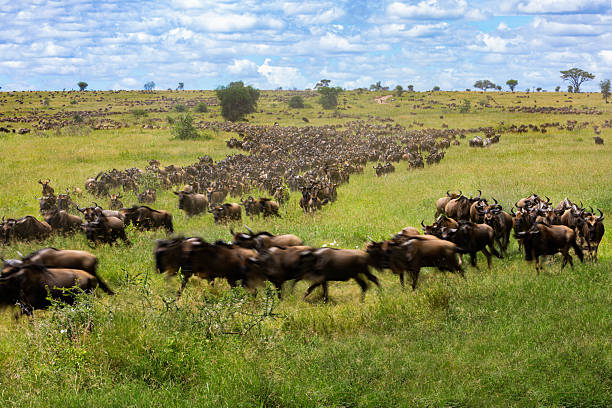
The Great Wildebeest Migration is one of Africa’s most remarkable wildlife spectacles, attracting travellers, photographers and nature enthusiasts from around the world. Every year, enormous herds of wildebeest, accompanied by zebras and gazelles, move across the Serengeti ecosystem in Tanzania and the Maasai Mara ecosystem in Kenya in search of fresh grass and water.
This extraordinary natural event is famous for its immense herds, dramatic river crossings and encounters between predators and their prey. However, the migration is much more than a single event. It is a continuous annual cycle shaped by rainfall, grazing conditions and the changing availability of water.
Whether you want to witness wildebeest calving in the southern Serengeti, watch herds approach the Grumeti River or experience the dramatic Mara River crossings, choosing the right destination and travel dates is essential.
In this guide to the Great Wildebeest Migration, we explain when and where to see the herds, the best time to visit Tanzania and Kenya, recommended safari destinations, accommodation options and practical tips for planning your African safari.
What Is the Great Wildebeest Migration?
The Great Wildebeest Migration is the seasonal movement of large herds of wildebeest across the greater Serengeti–Mara ecosystem of northern Tanzania and southwestern Kenya. The migrating population also includes zebras and gazelles, which share the grasslands and move through parts of the ecosystem in overlapping patterns.
The Serengeti–Mara wildebeest population is estimated at approximately 1.3 million animals by the Convention on the Conservation of Migratory Species of Wild Animals. Seasonal rainfall drives the movement, as the herds follow areas with suitable grazing and water.
The migration typically begins with concentrations of wildebeest in the southern Serengeti and Ndutu plains during the calving season. As the southern grasslands become drier, the herds move northwest through the Serengeti, reaching the western corridor and Grumeti region before moving towards the northern Serengeti and, at times, Kenya’s Maasai Mara.
The herds eventually turn south as rainfall returns to the southern grasslands, beginning another cycle.
Although river crossings are among the most famous migration experiences, travellers can enjoy many other remarkable moments, including thousands of animals grazing together, newborn calves taking their first steps and predators following the moving herds.
Where Does the Great Wildebeest Migration Take Place?
The Great Wildebeest Migration takes place mainly across two countries: Tanzania and Kenya. The most important safari destinations depend on the time of year and the particular wildlife experience you want to see.
1. Southern Serengeti and Ndutu, Tanzania
The southern Serengeti and Ndutu region are particularly famous for the wildebeest calving season, which generally occurs from late January through February, although births can extend across a broader period.
During this time, large herds gather on nutrient-rich short-grass plains. Many calves are born within a relatively short period, creating opportunities to observe newborn wildebeest, grazing herds and predators such as lions, cheetahs and hyenas.
Ndutu is especially attractive to travellers interested in photography, predator behaviour and the early stages of the migration cycle.

Best time to visit: January to March, with February often a key month for calving.
2. Central Serengeti, Tanzania
The central Serengeti, particularly the Seronera area, is one of Tanzania’s best-known safari regions. It supports resident wildlife throughout the year and provides opportunities to see lions, leopards, cheetahs, elephants, giraffes and numerous antelope species.
Migrating herds move through the wider central Serengeti at different times, particularly during their northward and southward journeys. This makes the region a useful destination for travellers who want to combine migration viewing with general wildlife watching.
Unlike a safari focused entirely on seasonal herds, a central Serengeti itinerary can deliver rewarding game drives even when large concentrations of wildebeest are elsewhere.
Best time to visit: Year-round for resident wildlife, with migration opportunities varying by month.
3. Western Serengeti and the Grumeti River, Tanzania
The western corridor is an important stage in the migration journey. As the herds move northwest, they may gather around the Grumeti River, where crocodiles inhabit the water and river crossings can occur.
Watching the herds approach a river, hesitate at the banks and eventually move into the water can be an intense wildlife experience. However, not every herd crosses while visitors are present, and the timing varies with seasonal conditions.
The wider western Serengeti also offers excellent opportunities to look for resident predators, elephants, giraffes, buffaloes and birds.
Travellers planning a Grumeti safari should carefully check the location of their accommodation. The private Grumeti reserve and the broader western corridor are related but distinct safari areas, with different access arrangements and activities.
Best time to visit: Generally May to July for the herds’ western movement and opportunities to see Grumeti River crossings.
4. Northern Serengeti and the Mara River, Tanzania
The northern Serengeti is one of the most sought-after destinations for travellers hoping to witness Mara River crossings.
During the middle and later parts of the year, wildebeest move through the northern Serengeti towards the Kenya border. Some herds cross the Mara River into Kenya, while others remain in Tanzania or move back and forth across the river.
The crossings can be dramatic, with strong currents, steep riverbanks and crocodiles creating natural obstacles. Large groups may gather at a crossing point before one animal finally enters the water, prompting others to follow.
The northern Serengeti is also a rewarding safari destination outside the exact moments of a crossing, with resident wildlife and beautiful landscapes.
Best time to visit: Generally July to October, although the timing and location of crossings vary annually.
5. Maasai Mara National Reserve, Kenya
Kenya’s Maasai Mara is the northern extension of the greater Serengeti–Mara ecosystem and an important destination for the migration.
During the dry season, substantial herds may enter the reserve from Tanzania in search of grazing. The Mara River forms part of their route, and river crossings can occur on either side of the international border.
The reserve also supports resident lions, leopards, cheetahs, elephants, buffaloes, giraffes and numerous other species. This means visitors can enjoy excellent game drives even when the main herds are elsewhere.
Travellers who choose Kenya for the migration should select accommodation according to the anticipated herd locations. Staying near the river or in a suitable wildlife conservancy may reduce travel time to promising viewing areas, depending on conditions.
Best time to visit: Generally July to October for migration viewing, with the exact experience depending on herd movements.
Great Wildebeest Migration Month-by-Month Calendar
The migration does not follow fixed dates. The following calendar is a general guide to its usual seasonal pattern, not a guarantee of where the herds will be on a particular day.
| Month | General migration location | Main safari highlight |
|---|---|---|
| January | Southern Serengeti and Ndutu | Herd concentrations and the beginning of the calving season |
| February | Ndutu and southern Serengeti | Newborn calves and predator activity |
| March | Southern and central Serengeti | Calving may continue; herds begin responding to changing grazing |
| April | Southern and central Serengeti, moving northwest | Green landscapes and herds beginning their northward movement |
| May | Central Serengeti and western corridor | Large herds may begin moving towards the west |
| June | Western Serengeti and Grumeti region | Opportunities to see herds near the Grumeti River |
| July | Northern Serengeti and potentially Maasai Mara | Northward movement and possible river crossings |
| August | Northern Serengeti and Maasai Mara | Strong migration viewing opportunities and possible Mara River crossings |
| September | Northern Serengeti and Maasai Mara | Continued migration activity and possible crossings |
| October | Northern Serengeti and Maasai Mara, with movement varying | Later crossings and potential southward movement |
| November | Central and eastern Serengeti, moving south | Short rains may encourage the herds to return south |
| December | Southern and eastern Serengeti | Herds gather ahead of the main calving period |
This calendar is based on the broad seasonal migration cycle. Actual movements depend on rainfall, grass availability and local conditions. For the best planning results, choose the destination based on the experience you want and confirm recent herd reports closer to departure.
What Is the Best Time to See the Great Wildebeest Migration?
The best time depends on whether you want to see calving, river crossings or large herds moving across the plains.
January to March: Calving Season
Choose the southern Serengeti and Ndutu region if you want to witness the calving season. The open grasslands provide opportunities to observe newborn wildebeest, large herds and predators following them.
This period is particularly attractive to wildlife photographers and travellers interested in animal behaviour rather than river crossings.
May to July: Western Migration and Grumeti River
The western Serengeti becomes important as the herds move northwest. Travellers may have opportunities to observe large concentrations of wildebeest and possible Grumeti River crossings.
This is a good period to consider a safari in the western corridor, although herd movements vary and the river-crossing spectacle is never guaranteed.
July to October: Northern Serengeti and Maasai Mara
This is the broad seasonal window most associated with Mara River crossings. Visitors may see wildebeest moving between northern Tanzania and Kenya, alongside strong general wildlife viewing.
August and September are popular months, but there is no single date when a crossing is certain to occur. A flexible itinerary with several days in the right region is more sensible than planning around one specific crossing.
November to December: The Return South
As seasonal rains begin to regenerate grazing in the south, the herds gradually move back towards the southern Serengeti. The landscape can become greener, offering different photographic conditions and birdwatching opportunities.
Late December can be an attractive time to visit the southern plains ahead of the main calving period.
What Happens During a Wildebeest River Crossing?
River crossings are among the most dramatic moments associated with the Great Wildebeest Migration.
As herds approach a river, animals may gather along the banks for hours or longer. They may move back and forth, search for easier access points or hesitate before entering the water. Eventually, one or more animals may begin crossing, sometimes prompting a much larger group to follow.
Crossings expose the animals to natural hazards, including strong currents, steep banks and crocodiles. The outcome varies with the location, river conditions and the behaviour of the animals.
The Grumeti River in Tanzania and the Mara River along the northern Serengeti–Maasai Mara ecosystem are particularly associated with these encounters.
It is important to understand that river crossings are unpredictable wildlife events. A guide may find a large herd near a river without witnessing a crossing, and animals may cross outside the viewing period. A good safari should still provide excellent wildlife viewing if no crossing occurs.
Wildlife to See During the Great Migration
The migrating herds are the main attraction, but the wider ecosystem supports a remarkable range of animals.
Wildebeest: The principal migrating species, travelling in large herds in search of fresh grass and water.
Zebras: Often seen alongside wildebeest, with overlapping migration routes and grazing patterns.
Gazelles: Several species occur across the ecosystem, contributing to its diversity of herbivores.
Lions: Lions follow opportunities to hunt and can be encountered throughout much of the Serengeti and Maasai Mara.
Cheetahs: Particularly associated with open grasslands, where they can use their speed to pursue prey.
Leopards: More elusive cats often found around suitable woodland and riverine habitats.
Hyenas: Spotted hyenas are important predators and scavengers and are frequently associated with areas where prey is abundant.
Elephants and buffaloes: These resident species add to the wider wildlife experience, even when the migrating herds have moved elsewhere.
The presence of any particular species cannot be guaranteed. Wildlife sightings depend on habitat, season, weather and animal behaviour.
Where to Stay for the Great Wildebeest Migration
Choosing accommodation in the correct region is one of the most important parts of planning a migration safari. A well-positioned camp can reduce driving time and provide easier access to promising wildlife-viewing areas.
Southern Serengeti and Ndutu
Choose a seasonal tented camp or lodge in the southern Serengeti or Ndutu area for calving season. Properties in this region can be especially convenient during the first months of the year.
Confirm the property’s exact location and seasonal operating dates before booking.
Central Serengeti
The Seronera area offers a wide range of accommodation, including permanent lodges and tented camps. It is a practical choice for travellers who want good general wildlife viewing and a flexible itinerary.
Western Serengeti and Grumeti
The western corridor and private Grumeti reserve offer different accommodation styles, from conventional safari camps to high-end luxury properties. If you want to stay in a private reserve, check the precise location, inclusions and access rules.
Northern Serengeti
Camps around Kogatende and other northern Serengeti areas are popular for seasonal migration viewing and potential Mara River crossings. Seasonal camps may be particularly useful when the herds are expected in the north.
Maasai Mara, Kenya
The reserve and surrounding conservancies provide a range of tented camps and lodges, from comfortable mid-range options to luxury properties. Select accommodation based on the area you want to explore, rather than choosing solely by price or brand.
Accommodation availability and pricing vary substantially during peak migration months, so early planning is recommended.
Tanzania or Kenya: Which Is Better for the Migration?
Both countries offer exceptional opportunities, but the better choice depends on the timing of your trip and your interests.
Choose Tanzania if:
- You want to experience the southern Serengeti calving season.
- You want to follow the herds through the central and western Serengeti.
- You are interested in the Grumeti River or northern Serengeti.
- You want to combine the migration with destinations such as Ngorongoro Conservation Area or Tarangire.
Choose Kenya if:
- Your travel dates align with migration activity in the Maasai Mara.
- You want to combine the migration with Kenya’s other wildlife destinations.
- You prefer to focus your safari on the Maasai Mara and its surrounding conservancies.
Consider both countries if: You have enough time and budget for a cross-border safari. A carefully planned Tanzania–Kenya itinerary can include the Serengeti and Maasai Mara, but border arrangements, vehicle permissions, flights and transfers must be confirmed in advance.
There is no universally better destination. The best choice is the one that places you in the right region at the right time for the experience you want.
How Many Days Do You Need for a Migration Safari?
The ideal duration depends on your destination, budget and travel style.
- 3–4 days: Suitable for a focused safari in one region, provided travel connections are efficient. It is a relatively short window for waiting for a specific river crossing.
- 5–7 days: Allows more time for game drives and flexibility if the herds are not immediately near your camp.
- 8–10 days: Offers more opportunities to combine different parts of the Serengeti or add another Tanzanian safari destination.
- 10–14 days: Can suit travellers planning a more comprehensive Tanzania–Kenya safari, depending on flights, border arrangements and the pace of travel.
For a migration-focused safari, the location of your camp and the amount of time spent in the relevant region can matter more than the total number of destinations included.
How to Plan a Great Wildebeest Migration Safari
1. Choose your preferred wildlife experience
Decide whether you are most interested in calving, general wildlife viewing, the Grumeti River or the Mara River crossings. Each experience points towards a different region and season.
2. Select travel dates around the migration pattern
Use the seasonal calendar as a planning guide, then check recent reports and local knowledge before finalising your itinerary.
3. Choose accommodation strategically
Prioritise a camp or lodge with practical access to the region you intend to explore. A more distant property may require longer transfers and reduce your time on game drives.
4. Book flights and permits where applicable
For fly-in safaris, confirm the correct airstrip, baggage restrictions, flight schedules and ground transfers. Check park fees, conservation charges and any required travel documents before departure.
5. Allow enough time for wildlife viewing
Avoid filling every day with long transfers between distant parks. Several game drives in the same region provide flexibility to respond to wildlife sightings.
6. Travel with realistic expectations
A safari guide can interpret animal behaviour, follow fresh sightings and recommend promising viewing areas, but no operator can guarantee a river crossing or a specific animal encounter.
What to Pack for a Great Wildebeest Migration Safari
Pack for warm days, cooler mornings and dusty or occasionally wet conditions.
- Lightweight, neutral-coloured clothing.
- A warm jacket or fleece for early game drives.
- Comfortable walking shoes.
- A wide-brimmed hat and sunglasses.
- Sunscreen and insect repellent.
- Binoculars for distant wildlife and birds.
- A camera, spare batteries and memory cards.
- Personal medication and travel documents.
- Soft-sided luggage if travelling on small aircraft.
During the rainy season, waterproof clothing and suitable footwear can be useful. If you are taking a fly-in safari, confirm luggage restrictions with the airline or safari operator.
Responsible Tourism During the Great Migration
The migration is a natural wildlife event, and responsible tourism helps protect the animals and their habitats.
Choose operators who follow park rules, maintain appropriate distances from wildlife and avoid obstructing animals at river crossings. Drivers should not crowd the riverbanks or encourage unsafe behaviour for photographs.
Visitors should follow their guide’s instructions, avoid littering and respect the natural environment. Giving wildlife space is especially important when animals are crossing rivers or caring for young.
Consider accommodation providers and operators who demonstrate responsible environmental practices and respect local communities.
Frequently Asked Questions About the Great Wildebeest Migration
When does the Great Wildebeest Migration happen?
The migration takes place throughout the year across the greater Serengeti–Mara ecosystem. The herds change location as rainfall and grazing conditions change. Calving generally occurs in the southern Serengeti around January to March, while river crossings are associated with the western and northern migration periods.
What is the best month to see the Great Migration?
February is an excellent month to consider for calving season in the southern Serengeti. July to September is a popular period for travellers hoping to see river crossings in the northern Serengeti or Maasai Mara. The best month depends on the experience you want.
Can I see the wildebeest migration in Kenya?
Yes. The Maasai Mara is an important part of the greater Serengeti–Mara ecosystem, and migrating herds may enter Kenya during the middle and later parts of the year. The timing varies annually.
Can I see the Great Migration in Tanzania?
Yes. Tanzania hosts the herds for much of their annual cycle, including the southern Serengeti calving grounds, central migration routes, western corridor and northern Serengeti.
Are Mara River crossings guaranteed?
No. Crossings depend on natural conditions and animal behaviour. Herds may wait near a river, cross at another location or move on without crossing while visitors are present.
How much does a Great Wildebeest Migration safari cost?
The cost depends on the season, accommodation category, number of travellers, duration, transport and whether the trip is road-based or fly-in. Luxury camps in prime migration areas generally cost more than standard lodges or camps outside those areas. Request a personalised quotation based on your dates and preferred comfort level.
Is the Great Migration suitable for families?
Yes. Families can enjoy migration safaris, but parents should select accommodation and activities suitable for their children’s ages. Some lodges have minimum-age requirements for certain activities, so confirm these before booking.
Can I combine the Serengeti and Maasai Mara in one safari?
Yes. A combined safari is possible with careful planning for flights, border crossings, vehicle arrangements and accommodation. Allow sufficient time to enjoy each destination instead of rushing between parks.
What is the difference between the Grumeti River and Mara River crossings?
The Grumeti River lies along the western migration route in Tanzania, while the Mara River is associated with the northern Serengeti and Kenya’s Maasai Mara. The timing and location of crossings vary, and both rivers offer different safari settings.
Plan Your Great Wildebeest Migration Safari
The Great Wildebeest Migration is not simply an event to watch; it is an extraordinary annual wildlife journey shaped by the natural rhythms of East Africa. From the birth of wildebeest calves on the southern Serengeti plains to the dramatic river crossings of the northern ecosystem, every season offers a different perspective on this remarkable phenomenon.
The secret to planning a rewarding migration safari is to match your travel dates, destination and accommodation to the wildlife experience you want. Whether you prefer Tanzania, Kenya or a combination of both, a well-planned itinerary gives you time to explore the landscape and appreciate the wider wildlife beyond the migrating herds.
Start planning your safari by choosing your preferred month, travel duration and accommodation category. With realistic expectations and knowledgeable local guides, you can enjoy an unforgettable experience in the Serengeti–Mara ecosystem.