Ngorongoro Crater Tanzania: A Comprehensive Guide to Africa’s Eden, Wildlife, Facts, Entry Fees and Concession Fees
Ngorongoro Crater Tanzania: Discover Africa’s Eden
Often described as Africa’s Eden, the Ngorongoro Crater is one of Tanzania’s most extraordinary safari destinations and a remarkable natural wonder. Located in the northern part of the country, within the Ngorongoro Conservation Area, this enormous volcanic caldera shelters an exceptional concentration of wildlife, including lions, elephants, buffaloes, zebras, wildebeest, hyenas and the endangered black rhinoceros.
The crater is particularly famous for its dramatic landscape, permanent wildlife populations and opportunities to see several iconic African animals in one day. Its grass-covered floor, freshwater springs, seasonal wetlands, alkaline lake and surrounding forests create different habitats that support a rich variety of wildlife and birdlife.
Beyond its natural beauty, the Ngorongoro Conservation Area is a place of outstanding historical and cultural importance. It is home to semi-nomadic Maasai pastoralist communities and archaeological sites that provide important evidence of human evolution. These features make a visit to Ngorongoro more than an ordinary wildlife safari.
Whether you are planning a short day trip from Arusha, a longer northern Tanzania wildlife safari or a combined Serengeti and Ngorongoro adventure, this guide explains what to expect, the wildlife to look for, the best time to visit, accommodation options and the fees to consider when planning your journey.
1. Where Is Ngorongoro Crater Located?
Ngorongoro Crater is situated in northern Tanzania, approximately 180 kilometres from Arusha by road, depending on the route and final destination within the conservation area. It lies within the Ngorongoro Conservation Area, between the Serengeti ecosystem to the northwest and the Great Rift Valley region to the east.
The crater is part of the Ngorongoro Highlands, a volcanic landscape characterised by extinct volcanic mountains, forested slopes, open grasslands and highland plains. Its location makes it an important stop on Tanzania’s Northern Safari Circuit, which also includes Serengeti National Park, Tarangire National Park and Lake Manyara National Park.
The nearest major safari town is Karatu, where visitors can find hotels, lodges, restaurants and other travel services. Many travellers stay in Karatu or at accommodation on the crater rim before embarking on an early-morning game drive.
The conservation area is managed by the Ngorongoro Conservation Area Authority (NCAA), which regulates visitor access, conservation activities, vehicle movement and tourism fees.
2. Facts About Ngorongoro Crater
Ngorongoro is among the world’s most impressive volcanic formations. Its enormous size, unusual ecosystem and concentration of wildlife distinguish it from many other safari destinations in Africa.
Here are some important facts:
| Feature | Description |
|---|---|
| Location | Northern Tanzania |
| Conservation area | Ngorongoro Conservation Area |
| Geological formation | Volcanic caldera |
| Crater floor | Approximately 260 square kilometres |
| Crater depth | Approximately 600 metres |
| Crater diameter | Approximately 19–20 kilometres |
| Management authority | Ngorongoro Conservation Area Authority |
| UNESCO status | UNESCO World Heritage Site |
| Main activities | Game drives, wildlife viewing, birdwatching, cultural experiences and guided walks in designated areas |
| Famous wildlife | Lions, elephants, buffaloes, zebras, wildebeest, hyenas and black rhinos |
The World’s Largest Intact Caldera
Ngorongoro is widely recognised as the world’s largest intact, unbroken and unfilled volcanic caldera. A caldera forms when a large volcanic mountain collapses after a major eruption or when the magma chamber beneath it is emptied.
Millions of years ago, volcanic activity shaped the landscape of northern Tanzania. The original volcano eventually collapsed, leaving the enormous bowl-shaped depression that visitors see today.
The crater is approximately 19–20 kilometres across, with steep walls rising about 600 metres above the floor. Its distinctive shape creates a natural enclosure for wildlife, although animals can move between the crater and surrounding landscapes.
The crater’s geological history is closely connected to the wider volcanic system of the East African Rift Valley.
Ngorongoro as a UNESCO World Heritage Site
The Ngorongoro Conservation Area was first recognised as a UNESCO World Heritage Site in 1979 for its exceptional natural significance. Its cultural heritage was also recognised through an extension of its World Heritage status in 2010.
UNESCO highlights the area’s biodiversity, geological features, wildlife populations, archaeological discoveries and coexistence of wildlife with semi-nomadic Maasai pastoralists.
The wider conservation area includes important archaeological locations such as Olduvai Gorge and Laetoli, where discoveries have contributed significantly to scientific understanding of human evolution.
The conservation area covers a much larger landscape than the crater itself, incorporating highland forests, savannah plains, volcanic craters, grasslands and wildlife corridors.
3. Why Is Ngorongoro Crater Called Africa’s Eden?
The name Africa’s Eden reflects the extraordinary concentration of wildlife and the natural beauty found within the crater. Unlike many destinations where visitors must travel long distances between different wildlife habitats, Ngorongoro offers an opportunity to see numerous species within a relatively compact area.
The crater floor has permanent water sources and grazing areas that support wildlife throughout the year. Animals are attracted to the grasslands, wetlands, springs and woodland habitats, making the crater one of Tanzania’s most rewarding places for wildlife viewing.
Its steep green walls, open plains, scattered acacia trees, Lake Magadi and Lerai Forest create a spectacular landscape.
The crater is not a completely closed ecosystem, and wildlife movements do occur. However, its natural geography and available food and water help maintain a large resident animal population.
For travellers interested in seeing Africa’s famous wildlife, Ngorongoro offers an excellent opportunity to encounter several major species during one well-planned safari.
4. Wildlife in Ngorongoro Crater: What Animals Can You Expect to See?
Wildlife viewing is the main reason many visitors travel to Ngorongoro. The crater supports a remarkable concentration of large mammals, making it one of the most rewarding places for game drives in Tanzania.
Although wildlife sightings can never be guaranteed, visitors have a good chance of encountering many iconic African animals.
The Big Five in Ngorongoro Crater
The Big Five refers to the African lion, African elephant, African buffalo, leopard and rhinoceros. The term originated from the animals considered particularly difficult and dangerous to hunt on foot, but it is now widely used in photographic safari tourism.
Ngorongoro is particularly famous for its opportunities to see four of these species. Leopards are present in the wider conservation landscape but are more elusive and are not commonly sighted on the crater floor.
1. African Lions
Lions are among the most frequently encountered predators in Ngorongoro. The crater supports resident prides, and visitors may see them resting in the grass, moving across the plains or hunting grazing animals.
Early-morning game drives can be especially rewarding because lions are often more active during the cooler hours.
2. African Elephants
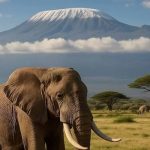
Elephants are another important attraction. Large bulls, including impressive older males with substantial tusks, may be seen around the woodland areas and forested sections of the crater.
The Lerai Forest and nearby habitats are among the areas where visitors may encounter elephants.
3. African Buffaloes
Buffaloes are commonly seen grazing in herds across the crater floor. Their large numbers and impressive appearance make them an important part of the Ngorongoro wildlife experience.
They often gather in open grasslands and around water sources.
4. Black Rhinoceros
Ngorongoro is one of the most important places in Tanzania to look for the endangered black rhinoceros. The species is protected because of its vulnerability to poaching and habitat pressures.
Black rhinos are generally solitary and can be difficult to spot. A guide with experience in the crater may help visitors identify them from a safe and respectful distance.
5. Leopards
Leopards are present in the broader Ngorongoro landscape, although sightings are less predictable than those of lions and buffaloes. Their secretive behaviour and preference for cover make them challenging to find during a standard crater game drive.
Other Mammals Found in Ngorongoro Crater
In addition to the Big Five, the crater supports many other mammals, including:
- Spotted hyenas: Frequently seen searching for food, resting or interacting in family groups.
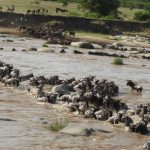
- Wildebeest: Graze in large numbers across the open grasslands.
- Plains zebras: Easily recognised by their black-and-white stripes.
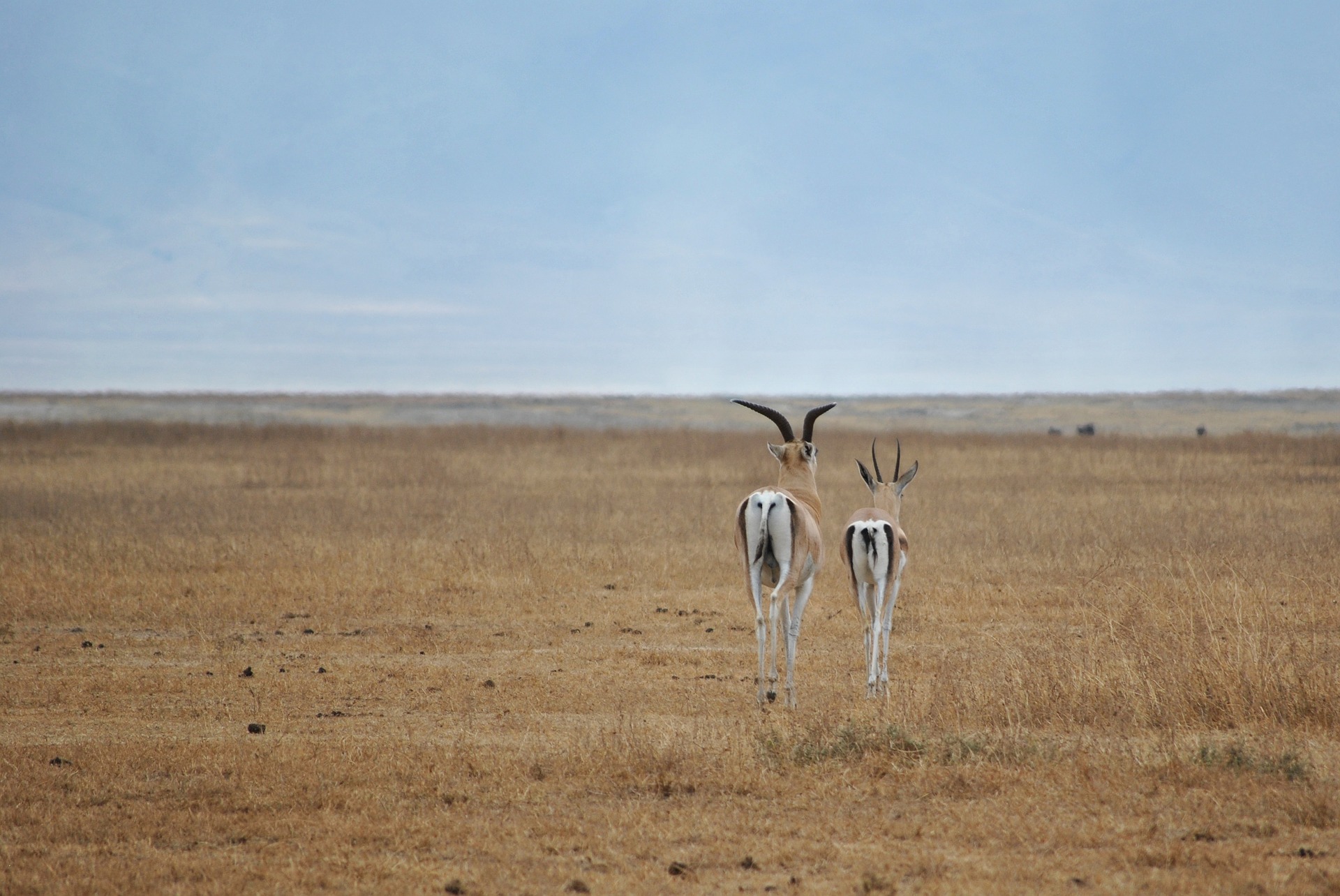
- Thomson’s gazelles: Small, fast antelopes that are common across open plains.
- Grant’s gazelles: Another antelope species adapted to the grassland environment.
- Elands: Large antelopes that may be encountered in the wider conservation area.
- Warthogs: Often seen feeding in open grassland.
- Hippos: Found in permanent water sources and wetlands.
- Jackals: Small predators that may be seen around open plains.
- Waterbucks: Frequently associated with areas close to water.
Are Giraffes Found in Ngorongoro Crater?
Giraffes are generally not found on the crater floor. The steep crater walls and the limited availability of their preferred browsing vegetation help explain their absence from this enclosed landscape.
However, visitors can see giraffes in other parts of the Ngorongoro Conservation Area and on nearby safari routes, depending on the itinerary.
5. Birdwatching in Ngorongoro Crater
Ngorongoro is also an excellent destination for birdwatching. Its combination of wetlands, grasslands, forests, lakes and highland habitats attracts a variety of resident and migratory bird species.
Bird enthusiasts can look for:
- Lesser flamingos
- Greater flamingos
- Crowned cranes
- Kori bustards
- Secretary birds
- Ostriches
- Grey-crowned cranes
- Various eagles and vultures
- Storks
- Herons
- Weavers and other smaller birds
Lake Magadi, a shallow alkaline lake on the crater floor, is particularly interesting for waterbirds and flamingos when conditions are suitable.
The crater rim and surrounding forests also provide opportunities to see forest-associated species. Birdlife varies according to season, water levels and habitat conditions.
Visitors interested in bird photography should consider travelling with a knowledgeable local guide who can identify species and help locate productive birding areas.
6. The Geography and Natural Features of Ngorongoro Crater
The spectacular scenery is one of the defining features of a Ngorongoro safari. From the crater rim, visitors can look down into an enormous volcanic depression surrounded by steep walls and green highland vegetation.
The crater floor contains several different habitats, each supporting a distinct range of wildlife.
Lake Magadi
Lake Magadi is a shallow alkaline lake located within the crater. Its water levels change according to rainfall and seasonal conditions.
The lake attracts flamingos and other waterbirds, particularly when feeding conditions are favourable. Its pale shoreline creates a striking contrast with the surrounding grasslands.
Lerai Forest
Lerai Forest is a woodland habitat on the crater floor, characterised by yellow-barked acacia trees and other vegetation.
It provides shelter and feeding opportunities for elephants, monkeys, birds and other wildlife. The forest is also an interesting area to explore during a game drive.
Ngoitokitok Springs
Ngoitokitok Springs is one of the crater’s notable water sources. It attracts wildlife and provides a scenic stop during a game drive.
There is a designated picnic area nearby where visitors can stop for lunch, subject to the conservation area’s rules. Travellers should remain within designated facilities and follow their guide’s instructions.
The Crater Rim
The crater rim offers some of the most impressive viewpoints in northern Tanzania. Visitors can admire the immense caldera, surrounding highlands and changing cloud formations.
The rim is also home to several safari lodges and camps, allowing guests to enjoy panoramic views of the crater.
Temperatures on the rim can be considerably cooler than on the crater floor, especially in the early morning and evening.
7. Ngorongoro Crater Entry Fees, Concession Fees and Crater Service Fees
Understanding the different Ngorongoro fees is important when planning a Tanzania safari. Visitors may encounter several separate charges depending on their nationality or residency category, accommodation location, vehicle registration and planned activities.
The main charges to understand are:
- Ngorongoro Conservation Area entry fee.
- Accommodation concession fee.
- Ngorongoro Crater service fee.
- Vehicle permit and any additional activity charges.
These fees are administered by the Ngorongoro Conservation Area Authority and should not be confused with Serengeti National Park fees or Lake Manyara National Park fees.
A. Ngorongoro Conservation Area Entry Fees
The entry fee is the charge paid by visitors entering the Ngorongoro Conservation Area. It is generally calculated per person and depends on the visitor’s age and eligibility category.
The NCAA tariff portal currently displays the following base rates for the general conservation-area entry category:
| Visitor category | Adult (16 years and above) | Child (5–15 years) | Below 5 years |
|---|---|---|---|
| Non-East African visitor | USD 60 | USD 20 | Free |
| East African Community citizen | TZS 10,000 | TZS 2,000 | Free |
| Tanzanian citizen | TZS 15,000 | TZS 7,500 | Free |
| Expatriate | USD 30 | USD 10 | Free |
Important: These are the base figures displayed on the NCAA tariff portal. Applicable VAT and any subsequent tariff changes can affect the amount payable. For example, adding 18% VAT to the USD 60 non-East African adult base rate gives USD 70.80. Confirm the final payable amount with the NCAA or your tour operator before travel.
Visitors claiming East African or expatriate rates should carry the required identification or valid residency documents.
B. Ngorongoro Conservation Area Concession Fees
A concession fee is a separate charge associated with accommodation and overnight stays within the Ngorongoro Conservation Area. It is not the same as the general entry fee or the crater service fee.
The NCAA tariff portal displays the following base concession rates:
| Visitor category | Adult (16 years and above) | Child (5–15 years) | Below 5 years |
|---|---|---|---|
| Non-East African visitor | USD 50 | USD 10 | Free |
| East African Community citizen | TZS 30,000 | TZS 10,000 | Free |
| Tanzanian citizen | TZS 30,000 | TZS 10,000 | Free |
Applicable taxes may be added. The exact charge and how it is applied should be confirmed for the specific lodge or camp, particularly when comparing accommodation inside the conservation area with properties outside its boundary.
If you stay in Karatu or another property outside the conservation area, ask your tour operator whether a concession fee applies to your accommodation. Do not automatically assume that every hotel near Ngorongoro charges the same concession fee.
C. Ngorongoro Crater Service Fee
The crater service fee is a separate charge for taking a vehicle down into the crater for a game drive. Unlike the individual entry fee, this charge is calculated per vehicle.
The NCAA tariff portal displays a base crater service charge of:
| Fee | Published base rate |
|---|---|
| Crater service fee | USD 250 per vehicle |
With 18% VAT, this is equivalent to USD 295 per vehicle.
This is an important cost to consider when comparing safari quotations. The fee is not the same as the conservation-area entry charge and is not simply paid once for every passenger.
For visitors travelling in a shared safari vehicle, the vehicle charge may be divided among the passengers, depending on the tour arrangement. In a private safari, the cost may form a larger part of the overall price.
D. Vehicle Permit Fees
Foreign-registered and commercial vehicles may be subject to additional vehicle permit charges. The amount depends on the vehicle’s registration and weight category.
A tour operator should clarify whether vehicle-related NCAA charges are included in the safari quotation.
E. Other Activity Fees
Additional charges may apply for activities such as guided walking safaris, visits to archaeological attractions and cultural experiences. These activities have their own rules and may require advance arrangements.
What Is the Estimated Cost of Visiting Ngorongoro Crater?
The total cost of a crater visit depends on the number of travellers, vehicle arrangements, accommodation, visitor category and activities included in the itinerary.
A typical international visitor’s budget may need to account for:
- Conservation-area entry fees.
- Crater service fee per vehicle.
- Vehicle permit charges where applicable.
- Accommodation concession fees if staying inside the conservation area.
- Safari vehicle and professional guide.
- Accommodation and meals.
- Transport from Arusha, Karatu or another safari destination.
- Optional activities and additional attraction fees.
Booking advice: Ask your safari operator for an itemised quotation showing whether the entry fee, concession fee, crater service fee, vehicle permit, accommodation and taxes are included. This helps avoid unexpected expenses during your trip.
For the latest official tariff information, consult the Ngorongoro Conservation Area Authority tariff portal.
8. What to Expect on a Ngorongoro Crater Safari
A Ngorongoro safari is generally organised around a game drive on the crater floor. Most visitors descend early in the morning, when temperatures are cooler and wildlife may be more active.
The experience combines a scenic drive down the crater wall with several hours of wildlife viewing.
Early-Morning Departure
If you are staying on the crater rim, your driver-guide will normally arrange an early departure. Travellers staying in Karatu or elsewhere outside the conservation area may need to leave earlier to reach the entrance and descent road on time.
The early morning is particularly rewarding because the crater floor can be covered in mist, creating beautiful photography opportunities.
Descending into the Crater
The descent is an exciting part of the experience. The vehicle follows a designated road down the steep crater wall, gradually opening up views of the grasslands, wetlands and wildlife below.
Once on the crater floor, your guide will follow authorised routes and look for animals in different habitats.
Wildlife Game Drive
During the game drive, visitors may encounter lions, buffaloes, zebras, wildebeest, elephants, hyenas, gazelles and other species.
Your guide will explain animal behaviour, the crater’s ecology and the importance of conservation.
A good game drive should balance wildlife viewing with respect for animals and other visitors. Avoid pressuring guides to drive too close to wildlife or leave authorised tracks.
Picnic Lunch
Many full-day crater excursions include a packed lunch at a designated picnic site, such as the area near Ngoitokitok Springs.
Visitors can enjoy lunch while observing the surrounding landscape, but should keep food secure and follow all instructions about wildlife and waste disposal.
Returning to the Crater Rim
After the game drive, the vehicle ascends the crater wall using an authorised route. The drive back may offer another opportunity to enjoy the scenery and take photographs from designated viewpoints.
The crater visit is usually a full-day excursion, although the actual time spent on the floor depends on the itinerary, road conditions and applicable access rules.
9. How to Get to Ngorongoro Crater
Visitors can reach Ngorongoro by road or by air, depending on their budget, travel schedule and preferred safari arrangement.
By Road from Arusha
Arusha is the main starting point for many northern Tanzania safaris. The drive to the Ngorongoro area takes approximately three to four hours, depending on traffic, road conditions and the final destination.
The usual route passes through Makuyuni and Mto wa Mbu before continuing towards Karatu and the Ngorongoro Conservation Area.
The journey offers views of rural settlements, agricultural landscapes, the Great Rift Valley region and the surrounding highlands.
A private 4×4 safari vehicle is the most convenient option for visitors planning a crater game drive.
By Road from Karatu
Karatu is one of the closest towns to the Ngorongoro Conservation Area entrance. Visitors staying in Karatu can reach the entrance relatively quickly, making the town a convenient accommodation base.
The journey from Karatu to the crater rim and descent point takes additional time, so an early departure is still advisable.
By Air
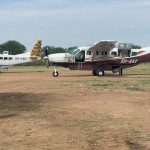
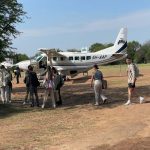
Travellers with limited time can arrange domestic or charter flights to airstrips serving the Ngorongoro region. Ngorongoro’s air access is particularly useful for visitors combining the crater with Serengeti and other remote safari destinations.
Flight routes and schedules vary by season and operator. Confirm the exact arrival airstrip and transfer arrangements before booking.
Can You Use Public Transport to Visit the Crater?
Public transport can take travellers to towns such as Karatu, but it is not a practical way to explore the crater floor. A properly arranged safari vehicle and the required permits are necessary for the crater game drive.
Visitors should organise their transport and permits in advance rather than relying on local buses or ordinary taxis to enter the crater.
10. Where to Stay Near Ngorongoro Crater
Accommodation is an important part of the Ngorongoro experience. Visitors can choose between luxury lodges, mid-range properties, tented camps and more affordable accommodation in Karatu.
There are no ordinary hotels on the crater floor. Accommodation options are found around the crater rim, within the wider conservation area or outside its boundary.
Luxury Accommodation
Luxury lodges provide high levels of comfort, personalised service and impressive views of the surrounding landscape.
Examples include:
- Ngorongoro Crater Lodge: A well-known luxury property overlooking the crater.
- Ngorongoro Serena Safari Lodge: Located on the crater rim, offering panoramic views and convenient access to the crater.
- Lemala Ngorongoro Tented Camp: A tented safari accommodation option in the Ngorongoro area.
These properties are suitable for travellers seeking an exclusive safari experience, excellent service and a convenient location.
Mid-Range Accommodation
Mid-range lodges and camps offer comfortable accommodation without the highest luxury prices.
Options to consider include:
- Ngorongoro Wildlife Lodge: A lodge on the crater rim with views of the caldera.
- Rhino Lodge: A popular accommodation option near the crater rim.
- Ngorongoro Farm House: Located in the Karatu area, offering a countryside setting and access to northern Tanzania’s safari destinations.
Budget Accommodation
Travellers seeking more affordable options can stay in Karatu, where there are guesthouses, small hotels, campsites and budget lodges.
Karatu is a practical base for visitors who want to explore Ngorongoro while controlling accommodation costs. It also provides access to Lake Manyara and other nearby attractions.
Should You Stay on the Crater Rim or in Karatu?
Staying on the crater rim offers convenient access to the crater and spectacular views, but accommodation can be more expensive. Karatu generally provides a wider range of prices and is suitable for travellers on a moderate budget.
Your choice should depend on your safari schedule, preferred comfort level and total travel budget. Remember to confirm whether any accommodation-related concession charges apply.
11. Nearby Attractions and Things to Do Around Ngorongoro
A Ngorongoro safari can be combined with several natural, historical and cultural attractions. Travellers with extra time can explore the wider conservation area and nearby destinations.
Empakaai Crater
Empakaai Crater is another impressive volcanic formation within the Ngorongoro Conservation Area. It is smaller than Ngorongoro Crater and features a deep alkaline lake that attracts flamingos and other birds when conditions are favourable.
One of the main activities is a guided walk from the crater rim towards the lake. Walking in the area must be arranged with the appropriate conservation authority guide or ranger.
Empakaai is a rewarding destination for travellers interested in hiking, birdwatching, scenery and less conventional safari experiences.
Olmoti Crater
Olmoti Crater is another volcanic feature in the Ngorongoro Highlands. Visitors can arrange guided walks to explore its landscape and surrounding highland vegetation.
The area is also associated with the Munge Waterfall, which provides an additional attraction for nature lovers and hikers.
As with other walking activities in the conservation area, visitors should arrange the experience through an authorised guide.
Olduvai Gorge
Olduvai Gorge is one of the world’s most important archaeological locations. It is particularly famous for discoveries that have contributed to the understanding of human evolution.
The gorge contains evidence of early human activity, including fossil remains and stone tools. Its archaeological significance has made it an important destination for researchers and travellers interested in anthropology and prehistory.
Visitors can explore the museum and learn about discoveries made in the wider Olduvai region.
Laetoli Footprints
Laetoli is an important archaeological site within the wider Ngorongoro landscape. It is famous for fossilised hominin footprints dating back approximately 3.6 million years.
These footprints provide valuable evidence about early human ancestors and the development of upright walking.
Access arrangements may be restricted, so travellers should confirm whether a visit is possible as part of their itinerary.
Maasai Cultural Experiences
The Ngorongoro Conservation Area is also home to Maasai communities who have traditionally practised pastoralism in the region.
A properly organised cultural visit can introduce travellers to aspects of Maasai culture, including traditional homes, beadwork, livestock keeping, songs, dances and community life.
Visitors should choose community-approved experiences, ask permission before taking photographs and respect local customs. Cultural visits should benefit the communities involved.
Lake Manyara National Park
Lake Manyara National Park is another rewarding destination on Tanzania’s Northern Safari Circuit. It is known for its lake, forest habitats, birdlife, elephants and tree-climbing lions.
The park can be combined with Ngorongoro for a multi-day northern Tanzania safari.
Serengeti National Park
Serengeti National Park is one of Africa’s most celebrated wildlife destinations. It is famous for its open savannah, large predator populations and the annual wildebeest migration.
Many travellers combine Serengeti with Ngorongoro to enjoy two different but complementary wildlife experiences.
Tarangire National Park
Tarangire is famous for its large elephant populations, ancient baobab trees and seasonal wildlife concentrations around the Tarangire River.
It is an excellent addition to a northern Tanzania safari, particularly for visitors interested in elephants and diverse landscapes.
12. Best Time to Visit Ngorongoro Crater
Ngorongoro Crater can be visited throughout the year because many of its resident wildlife species remain in the crater. However, weather conditions, vegetation, road conditions and visitor numbers vary by season.
June to October: Dry Season
The dry season is one of the most popular periods for visiting Ngorongoro.
During these months:
- Wildlife is often easier to spot in open grasslands.
- Roads are generally in better condition.
- The weather is usually favourable for game drives.
- Photography conditions can be excellent.
- Visitor numbers and accommodation demand may be high.
Travellers planning to visit during the peak season should book accommodation and safari arrangements early.
November to December: Short Rains
The short rains bring fresh vegetation and greener landscapes. The scenery becomes more attractive, and birdwatching can be rewarding as migratory species arrive.
Rainfall is not necessarily continuous, although weather conditions can change quickly.
January to February: Green Season
January and February can offer beautiful green scenery and good wildlife viewing. The wider Serengeti ecosystem is also associated with the wildebeest calving season during this period, making it an attractive time to combine Ngorongoro with the southern Serengeti.
March to May: Long Rains
The long rainy season can bring heavier rainfall, muddy tracks and mist around the crater rim. Some roads may become more challenging, and travel schedules can be affected by weather.
However, the landscape is often lush and green, and there may be fewer visitors than during the peak dry season.
Overall recommendation: June to October is a popular period for classic wildlife viewing, while January and February are attractive for green-season scenery and combining the crater with the southern Serengeti. Ngorongoro remains a year-round safari destination.
13. What to Pack for a Ngorongoro Crater Safari
Packing appropriately will make your visit more comfortable, particularly because temperatures can differ between the crater rim and the floor.
Recommended items include:
- Warm jacket or fleece for early mornings.
- Comfortable trousers and neutral-coloured clothing.
- Closed walking shoes.
- Sun hat or cap.
- Sunglasses.
- Sunscreen.
- Camera and spare batteries.
- Binoculars for wildlife and birdwatching.
- Reusable water bottle.
- Personal medication.
- Light rain jacket, particularly during rainy months.
- Small daypack for personal items.
The crater rim can be cold, especially before sunrise. It is therefore advisable to carry warm clothing even when visiting during the dry season.
14. Rules and Regulations for Visiting Ngorongoro Crater
Ngorongoro is a protected conservation area. Visitors are expected to follow the rules established by the NCAA to protect wildlife, the environment and local communities.
Important guidelines include:
- Use authorised routes: Vehicles must remain on designated roads and tracks unless specifically permitted otherwise.
- Observe speed limits: Follow the speed restrictions in the conservation area and on the crater floor.
- Do not disturb wildlife: Never shout, chase, feed or attempt to approach wild animals.
- Remain inside the vehicle: Visitors should only leave their vehicles at authorised picnic sites and other designated locations.
- Respect wildlife viewing distances: Avoid crowding animals or blocking their movement.
- Do not litter: Carry all rubbish out of the natural environment and follow waste-disposal instructions.
- Respect local communities: Ask permission before photographing Maasai people and follow the rules of cultural sites.
- Follow guide instructions: Your driver-guide is responsible for helping you comply with conservation regulations.
- Arrange walking activities properly: Guided walks outside the crater floor must follow NCAA requirements and be accompanied by authorised personnel.
- Observe access times: Crater descent and exit times are regulated, so plan your game drive accordingly.
These rules help protect the wildlife and preserve the natural experience for future visitors.
15. Sample 3-Day Ngorongoro Crater Safari Itinerary
A three-day safari is a convenient way to experience Ngorongoro and explore some of the surrounding attractions.
Day 1: Arusha to Karatu – Scenic Drive and Cultural Experience
After breakfast, depart from Arusha and drive towards the Ngorongoro region. The journey passes through the Tanzanian countryside, with opportunities to enjoy views of rural settlements, agricultural areas and the Great Rift Valley landscape.
Depending on your schedule, you may visit Mto wa Mbu for a guided cultural experience or explore a local market.
Continue to Karatu, check in at your lodge and spend the remainder of the day relaxing.
Accommodation: Karatu lodge or hotel.
Meal plan: Lunch and dinner, depending on the package.
Day 2: Ngorongoro Crater – Full-Day Wildlife Safari
After an early breakfast, drive towards the Ngorongoro Conservation Area and descend into the crater for a wildlife game drive.
Explore the crater floor in search of lions, elephants, buffaloes, zebras, wildebeest, hyenas, gazelles and, with luck, the endangered black rhinoceros.
Stop at an authorised picnic area for lunch before continuing your game drive.
In the afternoon, ascend the crater wall and return to your accommodation in Karatu or on the crater rim.
Accommodation: Karatu or crater-rim lodge.
Meal plan: Breakfast, lunch and dinner.
Day 3: Olduvai Gorge or Lake Manyara – Return to Arusha
After breakfast, choose an additional excursion depending on your interests and travel schedule.
Visitors interested in history can arrange a visit to Olduvai Gorge to learn about important archaeological discoveries. Alternatively, travel to Lake Manyara National Park for another wildlife and birdwatching experience.
After the excursion, return to Arusha for your onward journey.
Meal plan: Breakfast and lunch, depending on the programme.
This itinerary is flexible and can be adjusted to include Serengeti National Park, Tarangire National Park or additional cultural experiences.
16. Can You Visit Ngorongoro Crater in One Day?
Yes. A one-day Ngorongoro Crater safari is possible, particularly for travellers staying in Arusha or Karatu.
However, it requires an early start and careful planning. Visitors travelling from Arusha should expect several hours of road travel in addition to the game drive.
A typical day trip includes:
- Early departure from Arusha.
- Transfer to the Ngorongoro Conservation Area.
- Descent into the crater.
- Wildlife game drive.
- Picnic lunch at an authorised site.
- Afternoon ascent from the crater.
- Return to Arusha.
A day trip is suitable for travellers with limited time, but a two- or three-day safari provides a more relaxed experience and allows additional time to explore nearby attractions.
17. Is Ngorongoro Crater Worth Visiting?
Ngorongoro is one of Tanzania’s most rewarding wildlife destinations and is particularly suitable for travellers who want to experience a remarkable concentration of animals within a relatively short safari.
Its main attractions include:
- Opportunities to see several Big Five species.
- Excellent chances of encountering lions and buffaloes.
- Important habitat for the endangered black rhinoceros.
- Beautiful volcanic landscapes and crater viewpoints.
- A variety of birds and other wildlife.
- Access to archaeological and cultural attractions.
- Convenient combination with Serengeti, Tarangire and Lake Manyara.
The crater is especially appealing to first-time safari visitors, photographers, families and travellers with limited time who want a memorable wildlife experience.
However, it can become busy during peak safari months. Travelling with a knowledgeable guide and planning an early descent can help improve the experience.
18. Frequently Asked Questions About Ngorongoro Crater
1. Where is Ngorongoro Crater found?
Ngorongoro Crater is located in northern Tanzania, within the Ngorongoro Conservation Area. It is part of the Northern Tanzania Safari Circuit and can be reached by road from Arusha.
2. Why is Ngorongoro Crater called Africa’s Eden?
It is called Africa’s Eden because of its beautiful landscape, permanent water sources and high concentration of wildlife. The crater floor supports many species of mammals and birds throughout the year.
3. What is special about Ngorongoro Crater?
Ngorongoro is the world’s largest intact, unbroken and unfilled volcanic caldera. It is also famous for its wildlife, including lions, elephants, buffaloes, zebras, wildebeest and black rhinoceroses.
4. Can I see the Big Five in Ngorongoro Crater?
Ngorongoro offers opportunities to see lions, elephants, buffaloes and black rhinos. Leopards are present in the wider conservation landscape but are difficult to spot, so seeing all five species is not guaranteed.
5. How much is the Ngorongoro Crater entry fee?
The entry fee depends on the visitor’s nationality or residency status and age. The NCAA tariff portal displays a base adult entry rate of USD 60 for non-East African visitors, before applicable VAT. Confirm the final payable amount before travelling.
6. What is the Ngorongoro concession fee?
The concession fee is an additional charge associated with accommodation within the conservation area. The published base adult rate for non-East African visitors is USD 50, before applicable VAT. The amount and billing arrangement should be confirmed with the accommodation provider or tour operator.
7. How much is the Ngorongoro Crater service fee?
The NCAA tariff portal displays a base crater service fee of USD 250 per vehicle, before applicable VAT. With 18% VAT, this is equivalent to USD 295 per vehicle.
8. Can I visit Ngorongoro Crater without a safari guide?
Visitors should arrange the required permits and vehicle arrangements before travelling. Crater access is regulated, and self-drive visitors must comply with NCAA requirements, including the applicable guide or ranger arrangements. Confirm the current procedure before departure.
9. What is the best month to visit Ngorongoro Crater?
June to October is popular for dry-season wildlife viewing. January and February offer green scenery and can be combined with the southern Serengeti calving season. The crater can be visited throughout the year.
10. How many days do I need in Ngorongoro?
One day is sufficient for a crater game drive. However, two or three days allow a more relaxed safari and provide time to explore attractions such as Olduvai Gorge, Empakaai Crater and nearby Lake Manyara.
11. Are there hotels inside Ngorongoro Crater?
There are no ordinary hotels on the crater floor. Accommodation is available on the crater rim and in the wider conservation area, while Karatu provides additional options outside the conservation area’s boundary.
12. Can I combine Ngorongoro Crater with Serengeti National Park?
Yes. Ngorongoro and Serengeti are commonly combined on northern Tanzania safaris. Visitors can enjoy the crater’s concentrated wildlife and the Serengeti’s extensive plains, predators and seasonal wildebeest migration.
13. Is Ngorongoro suitable for children?
Yes. Children can enjoy wildlife viewing from a safari vehicle, although the long drive and several hours of game viewing may be tiring for younger travellers. Families should choose an itinerary and accommodation suited to their children’s ages.
19. Book a Ngorongoro Crater Safari with Epic Uganda Vacation
A visit to Ngorongoro Crater is an opportunity to discover one of Africa’s most remarkable natural landscapes. From its enormous volcanic walls and open grasslands to its lions, elephants, buffaloes and endangered black rhinoceroses, the crater offers an unforgettable wildlife experience.
At Epic Uganda Vacation, we can help organise a Tanzania safari that combines Ngorongoro with other outstanding destinations, including Serengeti National Park, Tarangire National Park, Lake Manyara and the cultural communities of northern Tanzania.
Whether you are interested in a short Ngorongoro Crater day trip, a three-day wildlife safari or a longer Kenya and Tanzania adventure, we can help arrange transport, accommodation, professional safari guides and a suitable itinerary.
Explore our 14 Days Kenya-Tanzania Classic Wildlife Photo Safari for an extended East African wildlife experience.
Contact Epic Uganda Vacation to start planning your Ngorongoro Crater safari in Tanzania and discover why this remarkable destination is celebrated as Africa’s Eden.
Visit our contact page to request a personalised safari quotation.