Mgahinga Gorilla National Park: Things to Do – Where Gold Meets Silver
Mgahinga Gorilla National Park: Where Gold Meets Silver
Located in the far southwestern corner of Uganda, Mgahinga Gorilla National Park is a remarkable destination where endangered mountain gorillas meet rare golden monkeys beneath the dramatic peaks of the Virunga Volcanoes. Although it covers only 33.7 square kilometres, making it Uganda’s smallest national park, Mgahinga offers an extraordinary combination of wildlife, volcanic scenery, montane forests and cultural heritage.
The park forms part of the transboundary Virunga Conservation Area, which connects protected landscapes in Uganda, Rwanda and the Democratic Republic of Congo. It shares its boundaries with Rwanda’s Volcanoes National Park and the Democratic Republic of Congo’s Virunga National Park.
Mgahinga is particularly famous for mountain gorilla trekking, golden monkey tracking and hiking its three volcanic mountains: Mount Muhabura, Mount Gahinga and Mount Sabinyo. Visitors can also experience the heritage of the Batwa people, the Indigenous community whose history and traditional forest knowledge are closely connected to this landscape.
The phrase “Where Gold Meets Silver” captures the park’s special appeal: the golden coats of the golden monkeys and the silverbacks of the mountain gorilla families that inhabit the Virunga forests.
Where Is Mgahinga Gorilla National Park Located?
Mgahinga Gorilla National Park is situated in Kisoro District in southwestern Uganda, close to the borders of Rwanda and the Democratic Republic of Congo. It lies approximately 10–15 kilometres from Kisoro town, depending on the route and starting point.
The park protects the Ugandan slopes of three Virunga volcanoes:
- Mount Muhabura – 4,127 metres above sea level.
- Mount Sabinyo – approximately 3,669 metres above sea level.
- Mount Gahinga – approximately 3,474 metres above sea level.
Together with Volcanoes National Park in Rwanda and Virunga National Park in the Democratic Republic of Congo, Mgahinga forms part of the wider Virunga Conservation Area, an important habitat for mountain gorillas and other wildlife.
The park’s name comes from the local word Gahinga, referring to small piles of volcanic stones cleared from farmland. The surrounding landscape features volcanic slopes, bamboo forests, montane vegetation, swamps and Afro-alpine plants.
History of Mgahinga Gorilla National Park
The history of Mgahinga is closely connected to mountain gorilla conservation in the Virunga region.
The area was initially protected as a sanctuary in 1930 during the British administration. It later received game reserve status in 1964 before becoming a national park in 1991.
The park was established primarily to protect endangered mountain gorillas and their forest habitat. It also conserves other wildlife, including golden monkeys, forest elephants, buffaloes, duikers and numerous bird species.
Today, Mgahinga is managed by the Uganda Wildlife Authority and forms part of the Bwindi-Mgahinga Conservation Area management unit.
Wildlife and Biodiversity in Mgahinga Gorilla National Park
Despite its relatively small size, Mgahinga supports a variety of wildlife and vegetation types. Its changing altitude creates different habitats, from montane forests and bamboo stands to heathland and Afro-alpine vegetation.
1. Mountain Gorillas
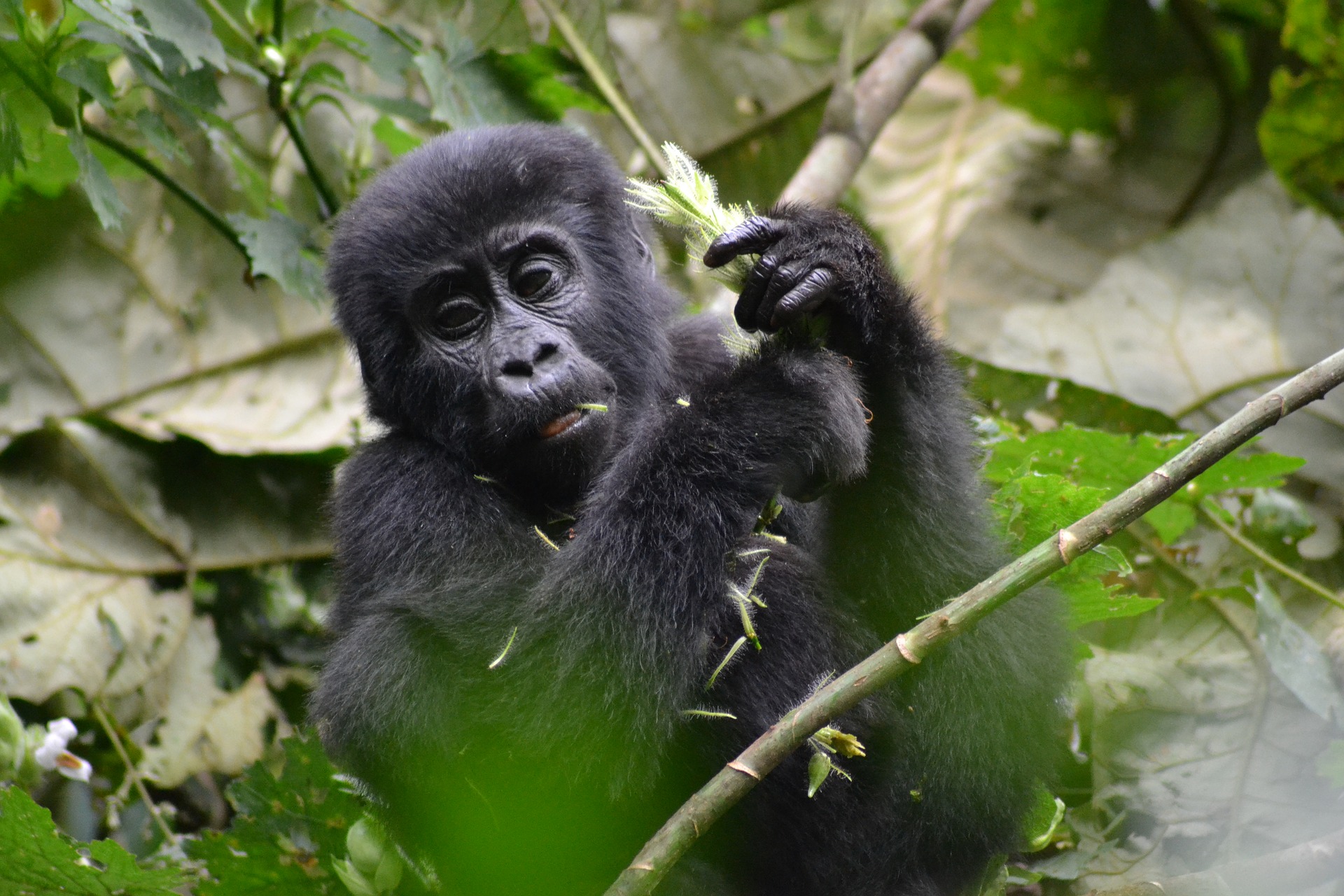
Mountain gorillas are among the park’s most important attractions. Mgahinga protects part of the Virunga mountain gorilla population, which moves through forest habitats shared by Uganda, Rwanda and the Democratic Republic of Congo.
The park is known for the habituated Nyakagezi Gorilla Family, which has historically been the main group available for tourism in Mgahinga. Because gorillas can move across international park boundaries, their location and tourism arrangements may change.
Visitors should book through the designated Ntebeko entry point and follow Uganda Wildlife Authority’s allocation arrangements. A particular family should not be assumed to be guaranteed without confirmation.
2. Golden Monkeys
Mgahinga is the only national park in Uganda where visitors can undertake golden monkey tracking. These rare and endangered primates are associated with the bamboo forests of the Virunga Mountains.
Golden monkeys are recognised by their golden-orange patches, expressive faces and lively behaviour. They often move in groups through bamboo vegetation, feeding, jumping between branches and interacting with one another.
The opportunity to observe these primates in their natural habitat makes Mgahinga one of Uganda’s most distinctive primate destinations.
3. Birdlife
Mgahinga is also an excellent destination for birdwatching, particularly for visitors interested in Albertine Rift and montane forest species.
Approximately 79 bird species were recorded in an earlier park biodiversity assessment, including species associated with the East Congo montane region. Birders may look for:
- Rwenzori Turaco
- Rwenzori Batis
- Kivu Ground Thrush
- Archer’s Ground Robin
- Dusky Crimsonwing
- Mountain Masked Apalis
- Blue-headed Sunbird
- Grauer’s Swamp Warbler
Bird sightings depend on habitat, season and the skill of the guide. A specialist birding guide can help visitors locate and identify forest species by their calls and appearance.
4. Other Mammals
Other mammals recorded in the park include forest elephants, buffaloes, bushbucks, black-fronted duikers, giant forest hogs and various smaller mammals.
These animals inhabit different vegetation zones and are not always easy to see in the dense forest. The park’s main wildlife experiences remain gorilla trekking and golden monkey tracking.
Top Things to Do in Mgahinga Gorilla National Park
Mgahinga offers several activities for travellers interested in wildlife, adventure, birdwatching and cultural experiences.
1. Mountain Gorilla Trekking
Mountain gorilla trekking is one of the leading activities in Mgahinga Gorilla National Park. The experience takes visitors into the forested slopes of the Virunga Mountains to search for a habituated mountain gorilla family.
The park’s Nyakagezi group is the best-known habituated family associated with Mgahinga tourism. However, gorilla movements and Uganda Wildlife Authority’s allocation procedures determine the arrangements for each trekking day.
How Gorilla Trekking Works
Gorilla trekking begins with registration and a briefing at the Ntebeko Visitor Centre. Rangers explain the trekking rules, safety procedures and expectations before guiding visitors into the forest.
The search may take several hours depending on where the gorillas are located and how far they have moved. The terrain can include steep slopes, muddy paths, thick vegetation and uneven ground.
Once the gorillas are found, visitors are allowed one hour to observe them under the supervision of the ranger guide.
During this encounter, visitors may see:
- A dominant silverback watching over the family.
- Adult females feeding and caring for their young.
- Young gorillas playing and climbing through vegetation.
- Juveniles interacting with other family members.
- Gorillas feeding, resting or moving through the forest.
Every gorilla encounter is different, making each trek a unique wildlife experience.
Gorilla Trekking Requirements
Visitors need a valid gorilla trekking permit issued by the Uganda Wildlife Authority. The minimum age for standard gorilla trekking is 15 years.
A reasonable level of fitness is recommended because the trek can involve challenging terrain. Travellers should carry waterproof hiking boots, long trousers, long-sleeved clothing, drinking water, a rain jacket and a small backpack.
Follow the ranger’s instructions at all times, maintain the required distance from the gorillas and avoid flash photography. Visitors who are unwell with potentially infectious symptoms should inform the park authorities before trekking.
Read more about gorilla trekking in Mgahinga Gorilla National Park.
2. Golden Monkey Tracking
Golden monkey tracking is another highlight of Mgahinga and a wonderful activity to combine with mountain gorilla trekking.
The golden monkeys live mainly in the bamboo forests on the slopes of the Virunga Volcanoes. Their striking golden-orange fur, playful behaviour and fast movements make them exciting to observe.
What to Expect During Golden Monkey Tracking
The activity starts with a briefing at the Ntebeko Visitor Centre. Visitors are accompanied by trained guides and trackers who lead them into the forest to locate the habituated golden monkey group.
The trek usually involves walking through bamboo vegetation and forest trails. Once the monkeys are located, visitors are generally allowed one hour to observe and photograph them.
You may see golden monkeys:
- Feeding on bamboo shoots and other vegetation.
- Jumping between branches.
- Grooming and interacting with other group members.
- Moving through the bamboo canopy.
- Caring for young monkeys.
Golden monkey tracking is generally less strenuous than some gorilla treks, although the experience still involves walking on uneven forest trails.
Mgahinga also offers a Golden Monkey Habituation Experience, subject to availability and current Uganda Wildlife Authority arrangements. This is a separate activity from standard golden monkey tracking and allows visitors to spend more time with researchers and habituation teams.
Read more about golden monkey tracking in Uganda.
3. Climb Mount Muhabura
Mount Muhabura, also written as Muhavura, is the highest of the three volcanoes in Mgahinga Gorilla National Park, rising to 4,127 metres above sea level.
The name is commonly interpreted as “guide” in the local language. Its steep, cone-shaped profile makes it one of the most challenging hiking destinations in the Virunga range.
The climb is normally completed in one day, although the total duration depends on weather, trail conditions and the fitness of the hikers. An ascent and descent can take approximately 8–10 hours.
At the summit, hikers are rewarded with views of the Virunga Volcanoes and surrounding landscapes. On clear days, views may extend towards Lake Edward and Queen Elizabeth National Park, with the Rwenzori Mountains visible in favourable conditions.
A small crater lake is located at the summit.
Hiking advice: Mount Muhabura is a demanding high-altitude climb. Visitors should be physically prepared, carry sufficient water and follow the guidance of their UWA ranger. Weather can change quickly at higher elevations.
4. Climb Mount Sabinyo
Mount Sabinyo is one of the most distinctive volcanoes in the Virunga range. Its jagged summit resembles an old man’s teeth, giving rise to its local nickname, “Old Man’s Teeth.”
The mountain rises to approximately 3,669 metres above sea level. Its slopes are covered with montane forest and other high-altitude vegetation.
The Mount Sabinyo hike is particularly famous because its third summit lies at the meeting point of Uganda, Rwanda and the Democratic Republic of Congo. Hikers who reach this point can stand at the three-country border area.
The trail is challenging, with steep sections, ridges, ladders and deep ravines. A full-day hike is generally required.
The experience is especially rewarding for adventurous travellers interested in mountain landscapes, photography and the unique geography of the Virunga region.
5. Climb Mount Gahinga
Mount Gahinga is the lowest of the three volcanoes in Mgahinga, standing at approximately 3,474 metres above sea level.
Its name is associated with the small volcanic stones cleared from farmland in the surrounding area. The mountain is characterised by bamboo forests, montane vegetation and a high-altitude swamp near its summit.
The hike offers an opportunity to explore the park’s changing vegetation zones, with the bamboo forest being one of its most attractive features.
Compared with Muhabura and Sabinyo, Gahinga is often considered a less demanding option, although it still requires preparation and a guided climb.
Visitors should arrange the hike with Uganda Wildlife Authority and follow the ranger’s instructions throughout the experience.
6. Batwa Trail Cultural Experience
The Batwa Trail offers visitors an opportunity to learn about the history, heritage and traditional forest knowledge of the Batwa Indigenous people.
The Batwa have long-standing cultural and historical connections to the forests of southwestern Uganda. Before the establishment of the national park, many Batwa families lived in and depended on the forest for their livelihoods, food, shelter and traditional medicine.
The creation of the protected area led to their displacement from the forest, profoundly changing their relationship with their ancestral landscape.
The guided Batwa experience provides an opportunity to learn about this history through stories, demonstrations and visits to important cultural sites, including Garama Cave.
Depending on the programme, visitors may learn about:
- Traditional forest food gathering.
- The use of medicinal plants.
- Traditional hunting and survival knowledge.
- Fire-making techniques.
- Forest shelters and historical settlements.
- Batwa music, storytelling and cultural practices.
The experience should be approached respectfully. The Batwa are a living Indigenous community, not simply a historical attraction. Visitors are encouraged to listen to community guides, respect individual privacy and support locally organised tourism initiatives.
7. Visit Garama Cave
Garama Cave is an important cultural site associated with the history of the Batwa in the Mgahinga area.
The cave is located within the park and is included in the guided Batwa cultural experience. It is traditionally associated with the Batwa’s historical use of the forest landscape.
A guided visit provides an opportunity to hear stories about the community’s history and its relationship with the forest.
Visitors should arrange access through the authorised cultural experience and follow the guide’s instructions.
8. Birdwatching in Mgahinga
Mgahinga is a rewarding destination for birdwatchers interested in montane forest birds and Albertine Rift species.
The park’s different vegetation zones support a variety of birds, from forest-dwelling species to those associated with bamboo and high-altitude habitats.
Some of the notable species to look for include the Rwenzori Turaco, Rwenzori Batis, Kivu Ground Thrush, Dusky Crimsonwing and Archer’s Ground Robin.
Birdwatching can be combined with gorilla trekking, golden monkey tracking or a guided nature walk. Visitors interested in specialist birding should consider hiring a knowledgeable local guide.
9. Nature Walks and Scenic Viewing
Not every visitor to Mgahinga needs to undertake a demanding mountain climb. The park also offers guided nature walks and opportunities to appreciate its landscapes at a more relaxed pace.
The trails around the Ntebeko area provide views of the volcanic slopes, forest vegetation and surrounding countryside.
A guided walk can introduce visitors to the park’s plants, birds, smaller wildlife and conservation history.
The exact route and availability should be confirmed with the park authorities.
Best Time to Visit Mgahinga Gorilla National Park
Mgahinga Gorilla National Park can be visited throughout the year. However, the weather influences hiking conditions, forest trails and the overall trekking experience.
Dry Seasons: June to August and December to February
These months are generally popular for gorilla trekking, golden monkey tracking and volcano hiking.
The trails may be less muddy, and hiking conditions can be more manageable. However, rain is still possible because Mgahinga is a high-altitude rainforest environment.
Visitors planning to travel during these busy periods should book permits and accommodation in advance.
Rainier Seasons: March to May and September to November
The wetter months can bring heavier rainfall, making forest trails slippery and mountain hikes more challenging.
However, the park remains green and beautiful, and the wetter periods may suit travellers who prefer quieter travel conditions.
For visitors planning to climb Muhabura or Sabinyo, weather conditions are especially important. It is advisable to allow some flexibility in the itinerary in case rain or poor visibility affects hiking arrangements.
Where to Stay in Mgahinga Gorilla National Park
Accommodation for Mgahinga visitors is available near the Ntebeko entrance, around the park and in Kisoro town. Travellers can choose from luxury lodges, midrange accommodation, community camps and guesthouses.
Luxury Accommodation
Mount Gahinga Lodge
Mount Gahinga Lodge is a luxury accommodation option near the Ntebeko entrance. Its location makes it convenient for visitors planning gorilla trekking, golden monkey tracking and volcano hiking.
The lodge also offers an opportunity to learn about the local community and the cultural heritage of the region.
Midrange Accommodation
Lake Mulehe Safari Lodge
Lake Mulehe Safari Lodge is located near Lake Mulehe, within the wider Kisoro area. It is an option for travellers looking for comfortable accommodation while exploring Mgahinga and southern Bwindi.
Mutanda Lake Resort
Mutanda Lake Resort is set beside Lake Mutanda and offers a scenic base for visitors combining gorilla trekking with relaxation, canoeing and lake activities.
Budget and Community Accommodation
Amajambere Iwacu Community Camp
Amajambere Iwacu Community Camp is a community-based accommodation option near Mgahinga. It is suitable for travellers looking for a simpler stay and an opportunity to support local tourism initiatives.
Ntebeko Homestay
Ntebeko Homestay offers a family-run rural accommodation experience close to the park entrance. It is an option for visitors seeking a more personal stay in the local community.
Accommodation in Kisoro Town
Kisoro town provides additional guesthouses, hotels and lodges for visitors who prefer to stay outside the immediate park entrance area. When booking, consider the early morning briefing time and the road journey to Ntebeko.
Accommodation availability, facilities and prices should be confirmed directly before travel.
How to Get to Mgahinga Gorilla National Park
Mgahinga can be reached by road or air. The best route depends on where your safari begins.
From Kampala or Entebbe
The journey from Kampala or Entebbe to Mgahinga is approximately 500 kilometres by road, depending on the route. The drive normally takes around 9–10 hours, although traffic, road conditions and stopovers can affect travel time.
The common route passes through Masaka, Mbarara, Kabale and Kisoro before continuing to the park.
Travellers are advised to spend the night near Mgahinga before their trekking or hiking activity.
By Air
Travellers can arrange a domestic flight from Entebbe to Kisoro Airstrip, subject to airline schedules and operational conditions.
From Kisoro Airstrip, a road transfer is required to reach the lodge or park entrance.
Domestic flights can reduce the amount of time spent travelling by road, although availability and luggage restrictions should be checked before booking.
From Kigali, Rwanda
Mgahinga can also be reached from Kigali by road through northern Rwanda and the Cyanika border crossing into Uganda.
This route is useful for visitors combining Rwanda and Uganda in one safari. Travellers must have the appropriate travel documents and confirm vehicle and border-crossing arrangements before departure.
Combining Mgahinga with Other Uganda Safari Destinations
Mgahinga’s location in southwestern Uganda makes it possible to combine gorilla trekking and golden monkey tracking with other destinations.
1. Bwindi Impenetrable National Park
Bwindi is another important mountain gorilla destination in Uganda. It offers several trekking sectors, including Buhoma, Ruhija, Rushaga and Nkuringo.
Travellers can combine Mgahinga and Bwindi for a longer primate safari, subject to permit availability and suitable transfer arrangements.
2. Lake Mutanda
Lake Mutanda is a beautiful highland lake surrounded by rolling hills and views of the Virunga Volcanoes.
Visitors can enjoy canoeing, boat trips, birdwatching and lakeside relaxation. It is an excellent place to unwind after a challenging gorilla trek or mountain hike.
3. Lake Bunyonyi
Lake Bunyonyi is another scenic destination in southwestern Uganda, known for its islands, terraced hills and peaceful atmosphere.
Activities include canoeing, boat excursions, birdwatching and cultural visits. It can be added to a gorilla trekking itinerary for a relaxing stop.
4. Queen Elizabeth National Park
Queen Elizabeth National Park offers a contrasting safari experience, with savannah wildlife, crater lakes, game drives and boat cruises along the Kazinga Channel.
Visitors can combine gorilla trekking in Mgahinga with wildlife viewing in Queen Elizabeth National Park for a varied Uganda safari.
5. Lake Mburo National Park
Lake Mburo National Park is another possible addition to a longer Uganda safari. The park is known for zebras, impalas, elands, buffaloes and opportunities for game drives, boat trips and guided nature walks.
Suggested 4-Day Mgahinga Gorilla and Golden Monkey Safari
A four-day itinerary provides time to enjoy both mountain gorilla trekking and golden monkey tracking without rushing between activities.
Day 1: Transfer to Mgahinga Gorilla National Park
Travel from Entebbe or Kampala to Kisoro, enjoying the changing scenery of southwestern Uganda. Arrive at your lodge near Mgahinga, check in and relax.
Day 2: Mountain Gorilla Trekking
After an early breakfast, transfer to the Ntebeko Visitor Centre for registration and briefing. Join the ranger-guided trek into the forest to search for the habituated mountain gorilla family allocated by the park authorities.
Spend one hour observing the gorillas before returning to your lodge.
Day 3: Golden Monkey Tracking and Batwa Cultural Experience
After breakfast, report to the park headquarters for golden monkey tracking. Explore the bamboo forest with experienced guides and observe the golden monkeys in their natural habitat.
In the afternoon, enjoy an optional Batwa cultural experience, learning about the Indigenous community’s heritage and historical relationship with the forest.
Day 4: Return to Kampala or Entebbe
After breakfast, begin the return journey to Kampala or Entebbe. Alternatively, extend your safari to Lake Bunyonyi, Lake Mutanda or Queen Elizabeth National Park.
Responsible Tourism and Conservation in Mgahinga
Tourism plays an important role in supporting conservation and livelihoods around Mgahinga Gorilla National Park.
Mountain gorillas and golden monkeys depend on protected forest habitats, while neighbouring communities have a long-standing relationship with the landscape. Responsible tourism can help support conservation through park fees, local employment, guiding services and community-based activities.
Visitors can contribute by:
- Following all wildlife viewing regulations.
- Respecting the instructions of park rangers and guides.
- Hiring local porters where available.
- Supporting community-owned accommodation and cultural experiences.
- Buying crafts directly from local artisans.
- Avoiding littering and unnecessary disturbance.
- Respecting the privacy, dignity and cultural rights of the Batwa and other local communities.
Conservation is most effective when wildlife protection and the well-being of neighbouring communities are considered together.
Why Visit Mgahinga Gorilla National Park with Epic Uganda Vacation?
At Epic Uganda Vacation, we help travellers discover Uganda through carefully planned wildlife, primate, hiking and cultural safaris.
A visit to Mgahinga can be tailored around your interests, whether you want to track mountain gorillas, encounter golden monkeys, climb the Virunga Volcanoes or learn about the cultural heritage of the Batwa community.
We can assist with:
- Gorilla trekking permit arrangements.
- Golden monkey tracking and habituation experience planning.
- Accommodation selection around Mgahinga and Kisoro.
- Private safari transport and experienced driver-guides.
- Volcano hiking arrangements.
- Batwa cultural experiences.
- Multi-destination Uganda and Rwanda safari itineraries.
Whether you are planning a short gorilla trekking holiday or a longer adventure through southwestern Uganda, we can help organise a safari that suits your travel dates, budget and interests.
Plan your Mgahinga Gorilla National Park safari with Epic Uganda Vacation.
Contact our team: https://www.epicugandavacation.com/contact-us/
Frequently Asked Questions About Mgahinga Gorilla National Park
1. Why is Mgahinga Gorilla National Park famous?
Mgahinga is famous for mountain gorilla trekking, golden monkey tracking, the three Virunga volcanoes and the Batwa cultural experience. It is also an important conservation area for montane forest biodiversity.
2. How big is Mgahinga Gorilla National Park?
Mgahinga covers approximately 33.7 square kilometres, making it Uganda’s smallest national park.
3. How many gorilla families are in Mgahinga?
Mgahinga is best known for the habituated Nyakagezi Gorilla Family. Gorilla movements across the Virunga Conservation Area and UWA’s daily allocation arrangements can influence the trekking experience.
4. Can I see golden monkeys in Mgahinga?
Yes. Mgahinga is the only national park in Uganda where visitors can undertake golden monkey tracking. The monkeys inhabit the bamboo forests on the slopes of the Virunga Volcanoes.
5. What are the three volcanoes in Mgahinga?
The three volcanoes are Mount Muhabura (4,127 metres), Mount Sabinyo (approximately 3,669 metres) and Mount Gahinga (approximately 3,474 metres).
6. Can you stand in three countries at the summit of Mount Sabinyo?
The third summit of Mount Sabinyo is located at the meeting point of Uganda, Rwanda and the Democratic Republic of Congo. Hikers who reach this summit can stand at the three-country border area.
7. How long does gorilla trekking take in Mgahinga?
The trek may take several hours, depending on the location and movements of the gorillas. Once the family is found, visitors are allowed one hour to observe the gorillas.
8. Is Mgahinga suitable for birdwatching?
Yes. The park supports montane forest and Albertine Rift bird species, including the Rwenzori Turaco, Rwenzori Batis and other highland birds.
9. What is the Batwa Trail?
The Batwa Trail is a guided cultural experience that introduces visitors to the history, traditional knowledge and forest heritage of the Batwa Indigenous people. It includes storytelling and demonstrations at culturally important sites such as Garama Cave.
10. How many days do I need in Mgahinga?
A two- or three-day visit can provide time for one main activity and some additional exploration. A four-day itinerary is suitable for travellers who want to combine gorilla trekking, golden monkey tracking and a Batwa cultural experience.
11. What is the best time to visit Mgahinga?
The drier periods from June to August and December to February are popular for trekking and hiking. However, Mgahinga can be visited throughout the year, and rain is possible in every season.
12. Where should I stay when visiting Mgahinga?
Visitors can stay near the Ntebeko entrance, at lodges around Lake Mutanda or Lake Mulehe, or in Kisoro town. Options include Mount Gahinga Lodge, Lake Mulehe Safari Lodge, Mutanda Lake Resort and Amajambere Iwacu Community Camp.
Conclusion
Mgahinga Gorilla National Park may be Uganda’s smallest national park, but its wildlife, scenery and cultural heritage make it one of the country’s most distinctive safari destinations. From tracking endangered mountain gorillas and playful golden monkeys to climbing the dramatic Virunga Volcanoes, the park offers a wide range of experiences for nature lovers and adventure seekers.
Its combination of golden monkeys and silverback mountain gorillas gives meaning to the description “Where Gold Meets Silver.” Add the cultural heritage of the Batwa, exceptional birdlife and beautiful highland landscapes, and Mgahinga becomes an essential destination for anyone exploring southwestern Uganda.
Plan your visit with Epic Uganda Vacation and discover the remarkable wildlife and landscapes of Mgahinga Gorilla National Park.