Mount Muhabura Hiking: A Complete Guide to Rwanda and Uganda’s Virunga Volcano
Mount Muhabura hiking is an unforgettable adventure for travellers seeking a challenging mountain climb in East Africa. Rising to 4,127 metres (13,540 feet) above sea level, Mount Muhabura, also spelled Mount Muhavura, is one of the highest volcanoes in the Virunga Mountains. Its steep slopes, distinctive cone-shaped summit, and crater lake make it a remarkable destination for experienced hikers and adventurous travellers.
Located on the border between Uganda and Rwanda, Mount Muhabura forms part of two protected areas: Mgahinga Gorilla National Park in Uganda and Volcanoes National Park in Rwanda. The mountain offers a strenuous one-day hiking experience, rewarding determined climbers with spectacular views of the surrounding volcanic landscape.
Whether you are planning a mountain hiking safari in Uganda or a Rwanda adventure, this guide covers Mount Muhabura’s location, hiking experience, permit fees, preparation requirements, and nearby attractions.
Where Is Mount Muhabura Located?
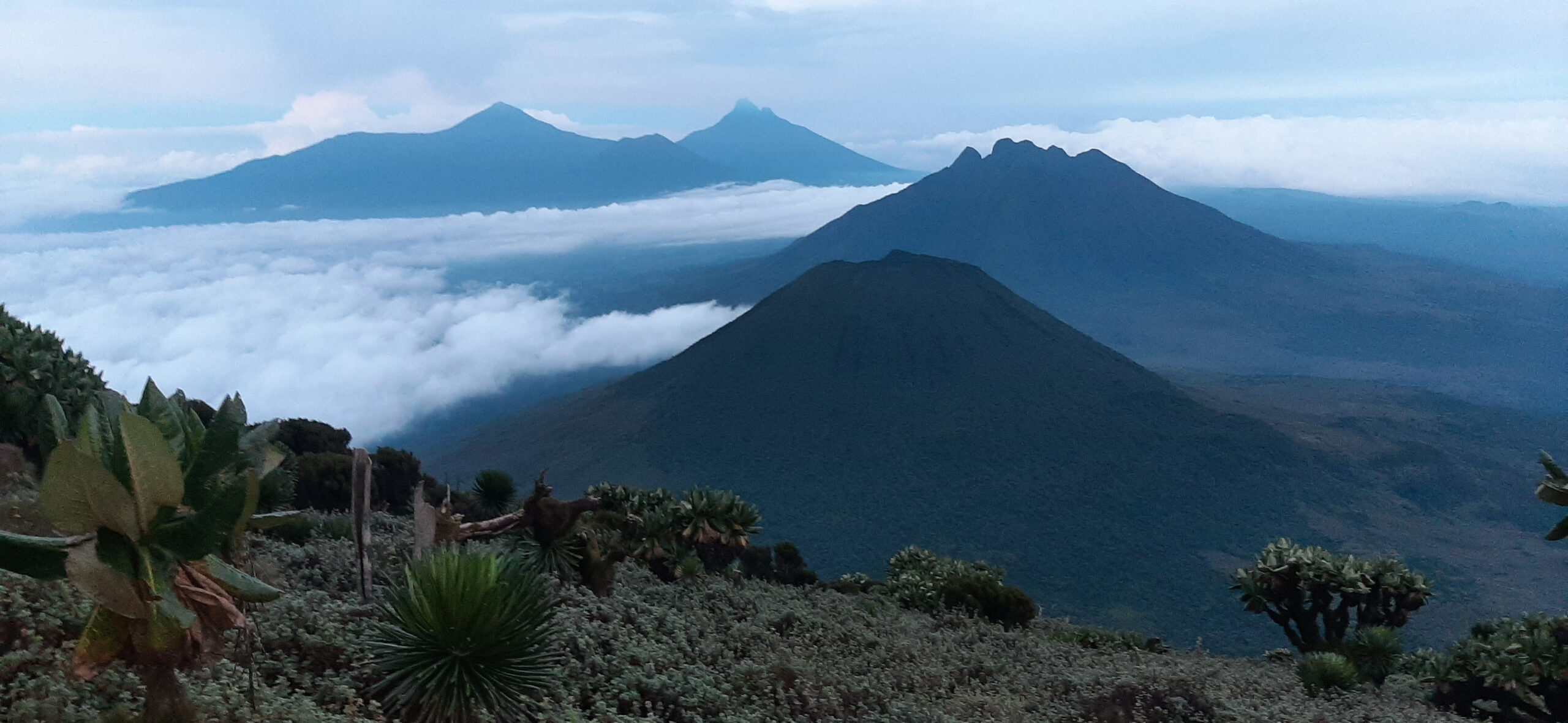
Mount Muhabura lies along the Uganda–Rwanda border within the Virunga Mountains, a chain of volcanic peaks in the Albertine Rift region of East Africa. The mountain rises to 4,127 metres, making it the third-highest of the eight major Virunga volcanoes.
The Ugandan side falls within Mgahinga Gorilla National Park, while the Rwandan side lies within Volcanoes National Park.
Mount Muhabura is known for its steep, symmetrical volcanic cone, which makes it a prominent landmark visible from many areas of southwestern Uganda and northern Rwanda.
The name Muhabura means “the guide” in Kinyarwanda. The name is traditionally associated with the mountain’s usefulness as a landmark for travellers navigating the surrounding region.
Although Mount Muhabura is an extinct or inactive volcano, it remains an important feature of the Virunga landscape. Its slopes support montane vegetation and wildlife, while the summit contains a small crater lake.
Hiking Mount Muhabura
Hiking Mount Muhabura is a demanding one-day adventure that requires good physical fitness, endurance, and determination. The steep ascent, high altitude, and changing weather conditions make it a challenging climb, particularly for travellers who are not accustomed to mountain hiking.
The hike can be arranged from either Uganda or Rwanda, subject to the applicable park regulations and permit availability. Your starting point depends on which side of the mountain you choose to climb.
Hiking Mount Muhabura from Uganda
On the Ugandan side, the climb takes place through Mgahinga Gorilla National Park, which is managed by the Uganda Wildlife Authority (UWA).
Hikers generally report to the park headquarters at Ntebeko for registration and a briefing before proceeding to the trailhead with their guides. Park staff provide instructions about the route, safety procedures, and what to expect during the climb.
The ascent involves steep trails through montane vegetation, with changing conditions as you gain altitude. Hikers should be prepared for muddy sections, cold temperatures, and limited visibility if clouds gather around the summit.
For visitors staying in Kisoro or exploring southwestern Uganda, Mount Muhabura is an excellent addition to a mountain hiking itinerary.
Hiking Mount Muhabura from Rwanda
The Rwandan route is managed through Volcanoes National Park. Hikers are required to follow the Rwanda Development Board’s registration and permit procedures, with reporting at the designated visitor registration centre in Kinigi.
After the briefing, park guides lead the group along the mountain trail. The route involves a steep climb, and hikers must follow the instructions of their guides throughout the expedition.
For visitors exploring northern Rwanda, Mount Muhabura can be combined with other activities in Volcanoes National Park, including gorilla trekking, golden monkey tracking, and hiking Mount Bisoke.
Mount Muhabura Hiking Experience: What to Expect
The Mount Muhabura hike generally begins early in the morning to allow sufficient time for the ascent and descent within daylight hours.
Before setting off, hikers attend a briefing covering trail conditions, safety requirements, the expected duration, and the importance of staying with the group.
The climb is physically demanding, and the pace depends on individual fitness, weather, and trail conditions. Regular rest breaks allow hikers to recover, drink water, and adjust to the increasing altitude.
The Ascent and Rest Stops
As you climb Mount Muhabura, the trail becomes progressively steeper. Rest stops along the route provide opportunities to catch your breath and appreciate the surrounding volcanic scenery.
The ascent involves considerable elevation gain, so hikers should maintain a steady pace rather than rushing towards the summit. Those who struggle with fatigue or altitude symptoms should inform their guide and follow the guide’s advice about whether to continue.
The higher you climb, the colder and more exposed the mountain becomes. Weather conditions may change quickly, making suitable clothing and reliable hiking boots essential.
Reaching the Summit
The summit of Mount Muhabura stands at 4,127 metres above sea level. At the top, hikers can discover the mountain’s small crater lake and enjoy views of the neighbouring Virunga volcanoes when weather conditions permit.
On clear days, the surrounding landscape offers impressive views across the mountainous border region of Uganda and Rwanda. The summit experience provides a rewarding conclusion to a challenging climb.
Important: The crater lake is not a designated swimming attraction. Do not enter the water; follow park guidance and respect the fragile summit environment.
The descent can also be demanding, particularly on steep or slippery sections. Hikers should allow enough time to return safely and follow the guide’s instructions throughout the journey.
How Difficult Is Mount Muhabura Hiking?
Mount Muhabura is considered a strenuous hike because of its steep gradient, high elevation, and the requirement to complete the trek in one day.
You do not necessarily need technical mountaineering skills, but you should be physically prepared for several hours of uphill and downhill walking.
The hike may be suitable for:
-
Experienced hikers seeking a challenging volcanic climb.
-
Fit travellers who regularly undertake long walks or hill hikes.
-
Adventure travellers exploring the Virunga Mountains.
-
Visitors combining hiking with a broader Uganda or Rwanda safari.
Travellers who are new to hiking should prepare with regular walking, hill training, stair climbing, and endurance exercises before their trip.
The published Rwanda Development Board requirements set the minimum age for hiking Mount Muhabura at 15 years. Confirm the current rules with the relevant park authority before booking.
Mount Muhabura Hiking Permit Fees
A valid hiking permit is required to climb Mount Muhabura. The fee depends on whether you hike from Uganda or Rwanda and on your visitor category.
Rwanda Mount Muhabura Hiking Fees
The Rwanda Development Board’s online booking portal publishes the following adult permit rates:
| Visitor category | Published fee |
|---|---|
| International visitors | US$100 |
| Foreign residents in Rwanda | US$75 |
| East African citizens | US$60 |
| Foreign residents in East African countries | US$80 |
| Rwandan citizens | RWF 5,000 |
These are published rates and should be reconfirmed before travel. Eligibility for resident rates may require appropriate identification and proof of residency.
Uganda Mount Muhabura Hiking Fees
Mount Muhabura hikes on the Ugandan side are managed by the Uganda Wildlife Authority through Mgahinga Gorilla National Park. The applicable charges should be confirmed directly with UWA or your tour operator, as Uganda’s conservation tariffs and activity arrangements may change.
The Ugandan and Rwandan permit systems are separate. A permit for one side should not be assumed to cover a hike from the other country.
What Is Included in the Hiking Permit?
Confirm the exact inclusions with the relevant authority before making payment. Depending on the arrangements, transport to the trailhead, accommodation, porter services, meals, and personal hiking equipment may cost extra.
For assistance organising your trip, contact Epic Uganda Vacation about permits, transport, accommodation, and a guided Mount Muhabura hiking safari.
What to Pack for Mount Muhabura Hiking
Proper preparation helps make the climb safer and more comfortable.
Recommended items include:
-
Sturdy waterproof hiking boots with good grip.
-
Waterproof trousers and a rain jacket.
-
Warm layers, including a fleece or insulated jacket.
-
A hat and lightweight gloves.
-
A daypack for personal belongings.
-
Sufficient drinking water and energy-rich snacks.
-
Trekking poles for steep and slippery sections.
-
Sunscreen and sunglasses.
-
A headlamp or flashlight.
-
Personal medication and basic first-aid supplies.
-
A waterproof cover for your backpack.
Weather in the Virunga Mountains can change quickly. Pack for both warm conditions at lower elevations and cold, wet conditions near the summit.
Wildlife and Vegetation on Mount Muhabura
The wider Virunga region is known for its biodiversity and conservation importance. The protected landscapes surrounding Mount Muhabura support several mammal species, birds, and distinctive montane vegetation.
Mountain Gorillas
Mountain gorillas inhabit the wider Virunga conservation landscape, including Mgahinga Gorilla National Park and Volcanoes National Park. However, seeing gorillas is not guaranteed during the Mount Muhabura hike.
For a planned gorilla encounter, arrange a separate permit through the appropriate park authority.
Explore our guides to gorilla trekking in Mgahinga Gorilla National Park and gorilla trekking in Rwanda.
Birds and Mountain Plants
The mountain’s vegetation zones support birds and plant species adapted to high-altitude conditions. The changing landscape provides an opportunity to appreciate the ecological diversity of the Virunga Mountains.
Other Wildlife
The wider Mgahinga landscape supports animals such as buffaloes and forest elephants, although sightings during the climb are unpredictable. The main purpose of the expedition is to reach the summit, rather than undertake a dedicated wildlife-viewing activity.
Best Time to Hike Mount Muhabura
Mount Muhabura can be climbed throughout the year, but relatively dry periods generally offer more favourable trail conditions.
June to September: This is generally a preferred period for hiking because conditions are often drier, although rain and mist remain possible.
December to February: These months can also offer favourable hiking conditions, but weather in the mountains remains unpredictable.
March to May and October to November: These periods commonly experience more rainfall, which can make steep trails muddy and slippery.
Regardless of the season, hikers should be prepared for cold temperatures, rain, and changing visibility. Check current conditions with the park authority before departure.
Nearby Attractions to Combine with Mount Muhabura Hiking
A Mount Muhabura hiking safari can be combined with other attractions in southwestern Uganda and northern Rwanda, depending on your starting point and travel schedule.
Mgahinga Gorilla National Park
Mgahinga is home to mountain gorillas, golden monkeys, and three Virunga volcanoes: Muhabura, Gahinga, and Sabyinyo. Visitors can combine the climb with other park activities, subject to permit availability.
Learn more about Mgahinga Gorilla National Park.
Lake Mutanda
Lake Mutanda, near Kisoro in southwestern Uganda, is known for its scenic islands and views of the surrounding volcanoes. Visitors can enjoy boat excursions, photography, and opportunities to relax after a strenuous mountain hike.
Batwa Cultural Experiences
The Batwa are Indigenous people with a longstanding cultural connection to the forests of the region. Community-led cultural experiences can offer insights into their history, traditions, and relationship with the forest. Choose responsible experiences led by local community organisations.
Mount Bisoke and Mount Karisimbi
For travellers exploring Rwanda, Mount Bisoke and Mount Karisimbi offer additional volcanic hiking opportunities. Each mountain has its own route, difficulty level, permit requirements, and preparation needs.
Read our guides to Mount Bisoke and Mount Karisimbi.
Dian Fossey’s Conservation Legacy
Dian Fossey played a significant role in mountain gorilla research and conservation in the Virunga Mountains. Travellers interested in her work can explore available conservation-related visits in Rwanda, subject to current access arrangements.
Read more about who Dian Fossey was.
Book a Mount Muhabura Hiking Safari
Mount Muhabura offers an exciting challenge for travellers seeking a demanding mountain adventure in Uganda or Rwanda. Its steep slopes, high-altitude crater lake, and dramatic volcanic scenery make the summit trek a memorable addition to an East African safari.
Whether you choose to hike from Mgahinga Gorilla National Park in Uganda or Volcanoes National Park in Rwanda, careful planning will help you make the most of your experience.
Epic Uganda Vacation can help you plan a Mount Muhabura hiking safari, with arrangements for permits, transport, accommodation, and additional experiences such as gorilla trekking and golden monkey tracking.
Contact us through our official enquiry page to start planning your Virunga Mountains adventure.
Frequently Asked Questions About Mount Muhabura
How high is Mount Muhabura?
Mount Muhabura stands at 4,127 metres (13,540 feet) above sea level. It is the third-highest of the eight major volcanoes in the Virunga Mountains.
How long does it take to hike Mount Muhabura?
The hike is normally completed in one day. The total duration depends on the route, weather, fitness level, and pace of the group.
How much is a Mount Muhabura hiking permit in Rwanda?
The published adult fee for international visitors is US$100. Other rates apply to eligible residents and citizens. Check the official Rwanda Development Board booking portal for the latest information.
Can I hike Mount Muhabura from Uganda?
Yes. The Ugandan route is managed through Mgahinga Gorilla National Park by the Uganda Wildlife Authority. Confirm the current permit requirements and fees before your visit.
Is Mount Muhabura difficult to climb?
Yes. The steep terrain, high altitude, and one-day schedule make this a strenuous hike. Good fitness, suitable clothing, and sturdy hiking boots are essential.
Can I see gorillas during the Mount Muhabura hike?
Gorillas inhabit the wider Virunga conservation landscape, but sightings are not guaranteed on the mountain hike. A separate gorilla trekking permit is required for a planned gorilla encounter.
Can Mount Muhabura be combined with gorilla trekking?
Yes. You can plan a multi-day itinerary that combines the hike with gorilla trekking, golden monkey tracking, Lake Mutanda, or other regional attractions, subject to availability and your fitness level.