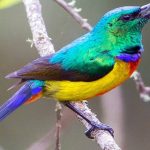
Albertine Rift Endemic Bird Species: Complete Birdwatching Guide to Uganda, Rwanda and the DRC
Introduction to Albertine Rift Endemic Bird Species
The Albertine Rift is one of Africa’s most important biodiversity hotspots and a remarkable destination for birdwatching. Stretching along the western branch of the East African Rift Valley, this region supports an exceptional variety of forest, wetland, mountain and savanna birds. It is particularly famous for its range-restricted bird species, many of which cannot be found outside the Albertine Rift region.
For birdwatchers, the Albertine Rift offers opportunities to search for some of Africa’s most sought-after forest and mountain birds. These include the striking Rwenzori Turaco, African Green Broadbill, Handsome Francolin, Grauer’s Rush Warbler, Red-throated Alethe, Shelley’s Crimsonwing and Rwenzori Batis.
The region extends across parts of Uganda, Rwanda, the Democratic Republic of Congo (DRC), Burundi and neighbouring areas. Its exceptional bird diversity is supported by a variety of habitats, including montane forests, bamboo forests, high-altitude wetlands, volcanic mountains and lowland tropical forests.
Uganda is an especially attractive starting point for an Albertine Rift birding safari. Important birdwatching destinations include Bwindi Impenetrable National Park, Mgahinga Gorilla National Park, Rwenzori Mountains National Park, Echuya Central Forest Reserve and Semuliki National Park.
This guide explores the meaning of Albertine Rift endemism, notable endemic bird species, where to find them and how to plan a rewarding birdwatching trip.
What Are Albertine Rift Endemic Birds?
Albertine Rift endemic birds are species whose natural geographic distribution is restricted to the Albertine Rift region. Unlike widespread African birds found across several countries and habitats, these species have relatively limited ranges associated with the region’s mountain forests, wetlands and other specialised ecosystems.
The Albertine Rift is recognised as an Endemic Bird Area because it supports an important concentration of range-restricted bird species.
One commonly cited historical checklist identifies 41 endemic bird species when the Albertine Rift and Eastern Zairean Lowlands are considered together. The combined list includes 36 species classified as Albertine Rift endemics and five associated with the Eastern Zairean Lowlands. The exact number can vary between references because of differences in geographic definitions and bird taxonomy.
The region’s bird diversity is closely connected to its varied elevations and habitats. Mountain ranges, isolated forest blocks, wetlands and valleys have created different ecological environments in which bird populations have developed over time.
Why Is the Albertine Rift Important for Birdwatching?
The Albertine Rift is a major destination for specialist birdwatchers because of its concentration of restricted-range species and its remarkable habitat diversity.
1. High Concentration of Endemic Birds
The region supports numerous birds with limited geographic distributions. Birdwatchers visiting Uganda, Rwanda and eastern DRC can search for species that are difficult or impossible to see elsewhere.
2. Diverse Forest Habitats
The Albertine Rift contains several montane forest ecosystems, including Bwindi, the Virunga mountain forests and the Rwenzori Mountains. These forests support species such as the African Green Broadbill, Rwenzori Batis, Red-collared Mountain Babbler and Rwenzori Turaco.
3. Unique Mountain Environments
The region’s high mountains create different vegetation zones, from lower tropical forests to bamboo, heathland and alpine vegetation. These changing habitats support different bird communities.
4. Important Wetlands
Wetlands and high-altitude swamps are also important for endemic birds. Grauer’s Rush Warbler, for example, is associated with specialised swamp and marsh vegetation.
5. Opportunities for Multi-Country Birding Safaris
Birdwatchers can combine destinations in Uganda, Rwanda and the DRC to explore different habitats and increase their opportunities to find Albertine Rift species.
Albertine Rift Endemic Bird Species Checklist
The following checklist is based on a published regional list that combines the Albertine Rift and Eastern Zairean Lowlands endemic bird areas. Scientific names and some common names reflect the terminology used in that historical checklist. Bird taxonomy changes, so check a current bird checklist before using the names for formal scientific recording.
Birds Classified as Albertine Rift Endemics
| No. | Bird species | Scientific name |
|---|---|---|
| 1 | Handsome Francolin | Francolinus nobilis |
| 2 | Rwenzori Turaco | Tauraco johnstoni |
| 3 | Albertine Owlet | Glaucidium albertinum |
| 4 | Congo Bay Owl | Phodilus prigoginei |
| 5 | Itombwe Nightjar | Caprimulgus prigoginei |
| 6 | Rwenzori Nightjar | Caprimulgus ruwenzorii |
| 7 | Dwarf Honeyguide | Indicator pumilio |
| 8 | African Green Broadbill | Pseudocalyptomena graueri |
| 9 | Stripe-breasted Tit | Parus fasciiventer |
| 10 | Red-collared Mountain Babbler | Kupeornis rufocinctus |
| 11 | Chapin’s Mountain Babbler | Kupeornis chapini |
| 12 | Grauer’s Cuckoo-shrike | Coracina graueri |
| 13 | Prigogine’s Greenbul | Chlorocichla prigoginei |
| 14 | Red-throated Alethe | Alethe poliophrys |
| 15 | Archer’s Ground Robin | Cossypha archeri |
| 16 | Kivu Ground Thrush | Zoothera tanganjicae |
| 17 | Kungwe Apalis | Apalis argentea |
| 18 | Kabobo Apalis | Apalis kaboboensis |
| 19 | Montane Masked Apalis | Apalis personata |
| 20 | Collared Apalis | Apalis ruwenzori |
| 21 | Grauer’s Rush Warbler | Bradypterus graueri |
| 22 | Grauer’s Warbler | Graueria vittata |
| 23 | Short-tailed or Neumann’s Warbler | Hemitesia neumanni |
| 24 | Red-faced Woodland Warbler | Phylloscopus laetus |
| 25 | Yellow-eyed Black Flycatcher | Melaenornis ardesiacus |
| 26 | Rwenzori Batis | Batis diops |
| 27 | Yellow-crested Helmetshrike | Prionops alberti |
| 28 | Blue-headed Sunbird | Cyanomitra alinae |
| 29 | Purple-breasted Sunbird | Nectarinia purpureiventris |
| 30 | Regal Sunbird | Cinnyris regia |
| 31 | Rockefeller’s Sunbird | Cinnyris rockefelleri |
| 32 | Rwenzori Double-collared Sunbird | Cinnyris stuhlmanni |
| 33 | Strange Weaver | Ploceus alienus |
| 34 | Dusky Crimson-wing | Cryptospiza jacksoni |
| 35 | Shelley’s Crimson-wing | Cryptospiza shelleyi |
| 36 | Schouteden’s Swift | Schoutedenapus schoutedeni |
Additional Species in the Combined Eastern Zairean Lowlands List
The following five species appear in the same historical regional checklist but are classified under the Eastern Zairean Lowlands rather than the Albertine Rift category.
| No. | Bird species | Scientific name |
|---|---|---|
| 37 | Sassi’s Olive Greenbul | Phyllastrephus lorenzi |
| 38 | Oberlander’s Ground Thrush | Zoothera oberlaenderi |
| 39 | Bedford’s Flycatcher | Terpsiphone bedfordi |
| 40 | Golden-naped Weaver | Ploceus aureonucha |
| 41 | Yellow-legged Weaver | Ploceus flavipes |
Important: The 41-species figure should be described as a combined historical checklist total, not as 41 species strictly endemic to the Albertine Rift. Modern checklists may also use revised scientific names or different species boundaries.
Notable Albertine Rift Endemic Birds to Look For
Although the regional checklist contains many species, some birds are particularly popular among birdwatchers because of their appearance, rarity, specialised habitats or importance to conservation.
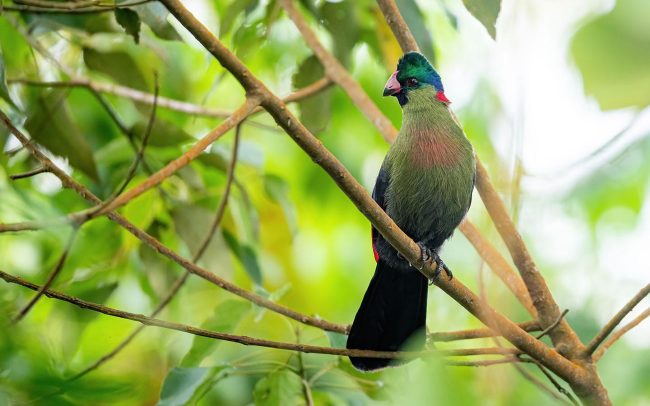
1. Rwenzori Turaco
The Rwenzori Turaco (Tauraco johnstoni) is among the most recognisable birds of the Albertine Rift. It is associated with montane forest habitats in the Rwenzori and Virunga mountain regions.
Its striking plumage makes it an attractive target for bird photographers. Visitors exploring suitable forest habitats in the Rwenzori Mountains and southwestern Uganda may have opportunities to search for this species.
2. African Green Broadbill
The African Green Broadbill (Pseudocalyptomena graueri) is one of the most sought-after Albertine Rift forest birds.
Its predominantly green plumage helps it blend into the forest environment. It is particularly associated with mature montane forest and is an important target species for birdwatchers visiting Bwindi Impenetrable National Park.
The Ruhija sector of Bwindi is especially important for birding, with the Mubwindi Swamp trail providing access to productive forest habitats.
3. Grauer’s Rush Warbler
Grauer’s Rush Warbler (Bradypterus graueri) is a specialised bird associated with high-altitude swamp and marsh habitats.
It is one of the region’s important threatened bird species. Its restricted habitat requirements make the protection of montane wetlands particularly important.
Birdwatchers can search for it in suitable swamp vegetation around Bwindi’s Mubwindi Swamp and other appropriate wetlands in the Albertine Rift.
4. Handsome Francolin
The Handsome Francolin (Francolinus nobilis) is a forest-dwelling bird associated with the Albertine Rift’s montane environments.
It is a sought-after species for birdwatchers visiting Bwindi and other suitable mountain forest habitats. Because it often remains close to dense vegetation, patience and the assistance of an experienced guide can improve the chances of locating it.
5. Rwenzori Batis
The Rwenzori Batis (Batis diops) is a small forest bird associated with the montane habitats of the Albertine Rift.
Birdwatchers should pay attention to forest edges, branches and middle vegetation layers when searching for this species. Its small size and active movements can make observation challenging.
6. Shelley’s Crimson-wing
Shelley’s Crimson-wing (Cryptospiza shelleyi) is a colourful forest finch associated with montane forest habitats.
It is a particularly interesting target for birdwatchers visiting Bwindi and other suitable highland forests. Its restricted distribution and specialised habitat requirements make it an important species for conservation.
7. Red-throated Alethe
The Red-throated Alethe (Alethe poliophrys) is a forest-dwelling bird that is often difficult to observe because it spends much of its time close to the ground and within thick vegetation.
Birdwatchers should listen carefully and watch the forest floor and lower vegetation when exploring suitable montane forest trails.
8. Strange Weaver
The Strange Weaver (Ploceus alienus) is an Albertine Rift-associated forest bird that adds to the region’s remarkable bird diversity.
It is an interesting species to search for during forest birding excursions in suitable highland habitats.
9. Blue-headed Sunbird
The Blue-headed Sunbird (Cyanomitra alinae) is an attractive species associated with montane forest environments.
Birdwatchers may search for sunbirds around flowering vegetation and forest edges, where nectar-feeding species are often active.
10. Rwenzori Double-collared Sunbird
The Rwenzori Double-collared Sunbird (Cinnyris stuhlmanni) is another attractive mountain bird associated with the Albertine Rift.
It is an interesting target for birdwatchers exploring the Rwenzori and Virunga mountain ecosystems.
Where to See Albertine Rift Endemic Birds in Uganda
Uganda is among the most rewarding countries for birdwatchers interested in Albertine Rift endemics. Its protected forests, mountain ranges and wetlands offer opportunities to search for many of the region’s restricted-range birds.
1. Bwindi Impenetrable National Park
Bwindi Impenetrable National Park is one of Uganda’s leading birdwatching destinations. Located in southwestern Uganda, it protects a large area of montane and lowland forest with an exceptional diversity of bird species.
More than 350 bird species have been recorded in the park, including approximately 23 Albertine Rift endemics in commonly cited park checklists.
Some of the notable target birds include:
- African Green Broadbill
- Grauer’s Rush Warbler
- Handsome Francolin
- Rwenzori Batis
- Shelley’s Crimson-wing
- Strange Weaver
- Red-throated Alethe
- Blue-headed Sunbird
- Yellow-eyed Black Flycatcher
- Archer’s Ground Robin
Best birding areas in Bwindi
Ruhija Sector: Ruhija is one of the most important birding areas in Bwindi. Its high-altitude forest and access to Mubwindi Swamp make it a popular starting point for searching for specialist forest birds.
Mubwindi Swamp Trail: This trail is particularly important for birdwatchers targeting Grauer’s Rush Warbler and African Green Broadbill. The route passes through forest and wetland habitats that support several interesting species.
Buhoma Sector: Buhoma offers access to lower-elevation forest habitats and a range of forest birding opportunities.
Nkuringo and Rushaga Sectors: These sectors provide access to additional forest habitats and can be incorporated into longer birdwatching trips.
2. Mgahinga Gorilla National Park
Mgahinga Gorilla National Park lies in southwestern Uganda within the Virunga volcanic mountain range. Although it is best known for mountain gorillas and golden monkeys, it also offers rewarding birdwatching opportunities.
The park’s habitats include montane forest, bamboo vegetation and higher-altitude mountain environments.
Birdwatchers can search for species such as:
- Rwenzori Turaco
- Rwenzori Batis
- Handsome Francolin
- Rwenzori Double-collared Sunbird
- Regal Sunbird
- Blue-headed Sunbird
The park can be combined with Bwindi for a broader southwestern Uganda birding itinerary.
3. Rwenzori Mountains National Park
Rwenzori Mountains National Park protects one of Africa’s most spectacular mountain ecosystems. The park is located in western Uganda along the border with the Democratic Republic of Congo.
Its habitats change with elevation, creating opportunities to search for forest, bamboo, heathland and high-altitude bird species.
Notable Albertine Rift bird targets include:
- Rwenzori Turaco
- Rwenzori Batis
- Rwenzori Nightjar
- Handsome Francolin
- Stripe-breasted Tit
- Dwarf Honeyguide
- Red-faced Woodland Warbler
- Yellow-eyed Black Flycatcher
Birdwatchers can combine forest birding with scenic mountain walks, although higher-altitude routes require suitable fitness and preparation.
4. Echuya Central Forest Reserve
Echuya Central Forest Reserve is located in southwestern Uganda between the Kabale and Kisoro areas. It is an important montane forest and bamboo habitat for specialised bird species.
The reserve is particularly interesting for birdwatchers seeking forest and highland wetland birds.
Its surrounding wetlands and montane vegetation are important habitats for threatened and range-restricted species, including Grauer’s Swamp Warbler in the wider southwestern Uganda landscape.
A visit to Echuya can be combined with birding around Bwindi, Mgahinga and Lake Bunyonyi.
5. Semuliki National Park
Semuliki National Park is located in western Uganda within the Albertine Rift region. It protects lowland tropical forest habitats that differ considerably from the high-altitude forests of Bwindi and the Rwenzori Mountains.
The park is especially valuable for birdwatchers interested in Central African forest species.
Although Semuliki is not the main destination for all Albertine Rift mountain endemics, its forest birdlife makes it an important addition to a wider western Uganda birding itinerary.
Where to See Albertine Rift Endemic Birds in Rwanda
Rwanda is another excellent destination for birdwatchers interested in Albertine Rift endemics. Its protected montane forests, volcanic landscapes and wetlands provide suitable habitats for numerous restricted-range species.
1. Nyungwe Forest National Park
Nyungwe Forest National Park is one of Rwanda’s most important birdwatching destinations. It protects a large montane rainforest in the southwestern part of the country.
The park is recognised for its rich forest birdlife and is an important destination for birders searching for Albertine Rift species.
Potential target birds include:
- Rwenzori Turaco
- Red-throated Alethe
- Grauer’s Warbler
- Red-faced Woodland Warbler
- Rwenzori Batis
- Purple-breasted Sunbird
- Blue-headed Sunbird
- Strange Weaver
Visitors can explore established forest trails with trained guides and search for birds at different forest elevations.
2. Volcanoes National Park
Volcanoes National Park protects part of the Virunga volcanic mountain range in northwestern Rwanda.
Although the park is internationally famous for mountain gorilla trekking and golden monkey tracking, its montane habitats are also valuable for birdwatching.
Birders can search for species associated with the Virunga and Albertine Rift mountain ecosystems, including Rwenzori Turaco, Rwenzori Batis and several sunbird species.
3. Gishwati-Mukura National Park
Gishwati-Mukura National Park protects montane forest habitats in western Rwanda.
The forest is important for biodiversity conservation and provides opportunities to observe forest-dependent bird species.
It can be included in a longer Rwanda birding itinerary alongside Nyungwe and Volcanoes National Park.
Albertine Rift Endemic Birds in the Democratic Republic of Congo
The Democratic Republic of Congo contains extensive areas of the Albertine Rift, including several important forest and mountain ecosystems.
Some of the region’s important birding destinations include:
Virunga National Park
Virunga National Park protects a diverse range of habitats, including volcanic mountains, montane forests, wetlands and lowland vegetation.
It is one of the most species-rich protected areas in the Albertine Rift and supports numerous endemic and range-restricted birds.
Itombwe Massif
The Itombwe Massif is a major montane forest region in eastern DRC. It is especially important for Albertine Rift biodiversity and supports several restricted-range bird species.
It is of particular interest to specialist birdwatchers and conservation researchers.
Kahuzi-Biega National Park
Kahuzi-Biega National Park protects extensive montane and lowland forest habitats. Its varied ecosystems support many bird species, including important Albertine Rift endemics.
Travel to protected areas in eastern DRC requires careful planning and current security advice. Visitors should confirm access conditions and local travel arrangements before considering a birding expedition.
Best Time for Albertine Rift Birdwatching
Albertine Rift endemic birds can be searched for throughout the year, but seasonal weather affects forest access, trail conditions and birdwatching comfort.
June to August
These months are generally part of a drier period in much of southwestern Uganda and Rwanda. Forest trails may be easier to navigate, making this a popular time for birding excursions.
December to February
The early part of the year is another relatively favourable period for many birding and hiking activities in the region. Visitors should still prepare for rain because mountain weather can change quickly.
March to May
This period is generally wetter in much of the Albertine Rift. Forest vegetation becomes lush, but muddy trails and rainfall can make some excursions more challenging.
September to November
These months include another rainy period in parts of the region. Birdwatching remains possible, although visitors should prepare for changing weather and wet conditions.
Birdwatching recommendation: Rather than choosing dates based only on season, plan your trip around the species you want to see, the habitats they occupy and the local advice of experienced bird guides.
How to Plan an Albertine Rift Birding Safari
A successful Albertine Rift birding safari requires more than visiting several national parks. Birdwatchers should plan their route according to target species, habitat requirements and travel time.
1. Identify Your Target Species
Begin by preparing a list of the endemic birds you most want to see. Some species are associated with high-altitude forest, while others require specific wetland or lowland forest habitats.
2. Choose the Right Birding Destinations
Bwindi, Mgahinga, Rwenzori Mountains, Echuya and Semuliki offer different birding environments in Uganda. Rwanda’s Nyungwe Forest and Volcanoes National Park can be added for a multi-country trip.
3. Use Experienced Local Bird Guides
Specialist bird guides are valuable because they know the calls, feeding habits and preferred habitats of difficult-to-find forest species.
A knowledgeable guide can also help distinguish similar-looking birds and record sightings accurately.
4. Allow Enough Time
A short visit may produce a good selection of birds, but a longer itinerary provides more opportunities to explore different habitats and search for difficult species.
For a specialist endemic-bird safari, allow several days in Bwindi and additional time for other forest and mountain destinations.
5. Prepare Suitable Birding Equipment
Carry binoculars, a bird identification guide, a camera, waterproof clothing, suitable hiking boots and a notebook or digital checklist.
Conservation of Albertine Rift Endemic Birds
The Albertine Rift’s endemic birds depend on specialised habitats, many of which are under pressure from human activities and environmental changes.
Forest clearance, agricultural expansion, settlement, wetland drainage and unsustainable resource use can affect bird populations by reducing or fragmenting their habitats.
High-altitude wetland species are particularly vulnerable when their specialised habitats are degraded.
Protecting Montane Forests
Montane forests provide habitat for many endemic birds, including the African Green Broadbill, Rwenzori Turaco and Rwenzori Batis.
Protecting remaining forest cover and maintaining ecological connections between habitats are important conservation priorities.
Protecting Wetlands
Wetlands such as Mubwindi Swamp and other highland marshes provide specialised habitats for species such as Grauer’s Rush Warbler.
Wetland conservation requires protecting natural vegetation, controlling drainage and reducing damaging land-use activities.
Supporting Responsible Birdwatching
Birdwatching can contribute to conservation when visitors use responsible operators and follow protected-area regulations.
Visitors should avoid disturbing nests, playback abuse, habitat damage and unnecessary handling of birds. Staying on designated trails and respecting local communities also helps protect the environment.
Frequently Asked Questions About Albertine Rift Endemic Birds
1. How many Albertine Rift endemic bird species are there?
A commonly cited historical checklist identifies 41 species when the Albertine Rift and Eastern Zairean Lowlands endemic bird areas are combined. The same list identifies 36 species as Albertine Rift endemics and five as Eastern Zairean Lowlands endemics. Counts may vary with taxonomic changes and geographic definitions.
2. Which country is best for seeing Albertine Rift endemic birds?
Uganda is an excellent starting point because it has several important birding destinations, including Bwindi, Mgahinga, Rwenzori Mountains and Echuya. Rwanda and the Democratic Republic of Congo also contain important habitats for these birds.
3. Which national park in Uganda has many Albertine Rift endemic birds?
Bwindi Impenetrable National Park is among the most important sites. Commonly cited park bird checklists record approximately 23 Albertine Rift endemic species.
4. What is the most famous Albertine Rift endemic bird?
The African Green Broadbill is one of the best-known and most sought-after birds in the region. The Rwenzori Turaco is another highly recognisable species.
5. Where can I see the African Green Broadbill?
Bwindi Impenetrable National Park is one of the best-known destinations for searching for the African Green Broadbill, particularly around the Ruhija area and Mubwindi Swamp trail.
6. Where can I see Grauer’s Rush Warbler?
Grauer’s Rush Warbler is associated with high-altitude swamp habitats. Mubwindi Swamp in Bwindi is an important location for birdwatchers searching for this species.
7. Are Albertine Rift endemic birds endangered?
Their conservation status varies by species. Some are classified as threatened, while others are listed as Least Concern. Habitat loss and degradation remain important conservation concerns across the region.
8. Can I combine gorilla trekking with Albertine Rift birdwatching?
Yes. Bwindi and Mgahinga offer opportunities to combine mountain gorilla trekking with guided birdwatching. Visitors can also add forest walks and other nature experiences to their itinerary.
9. What equipment do I need for Albertine Rift birdwatching?
Essential equipment includes binoculars, a bird field guide, a camera, waterproof clothing, hiking boots and a notebook or checklist for recording sightings.
10. Is the Rwenzori Hill Babbler an Albertine Rift endemic?
The Rwenzori Hill Babbler is associated with the wider Albertine Rift region, but it is not included in the 41-species historical combined checklist discussed in this guide. Its range extends beyond the Rwenzori Mountains, so it should not automatically be described as a strict Albertine Rift endemic.
Book an Albertine Rift Birding Safari with Epic Uganda Vacation
Uganda offers some of the most rewarding opportunities to explore the birdlife of the Albertine Rift. From the montane forests of Bwindi and Mgahinga to the high-altitude habitats of the Rwenzori Mountains, the country provides a variety of birdwatching experiences for both specialist birders and nature enthusiasts.
Epic Uganda Vacation can help organise a personalised birding safari covering selected destinations in Uganda, with opportunities to search for species such as the African Green Broadbill, Rwenzori Turaco, Handsome Francolin, Rwenzori Batis and Grauer’s Rush Warbler.
Your itinerary can also be extended to include Rwanda, depending on your birding interests and travel arrangements.
Contact Epic Uganda Vacation to discuss your target species, travel dates and preferred birdwatching destinations.