Rwenzori Turaco: Where to See This Spectacular Bird in Uganda
The Rwenzori Turaco is one of Uganda’s most striking forest birds and a memorable target for birdwatchers exploring the Albertine Rift. With its colourful plumage, distinctive calls and preference for lush montane forests, this beautiful bird attracts local and international birders to the legendary Rwenzori Mountains, often called the Mountains of the Moon.
For travellers planning a Uganda birding safari, finding the Rwenzori Turaco is an excellent reason to explore western Uganda’s mountain forests. The experience can also be combined with searches for other Albertine Rift endemics, forest birding in nearby destinations and wildlife experiences across the region.
At Epic Uganda Vacation, we can help birdwatchers plan a trip around this sought-after species while discovering the wider diversity of Uganda’s birdlife.
What Is the Rwenzori Turaco?
The Rwenzori Turaco is a colourful member of the turaco family, a group of African birds known for their distinctive appearance and forest-dwelling habits. Its scientific name is commonly listed as Gallirex johnstoni, although scientific naming conventions can vary between bird checklists.
This turaco is associated with the montane forests of the Albertine Rift, a biodiversity-rich region of mountains and highland forests in East-Central Africa. It is an important target for birders seeking species characteristic of this region.
The bird is especially attractive when seen in good light or in flight, when its vivid wing colours contrast with the green forest canopy. However, the dense vegetation can make observation challenging, so patience and a knowledgeable birding guide are valuable.
How to Identify the Rwenzori Turaco
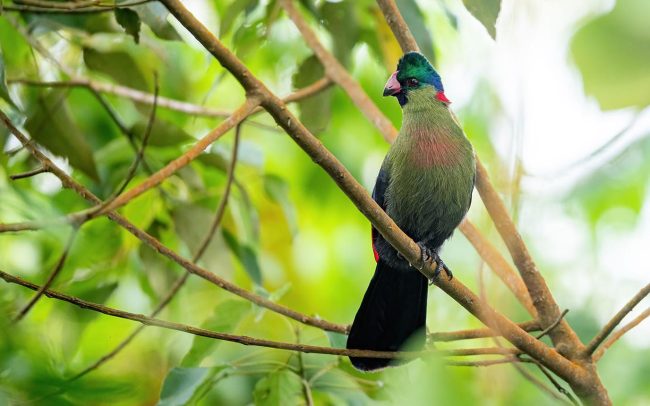
The Rwenzori Turaco can be identified by its colourful plumage, prominent crest and characteristic turaco shape.
Key identification features include:
- Colourful plumage: Its dark, glossy greenish and bluish tones contrast with vivid red or crimson flight feathers.
- Prominent crest: The head has an upright crest that contributes to its distinctive silhouette.
- Long tail: Like other turacos, it has a relatively long tail and strong legs adapted to moving through branches.
- Forest-dwelling behaviour: It is often seen perched in the canopy or moving between branches in search of fruit.
- Distinctive calls: Its vocalisations can help birders locate it before they obtain a clear view.
A pair of binoculars is essential for observing the bird in the canopy. A camera with a telephoto lens can help capture details without disturbing the bird.
Where Can You See the Rwenzori Turaco in Uganda?
1. Rwenzori Mountains National Park
The Rwenzori Mountains are the natural starting point for birders hoping to see the species that bears their name. Located in western Uganda along the border with the Democratic Republic of the Congo, the mountain range contains a variety of habitats, including montane forest, bamboo vegetation, heath and high-altitude landscapes.
The lower forested slopes provide important birding opportunities without necessarily requiring a climb to the mountain summits. Areas around the Nyakalengija trailhead and approved forest routes are useful starting points for arranging a guided birding excursion.
A local guide familiar with bird calls, feeding trees and forest trails can make the search more productive.
The wider park also supports other sought-after birds, including Rwenzori Batis, Rwenzori Apalis and a range of forest specialists. This makes the area especially appealing to birders interested in building a comprehensive Albertine Rift checklist.
2. Bwindi Impenetrable National Park
Bwindi is one of Uganda’s leading destinations for forest birding. Its varied elevations and rich montane forest habitats support numerous Albertine Rift endemics and other specialist species.
Birders interested in the Rwenzori Turaco can ask a local birding guide about suitable locations and recent sightings before arranging their visit. The Ruhija area is a recognised starting point for highland forest birding.
Bwindi is also home to mountain gorillas, making it possible to combine birdwatching with a gorilla trekking experience, subject to permits and availability.
3. Mgahinga Gorilla National Park
Mgahinga Gorilla National Park lies in southwestern Uganda within the Virunga conservation landscape. Its montane forest and bamboo habitats support a variety of highland birds and Albertine Rift species.
Birdwatching here can complement a wider trip through southwestern Uganda. Travellers should consult a specialist guide about current Rwenzori Turaco records and the best places to search, as sightings depend on the bird’s local distribution and movements.
The park also offers golden monkey tracking, volcano hiking and scenic views of the Virunga Mountains.
Best Time to See the Rwenzori Turaco
The Rwenzori Turaco is a resident forest bird, so birding trips can be planned throughout the year. However, weather and trail conditions affect comfort, access and the quality of the experience.
Drier Periods
The relatively drier periods, often around December to February and June to August, can be convenient for forest walks and wider Uganda birding itineraries. Trails may be easier to navigate, although rain remains possible in the mountains.
These months are worth considering if you intend to combine birding with hiking or visits to several destinations.
Wetter Periods
The wetter periods can bring lush forest conditions and increased bird activity associated with breeding and food availability. However, rain, mist and muddy trails may make birdwatching more challenging.
Birds may be easier to hear than see when dense vegetation and poor light reduce visibility.
Birding tip: Rather than choosing dates solely around a particular month, plan with a local guide who can advise on recent sightings, trail conditions and the most productive areas.
Best Time of Day for Rwenzori Turaco Birding
Early morning is often a productive time to begin a birding walk. Forest birds can be vocal during the morning, and cooler conditions make walking more comfortable.
Late afternoon may also provide opportunities to hear or observe turacos moving through the canopy.
Allow sufficient time to stop, listen and scan the treetops. Moving too quickly through the forest can cause you to miss birds that are calling nearby or feeding quietly above the trail.
What Other Birds Can You See in the Rwenzori Mountains?
One of the advantages of visiting the Rwenzori Mountains is the opportunity to search for several forest and highland species during the same trip.
Depending on the habitat, elevation and route, possible targets include:
- Rwenzori Batis
- Rwenzori Apalis
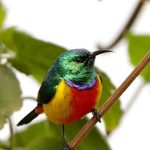
- Blue-headed Sunbird
- Regal Sunbird
- Handsome Francolin
- Strange Weaver
- Cinnamon-chested Bee-eater
- White-starred Robin
- Montane forest greenbuls and flycatchers
Not every species occurs along every trail or at every elevation. A specialist guide can help select routes that match your target list and the time available.
The Rwenzori Mountains are particularly rewarding for birders who enjoy searching for endemic and range-restricted species rather than simply ticking the most familiar birds.
How to Plan a Rwenzori Turaco Birding Trip
A successful birding excursion begins with realistic timing, suitable equipment and a guide who knows the area. a trip like 18 Days birding through uganda makes everything real
Choose the Right Birding Area
If the Rwenzori Turaco is your main target, consider beginning with the Rwenzori Mountains and the accessible forest trails around the park’s entry areas. If you have additional days, you can extend the trip to other western Ugandan birding destinations.
Hire a Knowledgeable Birding Guide
An experienced guide can help identify calls, locate suitable forest habitat and distinguish the Rwenzori Turaco from other turacos. Guides can also recommend additional target species based on recent observations.
Carry Suitable Equipment
For the best experience, bring:
- Good-quality binoculars
- A camera with a telephoto lens, if photography is important
- A regional bird field guide or identification app
- Waterproof clothing
- Comfortable, grippy walking shoes
- Drinking water and snacks
- A notebook or digital checklist
A small torch or headlamp can also be useful when travelling early, although birding should take place according to park access rules.
Allow Enough Time
A short forest walk can produce excellent sightings, but no wild bird encounter is guaranteed. If the Rwenzori Turaco is a priority species, consider spending more than one morning in suitable habitat.
Extra time also allows you to search for other Albertine Rift endemics and enjoy the wider forest ecosystem.
Can You Combine Rwenzori Turaco Birding With Other Uganda Safaris?
Yes. The Rwenzori Mountains can be incorporated into a broader western Uganda itinerary, depending on your travel dates and interests.
Birding and Wildlife in Queen Elizabeth National Park
Queen Elizabeth National Park offers savannah, woodland, wetlands and lakeside habitats that contrast with the montane forests of the Rwenzori region. Combining the two areas adds habitat diversity and expands the range of birds you may encounter.
Birding in Kibale Forest
Kibale Forest is famous for its primates and rich forest birdlife. It can be a useful addition to a western Uganda itinerary for travellers interested in both birds and chimpanzee trekking.
Birding and Gorilla Trekking in Bwindi
Bwindi offers opportunities to search for forest birds while also experiencing one of Uganda’s signature wildlife activities: mountain gorilla trekking. Gorilla trekking requires a separate permit, and the activity should be arranged in advance.
Birding in Mgahinga Gorilla National Park
Mgahinga can add highland forest and bamboo-zone birding to a southwestern Uganda itinerary. Travellers can also consider golden monkey tracking or volcano hiking if time and fitness allow.
Conservation and Responsible Birdwatching
The Rwenzori Turaco depends on suitable forest habitat, making the protection of montane ecosystems important for its long-term survival.
Visitors can contribute to responsible bird tourism by following these practices:
- Stay on authorised trails and follow park regulations.
- Avoid disturbing nests, feeding sites and roosting birds.
- Never use playback excessively or in ways that distress birds.
- Keep a respectful distance and avoid damaging vegetation for photographs.
- Carry out all litter and minimise waste.
- Support local guides and responsible conservation-focused tourism services.
- Follow the instructions of park staff and respect restrictions on access.
Responsible birding helps preserve the habitats that make the Albertine Rift such a special destination for wildlife enthusiasts.
Plan Your Rwenzori Turaco Birding Safari With Epic Uganda Vacation
The Rwenzori Turaco is an excellent target for birdwatchers exploring Uganda’s montane forests and Albertine Rift biodiversity. With thoughtful planning, you can combine the search for this colourful species with other forest birds, scenic mountain landscapes and wildlife experiences across western Uganda.
Epic Uganda Vacation can help you organise a birding itinerary tailored to your target species, available time, accommodation preferences and travel dates.
Whether you are planning a dedicated birding trip or adding a few days of birdwatching to a wider Uganda safari, our team can help you identify suitable destinations and arrange local guiding.
Contact us through the Epic Uganda Vacation contact page to discuss your birding plans.
Frequently Asked Questions About the Rwenzori Turaco
1. What is the Rwenzori Turaco?
The Rwenzori Turaco is a colourful forest bird associated with the montane forests of the Albertine Rift. It is a popular target for birdwatchers visiting Uganda’s Rwenzori Mountains.
2. Where is the best place to see the Rwenzori Turaco in Uganda?
The Rwenzori Mountains are the natural starting point. Bwindi and Mgahinga may also be worth considering as part of a broader highland birding itinerary, but travellers should confirm local records and suitable locations with a specialist guide.
3. What does the Rwenzori Turaco look like?
It has glossy greenish or bluish plumage, a prominent crest, a long tail and vivid red or crimson flight feathers that can be especially striking when it flies.
4. What is the best time to see the Rwenzori Turaco?
It can be searched for year-round. Early morning is a useful time to start birding, while the relatively drier months may make forest trails easier to access.
5. Is the Rwenzori Turaco an Albertine Rift endemic?
It is associated with the Albertine Rift region and is an important target for birders seeking the region’s specialised highland species. Exact range descriptions can differ between taxonomic and distribution references.
6. Do I need a guide to see the Rwenzori Turaco?
A specialist local birding guide is strongly recommended. The bird may be heard before it is seen, and a guide familiar with its calls and habitat can improve your chances of finding it.
7. Can I combine Rwenzori Turaco birding with gorilla trekking?
Yes. A longer itinerary can combine birding in the Rwenzori Mountains with gorilla trekking in Bwindi or Mgahinga, subject to travel time, permits and availability.
8. What equipment should I bring?
Bring binoculars, suitable walking shoes, waterproof clothing, drinking water and a regional bird guide. A telephoto camera lens is useful for photography in the forest canopy.