Bigodi Wetland Sanctuary Uganda: Birding, Primates and Community Tourism
Bigodi Wetland Sanctuary is one of the most rewarding nature experiences to add to a Uganda safari, particularly for travelers visiting Kibale National Park for chimpanzee trekking.
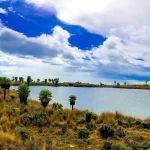
Located beside Kibale Forest in western Uganda, Bigodi offers a very different experience from a traditional national park game drive. Here, you explore the wetland on foot with a local community guide, crossing trails and boardwalks through papyrus, forest-edge vegetation, gardens and village landscapes.
The area is especially popular with birdwatchers because of its rich birdlife and its reputation for the Great Blue Turaco. It is also home to several primate species and provides travelers with an opportunity to experience community-based tourism and conservation.
For travelers planning a Kibale chimpanzee trekking safari, Bigodi Wetland Sanctuary can be an excellent complementary activity. While chimpanzee trekking takes you deep into the forest in search of habituated chimpanzees, Bigodi provides a slower walking experience combining wetlands, birds, monkeys, plants and local culture.
Where Is Bigodi Wetland Sanctuary?
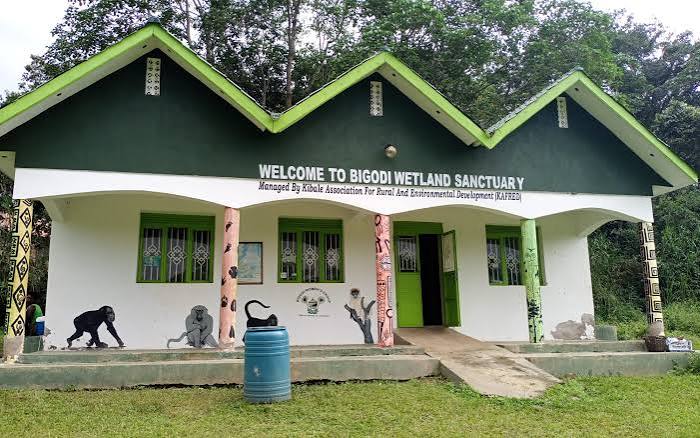
Bigodi Wetland Sanctuary is located in western Uganda, close to Kibale National Park and the Bigodi community.
The sanctuary protects part of the Magombe Wetland, and its location on the edge of Kibale Forest creates a productive mixture of wetland and forest-edge habitats.
The official Bigodi tourism organization describes the community as being about 40 kilometres from Fort Portal and bordering Kibale National Park.
For travelers staying around Kibale, Bigodi is particularly convenient because it can be incorporated into an existing Kibale safari itinerary without requiring a separate long-distance transfer.
Why Visit Bigodi Wetland Sanctuary?
Bigodi is worth visiting because it combines several experiences in one relatively short walking excursion.
1. Bird watching
Birding is one of the biggest reasons travelers visit Bigodi. The wetland and surrounding forest-edge habitats support a wide variety of birds, with sources documenting more than 200 species in the wider sanctuary area.
The Great Blue Turaco is the signature bird and one of the species many visitors hope to see.
Other possible sightings include:
- Papyrus-associated birds
- Kingfishers
- Hornbills
- Barbets
- Sunbirds
- Weavers
- Flycatchers
- Robin-chats
- Turacos
- Waders
- Forest-edge species
For serious birders, Bigodi can be incorporated into a wider Uganda birding safari together with Kibale, Bwindi, Queen Elizabeth, Budongo and other birding destinations.
2. The Great Blue Turaco
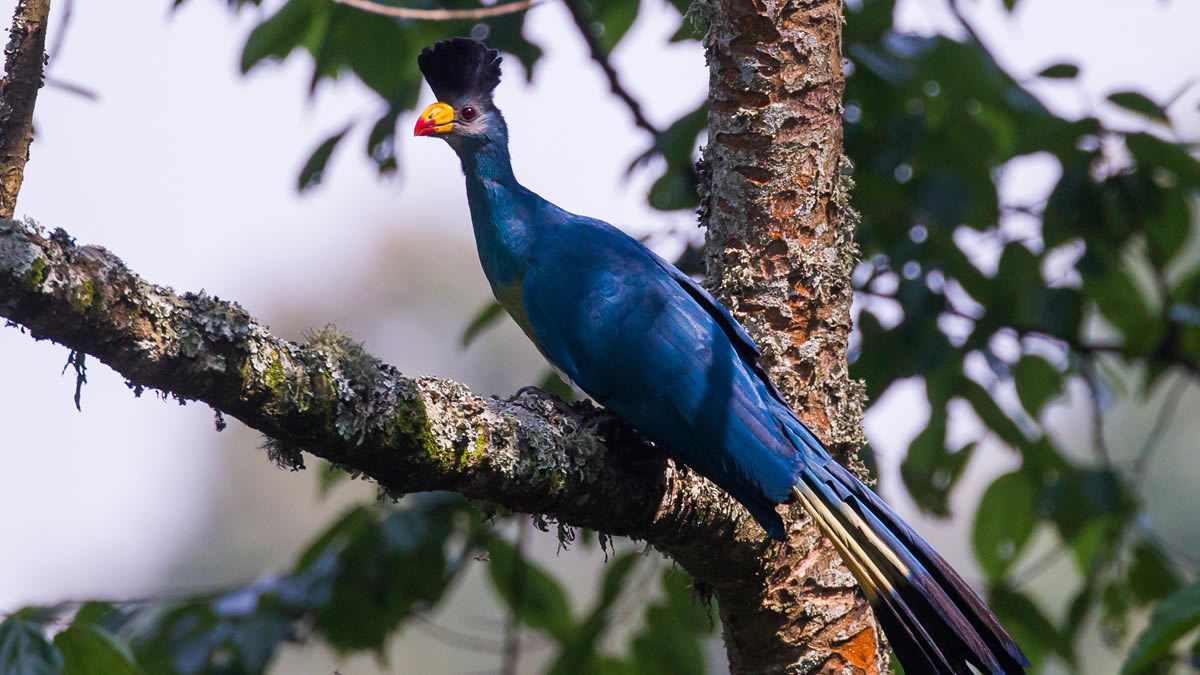
The Great Blue Turaco is one of Bigodi’s most famous attractions.
Its striking blue, green and yellow plumage makes it an exciting sight for both experienced birders and travelers who may not normally consider themselves birdwatchers.
However, it is important to remember that wildlife sightings are never guaranteed. A good local guide can greatly improve the chances of finding particular species because guides understand the habitats, calls and areas where birds are frequently encountered.
3. Primates and Wildlife
Bigodi is not only about birds.
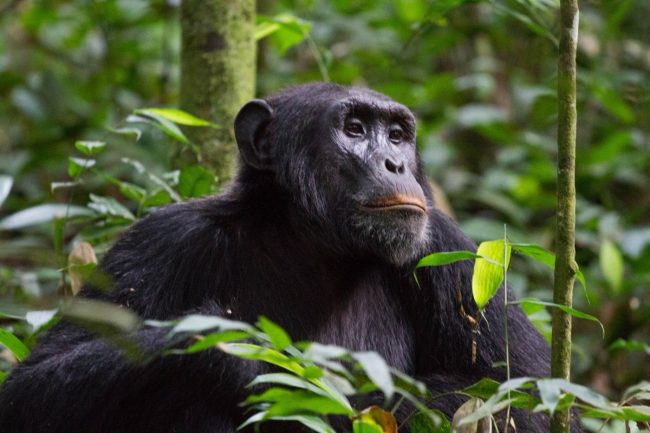
The wetland and surrounding vegetation support several primate species. Possible sightings include:
- Red colobus monkeys
- Black-and-white colobus monkeys
- Red-tailed monkeys
- Grey-cheeked mangabeys
- Blue monkeys
- Vervet monkeys
- Olive baboons
- L’Hoest’s monkeys
Other wildlife associated with the wetland includes bushbucks, mongooses, otters and sitatunga, although sightings vary depending on conditions and animal movements.
This makes Bigodi particularly interesting for travelers who want a nature experience beyond chimpanzee trekking.
Bigodi Wetland Nature Walk
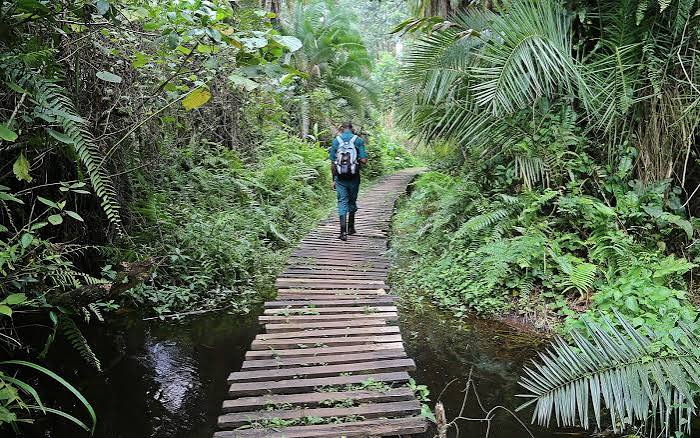
The main activity is a guided Bigodi Wetland nature walk.
The walk takes you through a mixture of wetland vegetation, forest edges, gardens and community areas. Sections of the trail include wooden boardwalks crossing the wetland.
The official Bigodi tourism organization describes the guided route as approximately 4.5 kilometres and taking up to around three hours, although the actual duration can vary according to the interests and pace of the group.
For birders, the walk can take longer because you may stop frequently to identify calls, scan vegetation and photograph birds.
This is one reason I recommend marketing Bigodi as a guided nature and birding experience, rather than simply calling it a “swamp walk.”
Bigodi Community Tourism
One of Bigodi’s strongest tourism stories is its connection between conservation and community development.
The experience is managed through the Kibale Association for Rural and Environmental Development (KAFRED). KAFRED was established in 1992 with objectives including environmental protection and community development. According to its own information, tourism revenues support projects related to education, health and sanitation, while many employees come from the local community.
This gives visitors an opportunity to experience a form of tourism where their visit contributes directly to the surrounding community.
That is a strong selling point for responsible travelers looking for community-based tourism in Uganda.
Bigodi Community Walk
In addition to the wetland nature walk, travelers can arrange a broader community experience.
A community walk can provide insight into:
- Local farming
- Traditional foods
- Medicinal plants
- Local crafts
- Village life
- Community conservation
- Traditional practices
The experience should be approached respectfully. Visitors should ask permission before photographing people and should support local guides, craftspeople and community businesses where appropriate.
This is particularly useful for travelers who want their Uganda safari to include cultural interaction rather than wildlife viewing alone.
Bigodi Wetland vs Kibale Chimpanzee Trekking
A common question is whether Bigodi can replace chimpanzee trekking.
The answer is no — they are different experiences.
| Bigodi Wetland | Kibale Chimpanzee Trekking |
|---|---|
| Guided community nature walk | Guided primate trekking |
| Wetland and forest-edge habitat | Tropical rainforest |
| Strong birding experience | Chimpanzee-focused |
| Several monkey species | Habituated chimpanzee communities |
| Community tourism | National park experience |
| Usually a few hours | Trek duration varies |
| Suitable for mixed-interest groups | Better for travelers specifically interested in chimpanzees |
The best approach is often to combine both.
For example:
Morning: Chimpanzee trekking in Kibale
Afternoon: Bigodi Wetland/community walk
Or, depending on your chimpanzee permit schedule, the activities can be arranged on separate days.
Bigodi for Birding Safaris
For Epic Uganda Vacation, I would make Bigodi an important supporting destination in your Uganda birding content cluster.
A birder visiting Uganda can combine:
Mabamba Wetland → Mabira Forest → Murchison Falls → Budongo Forest → Kibale/Bigodi → Queen Elizabeth → Bwindi
This gives the traveler different habitats rather than repeatedly visiting similar environments.
Bigodi is especially valuable because it provides a combination of wetland, forest-edge and community habitats in a relatively compact walking experience.
Best Time to Visit Bigodi Wetland
Bigodi can be visited throughout the year.
For birdwatchers, early morning is generally a productive period because bird activity is often higher.
The trails can become wet and muddy during rainy periods, so comfortable walking shoes and rain protection are advisable.
If you are building a safari specifically around birding, I would recommend giving yourself enough time rather than treating Bigodi as a rushed stop between two major activities.
What to Bring for the Bigodi Wetland Walk
For a comfortable visit, bring:
- Binoculars
- Comfortable walking shoes
- Lightweight long trousers
- Long-sleeved shirt
- Insect repellent
- Rain jacket or poncho
- Hat
- Drinking water
- Camera
- Small backpack
Birders should definitely carry binoculars because many species may be high in the canopy or hidden within vegetation.
Is Bigodi Wetland Sanctuary Worth Visiting?
Yes, particularly if your Uganda safari includes Kibale National Park.
Bigodi does not try to compete with Uganda’s major national parks. Its strength is different. It offers a relatively intimate experience where birds, primates, wetlands, local communities and conservation come together.
For a traveler interested in birding, it can add valuable species and habitat variety. For a family, it provides an accessible nature experience. For photographers, it offers opportunities to capture birds, monkeys, vegetation and village life. And for responsible travelers, the community tourism model adds another important dimension to the experience.
Most importantly, Bigodi allows visitors to see a side of Uganda that can easily be missed when a safari is focused only on major national parks and flagship wildlife.
Book a Bigodi Wetland Experience with Epic Uganda Vacation
At Epic Uganda Vacation, we can incorporate Bigodi Wetland Sanctuary into your Uganda safari according to your interests, travel dates and preferred pace.
Whether you are interested in birding, chimpanzee trekking, primates, community tourism, photography or a broader Uganda wildlife safari, we can combine Bigodi with Kibale and other destinations across Uganda.