Semuliki National Park Uganda: Complete Travel and Safari Guide
Semuliki National Park: Uganda’s Lowland Rainforest
Semuliki National Park is one of Uganda’s most unique and least-explored national parks. Located in the remote Semuliki Valley of western Uganda, the park protects approximately 220 square kilometres of lowland tropical rainforest within the Albertine Rift.
Unlike Uganda’s high-altitude forests such as Bwindi Impenetrable National Park and Kibale National Park, Semuliki lies on the floor of the Rift Valley. Its low elevation, warm climate and proximity to the Democratic Republic of Congo give the forest a distinctly Central African character.
The park is particularly famous for its exceptional birdlife, forest primates, butterflies, ancient rainforest, the Semuliki River and the spectacular Sempaya Hot Springs.
For travelers interested in birding, nature walks, photography, primates and unusual ecosystems, Semuliki National Park offers a completely different experience from Uganda’s traditional savannah safaris.
Where Is Semuliki National Park?
Semuliki National Park is located in Bundibugyo District in western Uganda, within the Bwamba County area.
The park lies between the Rwenzori Mountains to the east and the Democratic Republic of Congo to the west. The Semuliki River flows along the western side of the valley and forms part of the Uganda–DRC boundary.
The journey to Semuliki is an attraction in itself. As you travel from Fort Portal toward Bundibugyo, the road descends from the higher Fort Portal plateau into the Semuliki Valley, creating dramatic views of forests, mountains and the Rift Valley landscape.
Why Visit Semuliki National Park?
Semuliki is not simply another Ugandan forest.
Its location at the meeting point of East African and Central African ecosystems gives it an unusually high level of biodiversity. Many species found in the park have stronger ecological links to the Congo Basin than to eastern Uganda.
Some of the main reasons to visit Semuliki include:
- Explore Uganda’s lowland tropical rainforest
- Search for rare Congo-Guinea biome birds
- See forest primates
- Visit the famous Sempaya Hot Springs
- Walk through ancient rainforest
- Explore the Semuliki River landscape
- Enjoy specialist birding
- Experience local cultures and traditions
- Photograph butterflies, birds, plants and forest wildlife
- Combine Semuliki with Kibale, Queen Elizabeth or the Rwenzori Mountains
Semuliki is particularly rewarding for travelers who prefer less crowded and more specialized safari experiences.
Semuliki National Park Wildlife
Semuliki supports a remarkable variety of wildlife despite being much smaller than some of Uganda’s savannah parks.
The park is home to forest and wetland species including:
- Forest elephants
- Forest buffaloes
- Hippos
- Chimpanzees
- Black-and-white colobus monkeys
- Red-tailed monkeys
- De Brazza’s monkeys
- Grey-cheeked mangabeys
- Mona monkeys
- Baboons
- Bushbucks
- Duikers
- Bush babies
- Pottos
- Flying squirrels
- Water chevrotain
The wildlife experience here is very different from a conventional game drive in Murchison Falls or Queen Elizabeth National Park.
Semuliki is primarily about forest biodiversity rather than large concentrations of savannah animals.
For travelers whose main goal is to see lions, large herds of buffalo and elephants or other classic savannah wildlife, Uganda’s savannah parks are generally more suitable.
For unusual forest species, primates, birds and nature experiences, Semuliki is an excellent choice.
Birding in Semuliki National Park
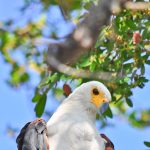
Semuliki is one of Uganda’s most important birding destinations.
More than 400 bird species have been recorded in the park, including a significant number of forest species and birds associated with the Congo-Guinea biome.
This makes Semuliki especially attractive to experienced birders who want to find species that are difficult to see elsewhere in East Africa.

Birds to Look for in Semuliki
Depending on the season, habitat and birding trail, you may look for:
- Nkulengu Rail
- Congo Serpent Eagle
- Piping Hornbill
- Red-billed Dwarf Hornbill
- Black Dwarf Hornbill
- White-crested Hornbill
- Black-casqued Wattled Hornbill
- Yellow-throated Cuckoo
- Yellow-throated Nicator
- White-throated Blue Swallow
- Leaf-love
- Swamp Palm Bulbul
- Lemon-bellied Crombec
- Maxwell’s Black Weaver
- Crested Malimbe
- Red-bellied Malimbe
- Chestnut-breasted Negrofinch
- Orange-cheeked Waxbill
The park’s forest environment means that patience is important. Some birds remain high in the canopy or move through thick vegetation, making an experienced birding guide extremely valuable.
Why Semuliki Is Important for Birders
The biggest attraction is not simply the number of bird species.
Semuliki sits at an ecological crossroads where Central African forest species reach the eastern edge of their distribution.
This gives birders an opportunity to search for species that are rarely encountered on more conventional East African safari routes.
If you are planning a specialist Uganda birding safari, Semuliki can be combined with Kibale Forest, Budongo Forest, Bwindi, Mabamba Swamp, Queen Elizabeth National Park and Lake Bisina.

Sempaya Hot Springs
The Sempaya Hot Springs are the most famous attraction in Semuliki National Park.
The hot springs consist of two main geothermal features traditionally known as the male and female hot springs.
The male spring is known as Bintente, while the female spring is known as Nyasimbi.
Nyasimbi is particularly impressive because boiling water and steam emerge from the ground, creating a dramatic geothermal spectacle.
Temperatures at the springs can exceed 100°C, so visitors should never touch the water or approach the boiling vents outside designated areas.
The springs are a fascinating example of the geological forces associated with the Albertine Rift.
Visitors can walk through the forest to the springs with a park guide while learning about the geology, wildlife and cultural significance of the area.
Forest Nature Walks and Hiking
Walking is one of the best ways to experience Semuliki National Park.
Unlike a vehicle safari, a guided forest walk allows you to slow down and observe the smaller details of the ecosystem.
You may encounter:
- Forest birds
- Butterflies
- Monkeys
- Bushbucks
- Duikers
- Forest plants
- Giant trees
- Reptiles
- Amphibians
- Animal tracks and signs
Sempaya Nature Trail
The Sempaya Nature Trail is one of the most popular walking routes.
It leads visitors through the forest toward the Sempaya Hot Springs and provides opportunities to see birds, primates, butterflies and other forest wildlife along the way.
Red Monkey Trail
The Red Monkey Trail provides another opportunity to explore the forest and extends toward the Semuliki River.
It is particularly interesting for visitors who want a combination of forest scenery, wildlife and river landscapes.
Kirumia Trail
For serious birders and experienced hikers, the Kirumia Trail is one of the most interesting routes in the park.
The trail passes through the heart of the forest toward the Semuliki River and can take several hours.
Because of its length and forest conditions, it is best suited to travelers who are comfortable with extended walking.
The Semuliki River
The Semuliki River flows through the valley and forms part of the Uganda–Democratic Republic of Congo boundary.
The river and its surrounding habitats are important for wildlife and birds. Hippos and crocodiles can be found in the river system, while the surrounding forest provides habitat for numerous bird and primate species.
The river also adds another dimension to a Semuliki safari because it shows how closely the forest, wetlands and Rift Valley landscape are connected.
Primates in Semuliki National Park
Semuliki is an excellent destination for travelers interested in primates.
The forest supports several species, including:
- Chimpanzees
- Black-and-white colobus monkeys
- Red-tailed monkeys
- De Brazza’s monkeys
- Grey-cheeked mangabeys
- Mona monkeys
- Baboons
- Bush babies
- Pottos
Chimpanzees occur in the wider Semuliki ecosystem, although travelers whose main goal is chimpanzee trekking should generally prioritize Kibale National Park, Uganda’s best-known destination for chimpanzee experiences.
Semuliki is better suited to travelers who want to experience a broader Central African-style rainforest ecosystem.

Cultural Experiences Around Semuliki
Semuliki is surrounded by communities with deep historical and cultural connections to the forest and valley.
Cultural experiences around the park can provide insight into:
- Traditional foods
- Local farming
- Traditional medicine
- Music and dance
- Storytelling
- Forest knowledge
- Local history
- Traditional crafts
The Batwa are among the indigenous communities historically associated with the forests of the Albertine Rift and wider Congo Basin.
A responsible cultural visit should be organized through legitimate community initiatives and should respect local traditions while ensuring that tourism benefits the people involved.
Semuliki National Park and Toro-Semliki Wildlife Reserve
One common mistake when planning a safari is treating Semuliki National Park and Toro-Semliki Wildlife Reserve as the same destination.
They are different protected areas.
Semuliki National Park
The national park is primarily a lowland rainforest destination known for:
- Birding
- Primates
- Forest walks
- Sempaya Hot Springs
- Forest biodiversity
- Semuliki River
Toro-Semliki Wildlife Reserve
Toro-Semliki Wildlife Reserve contains more open savannah and woodland habitats.
It can offer opportunities to see animals such as:
- Elephants
- Buffaloes
- Uganda kob
- Waterbucks
- Warthogs
- Hippos
- Primates
- Other savannah wildlife
If your itinerary includes a game drive, make sure your safari operator specifies whether the activity is in Semuliki National Park or Toro-Semliki Wildlife Reserve.
Best Time to Visit Semuliki National Park
Semuliki National Park can be visited throughout the year.
However, the best time depends on your interests.
June to August
These months generally offer good conditions for hiking, forest walks and wildlife exploration.
They can be particularly comfortable for travelers who prefer drier trail conditions.
September to February
This period can also provide good opportunities for wildlife and birding, although rainfall remains possible because Semuliki has a humid tropical climate.
March to May
This is one of the wetter periods.
Rain can make forest trails muddy and slippery, but the rainforest becomes exceptionally lush and green.
For photographers and nature lovers, the wet season can produce beautiful forest conditions.
Best Time for Birding
Semuliki is productive for birding throughout the year.
However, serious birders should consider spending at least two or three days in the area rather than attempting to see everything in a single rushed visit.
Semuliki National Park Weather
Semuliki has a warm and humid tropical climate.
Because the park lies at a relatively low elevation, temperatures are generally warmer than in the higher-altitude forests of Bwindi and the Rwenzori Mountains.
Rainfall can occur at different times of the year, so travelers should always carry rain protection when entering the forest.
How to Get to Semuliki National Park
From Kampala or Entebbe
The most common route is:
Kampala/Entebbe → Mubende → Fort Portal → Bundibugyo → Semuliki National Park
The journey takes several hours and is best done as part of a western Uganda safari rather than as a rushed day trip from Kampala.
From Fort Portal
Fort Portal is the most convenient major town for travelers approaching Semuliki.
From Fort Portal, the road continues toward Bundibugyo and the park headquarters at Ntandi.
The descent toward the Semuliki Valley offers beautiful views of the surrounding landscape.
Where to Stay in Semuliki National Park
Accommodation options are more limited than in popular destinations such as Queen Elizabeth, Bwindi or Kibale.
Travelers can choose between:
- Safari lodges
- Guesthouses
- Campsites
- Accommodation around Fort Portal
- Lodges serving the wider Semuliki Valley
For travelers who want a comfortable safari experience, Semuliki Safari Lodge is one of the best-known accommodation options in the area.
For budget travelers, staying around Fort Portal can provide more choices while still allowing access to Semuliki.
What to Pack for Semuliki National Park
Because Semuliki is a tropical rainforest environment, practical clothing is important.
Pack:
- Comfortable hiking boots
- Lightweight long trousers
- Long-sleeved shirts
- Rain jacket
- Hat
- Sunglasses
- Insect repellent
- Sunscreen
- Binoculars
- Camera
- Waterproof bag
- Reusable water bottle
- Small daypack
- Extra socks
Birders should bring good binoculars and, if possible, a field guide to Uganda’s birds.
How Many Days Do You Need in Semuliki?
A single day can be enough to visit the Sempaya Hot Springs and experience a short nature walk.
However, if birding is your main interest, we recommend spending at least two nights.
A longer stay gives you more time to explore different forest habitats and increases your chances of finding specialist birds and primates.
Suggested 2-Day Semuliki Itinerary
Day 1: Fort Portal – Semuliki National Park – Sempaya Hot Springs – forest walk
Day 2: Early morning birding – Kirumia or another forest trail – Semuliki River – return to Fort Portal
For a longer safari, Semuliki can be combined with Kibale National Park, Queen Elizabeth National Park, Rwenzori Mountains or Bwindi Impenetrable National Park.
Combining Semuliki with Kibale National Park
Semuliki and Kibale make an excellent combination.
Kibale is famous for chimpanzee trekking and its large concentration of primates, while Semuliki provides a different lowland rainforest environment with strong Central African influences.
A combined itinerary could look like:
Fort Portal → Semuliki → Kibale → Queen Elizabeth → Bwindi
This route works particularly well for travelers interested in primates, birds, forests and wildlife.
Semuliki for Photographers
Semuliki is an excellent destination for nature photography.
The combination of dense rainforest, birds, butterflies, primates, geothermal springs and dramatic landscapes creates many photographic opportunities.
The best subjects include:
- Sempaya Hot Springs
- Forest trails
- Birds
- Primates
- Butterflies
- Giant trees
- River landscapes
- Rwenzori views
Early morning is especially rewarding because forest activity is high and the light is often softer.
Is Semuliki National Park Worth Visiting?
Yes.
Semuliki may not have the same international recognition as Bwindi, Queen Elizabeth or Murchison Falls, but that is exactly what makes it attractive.
It offers a side of Uganda that many visitors miss: lowland rainforest, Central African bird species, unusual primates, geothermal activity and a remote Rift Valley landscape.
If you are looking for a safari destination away from the usual tourist circuit, Semuliki is worth adding to your itinerary.
Frequently Asked Questions About Semuliki National Park
What is Semuliki National Park famous for?
Semuliki is famous for its lowland tropical rainforest, exceptional birdlife, forest primates and the Sempaya Hot Springs.
Where is Semuliki National Park located?
Semuliki National Park is located in Bundibugyo District in western Uganda, near the border with the Democratic Republic of Congo.
How big is Semuliki National Park?
The park covers approximately 220 square kilometres.
How many bird species are found in Semuliki?
More than 400 bird species have been recorded in Semuliki, including many forest and Congo-Guinea biome species.
What animals can I see in Semuliki?
Possible wildlife sightings include forest elephants, buffaloes, hippos, chimpanzees, colobus monkeys, red-tailed monkeys, De Brazza’s monkeys, mangabeys, duikers and other forest species.
Are the Sempaya Hot Springs safe to visit?
Yes, when visited with a trained park guide and from designated viewing areas. The water itself is extremely hot and should never be touched.
Can I go chimpanzee trekking in Semuliki?
Chimpanzees occur in the Semuliki ecosystem, but Kibale National Park is generally the better-known destination for dedicated chimpanzee trekking.
Can I combine Semuliki with Kibale?
Yes. Combining Semuliki and Kibale is an excellent option for travelers interested in primates, birding and rainforest ecosystems.
How many days should I spend in Semuliki?
One day is enough for a short visit, but birders and photographers should consider two or more nights.
Plan Your Semuliki National Park Safari
Semuliki National Park is one of Uganda’s most fascinating hidden gems.
From the moment you descend into the Semuliki Valley, the landscape begins to change. The Rwenzori highlands give way to lowland rainforest, the vegetation becomes more tropical, and the sounds of birds and primates replace the open landscapes of a traditional savannah safari.
Add the spectacular Sempaya Hot Springs, specialist birding, forest walks and cultural experiences, and Semuliki becomes an excellent addition to a western Uganda itinerary.
At Epic Uganda Vacation, we can tailor Semuliki safaris around your interests, whether you are a birdwatcher, photographer, wildlife enthusiast, primate lover or simply looking for a quieter side of Uganda.
Thinking of an East Africa trip? Look no further.