The Maasai Tribe: Facts, Culture, Traditions, Customs and How to Visit a Maasai Village in Tanzania and Kenya
The Maasai are among the most recognisable indigenous communities in East Africa. Known for their colourful clothing, intricate beadwork, traditional dances and strong connection to cattle, the Maasai have maintained a distinctive cultural identity across generations.
Living mainly in southern Kenya and northern Tanzania, the Maasai are famous for their pastoral lifestyle and close relationship with the African savannah. Their communities share landscapes with some of East Africa’s most celebrated wildlife destinations, including the Serengeti National Park, Ngorongoro Conservation Area, Amboseli National Park and Maasai Mara National Reserve.
For travellers visiting East Africa, meeting the Maasai offers an opportunity to discover another dimension of the region beyond wildlife safaris. A village visit can introduce visitors to traditional homes, cattle keeping, family life, music, dance, beadwork and the customs that continue to shape Maasai identity.
This guide explores the history of the Maasai people, interesting facts, traditional clothing, food, beliefs, ceremonies and the best ways to experience Maasai culture during a Tanzania or Kenya safari.
Who Are the Maasai People?
The Maasai are an ethnic community belonging to the Nilotic-speaking peoples of East Africa. They traditionally occupy areas of southern Kenya and northern Tanzania, particularly the Great Rift Valley and surrounding savannah landscapes.
The name Maasai is associated with the Maa language spoken by the community. Although the Maasai are commonly described as one tribe, they consist of different sections and communities with variations in customs, dialects and social organisation.
Historically, the Maasai have been pastoralists, depending largely on cattle, goats and sheep for their livelihoods. Their traditional way of life developed around the movement of livestock in search of pasture and water, particularly in semi-arid environments.
Today, many Maasai continue to practise livestock keeping, while others participate in farming, education, tourism, business, conservation and other modern economic activities.
Interesting Facts About the Maasai Tribe
Here are some interesting facts about the Maasai people that travellers should know before visiting their communities.
- They live in two countries: Maasai communities are found mainly in southern Kenya and northern Tanzania.
- They speak Maa: Maa is their traditional language, although many Maasai also speak Swahili and, increasingly, English.
- Cattle are culturally important: Cattle traditionally represent wealth, social standing, food security and family prosperity.
- They are traditionally pastoralists: Livestock keeping has historically shaped their settlement patterns, economy and social organisation.
- They wear colourful clothing: Red, blue, purple and other brightly coloured fabrics are commonly associated with Maasai dress.
- Beadwork is an important cultural art: Maasai women are particularly well known for creating necklaces, bracelets, earrings and other decorative pieces.
- They have an age-set system: Different generations traditionally progress through recognised stages of social life, including the warrior and elder stages.
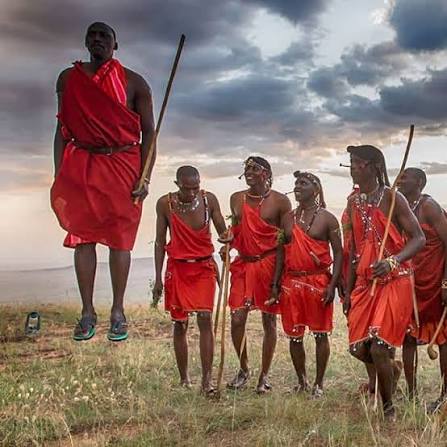
- They are famous for the jumping dance: The adumu is a well-known Maasai dance associated with warrior celebrations and ceremonial occasions.
- Their homes traditionally use locally available materials: Traditional houses are constructed using branches, mud, grass and cow dung.
- Their culture is continually evolving: Many Maasai combine traditional cultural practices with modern education, technology, employment and business.
History and Origin of the Maasai People
According to historical and oral accounts, the Maasai migrated southwards from the Nile Valley region into present-day Kenya and Tanzania over many generations.
Their historical expansion across the Great Rift Valley and surrounding grasslands was closely associated with pastoralism and the availability of grazing land.
During the nineteenth century, Maasai communities occupied extensive areas of the Rift Valley. However, disease outbreaks, famine, colonial expansion, conflicts and the loss of grazing territories significantly affected their population and traditional way of life.
The establishment of national parks, conservation areas and other land-use changes also influenced pastoral communities.
Despite these challenges, the Maasai have maintained important aspects of their cultural identity, including their language, beadwork, ceremonies, social organisation and livestock traditions.
Maasai Culture and Traditions
Maasai culture is built around family, community, livestock, age groups, traditional knowledge and relationships with the natural environment.
Although customs differ between communities, several cultural elements are widely recognised.
1. Cattle Keeping and the Importance of Livestock
Cattle occupy a central position in traditional Maasai society.
Historically, cattle have provided milk, meat, hides and other resources necessary for household survival. They have also played important roles in marriage arrangements, social relationships, ceremonies and the traditional exchange of wealth.
A large cattle herd has traditionally been associated with prosperity and social status.
Maasai pastoralists move their livestock according to seasonal availability of water and grazing land. This knowledge of the environment has helped communities survive in areas where rainfall can be unpredictable.
Goats and sheep are also important livestock, providing food and income.
2. Traditional Maasai Clothing
One of the most recognisable features of Maasai culture is traditional clothing.
Men and women commonly wear colourful cloth wraps known as shukas. Red is particularly associated with Maasai dress, although other colours and patterns are also popular.
Traditional clothing is often complemented by decorative beadwork, sandals and other accessories.
The colours used in Maasai clothing and jewellery can carry cultural meanings, although interpretations vary between communities.
3. Maasai Beadwork and Jewellery
Beadwork is an important part of Maasai cultural expression.
Women traditionally create colourful necklaces, bracelets, earrings, belts and other decorative items using small beads arranged in distinctive patterns.
Different designs and colours may communicate aspects of identity, age, marital status and social relationships.
Visitors to Maasai villages often have opportunities to watch women making jewellery and purchase handmade items directly from the artisans.
Buying directly from the makers can provide an additional source of income for local families.
4. Traditional Maasai Houses
Traditional Maasai homesteads are commonly organised around an enclosed settlement known as an enkang.
The settlement typically consists of several houses arranged around a central livestock enclosure. Thorn branches are traditionally used to create protective fencing for people and animals.
The houses are generally constructed using branches, grass, mud and cow dung.
Women traditionally play a major role in constructing and maintaining these houses.
During a cultural village visit, guests may be invited to enter a traditional house and learn about its construction, cooking arrangements and sleeping spaces.
5. Maasai Warrior Culture
Young Maasai men traditionally pass through different stages of life, including a period known as the moran stage.
Moran refers to young warriors who historically had responsibilities associated with protecting livestock and their communities.
The warrior stage is an important part of the traditional age-set system, which organises people according to generations and stages of life.
Today, the role of young Maasai men has changed considerably, with many pursuing education, employment and other opportunities while maintaining connections with their cultural heritage.
6. Maasai Music and Traditional Dance
Music and dance are important features of Maasai celebrations and social gatherings.
One of the most famous performances is the adumu, commonly known as the Maasai jumping dance.
During the performance, young men take turns jumping vertically while other participants sing and maintain a rhythmic vocal pattern.
The jumping dance is associated with traditional warrior celebrations, although visitors may also see it performed during cultural demonstrations.
Other traditional songs accompany ceremonies, community gatherings and important life events.
7. Maasai Religion and Traditional Beliefs
Traditionally, the Maasai believe in a supreme deity known as Enkai or Engai.
Traditional beliefs connect Enkai with creation, rain, fertility and the natural world.
Rain is particularly important in a pastoral society because it determines the availability of pasture and water for livestock.
Today, Maasai religious beliefs vary. Many community members identify as Christians, while others maintain or combine different traditional beliefs and practices.
8. Family Life and Social Organisation
Family and community relationships are central to Maasai society.
Traditionally, families are organised through extended family networks, clans and age groups.
Elders have historically played important roles in community leadership, resolving disputes and making decisions concerning livestock, grazing and social affairs.
Marriage, childbirth and the transition from one stage of life to another are traditionally marked by important ceremonies.
Customs vary between communities, and modern education, religious beliefs and changing economic conditions continue to influence family life.
Maasai Food: What Do They Traditionally Eat?
Traditional Maasai food is strongly connected to livestock keeping.
Historically, milk has been an important part of the diet, particularly in pastoral households.
Other traditional foods include:
- Milk: Fresh milk is an important traditional food.
- Meat: Beef, goat and sheep meat are consumed during meals and special occasions.
- Blood: Traditionally consumed in some communities, sometimes mixed with milk.
- Maize meal: Known as ugali in East Africa, it is now widely consumed.
- Vegetables and other foods: Dietary habits have diversified considerably with changing lifestyles and increased access to markets.
It is important to understand that modern Maasai diets are not limited to traditional livestock products. Food habits vary according to location, household income, religious practices and access to different foods.
Important Maasai Customs and Ceremonies
Maasai society has traditionally recognised different stages of life through ceremonies and social celebrations.
Some of the important ceremonies include:
Enkipaata
Enkipaata is traditionally associated with the initiation and preparation of a new generation of young men entering the warrior age-set.
Eunoto
Eunoto is an important ceremony marking the transition of warriors towards elderhood.
It is associated with celebrations, songs, social gatherings and the recognition of a new stage in life.
Olng’esherr
Olng’esherr is another important traditional ceremony associated with the transition into senior elderhood and the organisation of age groups.
These ceremonies form part of the Maasai cultural heritage and have been recognised in UNESCO’s work on safeguarding Maasai rites of passage.
Not every ceremony is open to visitors. Some are private community events, and travellers should respect the wishes of their hosts.
What Is the Maasai Relationship with Wildlife?
The Maasai have historically shared their ancestral landscapes with wildlife.
Their traditional pastoral territories include important ecosystems supporting elephants, lions, giraffes, zebras, wildebeest, buffaloes and other animals.
Many Maasai communities live around major wildlife destinations, including the Serengeti, Ngorongoro, Amboseli and Maasai Mara ecosystems.
Pastoralism and wildlife conservation have sometimes complemented each other through shared rangeland management. However, land pressures, changing grazing access, human-wildlife conflict and conservation policies have also created challenges.
Today, some Maasai communities participate in wildlife conservation through community conservancies, tourism partnerships and land-leasing arrangements.
For travellers, a cultural visit can help explain the relationship between local communities, livestock, wildlife and conservation.
How to Visit a Maasai Village in Tanzania
Tanzania offers several opportunities to experience Maasai culture, particularly around the northern safari circuit.
A village visit can be included in a safari itinerary around Arusha, Tarangire, Lake Manyara, Ngorongoro and Serengeti.
Some of the activities available during a cultural visit include:
- Meeting Maasai elders and community members.
- Learning about traditional houses and homesteads.
- Watching traditional music and dancing.
- Learning about cattle keeping and pastoralism.
- Watching women create traditional beadwork.
- Learning traditional fire-making techniques.
- Purchasing handmade jewellery and crafts.
- Walking with a local Maasai guide.
- Learning about medicinal plants and traditional environmental knowledge, where offered.
1. Visit a Maasai Community Around Arusha
Arusha is an excellent starting point for travellers interested in learning about Maasai culture.
Community-based experiences around Monduli and the surrounding highlands offer opportunities to meet Maasai hosts, learn about traditional lifestyles and explore the countryside.
A visit can be arranged as a half-day or full-day excursion, depending on the programme.
2. Visit a Maasai Village Near Ngorongoro
The Ngorongoro Conservation Area is another important destination for understanding the relationship between Maasai pastoralism and wildlife conservation.
Maasai communities live within the conservation area, sharing the landscape with wildlife.
Visitors can learn about traditional livestock keeping, village life and the challenges of balancing conservation with community livelihoods.
Cultural visits should be arranged with appropriate local hosts and in accordance with conservation area regulations.
3. Experience Maasai Culture Around the Serengeti
The Serengeti ecosystem extends into areas where Maasai communities have traditionally lived and grazed their livestock.
Depending on the safari route and community arrangements, travellers may incorporate a cultural experience into their Serengeti holiday.
This can provide a valuable contrast to wildlife viewing and game drives.
4. Visit Maasai Communities Around West Kilimanjaro
The West Kilimanjaro region offers opportunities to learn about Maasai pastoral life against the backdrop of the mountain landscapes.
Visitors can arrange cultural experiences involving traditional homes, local guides, beadwork and storytelling.
How to Visit a Maasai Village in Kenya
Kenya is equally rewarding for travellers interested in Maasai culture.
Some of the best-known areas for cultural visits include:
Maasai Mara: Cultural experiences can be arranged in communities around the reserve and neighbouring conservancies. Visitors may learn about traditional homesteads, livestock keeping, beadwork and community conservation.
Amboseli: Maasai communities live around Amboseli National Park, where pastoralism and wildlife conservation are closely connected.
Kajiado: This county has important Maasai cultural landscapes and communities, offering opportunities to learn about traditional pastoral life.
Narok: The region is strongly associated with Maasai culture and is home to communities around the Maasai Mara ecosystem.
What to Expect During a Maasai Village Visit
A well-organised village visit is more than a traditional dance performance. It should provide an opportunity to interact with local people and learn about their everyday lives.
Although activities vary between communities, a typical visit may include:
1. Traditional welcome
Visitors may be welcomed with songs and dances performed by community members.
2. Maasai homestead tour
A local guide introduces the homestead, explains the traditional houses and describes how families organise their living spaces.
3. Traditional dance
Guests may watch the famous jumping dance and other traditional performances.
4. Fire-making demonstration
A community member may demonstrate how to make fire using traditional wooden tools.
5. Beadwork demonstration
Visitors can meet local women and learn about traditional jewellery-making techniques.
6. Conversation with community members
Guests can ask questions about education, family life, livestock keeping, traditional beliefs and changes in modern Maasai society.
7. Local crafts
Visitors may purchase handmade necklaces, bracelets and other items directly from community artisans.
Best Time to Visit Maasai Communities
Maasai cultural visits can generally be arranged throughout the year.
The best time depends on your wider East African safari itinerary.
June to October: This is a popular dry-season period for northern Tanzania and Kenya safaris. It is a good time to combine cultural experiences with wildlife viewing in the Serengeti, Ngorongoro, Tarangire and Maasai Mara.
January to February: These months offer opportunities to combine Maasai cultural experiences with the wildebeest calving season in the southern Serengeti.
March to May: The long rainy season brings greener landscapes. Some roads can become challenging, so transport arrangements should be considered carefully.
November to December: The short rains and festive travel season provide another opportunity to explore Maasai communities alongside northern Tanzania and Kenya’s wildlife destinations.
Cultural visits are subject to community availability and local arrangements.
Responsible Tourism: How to Visit a Maasai Village Respectfully
A cultural visit should benefit the people hosting you, not simply provide a photo opportunity.
Here are some important guidelines for travellers:
- Choose community-led or community-approved visits.
- Ask how the visitor fee is distributed and how the community benefits.
- Request permission before photographing individuals, especially children and elders.
- Respect homes, family privacy and community traditions.
- Dress modestly and follow your host’s guidance.
- Avoid interrupting private ceremonies or religious activities.
- Purchase crafts directly from local artisans if you wish to support their work.
- Avoid treating community members as tourist attractions or assuming every family follows the same traditions.
The Maasai are a living community, not a museum exhibit. Many community members use modern technology, attend school, run businesses and participate in contemporary society while maintaining important aspects of their cultural heritage.
Combining a Maasai Cultural Visit with an East African Safari
One of the best ways to experience Maasai culture is to combine a community visit with a wildlife safari.
In Tanzania, travellers can combine Maasai cultural experiences with:
- Serengeti National Park for the Great Wildebeest Migration and predator sightings.
- Ngorongoro Crater for wildlife viewing and spectacular scenery.
- Tarangire National Park for elephants and ancient baobab trees.
- Lake Manyara National Park for diverse wildlife and birdlife.
- Arusha National Park for walking safaris and beautiful mountain scenery.
In Kenya, cultural experiences can be combined with:
- Maasai Mara National Reserve for wildlife viewing and the Great Migration.
- Amboseli National Park for elephants and views of Mount Kilimanjaro.
- Nairobi National Park and other destinations in southern Kenya.
At Epic Uganda Vacation, we organise tailor-made East African holidays that combine wildlife, cultural experiences, nature and comfortable accommodation.
Whether you are planning a Tanzania safari, Kenya safari or a longer East African adventure, we can incorporate a Maasai cultural experience into your itinerary.
Frequently Asked Questions About the Maasai Tribe
1. Where do the Maasai people live?
The Maasai mainly live in southern Kenya and northern Tanzania, particularly across the Great Rift Valley and surrounding savannah landscapes.
2. What language do the Maasai speak?
Their traditional language is Maa, a Nilotic language. Many Maasai also speak Swahili and English.
3. What are the Maasai famous for?
They are widely recognised for their colourful clothing, intricate beadwork, cattle-keeping traditions, warrior culture, jumping dance and strong cultural identity.
4. Why are cattle important to the Maasai?
Cattle traditionally provide food, income, social status and security. They also play important roles in ceremonies, marriage arrangements and community relationships.
5. What is the famous Maasai jumping dance called?
It is called adumu. Young men take turns jumping vertically while others sing and maintain a rhythmic pattern.
6. What do Maasai people wear?
Traditional clothing commonly includes colourful shukas, often red, complemented by beaded necklaces, bracelets, earrings and other accessories.
7. What is a traditional Maasai house made of?
Traditional houses are generally constructed using branches, mud, grass and cow dung. Their design reflects the availability of local materials and traditional building knowledge.
8. Can tourists visit a Maasai village?
Yes. Visitors can arrange cultural experiences in Tanzania and Kenya, where local hosts introduce aspects of their culture, traditional homes, food, beadwork, music and everyday life.
9. How long does a Maasai village visit take?
A typical organised cultural visit may take approximately two to three hours, although longer experiences and overnight community stays are also available.
10. Can you combine a Maasai village visit with a Tanzania safari?
Yes. Cultural visits can be incorporated into itineraries covering Arusha, Tarangire, Lake Manyara, Ngorongoro and Serengeti.
11. Are the Maasai still practising their traditional culture?
Yes. Many communities continue to maintain important traditions, including Maa language, beadwork, livestock keeping and ceremonies. However, lifestyles vary and have evolved with education, technology, urbanisation and modern employment.
Discover Maasai Culture with Epic Uganda Vacation
An East African safari is not only about seeing lions, elephants, giraffes and other wildlife. It is also an opportunity to understand the people whose histories and livelihoods are connected to these landscapes.
Meeting the Maasai, learning about their traditions, listening to their stories and discovering their relationship with livestock and wildlife can make a safari more meaningful.
At Epic Uganda Vacation, we believe in creating journeys that go beyond wildlife viewing. We organise personalised East African safaris featuring cultural encounters, nature experiences, wildlife adventures and comfortable accommodation.
Thinking of an East Africa trip? Look no further.
Contact Epic Uganda Vacation to plan your Tanzania or Kenya safari with a meaningful Maasai cultural experience.