Dian Fossey in Rwanda: Her Life, Gorilla Conservation and the Famous Grave Hike
Dian Fossey was one of the most influential figures in mountain gorilla conservation. Her pioneering research in Rwanda’s Virunga Mountains transformed scientific understanding of mountain gorillas and brought international attention to the threats facing these endangered primates.
For travellers planning a Rwanda gorilla safari, learning about Dian Fossey adds a deeper meaning to the experience. Her story connects visitors with the history of gorilla research, the importance of protecting wildlife, and the remarkable conservation work taking place in Volcanoes National Park.
Today, visitors can explore this history through the Dian Fossey grave hike, learn about the former Karisoke Research Center, and encounter mountain gorillas in their natural habitat through a guided gorilla trekking experience.
Whether you are a wildlife enthusiast, primate researcher, photographer or adventure traveller, Dian Fossey’s legacy offers a compelling reason to discover Rwanda beyond gorilla trekking alone.
Who Was Dian Fossey?
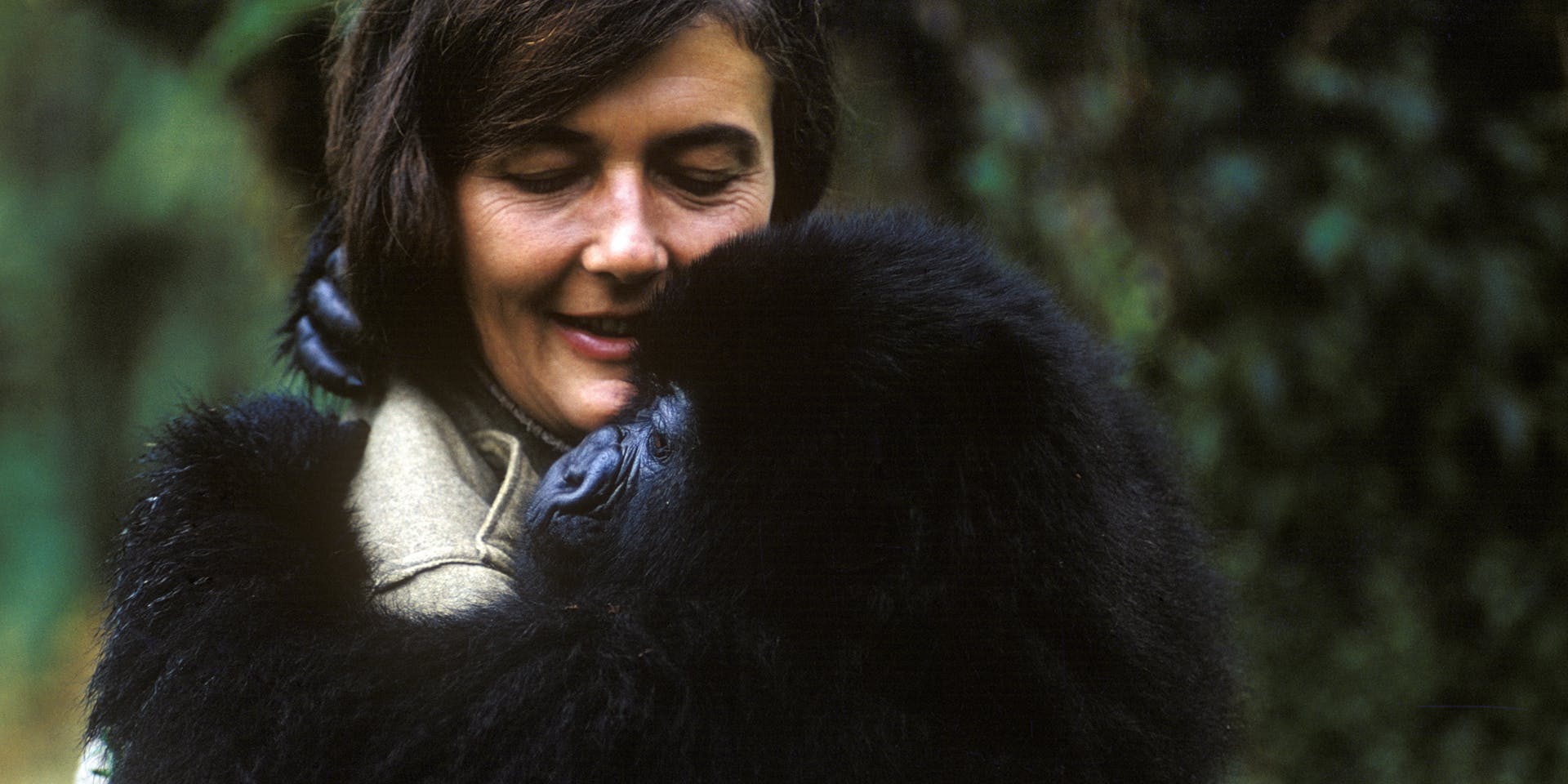
Dian Fossey was an American primatologist best known for her long-term research on mountain gorillas in Rwanda. Born in San Francisco, California, in 1932, she became one of the world’s most recognised figures in primate research and conservation.
Her interest in great apes developed through her encounters with renowned anthropologist and conservationist Louis Leakey, who encouraged her to undertake long-term research on these animals.
In 1967, Fossey travelled to Rwanda and established the Karisoke Research Center in the Virunga Mountains. From this remote mountain camp, she began studying mountain gorillas in their natural forest habitat.
Her work helped reveal that gorillas have complex social relationships, distinct personalities and strong family bonds. She also became a determined advocate for protecting them against poaching and other threats.
Fossey devoted nearly two decades to gorilla research and conservation before her death in 1985. Her scientific contributions, writings and conservation efforts continue to influence how people understand and protect mountain gorillas.
Dian Fossey and Mountain Gorilla Conservation in Rwanda
When Dian Fossey began her research, mountain gorillas were still poorly understood by much of the outside world. Her observations helped challenge common misconceptions about these powerful primates.
Through years of observing individual gorillas and their families, Fossey documented important aspects of their behaviour, including:
- Social relationships and family structures
- Communication and interactions within gorilla groups
- Feeding habits and daily activities
- Territorial behaviour and relationships between groups
- Mother-infant relationships
- Individual personalities and social bonds
Fossey identified individual gorillas and followed their lives over extended periods. This approach helped researchers develop a more detailed understanding of gorilla behaviour and social organisation.
Her work also brought international attention to the challenges of protecting mountain gorillas in the Virunga Mountains.
Today, gorilla conservation involves scientific research, wildlife monitoring, habitat protection, anti-poaching efforts and cooperation among conservation organisations, park authorities and local communities.
For travellers, this history helps explain why Rwanda’s mountain gorillas are more than an extraordinary wildlife attraction. They are part of a conservation story that continues to evolve.
What Is the Karisoke Research Center?
The Karisoke Research Center was established by Dian Fossey in 1967 in the Virunga Mountains of Rwanda. Its name combines parts of the names of two nearby volcanoes: Mount Karisimbi and Mount Bisoke.
The research center became the base for Fossey’s long-term study of mountain gorillas. It played an important role in documenting gorilla behaviour, monitoring individual animals and drawing attention to conservation threats.
Karisoke also became closely associated with efforts to protect gorillas from poaching and illegal wildlife activity.
The Dian Fossey Gorilla Fund continues conservation and research work inspired by her legacy, helping carry forward the commitment to protecting mountain gorillas and their forest habitat.
For visitors interested in the scientific history of Rwanda’s gorilla conservation, Karisoke provides an important connection between early primate research and modern conservation efforts.
What Happened to Dian Fossey?
Dian Fossey was murdered in her cabin at Karisoke on December 26, 1985, at the age of 53.
The circumstances surrounding her death have remained a subject of investigation and discussion. However, her death did not end the conservation work associated with her name.
Her research, writing and commitment to mountain gorillas continued to inspire scientists, conservationists and wildlife enthusiasts around the world.
Her life and work became widely known through her book, Gorillas in the Mist, which recounts her experiences studying and protecting mountain gorillas in the Virunga Mountains.
The book and its subsequent film adaptation introduced millions of people to the mountain gorillas of Rwanda and helped bring greater international attention to their conservation.
Gorillas in the Mist: Dian Fossey’s Lasting Legacy
Gorillas in the Mist remains closely associated with Dian Fossey and Rwanda’s mountain gorillas. The book describes her experiences conducting research in the forest and the difficulties involved in protecting the animals she studied.
The story helped change how many people viewed mountain gorillas, encouraging greater appreciation of their social lives, intelligence and individual characteristics.
The expression “gorillas in the mist” has also become strongly linked to the mist-covered volcanic forests of the Virunga Mountains, where mountain gorillas live.
For visitors to Rwanda, understanding Fossey’s story provides valuable context for a gorilla trekking safari. It highlights the research and conservation efforts behind the opportunity to observe these endangered primates in their natural environment.
The Dian Fossey Grave Hike in Rwanda
One of the most meaningful experiences for visitors interested in Dian Fossey is the guided hike to her grave and former research area in the Virunga Mountains.
Fossey was buried near the former Karisoke Research Center, between Mount Karisimbi and Mount Bisoke. Her grave lies beside those of several gorillas she studied and protected, including Digit, a gorilla that held a special place in her life and conservation work.
The hike offers an opportunity to learn about Fossey’s research, her conservation efforts and the challenges she faced while working in the mountains.
Unlike gorilla trekking, which focuses on locating and observing a habituated gorilla family, the Dian Fossey hike centres on conservation history and the legacy of one of the world’s best-known primatologists.
What to Expect on the Dian Fossey Hike
The hike takes place in mountainous forest terrain, where weather and trail conditions can change. Depending on conditions, visitors may encounter muddy paths, steep sections and uneven ground.
During the experience, visitors can learn about:
- Dian Fossey’s life and scientific research
- The history of the Karisoke Research Center
- Her efforts to protect mountain gorillas
- The gorillas associated with her research
- The continuing importance of conservation in the Virunga Mountains
The hike can be particularly rewarding for travellers who want to understand the history behind Rwanda’s mountain gorilla conservation.
Important: Access arrangements, hike duration, fees and current trail conditions should be confirmed with the relevant park authorities or your tour operator before travel.
Read our guide to the Dian Fossey grave hike for additional planning information.
Is the Dian Fossey Grave Hike Difficult?
The Dian Fossey hike can be physically demanding because it involves mountainous terrain and forest trails. The difficulty depends on trail conditions, weather and individual fitness.
Travellers should prepare for uneven ground, possible mud and changing mountain weather. Reasonable physical fitness and suitable hiking equipment are recommended.
Before booking, consider your fitness level and discuss any mobility concerns with your tour operator. Ask about the expected walking time, elevation, trail conditions and any current access restrictions.
The hike is particularly suitable for travellers interested in wildlife conservation, primate research, nature and Rwanda’s conservation history.
Dian Fossey Hike vs. Gorilla Trekking: What’s the Difference?
Although both activities take place in Rwanda’s mountain gorilla landscape, they offer different experiences.
| Experience | Dian Fossey grave hike | Gorilla trekking |
|---|---|---|
| Main focus | Conservation history and Fossey’s legacy | Observing mountain gorillas |
| Main experience | Guided hike to the historic research area and grave | Guided search for a habituated gorilla family |
| Physical activity | Mountain hiking through forest terrain | Forest hiking that varies with the gorilla family’s location |
| Wildlife viewing | Not primarily a gorilla-viewing activity | The main goal is to see mountain gorillas |
| Best suited to | Conservation enthusiasts and travellers interested in history | Wildlife lovers seeking a gorilla encounter |
If time and arrangements permit, combining both activities can provide a more complete understanding of Rwanda’s mountain gorillas and the people who helped protect them.
Gorilla Trekking in Volcanoes National Park, Rwanda
Volcanoes National Park in northwestern Rwanda is one of Africa’s best-known destinations for mountain gorilla trekking.
During a guided trek, visitors hike through montane forest with trained guides and trackers to locate a habituated gorilla family. Once the gorillas are found, visitors follow the instructions of park staff and observe the animals under the applicable visitor rules.
Seeing mountain gorillas in the wild can be an unforgettable experience. Visitors may observe family interactions, feeding behaviour, resting, grooming and the relationships between adults and young gorillas.
Gorilla trekking also offers a practical connection to the conservation story associated with Dian Fossey. Her research helped bring international attention to these animals and the importance of protecting their habitat.
If you are planning your first trek, read our guide to where to see mountain gorillas in Rwanda.
Does Gorilla Tourism Support Conservation?
Responsible gorilla tourism forms part of Rwanda’s wider conservation and tourism system. Visitors purchase permits to participate in gorilla trekking, while tourism supports employment and business opportunities for guides, trackers, drivers, accommodation providers, porters and other local workers.
Tourism can also create economic incentives to protect wildlife and forest habitats. Its long-term benefits depend on responsible management, effective conservation measures and meaningful participation by local communities.
Visitors can contribute by following park rules, respecting wildlife, listening to their guides and supporting responsible tourism businesses.
Can You Combine the Dian Fossey Hike With Gorilla Trekking?
Yes. Travellers can plan an itinerary that combines the Dian Fossey grave hike with gorilla trekking in Volcanoes National Park, subject to current access arrangements, availability and the time required for each activity.
A combined trip allows you to explore both the historical and wildlife aspects of Rwanda’s mountain gorilla conservation story.
A possible short itinerary is:
Day 1: Kigali to Volcanoes National Park
- Arrive in Kigali or enjoy a city tour.
- Transfer to the Volcanoes National Park area.
- Check in at your accommodation and prepare for the next day’s activities.
Day 2: Gorilla Trekking
- Attend the park briefing.
- Join your assigned gorilla trekking group.
- Spend the permitted viewing time observing the gorillas.
- Return to your lodge and relax.
Day 3: Dian Fossey Hike and Return to Kigali
- Undertake the Dian Fossey hike if access, scheduling and physical conditions permit.
- Learn about the former research area and Fossey’s conservation legacy.
- Return to Kigali, allowing sufficient time for the hike and road transfer.
The itinerary may need to be adjusted depending on the hike schedule, gorilla permit arrangements and your departure time. In some cases, allowing an additional night provides a more comfortable experience.
For a planned combination of these activities, explore our 4-Day Rwanda Gorillas and Dian Fossey Tour.
Best Time to Visit Dian Fossey’s Research Area
Rwanda is a year-round destination, but mountain weather can affect hiking conditions.
The Virunga Mountains receive rainfall throughout the year, and forest trails can become slippery or muddy. Many travellers prefer relatively drier periods for hiking, although wet conditions are possible in any season.
When planning your trip, consider:
- Weather: Prepare for cool temperatures, mist and rain in the mountains.
- Trail conditions: Ask about current conditions before the hike.
- Gorilla permits: Secure your preferred trekking date well in advance, especially during busy travel periods.
- Itinerary flexibility: Allow enough time for mountain activities and road transfers.
- Access arrangements: Confirm that the Dian Fossey hike is available on your intended travel dates.
Rather than relying on weather alone, plan around permit availability, your interests and the time you have available.
What to Pack for the Dian Fossey Hike
Appropriate clothing and equipment can make a mountain hike more comfortable.
Consider packing the following:
- Sturdy, waterproof hiking boots with good grip
- Lightweight waterproof jacket
- Long trousers and a long-sleeved shirt
- Gardening gloves for gripping vegetation
- Small backpack
- Drinking water
- Energy snacks, where permitted
- Insect repellent
- Camera and waterproof protection for electronics
- Walking stick, if useful
- Extra layers for cool conditions
Wear clothing suitable for wet forest environments and follow your guide’s advice about the trail. Avoid leaving litter, disturbing wildlife or damaging vegetation.
Why Dian Fossey Still Matters Today
Dian Fossey’s legacy extends beyond the gorillas she studied. Her research helped people understand mountain gorillas as complex social animals with individual personalities and strong family relationships.
Her determined campaign against poaching also brought international attention to the threats facing these primates.
Although her methods and approach to conservation have been debated, her influence on public awareness and the history of mountain gorilla research remains significant.
Today, mountain gorilla conservation depends on the continued efforts of researchers, park authorities, conservation organisations, local communities and responsible visitors.
For travellers, learning about Fossey’s work provides a deeper appreciation of the forest ecosystem and the conservation efforts that make gorilla tourism possible.
Plan Your Dian Fossey and Rwanda Gorilla Safari
Exploring Dian Fossey’s legacy can turn a Rwanda safari into more than a wildlife holiday. You can discover the history of mountain gorilla research, visit the memorial area where permitted, and experience the remarkable wildlife of Volcanoes National Park.
Depending on your interests and available time, your trip can include:
- A guided Dian Fossey grave hike
- Mountain gorilla trekking
- A Kigali city experience
- Golden monkey trekking
- Cultural experiences around Volcanoes National Park
- Additional wildlife experiences elsewhere in Rwanda
At Epic Uganda Vacation, we can help you plan a Rwanda safari based on your preferred activities, travel dates, accommodation preferences and budget.
Whether you want to focus on gorilla trekking or combine it with the Dian Fossey hike, our team can help you organise the practical details of your trip.
Contact Epic Uganda Vacation to start planning your Rwanda gorilla trekking and Dian Fossey experience.
Frequently Asked Questions About Dian Fossey
Who was Dian Fossey?
Dian Fossey was an American primatologist known for her pioneering long-term research on mountain gorillas in Rwanda. She established the Karisoke Research Center in 1967 and became an internationally recognised figure in gorilla conservation.
Where did Dian Fossey study mountain gorillas?
She conducted her research in the Virunga Mountains of Rwanda, where she established the Karisoke Research Center to study mountain gorillas in their natural habitat.
Where is Dian Fossey buried?
Dian Fossey is buried near her former research station at Karisoke, in the Virunga Mountains between Mount Karisimbi and Mount Bisoke.
Can tourists visit Dian Fossey’s grave?
A guided hike to Dian Fossey’s grave and former research area may be available to visitors. Confirm current access, booking requirements, fees and trail conditions with the relevant park authorities or a tour operator before travelling.
What is the Karisoke Research Center famous for?
The Karisoke Research Center is known for Dian Fossey’s long-term mountain gorilla research and its place in the history of gorilla conservation in Rwanda.
Why is Dian Fossey important to gorilla conservation?
Her research helped reveal the complex social behaviour of mountain gorillas, while her efforts to protect them brought international attention to the threats they faced.
Can I combine the Dian Fossey hike with gorilla trekking?
Yes, the two activities can be combined in a Rwanda safari, depending on scheduling, access arrangements, permit availability and your fitness level. Allow sufficient time for both experiences.
Is the Dian Fossey hike difficult?
The hike can be physically demanding because it involves mountainous forest terrain. Sturdy footwear, suitable clothing and reasonable physical fitness are recommended.
What is Gorillas in the Mist about?
Gorillas in the Mist is Dian Fossey’s account of her experiences studying and protecting mountain gorillas in the Virunga Mountains. The book and its film adaptation helped introduce her work to a global audience.
Where can I see mountain gorillas in Rwanda?
Mountain gorilla trekking takes place in Volcanoes National Park in northwestern Rwanda. Visitors need to arrange the appropriate trekking permit and follow park regulations.
How do I book a Dian Fossey and gorilla trekking tour?
You can contact Epic Uganda Vacation to discuss your preferred travel dates, gorilla trekking permits, the Dian Fossey hike and accommodation options.