Nouabalé-Ndoki National Park: Wildlife, Lowland Gorillas and Congo Rainforest Safaris
Nouabalé-Ndoki National Park is one of Africa’s most remarkable destinations for travellers seeking an authentic rainforest experience. Located in the northern Republic of the Congo, this remote protected area preserves vast stretches of Congo Basin rainforest, providing habitat for western lowland gorillas, chimpanzees, forest elephants and hundreds of bird species.
Unlike Africa’s more established safari destinations, Nouabalé-Ndoki offers a different kind of adventure. Here, the experience centres on exploring tropical forests, observing wildlife at natural forest clearings, learning about primate research and discovering one of Central Africa’s most important conservation landscapes.
The park is especially appealing to specialist wildlife travellers, primate enthusiasts, conservation researchers, birdwatchers and adventurous visitors interested in less-visited destinations.
If you are planning a Congo rainforest safari, this guide explains where Nouabalé-Ndoki National Park is located, the wildlife you may encounter, the activities to consider, the best time to visit and how to prepare for your journey.
Where Is Nouabalé-Ndoki National Park Located?
Nouabalé-Ndoki National Park is situated in the northern part of the Republic of the Congo, also known as Congo-Brazzaville. It lies more than 900 kilometres north of Brazzaville, the country’s capital, and covers more than 4,000 square kilometres of rainforest.
The park forms part of the wider Congo Basin, one of the world’s most important tropical forest regions. Its landscape includes dense lowland rainforest, forest streams, swamp forests and natural clearings known as baïs, where wildlife sometimes gathers to feed, drink and interact.
The park’s remote location is a major part of its appeal, but it also means that travel requires advance planning. Visitors should arrange transport, accommodation, park access and guided activities with the park’s management or an authorised tourism operator before departure.
For travellers seeking a more conventional safari with extensive road networks and easy access to multiple wildlife-viewing areas, another destination may be more suitable. Nouabalé-Ndoki is best approached as a specialist rainforest expedition.
Why Is Nouabalé-Ndoki National Park Important?
Established in 1993, Nouabalé-Ndoki National Park protects one of the most intact areas of the Congo Basin rainforest.
Its forests support threatened large mammals and exceptional biodiversity. They also provide opportunities for long-term scientific research into animal behaviour, forest ecology and conservation.
The park is important for several reasons:
- Wildlife protection: It safeguards habitat for western lowland gorillas, chimpanzees and African forest elephants.
- Rainforest conservation: It protects extensive forest ecosystems, including ancient trees and swamp habitats.
- Scientific research: Researchers study great apes, mammals and other components of the forest ecosystem.
- Community engagement: Conservation and tourism initiatives create opportunities for local participation and employment.
- Regional cooperation: The park is part of a larger transboundary conservation landscape linking protected areas in the Republic of the Congo, Cameroon and the Central African Republic.
Nouabalé-Ndoki is also part of the Sangha Trinational conservation landscape, which is recognised as a UNESCO World Heritage property. This wider protected area demonstrates the importance of international cooperation in conserving Central Africa’s forests and wildlife.
Wildlife in Nouabalé-Ndoki National Park
The park’s greatest attraction is its rich rainforest biodiversity. Wildlife encounters can be rewarding, but animals move freely through dense vegetation, and sightings are never guaranteed.
1. Western Lowland Gorillas
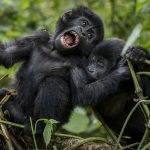
Western lowland gorillas are among the most important wildlife species associated with Nouabalé-Ndoki National Park.
They inhabit the dense forests of Central Africa and differ from the mountain gorillas found in Uganda, Rwanda and the Democratic Republic of the Congo’s Virunga region.
Western lowland gorillas generally live in social groups led by a dominant silverback. Their diet includes fruit, leaves, shoots and other forest vegetation.
For visitors interested in great apes, the park offers opportunities to learn about lowland gorilla ecology and conservation. Specialised visits may be available at designated research or habituation sites, subject to current visitor arrangements.
Gorilla viewing in a remote rainforest is different from trekking for mountain gorillas. The forest is dense, visibility varies, and encounters depend on animal movements and the conditions of the visit.
2. Chimpanzees
Chimpanzees are another important great ape found in Nouabalé-Ndoki’s forests.
They live in complex social communities and communicate through vocalisations, gestures and other behaviours. Their diet includes fruit, leaves, seeds and other foods available in the forest.
The Goualougo Triangle, associated with the park’s scientific research, is particularly significant for studies of chimpanzee behaviour and great ape ecology.
Visitors should not assume that research areas are automatically open to tourism. Access to specialised chimpanzee experiences must be confirmed with park management before travel.
3. African Forest Elephants
African forest elephants are among the most impressive animals living in the Congo Basin.
Compared with savanna elephants, forest elephants are generally smaller and adapted to moving through dense tropical vegetation. They play an important ecological role by dispersing seeds and influencing forest regeneration.
One of the best-known ways to observe forest elephants in Nouabalé-Ndoki is from a designated viewing area overlooking a natural forest clearing, where elephants may gather to feed, drink or interact.
Wali Baï, accessible from the park’s Bomassa area, is an important wildlife-viewing location. However, sightings depend on the movements of wild animals, so patience is essential.
4. Forest Buffaloes
Forest buffaloes inhabit the park’s forest clearings and surrounding vegetation. These animals may visit open areas to feed or access water, offering visitors a chance to observe their behaviour in a natural setting.
A viewing platform can provide a useful vantage point while allowing visitors to remain at a respectful distance from wildlife.
5. Sitatungas and Other Forest Antelopes
Nouabalé-Ndoki supports several forest-dwelling antelopes, including sitatungas. These animals are adapted to the wet, densely vegetated environments of Central African forests.
Sitatungas are particularly associated with marshes and swampy habitats, where their specialised hooves help them move through soft ground.
Other small and medium-sized forest antelopes may also occur in the park, although they can be difficult to spot in thick vegetation.
6. Birds and Other Rainforest Wildlife
Birdwatching is another reason to visit Nouabalé-Ndoki National Park. The wider Sangha Trinational landscape supports hundreds of bird species, including hornbills and other forest birds.
The park’s biodiversity extends beyond large mammals to include monkeys, reptiles, amphibians, butterflies and numerous plant species.
Visitors who travel with a knowledgeable local guide may gain a better understanding of forest sounds, animal signs, plant relationships and the ecological processes that are less visible during a conventional safari.
Best Things to Do in Nouabalé-Ndoki National Park
Nouabalé-Ndoki is best suited to travellers who appreciate nature, conservation and the experience of exploring a remote forest. Activities depend on current access arrangements, weather, available guides and park regulations.
1. Observe Wildlife at Wali Baï
Wali Baï is a natural forest clearing near Bomassa that offers opportunities to observe wildlife from a raised viewing platform.
Forest elephants are among its best-known visitors. Forest buffaloes and other animals may also appear.
The experience differs from a typical savanna game drive. Instead of following animals in a vehicle, visitors spend time watching a natural clearing and waiting for wildlife to arrive.
This approach can be rewarding for photographers, wildlife enthusiasts and travellers who enjoy patient observation.
2. Explore Western Lowland Gorilla Conservation
The park has a long history of research into western lowland gorillas. At designated sites such as Mondika, researchers and trackers have worked to habituate gorilla groups for scientific study and carefully managed visitor experiences.
A gorilla visit must be arranged in advance, and current availability should be confirmed directly with park management or an authorised operator.
Visitors should also understand that gorilla encounters are governed by strict rules intended to protect both people and animals from disease transmission and disturbance.
3. Learn About Chimpanzee Research
Nouabalé-Ndoki is internationally recognised for its great ape research, including work associated with the Goualougo Triangle.
Depending on the activities currently offered to visitors, a trip may provide insight into the scientific work being carried out in the forest. However, research sites are not necessarily tourist attractions, and access may be restricted.
For travellers interested in primatology, the park’s scientific importance is a major reason to consider visiting even beyond the prospect of seeing a particular animal.
4. Experience the Congo Basin Rainforest
Walking through a tropical rainforest offers a different perspective on wildlife than travelling through open savanna.
The forest is filled with birdsong, insect sounds, changing light and layers of vegetation. A guided walk can help visitors understand the relationship between plants, wildlife, water and the forest’s seasonal cycles.
Walking routes, river activities and other excursions must follow park regulations and should only be undertaken with the required guides.
5. Discover Community-Based Conservation
The long-term protection of Nouabalé-Ndoki depends not only on wildlife management but also on relationships with communities around the park.
Responsible tourism can contribute to employment, local services and wider conservation objectives when benefits are managed effectively.
Visitors can support this approach by using authorised operators, following local guidance, respecting community customs and asking permission before photographing people.
What Is Mbeli Baï, and Can Tourists Visit It?
Mbeli Baï is a large natural forest clearing known for its importance to wildlife observation and long-term research. The site has been used to study forest elephants, gorillas, forest buffaloes and other animals that visit the clearing.
Its open setting can provide opportunities to observe animal behaviour that would be difficult to see inside dense rainforest.
However, Mbeli Baï is currently listed by the park’s official website as closed to the public for renovations, with reopening expected in early 2028. The schedule may change, so travellers should check the official park website before building their itinerary around this site.
Wali Baï is a separate forest clearing and should not be confused with Mbeli Baï.
For the latest visitor information, consult the official site
Best Time to Visit Nouabalé-Ndoki National Park
Nouabalé-Ndoki has a tropical rainforest climate, with warm temperatures, high humidity and rainfall that can affect travel and forest activities.
The park’s official visitor information identifies January to March as a dry-season period in northern Congo. Conditions can nevertheless vary, and rain may occur outside this period.
The best time to visit depends on your priorities, such as gorilla observation, birdwatching, photography or general rainforest exploration.
Before choosing dates, consider:
- Rainfall and trail conditions: Wet weather can affect walking routes and travel logistics.
- Wildlife behaviour: Animals move naturally through the forest, and no month guarantees sightings.
- Visitor availability: Specialised gorilla visits and other activities may have limited capacity.
- Transport arrangements: Road, river and other transfers should be checked for your travel dates.
- Accommodation: Confirm that your preferred accommodation is operating and available before booking international flights.
Because tourism infrastructure and access arrangements can be limited, it is best to organise your visit around confirmed activities rather than choosing dates based on wildlife expectations alone.
How to Get to Nouabalé-Ndoki National Park
Reaching Nouabalé-Ndoki requires more planning than visiting many mainstream African national parks.
The park is located far north of Brazzaville, and visitors generally need to coordinate domestic travel with onward road or river transfers to the Bomassa area.
A practical planning process is:
- Arrive in Brazzaville or another agreed entry point. Confirm international connections and any necessary overnight stays.
- Arrange onward transport. The route and combination of flights, road travel or river transport will depend on current services and the arrangements made by your operator.
- Travel towards Ouesso and the Sangha region, if applicable. Confirm the current transfer plan and realistic journey times before departure.
- Continue to Bomassa or your confirmed park accommodation. Follow the itinerary supplied by park management or your authorised operator.
Do not assume that all transfers operate daily or that every route is suitable throughout the year. Ask your operator to confirm the full journey, luggage limits, transfer times, accommodation and contingency plans before making non-refundable bookings.
Independent travel can be challenging because park entry, guided activities and transport need to be coordinated in advance.
Where to Stay When Visiting Nouabalé-Ndoki
Accommodation options in and around the park are more limited than in well-established safari destinations.
Depending on current operations, visitors may need to stay at designated park accommodation, research-related visitor facilities or other approved lodging arranged through their operator.
Before booking, confirm:
- Whether the property is currently operating
- Whether meals are included
- The availability of electricity, charging facilities and communications
- How transfers between accommodation and activities are arranged
- Whether the price includes park fees, guides and other services
- What happens if weather or transport disruptions affect the itinerary
Because the park is remote, accommodation should be confirmed before travelling to the region rather than arranged on arrival.
Park Fees, Permits and Visitor Requirements
The total cost of visiting Nouabalé-Ndoki depends on the activities selected, the duration of the trip, accommodation, transport and the applicable park fees.
Certain fees apply to visitors, and the park publishes a visitor tariff through its official information resources. Specialised wildlife experiences may involve additional arrangements and costs.
Before paying a deposit, request a written breakdown covering:
- Park entrance and visitor fees
- Gorilla or other specialist activity fees, where applicable
- Accommodation and meals
- Road, river or other transfers
- Guide services
- Any required local permits or administrative charges
Fees and availability can change. Confirm the current tariff with the park or your authorised operator rather than relying on outdated prices published elsewhere.
Visa and Health Preparation
Many nationalities require a visa to enter the Republic of the Congo, and the park’s visitor guidance states that visitors should arrange applicable visas in advance rather than assume a visa on arrival is available.
Entry requirements depend on nationality and may change. Check with the relevant Congolese embassy or consular authority before travel.
Yellow fever documentation may be required depending on your itinerary and applicable entry rules. Consult official health and immigration guidance for your circumstances.
Malaria is present in the region. Speak with a qualified travel-health professional well before departure about recommended preventive medication, vaccinations, insect protection and other precautions.
What to Pack for a Nouabalé-Ndoki Rainforest Safari
The rainforest environment calls for practical clothing and equipment that can cope with humidity, rain, insects and dense vegetation.
Consider packing:
- Lightweight, breathable long-sleeved shirts
- Long trousers
- Waterproof hiking boots with good grip
- A lightweight rain jacket
- Insect repellent
- A comfortable daypack
- Reusable water bottles, following local guidance
- Binoculars for wildlife and birdwatching
- A camera and waterproof protection for electronics
- Spare socks and quick-drying clothing
- Personal medication and a basic first-aid kit
- A headlamp or torch, if recommended by your accommodation provider
- Neutral-coloured clothing suitable for forest activities
Pack according to the operator’s instructions, especially if your trip includes specialised gorilla observation or extended forest excursions.
Responsible Tourism Rules in Nouabalé-Ndoki National Park
Nouabalé-Ndoki protects vulnerable wildlife and sensitive forest ecosystems. Visitors are expected to follow park rules and the instructions of their guides.
Important principles include:
- Maintain the distance instructed by guides when observing wildlife.
- Never feed, touch or deliberately approach wild animals.
- Follow all health precautions for gorilla and other great ape visits.
- Do not visit habituated primates when you are unwell or have symptoms that may pose a disease risk; follow the park’s specific health requirements.
- Stay with your guide and use authorised routes.
- Do not litter, remove plants or disturb animals.
- Respect local communities and ask permission before taking photographs of people.
- Follow instructions from park staff and conservation personnel.
These rules help protect wildlife, visitors, local communities and the long-term future of ecotourism in the region.
Nouabalé-Ndoki National Park and the Sangha Trinational
Nouabalé-Ndoki is part of the wider Sangha Trinational landscape, which connects protected areas in the Republic of the Congo, Cameroon and the Central African Republic.
The landscape includes Nouabalé-Ndoki National Park, Lobéké National Park in Cameroon and protected areas associated with Dzanga-Sangha in the Central African Republic.
Together, these areas protect extensive rainforest habitat and important populations of forest wildlife. Their connected conservation work is especially valuable because wildlife and ecological processes do not stop at international borders.
For travellers interested in a longer Central African nature journey, the wider region offers opportunities to learn about rainforest conservation across national boundaries. However, cross-border trips require careful planning, including separate entry requirements, transport arrangements and confirmation of access to each protected area.
Is Nouabalé-Ndoki National Park Worth Visiting?
Nouabalé-Ndoki can be an extraordinary destination for travellers who value wilderness, biodiversity and conservation.
It is particularly appealing if you want to:
- Learn about western lowland gorillas and great ape research
- Observe forest elephants in a natural rainforest setting
- Experience the Congo Basin away from mainstream safari routes
- Explore tropical forest ecosystems with knowledgeable guides
- Support responsible tourism and conservation initiatives
However, the park is remote, and wildlife sightings are unpredictable. Transport, accommodation and access to specialist activities must be confirmed in advance.
If your priority is a highly structured safari with easy transport and a wide range of accommodation choices, consider your travel experience and comfort requirements carefully before booking.
For the right traveller, Nouabalé-Ndoki offers a rare opportunity to experience one of Africa’s most important rainforest conservation landscapes.
Plan Your Nouabalé-Ndoki National Park Safari
A visit to Nouabalé-Ndoki National Park is an opportunity to explore the Congo Basin, learn about western lowland gorilla conservation and discover the wildlife of one of Central Africa’s most intact rainforest regions.
Because access and activities can be limited, careful planning is essential. Confirm park entry, current visitor facilities, permits, transport, accommodation and health requirements before finalising your journey.
At Epic Uganda Vacation, we help travellers explore African wildlife destinations and plan nature-focused journeys according to their interests, dates and budget. If you are considering a trip to the Republic of the Congo, contact our team to discuss your plans and establish which arrangements can be confirmed for your preferred dates.
Start planning your rainforest adventure through Epic Uganda Vacation.
Frequently Asked Questions About Nouabalé-Ndoki National Park
Where is Nouabalé-Ndoki National Park located?
Nouabalé-Ndoki National Park is in northern Republic of the Congo, also known as Congo-Brazzaville. It is part of the Congo Basin rainforest and lies more than 900 kilometres north of Brazzaville.
What is Nouabalé-Ndoki National Park famous for?
The park is known for its extensive rainforest, western lowland gorillas, chimpanzees, African forest elephants, forest clearings and scientific research on great apes and other wildlife.
Can you see gorillas in Nouabalé-Ndoki National Park?
The park is associated with western lowland gorilla conservation and research. Specialised gorilla visits may be available at designated sites, but access, schedules and availability must be confirmed before booking.
What is the difference between western lowland gorillas and mountain gorillas?
Western lowland gorillas live in the forests of Central Africa, while mountain gorillas inhabit higher-altitude forest ecosystems in parts of Uganda, Rwanda and the Democratic Republic of the Congo. They are different populations adapted to different habitats.
Can tourists visit Mbeli Baï?
The park’s official website currently lists Mbeli Baï as closed to the public for renovations, with reopening expected in early 2028. Check the official park website for updates before planning your trip.
What is Wali Baï?
Wali Baï is a natural forest clearing near Bomassa where visitors may observe wildlife, particularly forest elephants, from a designated viewing platform.
What is the best time to visit Nouabalé-Ndoki National Park?
The park’s visitor information identifies January to March as a dry-season period in northern Congo. Weather varies, so check current conditions and activity availability before choosing travel dates.
How do you get to Nouabalé-Ndoki National Park?
Visitors need to coordinate travel from Brazzaville or another suitable entry point with onward transport to the northern Sangha region and the park. The exact route depends on current transport services and arrangements with park management or an authorised operator.
Do you need a permit to visit Nouabalé-Ndoki National Park?
Visitors are subject to park fees, and certain activities may require additional arrangements. Confirm the current visitor tariff, activity fees and booking requirements with the official park authorities.
Is Nouabalé-Ndoki National Park in the Democratic Republic of the Congo?
No. It is in the Republic of the Congo, also called Congo-Brazzaville. The Democratic Republic of the Congo is a separate country.
Is Nouabalé-Ndoki National Park suitable for first-time safari travellers?
It can suit travellers interested in nature and remote wildlife experiences, but its logistics are more complex than those of many mainstream safari destinations. Advance planning and confirmed local arrangements are essential.
What should I pack for a visit to Nouabalé-Ndoki?
Bring breathable long-sleeved clothing, long trousers, sturdy footwear, rain protection, insect repellent, binoculars, a camera, personal medication and other equipment recommended by your operator.