23-Day Uganda Mammal Watching and Birding Safari: A Complete Wildlife and Birdwatching Adventure
Explore Uganda’s extraordinary wildlife on this 23-day mammal watching and birding safari, a journey designed for dedicated birdwatchers, mammal enthusiasts, wildlife photographers and nature lovers.
Uganda is one of Africa’s most rewarding destinations for observing wildlife across different ecosystems. From the papyrus wetlands of Mabamba Swamp and the tropical rainforest of Mabira to the open savannah of Kidepo Valley, the lowland forests of Semuliki and the montane rainforests of Bwindi, this safari explores an exceptional variety of habitats.
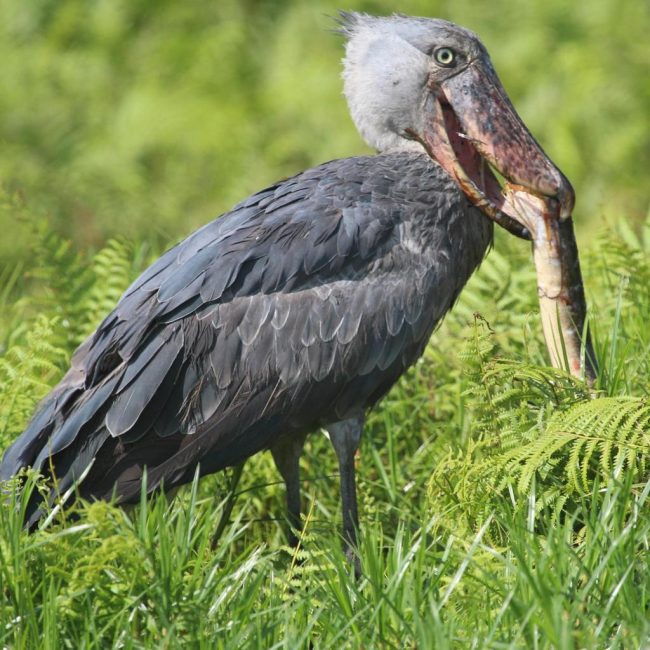
The journey begins in Entebbe, where you search for the famous Shoebill, before heading east to Mabira Forest, Pian Upe Wildlife Reserve and the Moroto Mountains. Continue north to Kidepo Valley National Park and Murchison Falls National Park for classic African wildlife encounters.
The adventure then takes you through Budongo Forest, Semuliki National Park and Kibale Forest, where you can search for unusual forest mammals, chimpanzees and rare birds such as the Green-breasted Pitta. In southwestern Uganda, explore Queen Elizabeth National Park, trek endangered mountain gorillas in Bwindi and track golden monkeys in Mgahinga Gorilla National Park.
The safari concludes in Lake Mburo National Park, where savannah wildlife, wetlands and nocturnal birding provide a memorable finish to your Uganda wildlife adventure.
Whether your goal is to expand your African bird checklist, search for elusive mammals or experience Uganda’s famous primates, this 23-day itinerary offers an extensive exploration of the country’s natural diversity.
23-Day Uganda Mammal Watching and Birding Safari Highlights
- Search for the Shoebill during a boat excursion in Mabamba Swamp.
- Explore Mabira Forest for Uganda Mangabey, potto, galagos and forest birds.
- Search for Fox’s Weaver and other regional birding specialities in Pian Upe Wildlife Reserve.
- Explore the Moroto Mountains and Karamoja landscapes.
- Enjoy game drives and birdwatching in Kidepo Valley National Park.
- Search for elephants, giraffes, lions, cheetahs and other savannah mammals.
- Explore Murchison Falls National Park through game drives and a Nile boat safari.
- Discover the famous Royal Mile birding trail in Budongo Forest.
- Search for Congo Basin and Ituri Forest bird species in Semuliki National Park.
- Track wild chimpanzees in Kibale Forest National Park.
- Search for the Green-breasted Pitta and other forest birds in Kibale.
- Explore Bigodi Wetland Sanctuary for primates, birds and nocturnal wildlife.
- Enjoy wildlife viewing and a boat safari along the Kazinga Channel in Queen Elizabeth National Park.
- Search for tree-climbing lions in the Ishasha sector.
- Trek endangered mountain gorillas in Bwindi Impenetrable National Park.
- Explore the Buhoma and Ruhija birding areas of Bwindi.
- Search for Albertine Rift endemic birds in Mgahinga Gorilla National Park.
- Track golden monkeys in Mgahinga.
- Enjoy savannah and wetland birding in Lake Mburo National Park.
Uganda Mammal Watching and Birding Safari at a Glance
| Safari detail | Information |
|---|---|
| Duration | 23 days |
| Starting point | Entebbe, Uganda |
| Ending point | Entebbe, Uganda |
| Main focus | Mammal watching and birdwatching |
| Primate experiences | Chimpanzee tracking, mountain gorilla trekking and golden monkey tracking |
| Main habitats | Wetlands, savannah, montane forest, lowland rainforest and riverine woodland |
| Main destinations | 13 wildlife and birding locations |
| Suitable for | Birdwatchers, mammal enthusiasts, photographers and nature lovers |
Detailed 23-Day Uganda Mammal Watching and Birding Itinerary
Day 1: Arrival in Entebbe – Botanical Gardens Birding
Upon arrival at Entebbe International Airport, you will be welcomed by your safari guide and transferred to your accommodation.
Depending on your arrival time, you may visit the Entebbe Botanical Gardens for an introductory birding and wildlife experience.
Established in 1898, the gardens occupy a beautiful stretch of Lake Victoria shoreline. Their combination of mature trees, open lawns and lakeside vegetation provides habitat for several bird and mammal species.
During your walk, look out for:
- Great Blue Turaco
- Ross’s Turaco
- African Grey Parrot
- Black-and-white-casqued Hornbill
- African Pied Hornbill
- Pink-backed Pelican
- African Openbill
- Yellow-billed Stork
- Bat Hawk
The gardens also support several primates, including black-and-white colobus monkeys and vervet monkeys. Red-tailed monkeys may also be encountered.
Return to your accommodation for dinner and relaxation.
Overnight: Entebbe.
Day 2: Mabamba Swamp Shoebill Excursion and Transfer to Mabira Forest
After breakfast, travel to Mabamba Swamp, one of Uganda’s most famous birdwatching destinations.
Located along the northern shores of Lake Victoria, Mabamba is a large papyrus wetland with winding waterways and lagoons. It is internationally recognised for its importance to wetland birds and is particularly famous for the Shoebill.
Enjoy a guided canoe excursion through the papyrus channels in search of this unusual bird. Your local guide will help you navigate the wetland and identify different bird species.
Other possible sightings include:
- Papyrus Gonolek
- Papyrus Canary
- African Marsh Harrier
- African Fish Eagle
- African Jacana
- Lesser Jacana
- Long-toed Lapwing
- Hamerkop
- Allen’s Gallinule
- African Water Rail
- Swamp Flycatcher
- Grey Crowned Crane
- Blue-breasted Bee-eater
- African Openbill
- African Grey Parrot
- Various herons and sunbirds
After the Mabamba excursion, continue towards Mabira Forest, located between Kampala and Jinja.
Arrive at your lodge and enjoy the forest surroundings.
Overnight: Mabira Forest area.
Day 3: Mabira Forest Nature Walk and Mammal Watching – Transfer Towards Pian Upe
Spend the morning exploring Mabira Forest, one of Uganda’s important tropical forest reserves.
Covering approximately 300 square kilometres, Mabira supports a rich diversity of birds, mammals, butterflies and forest vegetation.
It is particularly interesting for visitors looking for forest-dwelling primates and nocturnal mammals.
Some of the mammal species you may encounter include:
- Uganda Mangabey
- Red-tailed Monkey
- Vervet Monkey
- Black-and-white Colobus Monkey
- Eastern Potto
- Demidoff’s Galago
- Other galago species
Birding opportunities include:
- Nahan’s Francolin
- African Wood Owl
- Grey Longbill
- Blue-headed Crested Flycatcher
- Tit Hylia
- Forest Wood Hoopoe
- Purple-throated Cuckooshrike
- Shining-blue Kingfisher
- African Crowned Eagle
- Red-capped Robin-Chat
- Green-tailed Bristlebill
- Red-headed Bluebill
After the forest excursion, begin the journey eastwards towards the Karamoja region and the Pian Upe area. This is a substantial road transfer, so the day’s timing and overnight arrangements should be planned carefully.
Overnight: Pian Upe or an agreed stopover en route.
Day 4: Explore Pian Upe Wildlife Reserve
Today is dedicated to exploring Pian Upe Wildlife Reserve, one of Uganda’s most interesting wildlife areas in the Karamoja subregion.
The reserve features open grasslands, rocky hills, seasonal wetlands and expansive savannah landscapes. It is particularly attractive to birders searching for species associated with northeastern Uganda.
One of the most important birding targets is the Fox’s Weaver, a regional speciality associated with the Pian Upe and Karamoja landscape.
Other birds to look for include:
- Clapperton’s Francolin
- Common Ostrich
- Karamoja Apalis
- Black-bellied Firefinch
- Purple Grenadier
- Red-winged Lark
- Rufous Chatterer
- Stone Partridge
- White-backed Vulture
- White-bellied Bustard
- White-bellied Tit
- White-billed Buffalo Weaver
- White-headed Buffalo Weaver
- Yellow-billed Shrike
The reserve also supports mammals such as roan antelope, eland, Uganda kob, reedbuck, klipspringer and other savannah species.
Sightings of elusive predators, including cheetahs, should be considered possible rather than guaranteed.
Enjoy birdwatching and wildlife observation before returning to your accommodation.
Overnight: Pian Upe area.
Day 5: Pian Upe to Moroto – Birding the Karamoja Landscape
After breakfast, depart Pian Upe and travel towards Moroto, a town situated at the foot of Mount Moroto in northeastern Uganda.
The journey provides opportunities to explore the distinctive landscapes of Karamoja, with rocky hills, dry savannah, scattered woodland and seasonal wetlands.
Birdwatching stops along the way may produce a variety of species, including:
- Eastern Violet-backed Sunbird
- Eastern Yellow-billed Hornbill
- Fan-tailed Raven
- Fawn-coloured Lark
- Four-banded Sandgrouse
- Hemprich’s Hornbill
- Jackson’s Hornbill
- Jameson’s Firefinch
- Long-billed Pipit
- Northern White-crowned Shrike
- Pygmy Batis
- Silverbird
- Straw-tailed Whydah
- Superb Starling
- White-bellied Go-away-bird
- White-crested Turaco
- Yellow-bellied Eremomela
Depending on the route and conditions, you may also explore suitable wetlands for herons, jacanas and other waterbirds.
Arrive in Moroto and settle into your accommodation.
Overnight: Moroto.
Day 6: Moroto to Kidepo Valley National Park
After breakfast, depart Moroto and travel northwards to Kidepo Valley National Park.
Kidepo is located in the remote northeastern corner of Uganda, close to the borders with Kenya and South Sudan. Its dramatic scenery includes extensive savannah plains, rocky hills, seasonal rivers and mountain ranges.
The park is particularly rewarding for visitors interested in mammals and birds associated with dry northeastern African habitats.
Enjoy scenic stops along the way, arriving in the park in time to settle into your lodge and appreciate the surrounding wilderness.
Overnight: Kidepo Valley National Park.
Day 7: Wildlife and Birding Safari in Kidepo Valley National Park
Spend a full day exploring Kidepo Valley National Park.
Kidepo is one of Uganda’s most distinctive safari destinations, with a wildlife community that includes several species that are difficult to encounter elsewhere in the country.
An early morning game drive offers opportunities to search for:
- African Elephant
- African Buffalo
- Lion
- Leopard
- Spotted Hyena
- Cheetah
- Giraffe
- Zebra
- Bat-eared Fox
- Side-striped Jackal
- Warthog
- Uganda Kob
- Waterbuck
- Rock Hyrax
Birdwatching is equally rewarding. Target species include:
- Kori Bustard
- Secretary Bird
- Abyssinian Ground Hornbill
- Abyssinian Roller
- Black-breasted Barbet
- Fox Kestrel
- Pygmy Falcon
- Pearl-spotted Owlet
- Red-pate Cisticola
- Foxy Cisticola
- Red-faced Crombec
- Vitelline Masked Weaver
- Beautiful Sunbird
- Yellow-billed Shrike
- Rufous Bushchat
- Yellow-rumped Seedeater
Return to your lodge after an exciting day in the wilderness.
Overnight: Kidepo Valley National Park.
Day 8: Kidepo Valley to Murchison Falls National Park
After breakfast, depart Kidepo and travel towards Murchison Falls National Park.
The journey takes you from the remote northeastern savannah landscapes towards the Nile River ecosystem in northwestern Uganda.
Murchison Falls National Park is Uganda’s largest national park and is famous for its powerful waterfall, where the Victoria Nile forces its way through a narrow gorge.
The park supports a wide range of mammals and birds, including elephants, giraffes, buffaloes, lions, Uganda kob, waterbucks and numerous savannah bird species.
Arrive at your lodge and enjoy the surrounding wildlife environment.
Overnight: Murchison Falls National Park.
Day 9: Murchison Falls Game Drive and Nile Boat Safari
Begin the morning with a game drive through the northern sector of Murchison Falls National Park.
This area is characterised by open savannah, woodland and riverine habitats, creating excellent opportunities for wildlife observation.
Look out for:
- African Elephant
- Rothschild’s Giraffe
- African Buffalo
- Lion
- Uganda Kob
- Jackson’s Hartebeest
- Oribi
- Waterbuck
- Warthog
- Patas Monkey
- Olive Baboon
Birding targets include:
- Abyssinian Ground Hornbill
- Northern Carmine Bee-eater
- Red-throated Bee-eater
- Denham’s Bustard
- Grey Kestrel
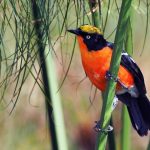
- Black-headed Gonolek
- Spotted Morning Thrush
- Blue-naped Mousebird
- White-crested Turaco
- Senegal Thick-knee
- Yellow-billed Shrike
Later, enjoy a boat cruise along the Victoria Nile towards the bottom of Murchison Falls.
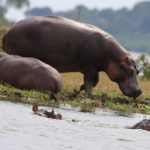
The riverbanks attract large numbers of hippos and Nile crocodiles, while elephants and other wildlife may be seen coming to drink.
Birds to look for include African Fish Eagles, Goliath Herons, kingfishers, cormorants, bee-eaters and other water-associated species.
Return to your lodge for relaxation.
Overnight: Murchison Falls National Park.
Day 10: Murchison Falls to Budongo Forest – Birding the Royal Mile
After breakfast, depart for Budongo Forest near Masindi.
Budongo is one of Uganda’s important tropical forest reserves and is well known for its birdlife, chimpanzees and other forest mammals.
Your main activity today is exploring the famous Royal Mile, a beautiful forest trail characterised by impressive mahogany trees and excellent opportunities for observing forest birds.
Target species include:
- Nahan’s Francolin
- Yellow Longbill
- Grey Longbill
- Chestnut-capped Flycatcher
- Rufous Flycatcher-Thrush
- Cameroon Sombre Greenbul
- White-thighed Hornbill
- Chocolate-backed Kingfisher
- Blue-throated Roller
- Ituri Batis
- Uganda Woodland Warbler
- Yellow-crested Woodpecker
- Cassin’s Hawk-Eagle
- Sabine’s Spinetail
- Yellow-browed Camaroptera
The forest is also home to several primates, including red-tailed monkeys, black-and-white colobus monkeys, blue monkeys, Uganda Mangabeys and olive baboons.
Enjoy the birding excursion before settling into your accommodation in Masindi.
Overnight: Masindi.
Day 11: Transfer to Semuliki National Park – Explore the Forest Ecosystem
After breakfast, travel towards Semuliki National Park in the Albertine Rift Valley.
Semuliki is one of Uganda’s most distinctive forest destinations because its lowland tropical rainforest has strong ecological connections to the Ituri Forest of the Congo Basin.
The park is especially rewarding for birders searching for species that are more commonly associated with Central African forests.
Its mammal diversity is also impressive, with several primate species and forest-dwelling mammals.
Possible mammal sightings include:
- Uganda Mangabey
- De Brazza’s Monkey
- Red-tailed Monkey
- Blue Monkey
- Black-and-white Colobus Monkey
- Olive Baboon
- Semuliki Red Colobus
- Dent’s Mona Monkey
- Various bat species
Birding targets include:
- Piping Hornbill
- Black Dwarf Hornbill
- Red-billed Dwarf Hornbill
- White-crested Hornbill
- African Piculet
- Yellow-throated Nicator
- Rufous-sided Broadbill
- Congo Serpent Eagle
- Nkulengu Rail
- Grey-throated Rail
- Red-headed Malimbe
- Yellow-throated Tinkerbird
- Lowland Sooty Boubou
- Brown-chested Alethe
- Swamp Palm Bulbul
Arrive at your lodge and enjoy the forest surroundings.
Overnight: Semuliki area.
Day 12: Birding Semuliki Forest – Transfer to Kibale National Park
Spend the morning exploring Semuliki’s forest trails in search of its distinctive Congo Basin bird species.
Depending on your target list and the advice of your guide, you may explore suitable trails and forest habitats to search for species missed on the previous day.
The Kirumia Trail is particularly interesting for dedicated birdwatchers, although the time needed should be considered when planning the transfer.
After the morning excursion, continue towards Kibale Forest National Park, one of Africa’s most important primate destinations.
Kibale’s tropical rainforest supports numerous primates, forest birds and other wildlife.
Arrive at your lodge and prepare for chimpanzee tracking.
Overnight: Kibale Forest area.
Day 13: Chimpanzee Tracking in Kibale Forest National Park
Today, enjoy an exciting chimpanzee tracking experience in Kibale Forest National Park.
After an early breakfast, report to the park headquarters for registration and a briefing by Uganda Wildlife Authority staff.
Accompanied by experienced trackers and guides, enter the forest in search of a habituated chimpanzee community.
Kibale is one of Uganda’s leading destinations for observing wild chimpanzees. The forest is also home to several other primate species.
Other primates that may be encountered include:
- Red Colobus Monkey
- Uganda Mangabey
- L’Hoest’s Monkey
- Blue Monkey
- Red-tailed Monkey
- Black-and-white Colobus Monkey
- Olive Baboon
- Vervet Monkey
Chimpanzee tracking provides an opportunity to observe the animals feeding, communicating, moving through the forest and interacting with other members of their community.
Depending on the final arrangements, an additional evening or night excursion can be discussed for visitors interested in nocturnal wildlife. Such sightings are not guaranteed and should only be undertaken through authorised arrangements.
Return to your lodge after the activity.
Overnight: Kibale Forest area.
Day 14: Birding in Kibale Forest and Bigodi Wetland Sanctuary
Spend the day exploring the birdlife and wildlife of Kibale Forest and the neighbouring Bigodi Wetland Sanctuary.
Kibale is particularly famous among birdwatchers for the Green-breasted Pitta, one of the most sought-after forest birds in Uganda.
An early morning birding excursion offers an opportunity to search for this colourful species.
Other birds to look for include:
- African Blue Flycatcher
- White-throated Greenbul
- Red-chested Owlet
- Yellow-billed Barbet
- Hairy-breasted Barbet
- Jameson’s Wattle-eye
- Chestnut-winged Starling
- Shining-blue Kingfisher
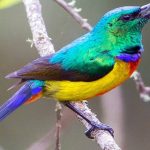
- Superb Sunbird
- Olive-tailed Cuckoo
- Green-headed Sunbird
- Crested Guineafowl
- Western Black-headed Oriole
- Purple-headed Starling
- African Goshawk
Later, visit Bigodi Wetland Sanctuary, a community-managed conservation area near Kibale Forest.
The wetland is an excellent destination for birdwatching and primate observation. Its habitats support monkeys, butterflies and a variety of wetland birds.
With a local guide, explore the boardwalks and nature trails while searching for wildlife such as:
- Uganda Mangabey
- Red-tailed Monkey
- Black-and-white Colobus Monkey
- Vervet Monkey
- Olive Baboon
- Various wetland and forest birds
The sanctuary can also offer opportunities to search for nocturnal mammals during specially arranged guided walks.
Return to your lodge after the day’s activities.
Overnight: Kibale or Queen Elizabeth National Park area, depending on the final routing.
Day 15: Transfer to Queen Elizabeth National Park – Kazinga Channel Boat Safari
After breakfast, travel towards Queen Elizabeth National Park.
The park is one of Uganda’s most diverse wildlife destinations, featuring open savannah, crater lakes, wetlands, woodland and tropical forest habitats.
Enjoy a boat excursion along the Kazinga Channel, a natural waterway connecting Lake Edward and Lake George.
The channel is famous for its high concentration of hippos and is a rewarding location for observing elephants, buffaloes, crocodiles and numerous waterbirds.
Birds to look for include:
- African Skimmer
- Saddle-billed Stork
- African Fish Eagle
- Malachite Kingfisher
- Pied Kingfisher
- Goliath Heron
- Black Crake
- African Spoonbill
- Yellow-billed Stork
- Grey Heron
- Other resident and migratory waterbirds
The surrounding park also supports lions, leopards, elephants, buffaloes, Uganda kob, waterbucks, spotted hyenas and several smaller mammals.
Return to your lodge after the boat excursion.
Overnight: Queen Elizabeth National Park.
Day 16: Ishasha Sector – Search for Tree-Climbing Lions
After breakfast, travel to the Ishasha sector in the southern part of Queen Elizabeth National Park.
Ishasha is famous for its tree-climbing lions, which are occasionally seen resting in large fig trees.
The sector’s open grasslands, woodland and riverine habitats also provide rewarding birdwatching opportunities.
During your game drive, search for:
- Tree-climbing lions
- African Elephant
- African Buffalo
- Uganda Kob
- Topi
- Bushbuck
- Warthog
- Other savannah wildlife
Bird species to look for include:
- Green Wood Hoopoe
- Banded Snake Eagle
- Marsh Tchagra
- Sooty Chat
- Hooded Vulture
- Grey Crowned Crane
- White-backed Vulture
- Crimson-rumped Waxbill
- White-headed Barbet
- Hamerkop
- Long-crested Eagle
- Black-chested Snake Eagle
Continue towards the Bwindi region after the excursion, depending on your confirmed gorilla trekking sector and lodge location.
Overnight: Bwindi region.
Day 17: Mountain Gorilla Trekking in Bwindi Impenetrable National Park
Today is dedicated to one of Africa’s most remarkable wildlife experiences: mountain gorilla trekking.
After an early breakfast, report to the relevant park headquarters for registration and a briefing by Uganda Wildlife Authority rangers.
You will be allocated a habituated gorilla family and accompanied into the forest by experienced guides and trackers.
The duration of the trek depends on the location and movement of the gorillas. The forest terrain can be steep and sometimes muddy, so good physical preparation and appropriate hiking equipment are important.
Once the gorilla family is located, visitors are allowed a strictly regulated viewing period, following the park’s rules to protect both the gorillas and visitors.
Observe the family as individuals feed, groom, rest and interact. Watching young gorillas play while adults move through the forest is an unforgettable experience.
Bwindi is one of the world’s most important mountain gorilla conservation areas and offers a unique opportunity to see these endangered primates in their natural habitat.
Important: Gorilla permits are limited and should be secured in advance. The trekking sector must be confirmed before accommodation is selected.
Overnight: Bwindi region.
Day 18: Birding the Buhoma Main Trail in Bwindi
Spend the day exploring the Buhoma sector of Bwindi Impenetrable National Park.
Buhoma is one of Uganda’s established birding destinations, offering opportunities to search for numerous forest specialists and Albertine Rift species.
Explore selected forest trails with an experienced birding guide.
Possible sightings include:
- African Broadbill
- Chapin’s Flycatcher
- Red-capped Robin-Chat
- Blue-shouldered Robin-Chat
- Black-faced Rufous Warbler
- Equatorial Akalat
- White-bellied Robin-Chat
- Great Blue Turaco
- Elliot’s Woodpecker
- African Goshawk
- Lühder’s Bushshrike
- Red-faced Woodland Warbler
- Mountain Illadopsis
- Many-coloured Bushshrike
- Buff-spotted Woodpecker
- Fine-banded Woodpecker
- MacKinnon’s Fiscal
- Red-headed Bluebill
The forest also supports several mammals, including monkeys and forest antelopes.
Return to your lodge after the day’s birding.
Overnight: Buhoma, Bwindi.
Day 19: Birding the Neck and Ruhija Sector of Bwindi
After breakfast, explore the forested area known as the Neck, which connects the Buhoma and Ruhija sectors of Bwindi.
This area is important for birders because it provides access to a different range of forest habitats and species.
Continue towards Ruhija, another outstanding birding area in Bwindi.
Target birds include:
- African Black Duck
- Mountain Wagtail
- Black Bee-eater
- Rwenzori Apalis
- Grey-throated Apalis
- Red-tailed Bristlebill
- Red-faced Malimbe
- Mountain Sooty Boubou
- Yellow-spotted Barbet
- Yellow-billed Barbet
- Hairy-breasted Barbet
- Rwenzori Batis
- Mountain Yellow Warbler
- Western Bronze-naped Pigeon
- Tambourine Dove
- Purple-headed Starling
- Stuhlmann’s Starling
The Neck is particularly interesting for visitors hoping to see the Black Bee-eater.
Overnight: Ruhija or nearby Bwindi accommodation.
Day 20: Transfer to Mgahinga Gorilla National Park – Birding and Mammal Watching
After breakfast, depart Bwindi and travel towards Mgahinga Gorilla National Park in southwestern Uganda.
Mgahinga forms part of the Virunga Conservation Area, a transboundary landscape shared by Uganda, Rwanda and the Democratic Republic of Congo.
The park protects montane forest, bamboo vegetation and the slopes of three volcanic mountains: Muhavura, Gahinga and Sabinyo.
It is an important destination for birders searching for Albertine Rift endemic species.
Birding targets include:
- Rwenzori Batis
- Regal Sunbird
- Purple-breasted Sunbird
- Mountain Oriole
- Dusky Twinspot
- White-starred Robin
- Handsome Francolin
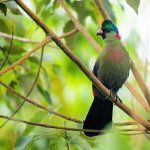
- Rwenzori Turaco
- Red-faced Woodland Warbler
- Grey Cuckooshrike
- Striped Tit
- Chubb’s Cisticola
- Mountain Thrush
- African Crowned Eagle
The park also supports mountain gorillas, golden monkeys, forest antelopes and several other mammals.
Overnight: Mgahinga area.
Day 21: Golden Monkey Tracking and Birding in Mgahinga
Today, enjoy a golden monkey tracking experience in Mgahinga Gorilla National Park.
After breakfast, report to the park headquarters for a briefing before entering the forest with experienced trackers.
Golden monkeys are striking primates associated with the bamboo forests of the Virunga Mountains. They are known for their golden-orange colouring and lively movements through the vegetation.
The tracking experience offers opportunities to observe these endangered primates feeding, jumping between bamboo stems and interacting within their groups.
After the activity, you may enjoy additional birdwatching or a relaxed afternoon around the lodge.
Mgahinga’s forest habitats provide opportunities to search for several Albertine Rift species, including:
- Rwenzori Turaco
- Cinnamon Bracken Warbler
- Dwarf Honeyguide
- Rwenzori Double-collared Sunbird
- Blue-headed Sunbird
- Red-throated Alethe
- Equatorial Akalat
- Chestnut-throated Apalis
- Mountain Masked Apalis
- Doherty’s Bushshrike
Overnight: Mgahinga area.
Day 22: Transfer to Lake Mburo National Park – Wetland and Night Birding
After breakfast, begin the journey towards Lake Mburo National Park.
The route offers opportunities for birding stops at suitable wetlands and savannah habitats.
Depending on conditions, look for:
- Papyrus Yellow Warbler
- Papyrus Gonolek
- Papyrus Canary
- White-winged Warbler
- Carruthers’s Cisticola
- Other wetland specialists
Arrive in Lake Mburo National Park, a rewarding destination for savannah wildlife and birdwatching.
The park is known for its populations of zebra, impala, buffalo, hippo, eland, topi, waterbuck and other mammals.
Birding targets include:
- Red-faced Barbet
- Tabora Cisticola
- African Finfoot
- White-backed Night Heron
- Giant Kingfisher
- Shining-blue Kingfisher
- Crested Francolin
- Brown Parrot
- Emerald-spotted Wood Dove
- Blue-naped Mousebird
- Lilac-breasted Roller
- Green Wood Hoopoe
- African Grey Hornbill
- Black-bellied Bustard
- African Wattled Lapwing
Depending on availability and park arrangements, an evening or night birding excursion may be organised to search for nocturnal birds and mammals.
Overnight: Lake Mburo National Park.
Day 23: Lake Mburo to Entebbe – Departure
After breakfast, depart Lake Mburo and drive towards Entebbe.
Enjoy the changing scenery as you travel through Uganda’s countryside, with opportunities for suitable stops along the way.
You will be transferred to Entebbe International Airport for your onward flight, marking the end of your 23-day Uganda mammal watching and birding safari.
Wildlife and Bird Species to Look for on This Safari
One of the greatest strengths of this itinerary is its diversity of habitats. Each destination offers opportunities to search for different bird and mammal species.
Key mammal species
| Destination | Mammal highlights |
|---|---|
| Entebbe Botanical Gardens | Black-and-white colobus, vervet and red-tailed monkeys |
| Mabira Forest | Uganda Mangabey, potto and galagos |
| Pian Upe | Roan antelope, eland, Uganda kob and other savannah mammals |
| Moroto | Mammals associated with the Karamoja landscape |
| Kidepo Valley | Elephant, lion, giraffe, buffalo, zebra and cheetah |
| Murchison Falls | Elephant, Rothschild’s giraffe, lion, buffalo and Patas monkey |
| Budongo Forest | Chimpanzees, Uganda Mangabey and colobus monkeys |
| Semuliki | De Brazza’s monkey, red colobus and other forest primates |
| Kibale Forest | Chimpanzees, red colobus, L’Hoest’s monkey and Uganda Mangabey |
| Queen Elizabeth | Elephant, hippo, lion, leopard, buffalo and Uganda kob |
| Bwindi | Mountain gorillas, forest monkeys and forest antelopes |
| Mgahinga | Golden monkeys, mountain gorillas and forest antelopes |
| Lake Mburo | Zebra, impala, eland, buffalo, hippo and waterbuck |
Key birding specialities
| Destination | Important birding targets |
|---|---|
| Mabamba Swamp | Shoebill, Papyrus Gonolek and African Jacana |
| Mabira Forest | Nahan’s Francolin, Tit Hylia and African Crowned Eagle |
| Pian Upe | Fox’s Weaver, Karamoja Apalis and Clapperton’s Francolin |
| Moroto | Jackson’s Hornbill, Hemprich’s Hornbill and Karamoja specialities |
| Kidepo | Secretary Bird, Kori Bustard and Abyssinian Ground Hornbill |
| Murchison Falls | Northern Carmine Bee-eater, Denham’s Bustard and Abyssinian Ground Hornbill |
| Budongo Forest | Nahan’s Francolin, Yellow Longbill and Chocolate-backed Kingfisher |
| Semuliki | Piping Hornbill, Nkulengu Rail and Congo Serpent Eagle |
| Kibale Forest | Green-breasted Pitta, African Blue Flycatcher and Jameson’s Wattle-eye |
| Queen Elizabeth | African Skimmer, Saddle-billed Stork and African Fish Eagle |
| Bwindi | African Broadbill, Chapin’s Flycatcher and Rwenzori Apalis |
| Mgahinga | Rwenzori Turaco, Regal Sunbird and Handsome Francolin |
| Lake Mburo | Red-faced Barbet, Tabora Cisticola and African Finfoot |
Wildlife sightings depend on weather, season, habitat conditions and animal movements. This is a target list, not a guarantee that every species will be seen.
What Is Included in the 23-Day Uganda Mammal Watching and Birding Safari?
Your final safari quotation can include:
- Airport pickup and drop-off in Entebbe.
- Private safari vehicle and experienced driver-guide.
- Specialist birding guidance and local guides where required.
- Accommodation throughout the safari.
- Meals as specified in the final itinerary.
- National park entrance fees.
- Mabamba Swamp canoe excursion.
- Guided forest walks and birding activities.
- Chimpanzee tracking permit.
- Mountain gorilla trekking permit.
- Golden monkey tracking permit.
- Game drives and boat excursions included in the confirmed programme.
- Relevant activity fees agreed upon before booking.
What Is Excluded?
Unless otherwise stated in your quotation, the following are excluded:
- International flights.
- Uganda visa fees.
- Travel and medical insurance.
- Personal expenses.
- Alcoholic and personal beverages.
- Laundry services.
- Tips and gratuities.
- Additional activities not included in the final itinerary.
- Extra accommodation before or after the safari.
Best Time for Mammal Watching and Birding in Uganda
Uganda is a year-round wildlife and birdwatching destination. However, your preferred travel period may depend on the species you hope to see and the conditions you prefer for trekking and forest exploration.
The relatively drier periods, generally June to August and December to February, are popular for wildlife safaris and primate tracking. Roads and forest trails may be easier to navigate during these months, although rainfall can occur at any time.
The wetter months can also be rewarding for birdwatching. Migratory birds are present during parts of the year, while resident forest birds remain important targets throughout the seasons.
For visitors with specific birding targets, we recommend discussing travel dates with our team before confirming the itinerary.
What to Pack for a Uganda Mammal Watching and Birding Safari
We recommend packing:
- Binoculars for bird and mammal observation.
- Camera and appropriate wildlife lenses.
- Bird field guide or bird identification application.
- Waterproof hiking boots.
- Lightweight, long-sleeved clothing.
- Neutral-coloured safari clothing.
- Waterproof jacket or poncho.
- Hat and sunscreen.
- Insect repellent.
- Small daypack.
- Reusable water bottle.
- Personal medication.
- Trekking gloves for gorilla and chimpanzee tracking.
- A headlamp or torch for authorised night activities.
For forest walks and primate tracking, sturdy footwear and clothing that protects your arms and legs are particularly useful.
Frequently Asked Questions About Uganda Mammal Watching and Birding Safaris
1. What is mammal watching?
Mammal watching involves searching for and observing wild mammals in their natural habitats. It may include primates, antelopes, carnivores, elephants, bats and other mammals.
Unlike a conventional game drive focused mainly on large animals, a mammal-watching safari may include guided forest walks, nocturnal excursions and specialist tracking activities.
2. How many days are needed for a Uganda mammal watching and birding safari?
A 23-day safari allows visitors to explore several of Uganda’s major birding and wildlife destinations, including remote areas such as Kidepo Valley and Pian Upe, while also including gorilla trekking, chimpanzee tracking and golden monkey tracking.
3. Can I see mountain gorillas and chimpanzees on this safari?
Yes. The itinerary includes mountain gorilla trekking in Bwindi Impenetrable National Park and chimpanzee tracking in Kibale Forest National Park. Both activities require separate permits.
4. Where can I see the Shoebill in Uganda?
Mabamba Swamp is one of Uganda’s best-known Shoebill destinations. Visitors explore the papyrus channels by canoe with a local guide.
5. What makes Pian Upe Wildlife Reserve special for birdwatching?
Pian Upe is particularly interesting for its northeastern Uganda bird species and dry-country habitats. Fox’s Weaver is among its most sought-after birding targets.
6. Is Kidepo Valley National Park good for mammal watching?
Yes. Kidepo offers opportunities to search for lions, elephants, giraffes, buffaloes, zebras, cheetahs and other mammals. Its remote location and distinctive wildlife community make it an important destination for specialist wildlife enthusiasts.
7. What is special about Semuliki National Park?
Semuliki protects lowland tropical rainforest with strong ecological connections to the Congo Basin. It is especially rewarding for birders searching for Central African forest species.
8. Can I see golden monkeys in Uganda?
Yes. Mgahinga Gorilla National Park is Uganda’s destination for golden monkey tracking. Visitors can join guided tracking activities in the bamboo forest.
9. Is this safari suitable for wildlife photographers?
Yes. The itinerary offers diverse photographic opportunities, including forest primates, birds, large mammals, wetlands, savannah landscapes and mountain gorillas. Visitors should bring suitable camera equipment and follow wildlife viewing regulations.
10. Can this 23-day itinerary be customised?
Yes. Epic Uganda Vacation can adjust the route, accommodation level, activities and time spent at each destination according to your bird checklist, mammal interests, budget and travel dates.
Book Your 23-Day Uganda Mammal Watching and Birding Safari
Uganda offers much more than traditional game drives. Its forests, wetlands, savannahs and mountains provide opportunities to discover an extraordinary range of birds and mammals.
From the Shoebill wetlands of Mabamba to the remote wilderness of Kidepo, the Congo Basin birdlife of Semuliki and the mountain gorillas of Bwindi, this 23-day safari is designed to showcase Uganda’s exceptional biodiversity.
At Epic Uganda Vacation, we create tailor-made wildlife and birding safaris for travellers who want to explore Uganda beyond the ordinary tourist route.
We can help you select suitable accommodation, arrange specialist birding guides, secure primate permits and organise private transport throughout the journey.
Contact Epic Uganda Vacation to plan your 23-day Uganda mammal watching and birding safari.