Lake Edward, Uganda: Location, Wildlife, Attractions and Travel Guide
Lake Edward is one of the most beautiful and ecologically important lakes in western Uganda. Located within the spectacular Albertine Rift Valley, this impressive freshwater lake is famous for its scenic landscapes, rich aquatic biodiversity, fishing communities and proximity to Queen Elizabeth National Park.
Shared between Uganda and the Democratic Republic of Congo (DRC), Lake Edward is an important geographical feature of the Great East African Rift Valley. Its shores provide habitats for wildlife, support local fishing communities and form part of one of Africa’s most fascinating conservation landscapes.
For visitors exploring Uganda, Lake Edward offers an opportunity to experience the country’s remarkable natural beauty beyond traditional savannah game drives. From observing hippos and crocodiles along the lakeshore to exploring the nearby Kazinga Channel, Queen Elizabeth National Park and the surrounding fishing villages, the region has plenty to offer nature lovers and safari enthusiasts.
Whether you are planning a wildlife safari, a birdwatching holiday or a scenic road trip through western Uganda, Lake Edward is an excellent destination to include in your itinerary.
Where Is Lake Edward Located?
Lake Edward is situated in western Uganda and eastern Democratic Republic of Congo, within the western branch of the Great East African Rift Valley.
In Uganda, the lake borders several districts, including Kasese, Rubirizi, Bushenyi and Kanungu. Its Ugandan shoreline is closely associated with Queen Elizabeth National Park, one of the country’s most famous wildlife conservation areas.
On the western side, Lake Edward extends into the Democratic Republic of Congo, where it is bordered by Virunga National Park.
The lake is surrounded by remarkable natural landscapes, including savannah plains, wetlands, mountains, forests and wildlife habitats.
The Rwenzori Mountains rise to the north of the wider region, while the Mitumba Mountain Range forms part of the dramatic landscape along the western side of the lake.
Its location makes Lake Edward an important destination for travellers exploring Uganda’s western tourism circuit.
Lake Edward at a Glance
Here are some interesting geographical facts about Lake Edward:
- Location: Western Uganda and eastern Democratic Republic of Congo.
- Region: Albertine Rift Valley.
- Lake type: Freshwater Rift Valley lake.
- Surface area: Approximately 2,325 square kilometres.
- Length: Approximately 90 kilometres.
- Width: Approximately 40 kilometres.
- Elevation: Approximately 916 metres above sea level.
- Maximum depth: Approximately 117 metres.
- Main Ugandan protected area nearby: Queen Elizabeth National Park.
- Protected area on the Congolese side: Virunga National Park.
Lake Edward is one of the important freshwater ecosystems within the Nile Basin and supports a wide range of aquatic and terrestrial biodiversity.
The Formation of Lake Edward
Lake Edward was formed through geological processes associated with the development of the East African Rift System.
Millions of years of tectonic activity gradually shaped the landscape, creating deep depressions and valleys within the western branch of the Rift Valley.
Over time, these depressions filled with water, forming the spectacular lakes found throughout western Uganda and neighbouring parts of the Democratic Republic of Congo.
Lake Edward is one of the major lakes associated with this geological system.
Its formation is closely connected to the region’s volcanic and tectonic history, which also produced dramatic escarpments, mountains, crater lakes and other distinctive landforms.
For visitors interested in geology and natural history, the lake provides an opportunity to appreciate the geological forces that shaped the Albertine Rift Valley.
Rivers and Water Sources of Lake Edward
Lake Edward is connected to other important water bodies in western Uganda.
One of its most interesting geographical features is the Kazinga Channel, which connects Lake George to Lake Edward.
The Kazinga Channel flows westwards from Lake George into Lake Edward, creating an important aquatic ecosystem within Queen Elizabeth National Park.
Other rivers flowing into Lake Edward include the Ishasha, Rwindi, Rutshuru and Nyamugasani rivers.
The lake’s only major natural outlet is the Semliki River, which flows northwards towards Lake Albert.
This connection makes Lake Edward part of the wider Nile Basin drainage system.
The relationship between Lake George, the Kazinga Channel, Lake Edward and the Semliki River makes this region particularly interesting for travellers exploring Uganda’s aquatic ecosystems.
Wildlife Around Lake Edward
Lake Edward is surrounded by an impressive variety of natural habitats that support wildlife both in the water and along its shores.
Its association with Queen Elizabeth National Park makes the region particularly attractive to wildlife enthusiasts.
Some of the animals that visitors may encounter around the lake and its surrounding habitats include:
1. Hippopotamuses
Hippos are among the most recognisable animals associated with Lake Edward and the wider Queen Elizabeth National Park ecosystem.
They spend much of their day in water, emerging onto land at night to graze.
Visitors exploring the Kazinga Channel and suitable lakeshore areas may encounter large groups of hippos resting in shallow water.
2. African Elephants
African elephants inhabit the wider Queen Elizabeth National Park landscape.
They are often encountered during game drives in the park’s savannah habitats, wetlands and woodland areas.
Their presence adds to the remarkable wildlife diversity of the Lake Edward region.
3. African Buffaloes
Buffaloes are common in the grasslands and other habitats surrounding Lake Edward.
These powerful herbivores are often spotted grazing in open areas and near water sources.
4. Nile Crocodiles
Nile crocodiles inhabit suitable aquatic habitats within the Queen Elizabeth National Park ecosystem, including parts of the Kazinga Channel and associated water bodies.
They are impressive predators and an important part of the region’s aquatic food chain.
Visitors should always maintain a safe distance from crocodiles and never approach the water without following local wildlife safety instructions.
5. Lions and Leopards
The surrounding Queen Elizabeth National Park is famous for its large predators.
Lions can be encountered in different sectors of the park, including the Kasenyi Plains and Ishasha sector.
Leopards also inhabit the park, although they are generally more difficult to spot because of their secretive behaviour.
Birdwatching Around Lake Edward
Lake Edward and the wider Queen Elizabeth National Park ecosystem offer excellent opportunities for birdwatching.
The combination of open water, wetlands, grasslands and woodland habitats attracts numerous resident and migratory bird species.
Birdwatchers exploring the region may encounter:
- African fish eagles.
- African jacanas.
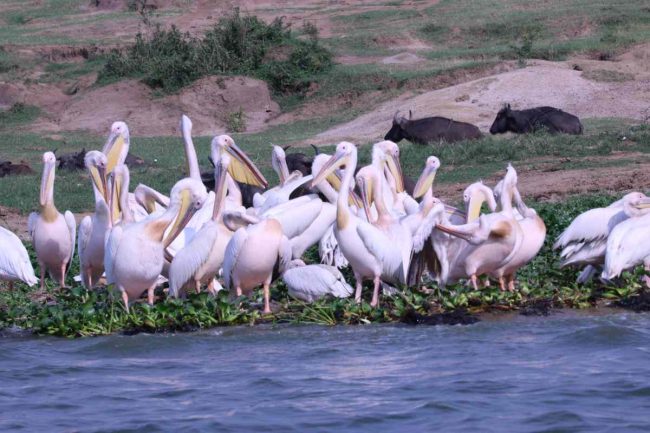
- Great white pelicans.
- Pink-backed pelicans.
- African skimmers.
- Yellow-billed storks.
- Grey-crowned cranes.
- Various kingfishers.
- Herons and egrets.
- Cormorants.
Queen Elizabeth National Park is recognised for its exceptional bird diversity, with more than 600 recorded bird species.
The Kazinga Channel is particularly rewarding for birdwatching because its shoreline and aquatic habitats attract numerous waterbirds.
For keen birdwatchers, combining Lake Edward with the Kazinga Channel and other habitats within Queen Elizabeth National Park creates an excellent birding experience.
Top Things to See and Do Around Lake Edward
Lake Edward is an excellent destination for travellers interested in nature, wildlife, photography and cultural experiences.
Although access to particular sections of the shoreline may depend on local conditions and conservation regulations, visitors can explore several attractions within the surrounding region.
1. Explore Queen Elizabeth National Park
Queen Elizabeth National Park is one of Uganda’s most popular safari destinations.
The park is famous for its diverse ecosystems, beautiful scenery and impressive wildlife populations.
Visitors can enjoy:
- Wildlife game drives.
- Birdwatching excursions.
- Guided nature walks in designated areas.
- Chimpanzee tracking in Kyambura Gorge.
- Exploring the Ishasha sector.
- Cultural encounters with surrounding communities.
A safari in Queen Elizabeth National Park is one of the best ways to experience the natural beauty of the Lake Edward region.
2. Enjoy a Kazinga Channel Boat Cruise
One of the most popular activities in Queen Elizabeth National Park is the boat cruise along the Kazinga Channel.
The channel connects Lake George and Lake Edward and supports a remarkable concentration of aquatic wildlife.
During a boat cruise, visitors can observe:
- Large groups of hippos.
- Nile crocodiles.
- African elephants drinking along the shoreline.
- Buffaloes resting near the water.
- Numerous waterbirds.
The Kazinga Channel boat cruise is an excellent opportunity for wildlife photography and birdwatching.
It is important to note that this is a cruise on the Kazinga Channel, not a boat cruise across Lake Edward itself.
3. Visit Mweya Peninsula
Mweya Peninsula is one of the most scenic locations within Queen Elizabeth National Park.
Situated between the Kazinga Channel and Lake Edward, Mweya offers beautiful views of the surrounding waters and the wider park landscape.
Visitors can enjoy wildlife viewing, photography and relaxing at the peninsula’s safari accommodation facilities.
It is also an excellent base for exploring the Kazinga Channel and other attractions within the park.
4. Explore the Ishasha Sector
The Ishasha sector is located in the southern part of Queen Elizabeth National Park and is famous for its tree-climbing lions.
These lions are often seen resting in large fig trees, making the area one of Uganda’s most interesting wildlife destinations.
The sector also supports elephants, buffaloes, Uganda kob and several bird species.
Travellers exploring Lake Edward can include Ishasha in a wider western Uganda safari itinerary.
5. Discover Local Fishing Communities
Lake Edward supports important fishing activities and provides livelihoods for communities living around its shores.
Fishing villages offer opportunities to learn about the relationship between local communities and the lake.
Visitors interested in cultural tourism can discover traditional fishing practices, local livelihoods and the importance of freshwater resources to surrounding settlements.
Any community visit should be arranged respectfully with local guides and community representatives.
6. Enjoy Scenic Photography
Lake Edward offers beautiful scenery for nature photography.
The lake’s expansive waters, surrounding mountains, distant landscapes and wildlife-rich environment create excellent photographic opportunities.
Photographers can also explore the surrounding savannah, wetlands and forest habitats within Queen Elizabeth National Park.
Sunrise and sunset can provide particularly beautiful lighting conditions for landscape photography.
Fishing on Lake Edward
Fishing is one of the most important economic activities associated with Lake Edward.
The lake supports commercial and small-scale fishing, providing employment and food for communities in Uganda and the Democratic Republic of Congo.
Several fish species are found in the lake, including:
- Nile tilapia.
- Catfish.
- Lungfish.
- Other native freshwater fish species.
The lake’s fisheries are important for local food security and regional economic activity.
However, sustainable fishing practices and responsible resource management are essential for protecting fish populations and maintaining the ecological balance of the lake.
Visitors interested in local culture can learn more about the fishing industry and the important role the lake plays in the lives of surrounding communities.
Fishing activities are regulated, so tourists should not assume that recreational fishing is permitted without the necessary authorisation.
Lake Edward and Virunga National Park
Lake Edward is particularly interesting because it is shared by two countries and is bordered by two important protected areas.
On the Ugandan side, the lake is associated with Queen Elizabeth National Park.
On the Democratic Republic of Congo side, it is bordered by Virunga National Park, one of Africa’s oldest national parks.
Virunga is internationally recognised for its exceptional biodiversity, mountain gorillas, volcanoes and diverse ecosystems.
Together, Queen Elizabeth and Virunga form an important conservation landscape within the Albertine Rift.
This cross-border location makes Lake Edward significant not only for Uganda’s tourism industry but also for regional biodiversity conservation.
Best Time to Visit Lake Edward
Lake Edward can be explored throughout the year, although weather conditions can influence travel comfort and wildlife activities.
Uganda generally experiences two relatively dry periods:
June to September
This is one of the favourable periods for exploring western Uganda.
Road conditions are often better, and wildlife viewing in Queen Elizabeth National Park can be rewarding.
December to February
Another relatively dry period that is suitable for game drives, sightseeing, birdwatching and exploring the region.
March to May and October to November
These months generally receive more rainfall.
The surrounding landscapes become greener, creating beautiful scenery for photography. However, some roads and tracks may become muddy.
The best time ultimately depends on your travel interests, preferred activities and itinerary.
How to Get to Lake Edward from Kampala
Lake Edward can be reached by road from Kampala through western Uganda.
The most common route follows:
Kampala – Masaka – Mbarara – Bushenyi – Rubirizi – Queen Elizabeth National Park.
Travellers can also approach the region through Fort Portal and Kasese, depending on their itinerary and the section of the lake they intend to explore.
The journey from Kampala generally takes around 6–8 hours or longer, depending on traffic, road conditions and the final destination.
A 4×4 safari vehicle is recommended for exploring the wider Queen Elizabeth National Park area.
Domestic charter flights to airstrips serving Queen Elizabeth National Park are another option for travellers who prefer flying.
For international visitors, arranging a guided Uganda safari with a reliable local tour operator can make transportation, accommodation and activity planning easier.
Where to Stay When Visiting Lake Edward
There are several accommodation options within and around Queen Elizabeth National Park.
Travellers can choose accommodation according to their budget, preferred location and safari activities.
Some popular areas include:
Mweya Peninsula: Ideal for visitors interested in Lake Edward views, the Kazinga Channel and central Queen Elizabeth National Park.
Kasese area: Suitable for travellers approaching the park from northern Uganda and the Rwenzori Mountains.
Ishasha sector: A good option for visitors interested in tree-climbing lions and exploring southern Queen Elizabeth National Park.
Rubirizi area: Convenient for exploring attractions in the southern part of the park and nearby communities.
Accommodation ranges from luxury safari lodges and tented camps to midrange lodges and budget guesthouses.
Booking in advance is recommended, particularly during peak safari seasons.
Lake Edward and Other Attractions in Western Uganda
A visit to Lake Edward can be combined with several other attractions in western Uganda.
Consider including these destinations in your itinerary:
- Lake George: Another beautiful freshwater lake connected to Lake Edward by the Kazinga Channel.
- Kazinga Channel: Famous for its boat cruises and concentrations of hippos and waterbirds.
- Mweya Peninsula: A scenic wildlife and accommodation destination.
- Maramagambo Forest: A beautiful tropical forest with interesting birdlife and other wildlife.
- Kyambura Gorge: Famous for chimpanzee tracking.
- Ishasha: Known for its tree-climbing lions.
- Rwenzori Mountains: A spectacular mountain destination offering hiking and mountaineering experiences.
Combining these attractions creates a rewarding western Uganda safari that introduces visitors to the region’s wildlife, landscapes and cultural heritage.
Why Visit Lake Edward with Epic Uganda Vacation?
Lake Edward is more than a beautiful freshwater lake. It is part of an extraordinary natural landscape that supports wildlife, local communities, fisheries and tourism.
For travellers exploring the Pearl of Africa, the lake offers an opportunity to discover the remarkable beauty of western Uganda and the Albertine Rift Valley.
At Epic Uganda Vacation, we help travellers discover Uganda through carefully planned safari experiences and nature-based adventures.
Whether you want to explore Queen Elizabeth National Park, enjoy a Kazinga Channel boat cruise, discover the wildlife of Ishasha or experience the beauty of western Uganda, we can help organise an unforgettable journey.
Our Uganda safari experiences can be tailored to your travel interests, preferred accommodation, budget and available time.
Contact Epic Uganda Vacation today to plan your Lake Edward and Queen Elizabeth National Park safari. Discover the Pearl of Africa with a memorable journey through Uganda’s extraordinary landscapes and wildlife destinations.