Echuya Forest Reserve, Uganda: Birdwatching, Bamboo Forest and Albertine Rift Endemics
Echuya Forest Reserve is one of Uganda’s most remarkable destinations for specialist birdwatching, montane forest walks and nature-based tourism. Located in southwestern Uganda between Kabale and Kisoro, this high-altitude forest protects a distinctive landscape of mountain bamboo, montane woodland and the ecologically important Muchuya Swamp.
Situated within the biodiversity-rich Albertine Rift, Echuya Central Forest Reserve is particularly attractive to birdwatchers searching for rare forest species, including Albertine Rift endemics and Grauer’s swamp-warbler. Its location also makes it a convenient addition to Uganda safaris that include Bwindi Impenetrable National Park, Mgahinga Gorilla National Park and Lake Bunyonyi.
For travellers interested in exploring Uganda beyond its famous gorilla trekking destinations, Echuya offers a quieter experience centred on forest biodiversity, wetland habitats, cultural encounters and conservation.
Where Is Echuya Forest Reserve Located?
Echuya Central Forest Reserve lies in southwestern Uganda, across Rubanda and Kisoro districts, close to the main road connecting Kabale and Kisoro.
The reserve covers approximately 3,400 hectares, or 34 square kilometres, and occupies highland terrain at elevations of roughly 2,270 to 2,750 metres above sea level. Its location places it within the wider Albertine Rift, one of Africa’s most important regions for biodiversity and endemic species.
The forest is strategically located for travellers exploring southwestern Uganda. It can be incorporated into journeys between Kabale, Lake Bunyonyi, Kisoro, Bwindi Impenetrable National Park and Mgahinga Gorilla National Park.
Why visit Echuya Forest Reserve?
- Search for rare Albertine Rift birds.
- Explore mountain bamboo and montane forest habitats.
- Visit Muchuya Swamp in search of specialised wetland birds.
- Experience guided nature walks in a lesser-known forest reserve.
- Learn about local conservation and community livelihoods.
- Combine forest birdwatching with gorilla trekking and scenic highland destinations.
1. Birdwatching in Echuya Forest Reserve
Birdwatching is one of the main reasons to visit Echuya Forest Reserve. The forest’s mix of bamboo stands, broad-leaved montane vegetation and swamp habitat supports a variety of birds, including species associated with the Albertine Rift.
The reserve has been identified as an Important Bird Area, reflecting its significance for bird conservation. Birdwatching reports document a rich bird community, including several species with restricted distributions.
Grauer’s Swamp-Warbler
Grauer’s swamp-warbler (Bradypterus graueri) is one of the most important birds associated with Echuya Forest Reserve.
This Albertine Rift endemic is closely associated with high-altitude swamp vegetation. Muchuya Swamp, located within the reserve, is particularly important for visitors hoping to find it.
The bird can be difficult to observe because it moves through dense vegetation and may be heard before it is seen. A specialist birding guide familiar with its calls and preferred habitat can significantly improve the experience.
Visitors should allow sufficient time to search quietly and avoid disturbing the sensitive swamp environment.
Rwenzori Turaco
The Rwenzori turaco is another sought-after species for birdwatchers exploring the Albertine Rift. Its colourful plumage and distinctive calls make it an exciting bird to search for in suitable forest habitats.
Look for movement among the forest canopy and listen for calls while walking with an experienced guide.
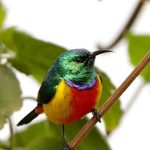
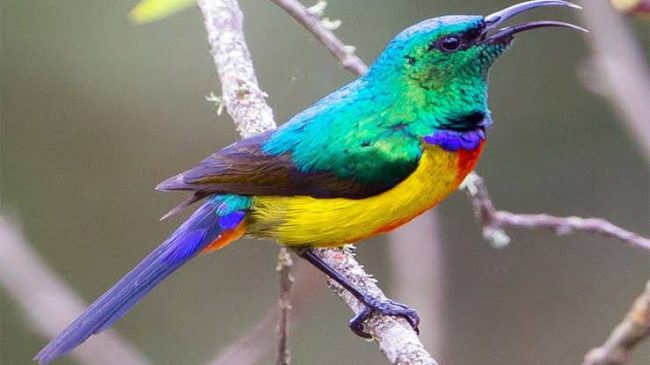
Regal Sunbird
The regal sunbird is an attractive highland species associated with montane forest habitats in the region. It is one of the birds that can make a visit to Echuya particularly rewarding for photographers and bird enthusiasts.
A pair of binoculars and patience are useful when searching for sunbirds among flowering vegetation.
Other Birds to Look For
Depending on the habitat, season and recent sightings, birdwatchers may encounter:
- Rwenzori batis
- Doherty’s bush-shrike
- Red-faced woodland-warbler
- Archer’s robin-chat
- Kivu ground-thrush
- Stripe-breasted tit
- Rwenzori hill babbler
- Blue-headed sunbird
- Strange weaver
- Handsome francolin
Not every species is guaranteed on every visit. Birders should work with a local guide to identify current target species and the most productive parts of the forest.
2. Explore Muchuya Swamp
Muchuya Swamp is an important wetland habitat within Echuya Forest Reserve. It provides a contrast to the surrounding bamboo and montane forest and is particularly significant for specialist birdwatching.
The swamp’s vegetation creates habitat for birds adapted to wetland environments at high elevations. Its ecological importance makes it a priority area for responsible nature tourism and conservation.
A guided visit may involve walking near suitable swamp access points and listening for birds hidden in the vegetation. Conditions underfoot can be wet and muddy, so waterproof hiking boots or wellington boots may be useful.
Access arrangements and the condition of walking routes should be confirmed locally before the visit. Visitors should not assume that a permanent boardwalk or maintained visitor trail is available.
3. Walk Through the Bamboo Forest
Echuya is known for its mountain bamboo, which forms a distinctive part of the reserve’s vegetation.
Walking through the bamboo stands offers an opportunity to appreciate the structure of a highland forest and learn about the relationship between vegetation, wildlife and local communities.
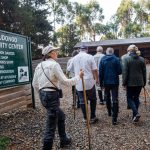
A guided nature walk can introduce visitors to native plants, forest birds, ecological processes and conservation challenges. Depending on the route and conditions, the walk may also reveal forest clearings, wetland margins and viewpoints across the surrounding highlands.
Bamboo is also important to some local livelihoods, providing materials for traditional crafts and other uses. Sustainable management is essential because pressure on forest resources can affect both biodiversity and the communities that depend on them.
4. Wildlife and Biodiversity in Echuya Forest
Although Echuya is best known for its birds and vegetation, the reserve also supports other forms of wildlife.
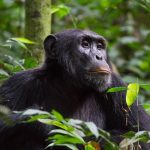
Its forest habitats provide shelter for small mammals, primates, reptiles, amphibians and numerous invertebrates. Visitors may encounter monkeys or other forest animals during a guided walk, although sightings vary.
The forest’s ecological value extends beyond the wildlife that visitors can easily observe. Its vegetation helps protect water catchments, supports local climate and contributes to the health of surrounding landscapes.
For travellers primarily interested in large mammals, Echuya is best combined with nearby protected areas such as Bwindi Impenetrable National Park and Mgahinga Gorilla National Park rather than treated as a conventional big-game safari destination.
5. Community Tourism Around Echuya Forest
The communities surrounding Echuya Forest are an important part of the destination’s cultural and conservation story.
Community-based tourism initiatives can provide opportunities to learn about traditional knowledge, local crafts, forest resources and everyday life in the Kigezi highlands.
Depending on local arrangements, visitors may be able to participate in:
- Guided community walks.
- Traditional basket and craft demonstrations.
- Learning about bamboo use and other forest products.
- Cultural performances and storytelling.
- Discussions about conservation and local livelihoods.
- Visits that introduce visitors to Batwa and other local cultural traditions.
Cultural experiences should be organised through responsible local guides and community organisations. Visitors should seek permission before photographing people and respect community preferences about which activities or traditions are shared with guests.
Where available, choosing locally guided experiences helps direct tourism income towards people living near the forest.
6. Conservation Importance of Echuya Forest Reserve
Echuya Forest Reserve is an important conservation area within the Albertine Rift. Its forests and wetlands provide habitat for rare and restricted-range species while helping protect local water catchments.
The reserve is managed by Uganda’s National Forestry Authority, which oversees forest conservation and regulated access to forest resources.
However, Echuya faces pressures associated with demand for bamboo, firewood and other forest products, as well as changes in surrounding land use. Conservation planning therefore needs to balance biodiversity protection with the needs of neighbouring communities.
Responsible tourism can contribute by supporting local guides, following access rules, avoiding litter and respecting sensitive bird habitats.
Visitors should remain on agreed routes and avoid cutting vegetation, disturbing nests or entering fragile swamp areas without appropriate guidance.
7. Best Time to Visit Echuya Forest Reserve
Echuya can be visited throughout the year, but seasonal conditions affect the comfort of walking and access to the wetland.
Drier Periods
The periods around June to August and December to February are often convenient for forest walks because paths may be less muddy and road access can be easier.
These months are worth considering for birdwatchers who want to explore the bamboo forest and nearby highland destinations.
Wetter Periods
Rainy periods can bring lush vegetation, misty forest scenery and challenging walking conditions. Swamp routes may become particularly muddy, so suitable footwear and waterproof clothing are important.
Bird activity and visibility depend on weather, habitat and species behaviour. There is no guarantee that a particular bird will be seen in any month.
Birdwatching tip: Begin early in the morning, when listening for calls and searching for forest birds can be productive. If Grauer’s swamp-warbler is your main target, arrange a dedicated visit to Muchuya Swamp with a guide familiar with the area.
8. How to Get to Echuya Forest Reserve
Echuya is accessible by road along the Kabale–Kisoro highway, which passes through the northern part of the reserve.
Travellers can arrange transport from Kabale or Kisoro, or visit as part of a wider itinerary through southwestern Uganda. The exact journey time depends on the starting point, road conditions and the forest access area selected.
Because the reserve has limited visitor infrastructure, it is advisable to arrange a guide before arriving, especially if your goal is to explore Muchuya Swamp rather than simply stop along the main road.
For a more comfortable experience, consider using a local guide who knows the forest’s access points, recent bird sightings and walking conditions.
9. Places to Visit Near Echuya Forest Reserve
One of Echuya’s biggest advantages is its location near several of Uganda’s best-known nature and wildlife destinations.
Lake Bunyonyi
Lake Bunyonyi is known for its scenic hills, terraced landscapes and numerous islands. Visitors can enjoy boat trips, canoeing where available, community experiences and relaxing lakeside accommodation.
It is an excellent place to unwind after birdwatching or gorilla trekking.
Bwindi Impenetrable National Park
Bwindi is one of Uganda’s premier destinations for mountain gorilla trekking. Its ancient rainforest also supports a remarkable diversity of birds and other wildlife.
Combining Bwindi with Echuya creates an itinerary that balances a flagship wildlife experience with specialist birdwatching.
Gorilla trekking requires a valid permit and advance planning.
Mgahinga Gorilla National Park
Mgahinga protects part of the Virunga mountain ecosystem and offers mountain gorilla trekking, golden monkey tracking and guided hiking opportunities.
Its volcanic landscapes provide a striking contrast to Echuya’s bamboo forest and swamp habitats.
Kisoro and Lake Mutanda
Kisoro is a useful base for exploring the surrounding mountains and protected areas. Nearby Lake Mutanda offers beautiful scenery, opportunities for canoeing and boat excursions, and views towards the Virunga volcanoes.
Kabale
Kabale is an important town in the Kigezi highlands and a practical base for exploring Echuya and Lake Bunyonyi.
Visitors can use the town as part of a wider journey through southwestern Uganda.
10. Suggested Three-Day Echuya Forest and Gorilla Safari
This itinerary combines specialist birdwatching with Uganda’s celebrated mountain gorilla experience.
Day 1: Travel to southwestern Uganda
Travel to Kabale or Kisoro and settle into your accommodation. Depending on your arrival time, enjoy the surrounding highland scenery or visit Lake Bunyonyi.
Day 2: Birdwatching at Echuya Forest Reserve
Start early with a guided birdwatching excursion in Echuya. Explore suitable forest habitats and, if arranged, the Muchuya Swamp area. Look for Albertine Rift endemics and other highland birds.
In the afternoon, continue to your accommodation near your chosen gorilla trekking sector or remain in the area for a more relaxed pace.
Day 3: Gorilla trekking or onward travel
If you have a valid permit and the logistics are suitable, participate in a mountain gorilla trek in Bwindi or Mgahinga. Alternatively, extend your stay for additional birdwatching or a visit to Lake Bunyonyi.
This itinerary is illustrative. A longer stay is preferable if you want to spend substantial time searching for specialist birds and also enjoy gorilla trekking without rushing.
11. Where to Stay Near Echuya Forest Reserve
There is no need to expect a conventional safari lodge inside the forest reserve itself. Visitors generally arrange accommodation in nearby towns and tourist areas.
Consider staying in:
- Kabale: Convenient for visitors approaching from the eastern side and exploring Lake Bunyonyi.
- Kisoro: Useful for combining Echuya with Mgahinga, Lake Mutanda and southern Bwindi.
- Lake Bunyonyi: Ideal for travellers who want scenic lakeside accommodation and a relaxed atmosphere.
- Bwindi’s surrounding areas: Suitable for travellers combining birdwatching with gorilla trekking.
The best choice depends on your route, accommodation budget and the location of your planned gorilla trek. Confirm road transfers and early-morning pickup arrangements before booking.
Frequently Asked Questions About Echuya Forest Reserve
Where is Echuya Forest Reserve located?
Echuya Forest Reserve is in southwestern Uganda, between Kabale and Kisoro, within Rubanda and Kisoro districts.
What is Echuya Forest Reserve famous for?
It is known for mountain bamboo, montane forest, Muchuya Swamp, birdwatching and Albertine Rift endemic species.
Can I go birdwatching in Echuya Forest?
Yes. Echuya is a recognised birdwatching destination. Visitors should arrange a local guide, particularly when targeting specialist species in the forest and swamp habitats.
Can I see Grauer’s swamp-warbler in Echuya?
Echuya’s Muchuya Swamp is an important site for Grauer’s swamp-warbler. Sightings are not guaranteed, so a dedicated birding excursion with a knowledgeable guide is recommended.
Can I combine Echuya with gorilla trekking?
Yes. Echuya can be included in an itinerary with Bwindi Impenetrable National Park or Mgahinga Gorilla National Park. The exact route should take account of your gorilla permit, trekking sector and accommodation.
How long should I spend at Echuya Forest Reserve?
A half-day visit can introduce you to the forest, but a full day or longer is preferable for dedicated birdwatching, particularly if you want to search for specialist species in Muchuya Swamp.
Is Echuya Forest Reserve suitable for families?
It can be suitable for families who enjoy nature walks and birdwatching, provided the route is appropriate for their fitness and age. Wet, uneven terrain may be challenging for young children, so discuss the planned walk with your guide.
Plan Your Echuya Forest Birding Trip with Epic Uganda Vacation
Echuya Forest Reserve is a valuable addition to Uganda’s nature tourism circuit. Its highland bamboo, specialised wetland habitats and remarkable birdlife make it particularly rewarding for birdwatchers, photographers and travellers interested in conservation.
At Epic Uganda Vacation, we help travellers plan tailor-made Uganda safaris combining specialist birdwatching, mountain gorilla trekking, cultural experiences and scenic destinations across southwestern Uganda.
Whether you want to search for Grauer’s swamp-warbler, explore Echuya’s bamboo forest or combine birding with Bwindi and Lake Bunyonyi, we can help organise an itinerary suited to your interests, travel dates and budget.
Visit https://epicugandavacation.com/ to explore Uganda safari options and enquire about a personalised trip.