Lake Victoria Basin: Wildlife, Culture, Landscapes and Travel Experiences in East Africa
The Lake Victoria Basin is one of the most important geographical and ecological regions in East Africa, supporting millions of people, diverse wildlife, rich cultural traditions and a network of rivers, wetlands, forests and lakeshore communities. Centred around Lake Victoria, the largest lake in Africa by surface area, the basin extends across Uganda, Kenya and Tanzania, with its wider drainage system connected to parts of the surrounding Great Lakes region.
For travellers exploring East Africa, the Lake Victoria Basin offers a fascinating combination of freshwater landscapes, island escapes, birdwatching, fishing traditions, cultural encounters and wildlife experiences. It also provides an important geographical link between destinations such as Entebbe, Jinja, the Ssese Islands, Mwanza and other communities surrounding the lake.
Whether you are planning a Uganda safari, a cultural holiday, a birdwatching expedition or a wider East African journey, understanding the Lake Victoria Basin reveals another dimension of the region beyond its famous national parks.
Where Is the Lake Victoria Basin?
The Lake Victoria Basin is located in East Africa and is centred on Lake Victoria, which is shared by Uganda, Kenya and Tanzania.
The basin includes the lake itself, surrounding lowlands, wetlands, tributaries, river systems and areas that drain into the lake. Its wider watershed supports agriculture, fishing, transport, urban settlements and numerous natural habitats.
Lake Victoria is connected to the White Nile through the Victoria Nile, which flows out of the lake near Jinja in Uganda. The river continues towards Lake Kyoga and the Murchison Falls area before joining the wider Nile system.
The basin is therefore important not only to the countries immediately surrounding Lake Victoria but also to the wider Nile River system.
Countries of the Lake Victoria Basin
The three principal countries bordering Lake Victoria are:
- Uganda: The northern and northwestern shores, including Entebbe, Jinja and numerous lakeside communities.
- Kenya: The northeastern and eastern shores, including Kisumu and surrounding fishing communities.
- Tanzania: The southern and southwestern shores, including Mwanza, Bukoba and several lakeside islands.
The broader drainage basin extends beyond the immediate shoreline, encompassing additional areas that contribute water to Lake Victoria.
Lake Victoria: The Heart of the Basin
Lake Victoria is the largest lake in Africa by surface area and one of the world’s major tropical freshwater lakes. Its extensive shoreline includes wetlands, rocky outcrops, sandy beaches, fishing villages, ports and islands.
The lake is a major source of freshwater and supports fishing, transport, agriculture, tourism and livelihoods throughout the surrounding region.
For visitors, its most appealing features include beautiful sunsets, boat excursions, island retreats, birdwatching and opportunities to experience the daily life of lakeside communities.
In Uganda, popular access points include Entebbe, Jinja and the Ssese Islands. In Kenya, Kisumu provides an important gateway to the lake’s eastern shores, while Mwanza is a major urban centre on the Tanzanian side.
Top Places to Visit in the Lake Victoria Basin
1. Entebbe, Uganda
Entebbe is one of Uganda’s most accessible destinations on Lake Victoria, particularly for international travellers arriving at Entebbe International Airport.
Entebe town offers lakeside scenery, botanical gardens, beaches, restaurants and opportunities for boat excursions. It is also a convenient starting point for visitors planning safaris to Uganda’s national parks.
Highlights include:
- Exploring Entebbe Botanical Gardens.
- Taking a boat trip on Lake Victoria.
- Visiting the Uganda Wildlife Conservation Education Centre.
- Enjoying lakeside dining and sunset views.
- Arranging birdwatching excursions around wetlands and lake shores.
Entebbe is an ideal place to begin or conclude a Uganda safari.
2. Jinja and the Source of the Nile, Uganda
Jinja lies near the point where the Victoria Nile flows out of Lake Victoria. The area is known for its river scenery, adventure tourism and cultural heritage.
Visitors can explore the Source of the Nile area, enjoy boat excursions and experience activities along the river.
Popular experiences include:
- Boat trips near the Source of the Nile.
- White-water rafting on the Nile, where permitted and suitable.
- Kayaking and other adventure activities.
- Visiting local markets and cultural attractions.
- Exploring the surrounding countryside.
Jinja is especially attractive to travellers who want to combine lake scenery with outdoor adventure.
3. Ssese Islands, Uganda
The Ssese Islands form an archipelago in the Ugandan portion of Lake Victoria. Their forested landscapes, sandy shores and relaxed atmosphere make them appealing for travellers seeking a break from busy cities and wildlife-safari schedules.
Visitors can enjoy lakeside accommodation, boat trips, fishing experiences, birdwatching and walks through island communities.
The islands can be particularly attractive for couples, families and travellers looking for a peaceful extension to a Uganda holiday.
Travel arrangements vary by island, so confirm ferry schedules, transfers and accommodation availability before departure.
4. Kisumu, Kenya
Kisumu is a major city on the northeastern shore of Lake Victoria and an important commercial and cultural centre in western Kenya.
The city provides access to lakeside attractions, fishing communities and nearby wetland habitats.
Experiences may include:
- Exploring lakeside markets.
- Learning about local fishing traditions.
- Enjoying views across Lake Victoria.
- Visiting nearby nature and wildlife attractions.
- Discovering Luo cultural traditions and regional cuisine.
Kisumu can be incorporated into a western Kenya itinerary or a broader journey around the lake.
5. Mwanza, Tanzania
Mwanza is one of Tanzania’s principal cities on Lake Victoria. Its lakeside setting, rocky outcrops and lively markets create a distinctive atmosphere.
The city is also a gateway to parts of northwestern Tanzania and can be combined with selected safari destinations, depending on travel arrangements.
Visitors can explore the waterfront, discover local markets, enjoy lake views and learn about the fishing and trading activities that support the region.
6. Rubondo Island National Park, Tanzania
Rubondo Island National Park lies in Lake Victoria and protects an important island ecosystem of forest, shoreline and wetland habitats.
The park is known for its biodiversity and offers opportunities for nature-based tourism. Wildlife and birdlife may be encountered in the forest and along the lake shore, although sightings depend on conditions.
Rubondo can appeal to travellers looking for a quieter, nature-focused experience away from Tanzania’s better-known savannah safari circuits.
Wildlife and Biodiversity in the Lake Victoria Basin
The Lake Victoria Basin supports a rich variety of aquatic and terrestrial habitats. These include open water, papyrus swamps, river mouths, seasonal wetlands, grasslands and forest patches.
Together, these environments support fish, amphibians, reptiles, mammals and a wide diversity of birds.
Birdwatching
The basin is an important birding destination because wetlands and lake shores provide feeding and breeding habitats for many species.
Depending on the location and season, birdwatchers may encounter:
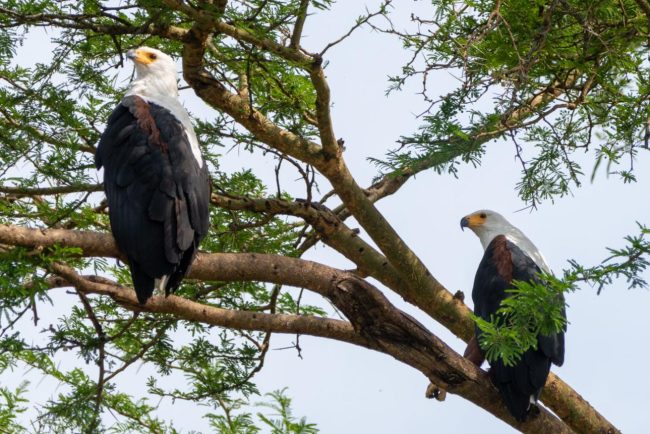
- African fish eagle.
- Pied kingfisher.
- Malachite kingfisher.
- Grey-headed gull.
- Great cormorant.
- African openbill.
- Yellow-billed stork.
- African jacana.
- Herons and egrets.
- Papyrus-associated birds in suitable wetland habitats.
Birdwatching locations vary considerably across the basin. In Uganda, Entebbe, Mabamba Bay and other wetlands around Lake Victoria offer particularly rewarding opportunities.
Mabamba Bay is internationally known for its shoebill sightings, although encounters cannot be guaranteed.
Fish and Aquatic Life
Lake Victoria supports a diverse freshwater ecosystem and is especially important for fisheries.
Nile perch and Nile tilapia are commercially significant, while the lake and its tributaries also support other fish species. The basin’s fisheries provide food, employment and income for communities across the three countries.
The lake’s ecology has changed substantially over time due to fishing pressure, introduced species, pollution and other environmental factors.
Mammals and Other Wildlife
Wildlife varies across the basin’s islands, forests, wetlands and surrounding landscapes. Some protected areas support primates and other forest wildlife, while wetlands attract aquatic birds and other animals.
Visitors should not assume that every lakeside destination offers the same wildlife experiences. For a dedicated big-game safari, it is best to combine Lake Victoria with established wildlife areas such as Murchison Falls, Queen Elizabeth National Park or selected parks in Tanzania and Kenya.
Cultural Experiences Around Lake Victoria
The Lake Victoria Basin is home to many communities with distinctive languages, traditions, livelihoods and cultural identities.
Fishing is central to life in many lakeside settlements. Visitors may observe fishing boats returning with their catch, fish being dried or prepared for sale, and local markets trading freshwater fish and other products.
Cultural experiences can also include traditional music, dance, local food, craft markets and guided visits to villages where tourism activities are organised with community participation.
In Uganda, travellers may learn about Baganda cultural traditions around the northern and northwestern parts of the lake. In Kenya, the Luo people have a significant cultural presence around the eastern lakeshore. Tanzania’s lakeside communities include Sukuma and other groups with diverse traditions.
Cultural visits should be arranged respectfully, with appropriate permission and fair compensation for local guides and participating communities.
Economic Importance of the Lake Victoria Basin
The basin is one of East Africa’s most important economic regions. Its resources support urban development, agriculture, fishing, transport, tourism and regional trade.
Fisheries
Lake Victoria is a major source of fish for domestic consumption and commercial markets. Fishing and fish processing support livelihoods for many lakeside communities.
Agriculture
The surrounding basin contains productive agricultural areas where communities grow crops and raise livestock. Agriculture also supports markets and food supply chains serving major towns and cities.
Transport and Trade
Lake transport connects selected ports and communities in Uganda, Kenya and Tanzania. The lake has historically served as an important route for people and goods, although services and schedules vary by route.
Tourism
Tourism supports accommodation providers, boat operators, guides, restaurants, transport businesses and community enterprises.
For travellers, these activities offer opportunities to understand how freshwater resources shape everyday life across East Africa.
Environmental Challenges Facing the Lake Victoria Basin
Despite its ecological and economic importance, the Lake Victoria Basin faces several environmental challenges.
Pollution
Urban wastewater, agricultural runoff, plastics and other forms of waste can affect water quality and aquatic habitats.
Invasive Species
The introduction and spread of invasive species, including water hyacinth, have affected some parts of the lake and its surrounding waterways.
Overfishing
Fishing pressure can threaten fish populations and disrupt ecological balance when catches exceed sustainable levels.
Wetland Loss
Wetlands help filter water, support biodiversity and reduce flooding. Their conversion for settlement, agriculture and other activities can weaken these natural functions.
Climate Variability
Changes in rainfall, temperature and water levels can influence fisheries, agriculture, transport and wetland ecosystems.
Conservation initiatives across the basin focus on improving water quality, protecting wetlands, supporting sustainable fisheries and strengthening cooperation between the countries sharing the lake.
Best Time to Visit the Lake Victoria Basin
The basin can be visited throughout the year, but weather conditions vary by location.
In Uganda, drier periods generally occur around December to February and June to August. These months can be convenient for outdoor activities, boat excursions and combining the lake with a wildlife safari.
Rainier periods often occur around March to May and September to November, although local conditions vary. Rain can bring lush landscapes and rewarding birdwatching, but it may also affect road conditions and some outdoor activities.
For birdwatching, the best time depends on the species you want to see. Migratory birds may be present during particular periods, while resident wetland species can be observed throughout much of the year.
Before travelling, check local weather forecasts, boat schedules and the availability of your chosen accommodation.
How to Explore the Lake Victoria Basin on a Uganda Safari
Travellers can experience the Ugandan side of the Lake Victoria Basin as a short excursion or as part of a longer itinerary.
Combine Lake Victoria with Uganda’s National Parks
For visitors interested in wildlife, the lake can be combined with several of Uganda’s major destinations:
- Murchison Falls National Park: Wildlife drives, the Nile River and the dramatic Murchison Falls.
- Kibale Forest National Park: Chimpanzee trekking and rainforest birdwatching.
- Queen Elizabeth National Park: Game drives and a boat cruise on the Kazinga Channel.
- Bwindi Impenetrable National Park: Mountain gorilla trekking and forest biodiversity.
- Lake Mburo National Park: Savannah wildlife, guided nature walks and other outdoor activities.
These combinations allow visitors to experience the contrast between freshwater landscapes, rainforests and African savannah.
Frequently Asked Questions About the Lake Victoria Basin
Which countries are in the Lake Victoria Basin?
The basin is centred on Lake Victoria, which is bordered by Uganda, Kenya and Tanzania. The wider drainage basin extends into surrounding areas beyond the immediate lakeshore.
Why is the Lake Victoria Basin important?
It supports freshwater fisheries, agriculture, biodiversity, transport, tourism and the livelihoods of millions of people. It is also an important part of the wider Nile River system.
Is Lake Victoria worth visiting?
Yes. Visitors can enjoy boat trips, island retreats, birdwatching, cultural experiences, fishing communities and beautiful lakeside scenery.
Can I see the shoebill around Lake Victoria?
Yes. Mabamba Bay, near Entebbe in Uganda, is one of the best-known places to search for the shoebill. Sightings depend on conditions and the bird’s movements.
Is Lake Victoria the source of the Nile?
The Victoria Nile flows out of Lake Victoria near Jinja, Uganda. The Nile’s wider river system continues through several lakes and countries before reaching the Mediterranean Sea.
What is the best way to explore the Ugandan side of Lake Victoria?
Entebbe, Jinja and the Ssese Islands are useful starting points. Visitors can combine boat excursions, birdwatching, cultural experiences and lakeside relaxation with a wider Uganda safari.
Explore Lake Victoria and Beyond with Epic Uganda Vacation
The Lake Victoria Basin offers more than beautiful lake scenery. It is a region of remarkable biodiversity, cultural heritage, working fishing communities and landscapes that connect several East African countries.
At Epic Uganda Vacation, we help travellers organise tailor-made Uganda holidays that can include Lake Victoria, birdwatching at Mabamba Bay, adventures in Jinja, wildlife safaris, chimpanzee trekking and mountain gorilla encounters.
Whether you want a short lakeside escape or a multi-day journey through Uganda’s national parks, we can help you build an itinerary around your interests, available time and budget.
Visit https://epicugandavacation.com/ to explore Uganda safari options and plan your East African adventure.