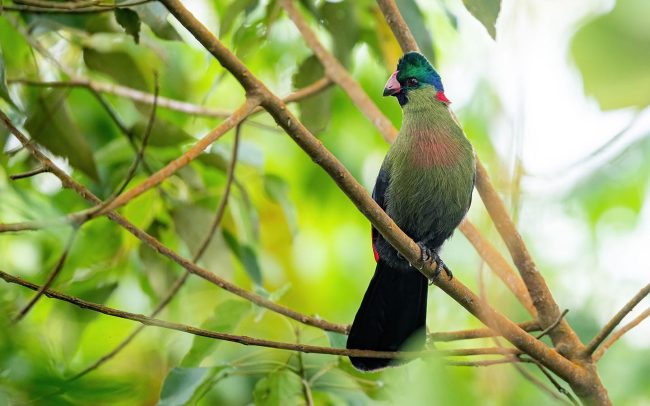
Bird Watching in Nyungwe National Park, Rwanda
Bird watching in Nyungwe National Park is one of the most rewarding experiences for nature lovers visiting Rwanda. Located in the country’s southwestern region, Nyungwe protects an extensive montane rainforest with rich birdlife, mist-covered hills, deep valleys and forest trails. It is particularly attractive to birdwatchers interested in species associated with the Albertine Rift, one of Africa’s important centres of biodiversity.
The forest provides opportunities for both experienced birders searching for regional specialties and travellers who simply enjoy observing birds in a natural environment. With a knowledgeable local guide, visitors can explore different forest habitats, identify birds by their calls and learn how the ecosystem supports wildlife.
Nyungwe is also a destination for chimpanzee tracking, nature walks and canopy experiences, making it a valuable addition to a wider Rwanda wildlife holiday.
Why Visit Nyungwe National Park for Bird Watching?
Nyungwe is widely recognised as one of Rwanda’s leading birding destinations. Published park and tourism sources report approximately 300 or more bird species, including around 30 associated with the Albertine Rift region. Exact totals vary by source and checklist.
The park’s appeal comes from its combination of montane rainforest, different elevations and specialised habitats. These conditions support forest birds that may be difficult to find in open savannah or wetland environments.
Reasons to include Nyungwe in a Rwanda birding itinerary include:
- Opportunities to search for Albertine Rift endemic and range-restricted birds.
- Forest habitats with turacos, sunbirds, flycatchers, babblers and other specialised species.
- Guided birding walks along established trails.
- Opportunities to combine bird watching with hiking and other nature activities.
- A chance to explore southwestern Rwanda beyond the country’s better-known gorilla trekking destinations.
Bird sightings are never guaranteed. Patience, suitable weather and the skill of your guide all influence what you may see during a visit.
Notable Birds to Look For in Nyungwe Forest
Nyungwe’s birdlife includes colourful canopy species, secretive forest-floor birds and specialised montane birds. The following species are particularly interesting for visitors preparing a birding checklist.
Rwenzori Turaco
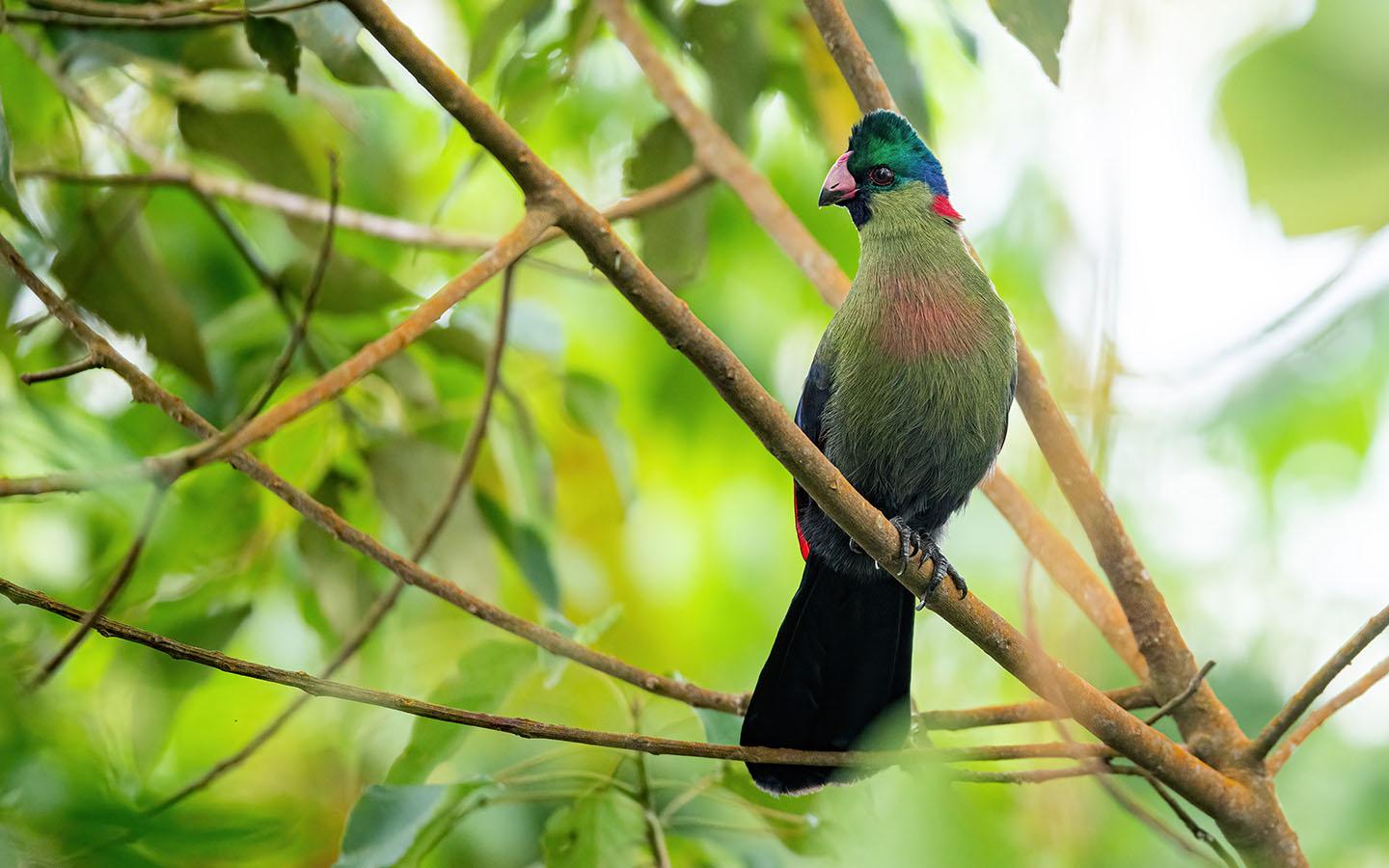
The Rwenzori Turaco is a striking forest bird and one of the species many birdwatchers hope to find in the Albertine Rift. Its distinctive appearance and calls make it an exciting target during guided forest walks.
Turacos can sometimes be detected by their vocalisations before they are seen clearly through the vegetation.
Red-collared Babbler
The Red-collared Babbler is a sought-after regional specialty. It inhabits forest environments and can be challenging to observe in dense vegetation.
A local bird guide can help visitors listen for calls, recognise suitable habitat and search patiently without disturbing the birds.
Regal Sunbird
Sunbirds are known for their slender, curved bills and their ability to feed on nectar. The Regal Sunbird is one of the attractive montane species birders may target in the region.
Look for suitable flowering vegetation, where feeding birds may be easier to detect.
Rwenzori Batis
The Rwenzori Batis is another interesting bird for visitors compiling an Albertine Rift target list. Small forest birds can be difficult to identify in the canopy, so binoculars and a guide familiar with their calls are useful.
Yellow-eyed Black Flycatcher
This forest-associated flycatcher is among the specialised birds birdwatchers may look for in Nyungwe. Careful observation is important because birds can move quickly between branches and remain partly concealed by foliage.
Handsome Francolin
The Handsome Francolin is a notable forest species associated with the Albertine Rift. As with other ground-dwelling forest birds, visitors may hear calls or detect movement before obtaining a clear view.
Other Species of Interest
Depending on the location and conditions, birdwatchers may also look for:
- Blue-headed Sunbird
- Purple-breasted Sunbird
- Doherty’s Bushshrike
- White-tailed Blue Flycatcher
- Red-throated Alethe
- Stripe-breasted Tit
- Neumann’s Short-tailed Warbler
- Great Blue Turaco
- Black-and-white-casqued Hornbill
Use an up-to-date bird checklist and confirm local records with your guide. Not every species is equally easy to find, and some may require dedicated effort.
Best Places for Bird Watching in Nyungwe National Park
Birding success depends on selecting suitable habitats and spending enough time in the forest. Trail access, conditions and guiding arrangements should be confirmed before the visit.
1. Uwinka Area and Forest Trails
Uwinka is an important visitor area in Nyungwe and a useful base for exploring the forest with authorised guides. Its surroundings provide access to montane forest habitats where birders can search for a range of forest species.
A guided walk can focus on identifying calls, scanning the canopy and checking vegetation along the trail.
2. Bigugu Trail
The Bigugu Trail leads towards Mount Bigugu, which reaches approximately 2,950 metres above sea level. The route passes through forest and montane habitats and can be of interest to visitors who want to combine birding with a longer hike.
The walk can be physically demanding, depending on the route and conditions. Discuss your fitness level, walking pace and target species with your guide before setting out.
3. Kamiranzovu Swamp
Kamiranzovu is an important wetland habitat within the forest landscape. Its different ecological conditions make it worth discussing with a guide when planning a specialist birding outing.
Wetland-associated species can be difficult to locate, so allow sufficient time and follow the current guidance on access and trail conditions.
4. Gisakura Area
The Gisakura area is a useful place to consider when arranging accommodation and forest activities in the western part of the park. Its surrounding landscapes can support a varied nature itinerary.
Ask your guide which birding locations are most suitable for your target species and the time available.
5. Canopy Walkway Area
The canopy walkway offers an elevated perspective over parts of the forest. From above the forest floor, visitors may have different opportunities to observe birds moving through the canopy.
However, the canopy walk is not a substitute for a dedicated birding excursion. Some species remain concealed, and sightings depend on activity, weather and visibility.
Best Time for Bird Watching in Nyungwe
Bird watching can be rewarding throughout the year, but conditions vary with rainfall, trail access and seasonal bird movements.
June to September
These months can be attractive for travellers who prefer to combine forest birding with hiking and other outdoor activities. Weather conditions still vary, and rain is possible in a rainforest environment.
October to November
The landscape may become wetter as seasonal rains develop. This can create lush forest scenery, but muddy trails and changing weather may affect walking conditions.
December to February
This period can be a good option for combining birding with other Rwanda travel experiences. Plan flexible outings and check the weather before longer hikes.
March to May
These months include a wetter period in much of Rwanda. Birding remains possible, but rainfall may affect visibility, trail conditions and the comfort of longer walks.
Migratory species may also influence seasonal checklists. If you have a specific target bird, discuss the most suitable travel period with a local specialist rather than relying on general seasonal assumptions.
Why Hire a Professional Birding Guide?
Nyungwe’s dense forest can make bird identification challenging, even for experienced travellers. Many birds spend their time in the canopy or move quietly through thick vegetation.
A guide with local birding experience can help by:
- Identifying species through their calls and songs.
- Selecting trails and habitats that match your target list.
- Helping distinguish similar-looking birds.
- Adjusting the pace to suit photographers and serious birdwatchers.
- Explaining the forest’s ecology and conservation importance.
When booking, explain whether you are a beginner, a keen amateur or an experienced birder with a specific target list. This allows your operator to arrange a suitable guide and realistic schedule.
What to Pack for a Nyungwe Birding Tour
Preparation makes a difference during long walks in a humid mountain forest.
Consider bringing:
- Binoculars suitable for forest birding.
- A camera with a useful zoom lens, if photography is a priority.
- A bird field guide or offline bird identification app.
- Waterproof walking shoes with good grip.
- Lightweight, quick-drying clothing.
- A waterproof jacket and protection for camera equipment.
- Drinking water and a small daypack.
- Insect repellent and personal medication.
- A notebook or digital checklist for recording sightings.
Neutral-coloured clothing can help you blend into the surroundings. Follow your guide’s instructions and avoid playback of bird calls unless its use is permitted and considered appropriate.
How Many Days Do You Need for Bird Watching?
The time required depends on the number of species you hope to find and whether birding is your main reason for visiting Rwanda.
One day: Suitable for a short introduction to the forest’s birdlife, although it may be insufficient for visitors with a long target list.
Two days: Allows more time to explore different trails and revisit locations for species that were missed on the first outing.
Three days or more: Worth considering for dedicated birders who want to search for specialised Albertine Rift species and combine multiple habitats with a more flexible pace.
These are planning suggestions, not guarantees of particular sightings. Build in time for travel, rest and changing weather.
Sample 3-Day Nyungwe Bird Watching Itinerary
Day 1: Arrival and introductory forest birding
Travel to the Nyungwe area and check into your accommodation. Depending on your arrival time and the availability of an authorised guide, enjoy a short introductory birding walk.
Use the session to become familiar with the forest environment and discuss your target species for the following days.
Day 2: Full-day guided birding
Begin early with a guided birding session along a suitable forest trail. Concentrate on calls, canopy species and the birds associated with the habitat selected by your guide.
After a break, continue birding where conditions and park arrangements allow. Record confirmed sightings and update your checklist with your guide’s help.
Day 3: Target-species search and departure
Spend the morning revisiting a promising habitat or exploring another suitable trail. This provides another opportunity to search for species missed earlier.
After the activity, depart for your next destination, such as Lake Kivu or Kigali, depending on your onward itinerary and available travel time.
The itinerary is illustrative. Actual trail selection, activity duration and departure times should be confirmed when booking.
Where to Stay for a Birding Trip
Choose accommodation according to your budget, preferred comfort level and the locations where you plan to begin your activities.
Options in the wider Nyungwe area include park-associated visitor accommodation and camps, as well as lodges and hotels around the forest’s access areas. Current availability and facilities should be checked directly before booking.
When comparing accommodation, consider:
- Driving time to the planned birding trail.
- Early breakfast or packed-meal arrangements.
- Availability of a guide or assistance arranging one.
- Secure storage for cameras and binoculars.
- Warm water, heating and other comfort needs at higher elevations.
- Whether transfers to and from activity starting points are included.
For a dedicated birding holiday, convenient access to your planned trails may be more valuable than selecting accommodation solely for its facilities.
Combining Nyungwe Birding with Other Rwanda Experiences
Nyungwe can form part of a broader Rwanda itinerary, especially for travellers interested in the country’s contrasting habitats.
Akagera National Park: Add savannah, woodland and wetland birding, along with opportunities to see larger wildlife.
Volcanoes National Park: Combine a forest-focused birding holiday with mountain scenery, golden monkey tracking or gorilla trekking, subject to permit availability.
Lake Kivu: Enjoy lakeside scenery and a more relaxed stop between Nyungwe and other destinations.
Kigali: Explore the capital’s cultural attractions and arrange your international departure.
A multi-destination trip can provide a broader range of bird habitats than a visit to Nyungwe alone. The best route depends on your target species, available days and budget.
Responsible Bird Watching in Nyungwe
Nyungwe is a sensitive forest ecosystem, so visitors should minimise disturbance and follow the park’s conservation rules.
Stay on authorised trails, avoid disturbing nests and roosting birds, and never remove plants or wildlife. Keep a respectful distance from animals and avoid loud calls or movements that could disrupt feeding or breeding behaviour.
Use authorised guides and follow instructions about restricted areas. Responsible birding helps protect the habitats that make the forest valuable for future visitors and local biodiversity.
Frequently Asked Questions
How many bird species are found in Nyungwe National Park?
Tourism and conservation sources commonly report around 300 or more bird species, with some sources listing over 310. Counts vary with the checklist and classification used.
Is Nyungwe good for seeing Albertine Rift endemic birds?
Yes. Nyungwe is an important destination for searching for birds associated with the Albertine Rift, including species such as the Red-collared Babbler, Rwenzori Turaco and Rwenzori Batis. Sightings depend on the season, habitat and guiding.
Do I need a guide for bird watching?
A knowledgeable guide is strongly recommended, particularly for visitors searching for specialised forest birds. Guides can identify calls, choose appropriate trails and help visitors distinguish similar species.
Can beginners enjoy birding in Nyungwe?
Yes. Beginners can enjoy learning common calls, observing colourful birds and discovering the rainforest. You do not need an advanced checklist to appreciate the experience.
Can I combine bird watching with chimpanzee tracking?
Yes, subject to activity schedules, permit availability and your travel dates. Birding and chimpanzee tracking have different requirements, so allow enough time for both.
Is Nyungwe suitable for bird photography?
Yes, although dense vegetation, low light and moving birds can make photography challenging. A camera with a suitable zoom lens and patience will improve your chances of capturing useful images.
Plan Your Nyungwe Bird Watching Tour
Nyungwe National Park is an excellent destination for travellers who want to explore Rwanda’s montane forest birdlife and search for Albertine Rift specialties. With knowledgeable guiding, suitable trails and enough time in the forest, a visit can become a rewarding part of a wider birding holiday.
Contact our team to plan a Nyungwe birding tour around your target species, travel dates, preferred accommodation and budget. We can help you combine the forest with other birding locations and wildlife experiences in Rwanda for a well-paced itinerary.