Volcanoes National Park: Africa’s Oldest Sanctuary
Volcanoes National Park is the oldest national park in Africa, established in 1925 under the Belgian colonial government. Initially, the park boundaries extended deep into the Democratic Republic of Congo. Because explorers had recently discovered mountain gorillas in the area, the government prioritized protecting the local biodiversity.
Currently, the park covers approximately 160 square kilometers in the northwestern region of Rwanda. Notably, it borders Virunga National Park in the DRC and Mgahinga Gorilla National Park in Uganda.
The Legacy of Dian Fossey
The park became world-famous when it hosted the renowned conservationist Dian Fossey. Specifically, she established the Karisoke Research Center to foster a worldwide campaign for mountain gorilla conservation. Although she was tragically murdered in 1985, her programs yielded immense returns for Rwanda’s wildlife, a Rwanda Safaris making a tremendous growth in the number of tourist visiting Rwanda. Today, many tourists flock to the park to pay their respects at her grave and continue her mission.
Habituated Gorilla Families in Volcanoes National Park
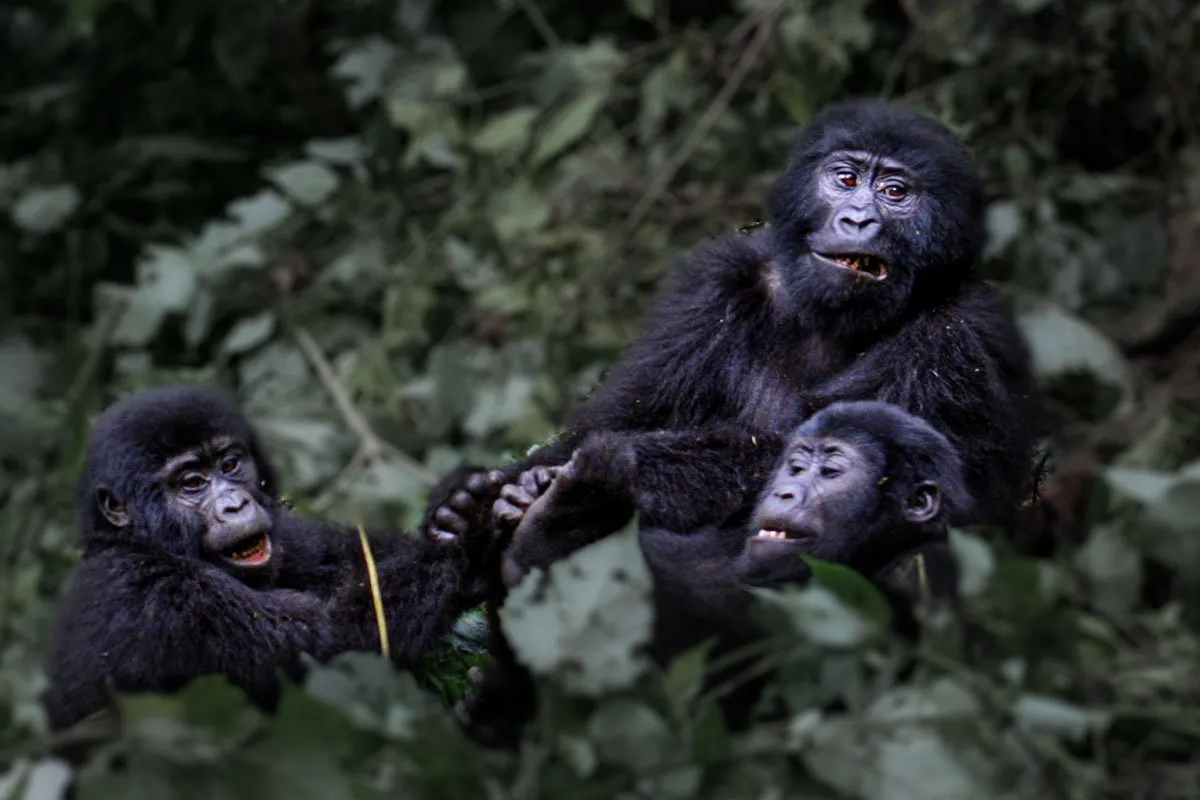
Volcanoes National Park hosts about 350 individual gorillas. While there are over 13 families, only 10 are currently habituated for gorilla trekking in Rwanda. Below are some of the most prominent families:
1. Amahoro & Umubano Families
-
Amahoro Family: The name means “peace” in Kinyarwanda. Indeed, this family is the most peaceful in the park. Led by the silverback Ubumwe, they reside on the steep slopes of Mount Bisoke.
-
Umubano Family: Meaning “neighbor,” this group formed when a silverback named Charles broke away from Amahoro. Despite the split, the two families live in harmony and frequently interact.
2. The Susa Families (A & B)
-
Susa A: This group is famous for being part of Dian Fossey’s original research. Furthermore, it is home to rare twins, Byishimo and Impano. Notably, a veteran gorilla named Poppy, born in 1976, still resides here.
-
Susa B (Karisimbi): This family split from Susa A in 2008. Because they inhabit the high slopes of Mount Karisimbi, they are often the most challenging group to trek.
3. Sabyinyo & Agashya Families
-
Sabyinyo Family: Led by the massive silverback Guhonda, this group stays in the territory between Mount Sabyinyo and Mount Gahinga.
-
Agashya Family (Group 13): Originally formed with only 13 members, it is now led by the silverback Agashya. Interestingly, he took over the group after carefully studying his rival’s fighting techniques for years.
4. Hirwa, Kwitonda, & Ugenda Families
-
Hirwa Family: Meaning “the lucky one,” this group formed when members from other families joined forces.
-
Kwitonda Family: This “humble” family originally migrated from the DRC. Currently, they reside on the slopes of Mount Muhabura.
-
Ugenda Family: The name means “on the move.” Consequently, trekking this family is challenging because they are constantly changing their location.
Planning Your Visit
If you are planning a wildlife photography safari in Uganda and Rwanda, understanding these family dynamics is essential. Knowing how much gorilla trekking costs in Rwanda ($1,500 per permit) helps you budget for this life-changing experience.