
How to Get to Serengeti National Park: Flights, Road Routes, Gates and Travel Tips
Serengeti National Park in northern Tanzania is one of Africa’s most famous wildlife destinations, known for its vast savannah plains, lions, elephants, leopards, cheetahs and the spectacular Great Wildebeest Migration. Whether you are planning a luxury safari, a family holiday, a honeymoon or a wildlife photography adventure, knowing how to get to Serengeti National Park will help you plan a smooth and rewarding journey.
The two main ways to reach the Serengeti are by road from Arusha or by domestic light aircraft to an airstrip inside the park. Most international travellers arrive at Kilimanjaro International Airport before travelling to Arusha, the main gateway for Northern Tanzania safaris. You can then drive through the Ngorongoro Conservation Area or connect to a scheduled or charter flight into the Serengeti.
For travellers planning an East African adventure, Epic Uganda Vacation Ltd can help organise a Northern Tanzania safari and, where suitable, combine it with gorilla trekking or wildlife experiences in Uganda.
1. Where Is Serengeti National Park Located?
Serengeti National Park is located in northern Tanzania, close to the border with Kenya. It forms part of the wider Serengeti–Mara ecosystem, which extends into Kenya’s Maasai Mara National Reserve.
The park covers approximately 14,750 square kilometres and is one of the leading destinations for wildlife safaris in Africa.
The most common starting point for visitors is Arusha, a northern Tanzanian city with access to the country’s main safari destinations. From Arusha, travellers can continue by road or take a domestic flight to one of the park’s airstrips.
2. How to Get to Serengeti National Park by Air
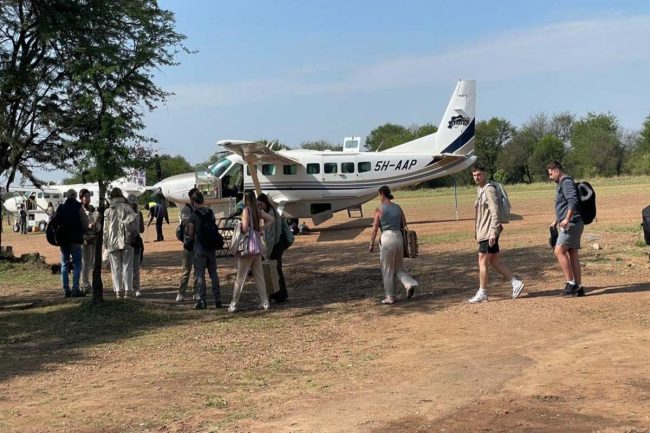
Flying is the most convenient option if you want to minimise long road transfers and spend more time enjoying wildlife.
Step 1: Fly to Kilimanjaro International Airport
Kilimanjaro International Airport (JRO) is a major international gateway for Northern Tanzania safaris. It is located between Arusha and Moshi.
International travellers can connect through regional or international hubs depending on their departure city and airline. From the airport, arrange a transfer to Arusha or a connection that fits your safari itinerary.
Step 2: Transfer to Arusha Airport
Arusha Airport (ARK) handles regional safari flights. Depending on your itinerary and flight schedule, you may need a road transfer from Kilimanjaro International Airport to Arusha Airport before boarding your onward flight.
Allow enough time between connections, especially if you arrive on a long-haul international flight.
Step 3: Take a domestic flight to the Serengeti
Scheduled and charter flights serve several airstrips within or near the park. The most suitable airstrip depends on where you plan to stay and which part of the Serengeti you want to explore.
Common options include:
| Airstrip | Best suited for |
|---|---|
| Seronera | Central Serengeti and year-round wildlife viewing |
| Kogatende | Northern Serengeti and possible Mara River crossings |
| Lobo | Northern and northeastern Serengeti |
| Kirawira | Western Serengeti and the Western Corridor |
| Kusini | Southern Serengeti |
| Ndutu | Southern plains and calving-season safaris; located in the Ngorongoro Conservation Area |
After landing, a lodge or safari operator will usually arrange a transfer to your accommodation. Flight times, baggage limits and transfer durations depend on the route and property.
Who should choose a fly-in safari?
-
Travellers with limited time.
-
Luxury safari guests seeking convenience.
-
Honeymooners and photographers.
-
Visitors travelling to remote northern camps.
-
Travellers combining several national parks or ending their safari in Zanzibar.
3. How to Get to Serengeti National Park by Road
Driving to Serengeti National Park is a popular choice for travellers who want a scenic overland safari and the opportunity to visit several destinations along the way.
Most road safaris begin in Arusha and travel through the Karatu area and Ngorongoro Conservation Area before entering the Serengeti through Naabi Hill Gate.
The drive from Arusha to the Serengeti takes approximately 7–8 hours in favourable conditions, although the journey can take longer depending on road conditions, stops, the gate used and your final lodge.
Route 1: Arusha to Serengeti via Ngorongoro
This is the classic Northern Tanzania safari route.
1. Arusha
Starting point for Northern Circuit safaris.
A convenient overnight stop near Ngorongoro.
3. Ngorongoro Conservation Area
A scenic highland route with optional crater-safari arrangements.
4. Naabi Hill Gate
A principal entry point for the Serengeti.
5. Serengeti National Park
Continue to your lodge or tented camp and begin exploring.
This route works well for travellers who want to combine Serengeti with the Ngorongoro Crater, Tarangire National Park or Lake Manyara National Park.
Note that travel through the Ngorongoro Conservation Area may involve separate conservation-area fees. Confirm how these charges and any overnight stops are handled in your safari quotation.
Route 2: Arusha to Serengeti via the Western Corridor
Travellers can also approach the western Serengeti through Ndabaka Gate, generally using the Mwanza side of the route.
This option may be practical for itineraries focused on the Western Corridor or when arriving in the Lake Victoria region. It is not usually the most direct route for visitors whose accommodation is in central or southern Serengeti.
Route 3: From Mwanza to Serengeti
Mwanza is located on the southern shore of Lake Victoria. It provides an alternative access point for visitors travelling from western Tanzania.
From Mwanza, travellers can drive towards Ndabaka Gate and enter the park’s western region. Road travel time varies according to the precise destination, road conditions and stops.
Can you drive yourself to Serengeti National Park?
Yes, self-driving is possible, but it requires careful preparation. A suitable high-clearance 4×4 vehicle is recommended, and drivers should be comfortable navigating remote roads, managing fuel and following park regulations.
For most international visitors, an organised safari with an experienced driver-guide is more convenient and allows them to concentrate on wildlife viewing rather than logistics.
4. Which Gates Can You Use to Enter Serengeti National Park?
Choosing the right gate is important because the Serengeti is enormous. Entering from the wrong side can add several hours of driving.
| Gate or access point | Location and purpose |
|---|---|
| Naabi Hill Gate | Main access for travellers arriving via Ngorongoro and heading towards central or southern Serengeti |
| Ndabaka Gate | Western access for the Western Corridor |
| Klein’s Gate | Access to the northeastern Serengeti |
| Ikoma access area | Useful for some northwestern Serengeti itineraries; confirm the designated entry point for your route |
Your entry gate should match your accommodation and planned wildlife activities. Confirm current operating hours, entry arrangements and route conditions before departure.
5. How to Get to Serengeti from Zanzibar
Travellers enjoying a beach holiday in Zanzibar can continue to the Serengeti for a wildlife safari.
The most convenient option is generally a scheduled or charter flight, subject to the available timetable and route. Depending on the booking, you may connect through Arusha or another regional airport, or use a flight serving a Serengeti airstrip.
A fly-in safari can save substantial overland travel time. For a longer holiday, you could spend several days exploring the Serengeti and Ngorongoro before returning to Zanzibar for relaxation.
When arranging this combination, confirm baggage limits, airport transfers and whether the flights are direct or require a connection.
6. How to Get to Serengeti from Uganda
Travellers departing from Uganda can plan a Serengeti safari by flying from Entebbe International Airport to a suitable Tanzanian gateway, usually Kilimanjaro International Airport or another airport that connects conveniently with the itinerary.
Depending on flight schedules, a connection may be necessary. Once in Tanzania, continue by road from Arusha or take a domestic safari flight to the Serengeti.
A combined Uganda–Tanzania itinerary can include:
-
Gorilla trekking in Bwindi Impenetrable National Park.
-
Chimpanzee tracking in Kibale National Park.
-
Wildlife viewing in Queen Elizabeth National Park.
-
The Great Migration and big-cat viewing in the Serengeti.
-
A wildlife excursion in Ngorongoro Crater.
These destinations are in different countries, so the itinerary must account for international flights or suitable regional connections, immigration procedures and any necessary travel documents.
Epic Uganda Vacation can help you coordinate a combined East African safari based on your dates, budget and preferred experiences.
7. How Much Does It Cost to Get to Serengeti National Park?
The cost of getting to the Serengeti depends on your departure airport, transport method, accommodation category, group size and safari duration.
| Expense | What affects the cost? |
|---|---|
| International flights | Departure country, airline, season and connections |
| Domestic safari flights | Route, airstrip, baggage allowance and availability |
| Road transfers | Distance, vehicle type, fuel and itinerary |
| Park fees | Visitor category, season, duration and applicable charges |
| Ngorongoro fees | Whether your route or activities enter the conservation area |
| Accommodation | Location, season, meal plan and comfort level |
| Activities | Game drives, balloon safaris and other optional experiences |
Tanzania National Parks publishes official park information, but charges can change and may differ according to visitor category and season. Check TANAPA latest rate
For accurate budgeting, request a quotation that clearly states which park fees, transfers, accommodation, meals and activities are included.
8. What Is the Best Time to Travel to Serengeti National Park?
Serengeti is a year-round safari destination, but the best period depends on your interests.
-
June to October: Generally drier conditions and excellent wildlife-viewing opportunities; the northern Serengeti may offer opportunities to see river crossings.
-
January to February: A popular period for the wildebeest calving season in the southern Serengeti and Ndutu region, depending on rainfall.
-
November to December: Greener scenery, seasonal wildlife movements and opportunities for birdwatching.
-
March to May: The long-rains period, with lush landscapes but potentially more challenging road conditions.
The Great Migration follows rainfall and fresh grazing, so animal locations can vary from year to year. Plan the location of your accommodation around the wildlife experience you want to prioritise.
9. What Should You Pack for the Journey?
Whether you fly or travel by road, pack for changing temperatures and outdoor activities.
Recommended items include:
-
Valid passport and required travel documents.
-
Comfortable, neutral-coloured safari clothing.
-
A light jacket for cool mornings and evenings.
-
Sunscreen, sunglasses and a hat.
-
Insect repellent and personal medication.
-
Binoculars and a camera.
-
Reusable water bottle.
-
Comfortable walking shoes.
-
Soft-sided luggage if taking a light aircraft, subject to the operator’s baggage rules.
Keep essential documents, medication and valuables in your hand luggage. Before departure, reconfirm flight schedules, baggage restrictions and lodge transfers.
10. How Many Days Do You Need to Reach and Explore the Serengeti?
The journey and safari duration depend on your chosen route.
-
3–4 days: Suitable for a shorter safari, particularly if you fly in and focus on one part of the park.
-
5–7 days: Allows more time for game drives and the possibility of combining Serengeti with Ngorongoro or another Northern Circuit park.
-
8 days or longer: Ideal for a more relaxed itinerary, multiple Serengeti regions or a broader East African adventure.
If you travel by road from Arusha, consider breaking up the journey with an overnight stay or another wildlife destination. If you fly, remember to include transfer time between the airstrip and your lodge.
11. Frequently Asked Questions About Getting to Serengeti National Park
What is the easiest way to get to Serengeti National Park?
Flying from Arusha to an appropriate Serengeti airstrip is usually the most convenient option. A road safari is an excellent alternative for travellers who want to explore the Northern Circuit along the way.
Which airport is closest to Serengeti National Park?
There is no single airport that is closest to every part of the park. Kilimanjaro International Airport and Arusha Airport are common gateways, while Serengeti airstrips provide access to particular regions within the park.
How far is Serengeti National Park from Arusha?
The drive to the park is commonly around 300–325 km, depending on the route and destination, and often takes approximately 7–8 hours or longer. The distance and travel time vary significantly depending on your lodge and the gate used.
Can I fly directly into Serengeti National Park?
Yes. Scheduled and charter light aircraft serve several airstrips in or near the park. You should select the airstrip based on your lodge and planned activities.
Can I visit Serengeti and Ngorongoro on the same trip?
Yes. They are commonly combined on Northern Tanzania safari itineraries. Allow enough time for travel between the destinations and confirm applicable conservation-area and park fees.
Can I travel from Kenya’s Maasai Mara directly into Serengeti?
Do not assume you can cross directly between the Maasai Mara and Serengeti through a normal tourist border crossing. Cross-border safari arrangements require careful planning, and travellers generally need to use an authorised international border route with the appropriate immigration procedures and vehicle arrangements.
Do I need to book my Serengeti safari in advance?
Advance booking is strongly recommended during popular travel periods, particularly July to October and the January–February calving season. Early planning gives you a better choice of accommodation, flights and safari routes.
Plan Your Serengeti Safari with Epic Uganda Vacation
Getting to Serengeti National Park is straightforward when you choose the right route and plan your accommodation around the region you want to explore.
Whether you prefer a scenic road safari from Arusha, a convenient fly-in experience or a combined Uganda–Tanzania adventure, Epic Uganda Vacation Ltd can help you plan a personalised itinerary.
Visit www.epicugandavacation.com to explore safari options and enquire about a Northern Tanzania wildlife adventure.
Discover the Serengeti with a well-planned safari and experience the extraordinary wildlife, landscapes and unforgettable moments of East Africa.
