How to Combine Gorilla Trekking and Wildebeest Migration Safari in East Africa
Imagine beginning your African adventure deep in the mist-covered rainforests of Uganda, where you trek through ancient vegetation to encounter endangered mountain gorillas in their natural habitat. A few days later, you find yourself on the endless golden plains of the Maasai Mara or Tanzania’s Serengeti National Park, witnessing thousands of wildebeest, zebras and gazelles moving across the savannah during the spectacular Great Wildebeest Migration.
This is the magic of combining a gorilla trekking experience with a Great Wildebeest Migration safari in East Africa.
For wildlife enthusiasts, photographers, honeymooners and adventurous travellers, combining Uganda gorilla trekking with the Great Migration creates one of Africa’s most extraordinary holiday experiences. It brings together two contrasting ecosystems, two remarkable wildlife spectacles and three of East Africa’s most exciting safari destinations: Uganda, Kenya and Tanzania.
The good news is that you do not need separate holidays to experience both adventures. With proper planning, convenient regional flights and a well-designed itinerary, you can combine mountain gorilla trekking in Uganda with the Great Migration in Kenya’s Maasai Mara or Tanzania’s Serengeti.
Whether you dream of trekking mountain gorillas in Bwindi Impenetrable National Park, witnessing the dramatic Mara River crossings, experiencing wildebeest calving in the Serengeti or exploring the Big Five in East Africa’s famous national parks, this guide explains everything you need to plan your combined safari.
At Epic Uganda Vacation, we help travellers discover Uganda’s incredible wildlife while connecting their journeys with some of Africa’s finest safari destinations.
Why Combine Gorilla Trekking and the Great Wildebeest Migration Safari?
Combining gorilla trekking and the Great Wildebeest Migration is an excellent way to experience the diversity of African wildlife in one holiday.
Although both experiences take place in East Africa, they offer completely different adventures.
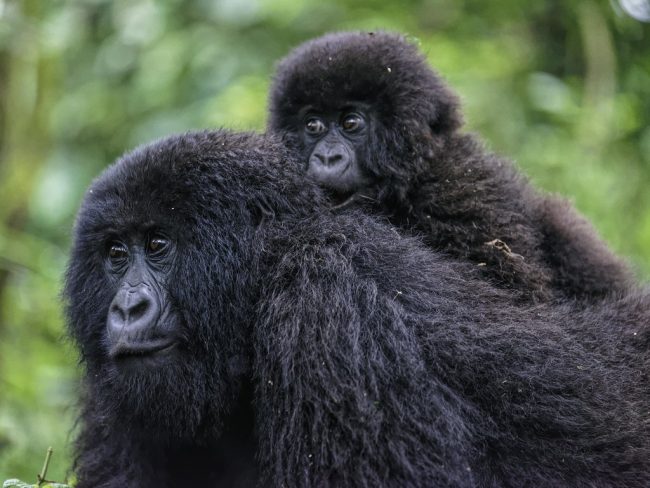
Gorilla trekking takes you into the tropical rainforests of southwestern Uganda, where mountain gorillas live in protected forest habitats. The experience involves hiking through beautiful but sometimes challenging terrain in search of a habituated gorilla family.
Once you locate the gorillas, you are allowed to spend one unforgettable hour observing their natural behaviour, including feeding, grooming, playing and interacting with one another.
The Great Wildebeest Migration, on the other hand, is a spectacular wildlife movement involving approximately 1.5 million wildebeest, accompanied by hundreds of thousands of zebras and gazelles. The animals move through the Serengeti-Mara ecosystem in search of fresh grazing and water.
Depending on the season, travellers can witness wildebeest calving, predator-prey interactions, enormous migrating herds and dramatic river crossings.
Here are the main reasons to combine these two experiences:
1. Experience two of Africa’s greatest wildlife spectacles
Few safari holidays offer the opportunity to encounter endangered mountain gorillas in a rainforest and witness the movement of millions of grazing animals across the African savannah.
The contrast makes this combination particularly special.
In Uganda, you experience the quiet beauty of the rainforest and the intimate encounter with mountain gorillas. In Kenya or Tanzania, you explore expansive grasslands filled with wildlife, where lions, cheetahs, leopards, elephants and other animals roam freely.
2. Explore three remarkable East African countries
A combined safari can introduce you to Uganda, Kenya and Tanzania.
Each country offers distinctive attractions:
-
- Uganda: Mountain gorillas in Bwindi Impenetrable National Park, chimpanzees in Kibale Forest, wildlife in Queen Elizabeth National Park and Murchison Falls National Park.
-
- Kenya: The Maasai Mara National Reserve, famous for the Great Wildebeest Migration, Big Five wildlife and traditional Maasai culture.
-
- Tanzania: Serengeti National Park, Ngorongoro Crater, Tarangire National Park and the spectacular wildebeest calving season.
Travelling through these destinations provides a broader understanding of East Africa’s natural beauty, wildlife and cultural heritage.
3. Make the most of your African holiday
International flights to Africa can be expensive, particularly for travellers arriving from North America, Europe and Australia.
Combining multiple destinations allows you to enjoy more experiences during one international holiday.
Instead of returning home after gorilla trekking in Uganda, you can continue to Kenya or Tanzania for additional wildlife adventures.
4. Enjoy different safari activities
A combined safari offers more than wildlife viewing from a vehicle.
Depending on your itinerary, you can enjoy:
-
- Mountain gorilla trekking.
-
- Traditional game drives.
-
- Hot-air balloon safaris in the Maasai Mara or Serengeti.
-
- Guided nature walks where permitted.
-
- Birdwatching.
-
- Cultural visits to local communities.
-
- Chimpanzee tracking in Uganda.
-
- Boat safaris along Uganda’s wildlife-rich waterways.
-
- Photography safaris.
This variety makes the journey ideal for travellers looking for a comprehensive African safari.
Where to Go for Gorilla Trekking and the Great Wildebeest Migration
The best way to combine these experiences is to understand where the mountain gorillas and migrating herds can be found.
1. Gorilla Trekking in Uganda
Uganda is one of only three countries where travellers can see endangered mountain gorillas in the wild. The other two are Rwanda and the Democratic Republic of Congo.
Uganda is particularly attractive because it offers two mountain gorilla trekking destinations: Bwindi Impenetrable National Park and Mgahinga Gorilla National Park.
Bwindi Impenetrable National Park
Bwindi is the most popular destination for mountain gorilla trekking in Uganda.
Located in southwestern Uganda, Bwindi is a UNESCO World Heritage Site and an important stronghold for endangered mountain gorillas.
The park is home to numerous habituated gorilla families distributed across four trekking sectors:
-
- Buhoma.
-
- Ruhija.
-
- Rushaga.
-
- Nkuringo.
Each sector offers opportunities to encounter mountain gorillas, although the trekking experience, accommodation options and terrain differ.
Bwindi is an excellent destination for travellers combining gorilla trekking with a Kenya or Tanzania safari.
Mgahinga Gorilla National Park
Mgahinga Gorilla National Park is another excellent destination for gorilla trekking in Uganda.
Located in the southwestern corner of the country, the park forms part of the Virunga Conservation Area, which extends into Rwanda and the Democratic Republic of Congo.
Mgahinga offers a beautiful volcanic landscape, mountain gorilla encounters and opportunities for golden monkey tracking.
Travellers can also explore the Virunga Mountains, enjoy guided nature walks and experience local Batwa cultural heritage.
For travellers interested in a quieter and more intimate gorilla trekking destination, Mgahinga is worth considering.
2. The Great Wildebeest Migration in Kenya
Maasai Mara National Reserve
The Maasai Mara National Reserve is one of Africa’s most celebrated wildlife destinations and a major highlight of the Great Wildebeest Migration.
Every year, enormous herds of wildebeest and zebras move north from Tanzania’s Serengeti ecosystem into Kenya’s Maasai Mara in search of fresh grazing.
The most anticipated spectacle is the Mara River crossing, when wildebeest gather along the riverbanks before attempting to cross crocodile-inhabited waters.
The crossings can be dramatic, with animals sometimes waiting for hours before entering the river.
The Maasai Mara also offers excellent opportunities to see the Big Five:
-
- Lions.
-
- Leopards.
-
- Elephants.
-
- Buffaloes.
-
- Rhinoceroses.
Other wildlife includes cheetahs, hyenas, giraffes, hippos, crocodiles and numerous antelope species.
For travellers combining Uganda gorilla trekking with the Great Migration, the Maasai Mara is one of the most convenient and rewarding safari destinations.
3. The Great Wildebeest Migration in Tanzania
Serengeti National Park
Serengeti National Park is the heart of the Great Wildebeest Migration ecosystem.
The park covers vast grasslands, woodlands and river systems that support extraordinary wildlife populations.
Unlike the Maasai Mara, which receives the herds during part of their annual movement, the Serengeti hosts migrating animals throughout much of the year.
Different regions of the Serengeti offer different migration experiences depending on the season.
Important areas include:
-
- Southern Serengeti and Ndutu: Famous for wildebeest calving.
-
- Central Serengeti: Excellent year-round wildlife viewing.
-
- Western Serengeti: Known for the Grumeti River crossings.
-
- Northern Serengeti: Important for the Mara River crossings and movement between Tanzania and Kenya.
The Serengeti is an excellent choice for travellers who want to experience the Great Migration in Tanzania while exploring additional destinations such as Ngorongoro Crater.
Best Time to Combine Gorilla Trekking and the Wildebeest Migration Safari
Choosing the right travel period is one of the most important decisions when planning this combined safari.
Gorilla trekking in Uganda is available throughout the year. However, the drier months generally offer more favourable hiking conditions.
The Great Wildebeest Migration is a continuous natural movement influenced by rainfall, pasture availability and other environmental conditions.
The herds do not follow a fixed calendar, and their exact location changes every year.
For most travellers, July to October is an excellent period for combining Uganda gorilla trekking with the Great Migration in Kenya’s Maasai Mara or northern Tanzania.
However, other months also offer rewarding opportunities, particularly for travellers interested in the wildebeest calving season.
January to March: Gorilla Trekking and Wildebeest Calving in Tanzania
January to March is an excellent period for combining gorilla trekking in Uganda with a safari in the southern Serengeti and Ndutu region of Tanzania.
During this period, large numbers of wildebeest gather on the nutrient-rich plains to give birth.
Calving season is one of the most fascinating wildlife experiences in Africa.
Thousands of calves are born during a relatively short period, attracting predators such as lions, cheetahs, hyenas and leopards.
Travellers can witness:
-
- Large herds of wildebeest.
-
- Newborn calves taking their first steps.
-
- Predator activity.
-
- Excellent wildlife photography opportunities.
-
- Beautiful green landscapes.
Gorilla trekking is also possible in Uganda during these months, making this an attractive combination for travellers interested in newborn wildlife and primate encounters.
April to May: Green Season Safari
April and May are generally among Uganda’s wetter months.
Gorilla trekking remains possible, but forest trails can become muddy and more challenging.
In Tanzania, the migration herds move through the central and western Serengeti as the rains influence grazing conditions.
This period may suit travellers looking for fewer crowds and potentially more favourable accommodation rates.
However, some safari roads and remote camps can be affected by seasonal rainfall.
June to July: Western and Northern Serengeti Migration
June and July are exciting months for a combined gorilla trekking and Tanzania safari.
The migrating herds move towards the western and northern Serengeti.
Travellers may experience the beginning of major river-crossing activity, particularly around the Grumeti River and northern migration routes.
In Uganda, June and July are generally favourable months for gorilla trekking because of relatively drier forest conditions.
This combination works particularly well for travellers interested in exploring Uganda and Tanzania.
August to October: Best Overall Period for the Maasai Mara Migration
August, September and October are among the most popular months for witnessing the Great Wildebeest Migration in Kenya’s Maasai Mara.
Large herds move through the northern Serengeti and Maasai Mara ecosystem.
The famous Mara River crossings are a major attraction during this period, although their timing and frequency cannot be guaranteed.
This is also a favourable period for gorilla trekking in Uganda because the forests generally experience relatively drier conditions.
For travellers seeking the classic combination of mountain gorillas and the Great Migration, this is one of the strongest travel windows.
November to December: Return Migration and Green Season Experiences
November and December bring seasonal changes across the Serengeti-Mara ecosystem.
Following the onset of rains, many migrating herds begin moving south towards Tanzania’s Serengeti plains.
Uganda remains open for gorilla trekking, although rainfall can make trekking trails more challenging.
These months can be suitable for travellers seeking a less crowded safari experience and flexible travel dates.
Quick guide to the best months
| Travel period | Gorilla trekking | Migration highlight |
|---|---|---|
| January–March | Uganda | Calving in southern Serengeti |
| April–May | Uganda | Central and western Serengeti |
| June–July | Uganda | Grumeti and northern Serengeti |
| August–October | Uganda | Maasai Mara and northern Serengeti |
| November–December | Uganda | Herds moving south |
Remember that these are general seasonal patterns, not guaranteed wildlife sightings. Your itinerary should be designed around the specific migration experience you want to witness.
Best Ways to Combine Uganda Gorilla Trekking with the Great Migration
There are several ways to combine these destinations depending on your travel dates, available time, budget and preferred safari experience.
Option 1: Uganda Gorilla Trekking and Kenya Maasai Mara Safari
This is one of the most practical combinations for travellers interested in gorilla trekking and the famous Mara River crossings.
You begin in Uganda, trek mountain gorillas in Bwindi Impenetrable National Park and then travel to Kenya for a wildlife safari in the Maasai Mara.
A typical route is:
Entebbe – Bwindi Impenetrable National Park – Entebbe – Nairobi – Maasai Mara – Nairobi.
You can travel between Entebbe and Nairobi by regional flight, followed by a scheduled or chartered light aircraft flight from Nairobi to the Maasai Mara.
Alternatively, you can arrange road transfers for some sections depending on your itinerary.
Why choose this combination?
-
- Excellent during the July to October migration season.
-
- Combines mountain gorillas with the famous Mara River crossings.
-
- Offers opportunities to see the Big Five.
-
- Allows travellers to explore two of East Africa’s most famous wildlife destinations.
-
- Can be completed in approximately 10–12 days.
This is particularly suitable for first-time African safari travellers.
Option 2: Uganda Gorilla Trekking and Tanzania Serengeti Migration Safari
This combination is ideal for travellers who want to explore Uganda’s rainforests and Tanzania’s spectacular Serengeti ecosystem.
You begin with gorilla trekking in Bwindi or Mgahinga before travelling to Tanzania for game drives in the Serengeti.
Depending on your travel dates, you can explore the southern Serengeti for calving season, the western Serengeti for Grumeti River crossings or the northern Serengeti for Mara River crossings.
A typical route is:
Entebbe – Bwindi – Entebbe – Kilimanjaro or Arusha – Serengeti National Park – Ngorongoro Crater – Arusha.
Regional flights can connect Uganda with Tanzania through available airline routes, often involving a connection through Nairobi or another regional hub.
Why choose this combination?
-
- Excellent opportunities to explore Tanzania’s extensive wildlife areas.
-
- Suitable for both calving season and northern migration experiences.
-
- Combines gorilla trekking with the Serengeti and Ngorongoro Crater.
-
- Offers opportunities to explore more of Tanzania’s northern safari circuit.
Allow approximately 12–15 days for a comfortable experience.
Option 3: Uganda, Kenya and Tanzania Combined Safari
For travellers with more time, combining Uganda, Kenya and Tanzania creates a comprehensive East African safari.
This itinerary allows you to trek mountain gorillas in Uganda, explore the Maasai Mara in Kenya and experience the Serengeti and Ngorongoro Crater in Tanzania.
A possible route is:
Entebbe – Bwindi – Entebbe – Nairobi – Maasai Mara – Serengeti – Ngorongoro Crater – Arusha.
The Kenya and Tanzania sections can be connected by air or through carefully planned overland arrangements.
This is an excellent option for photographers, wildlife enthusiasts, honeymooners and travellers visiting Africa for an extended holiday.
Allow approximately 14–18 days, depending on the number of nights in each destination and your preferred travel arrangements.
Sample 12-Day Uganda Gorilla Trekking and Kenya Great Migration Safari
The following itinerary demonstrates how to combine gorilla trekking in Uganda with a wildlife safari in Kenya’s Maasai Mara.
It is particularly suitable for travellers visiting between July and October.
Day 1: Arrival at Entebbe International Airport, Uganda
Arrive at Entebbe International Airport, where you will be welcomed by your safari representative.
Transfer to your hotel for relaxation after your international flight.
Depending on your arrival time, you can explore Entebbe, visit the botanical gardens or enjoy views of Lake Victoria.
Overnight in Entebbe.
Day 2: Fly to Bwindi Impenetrable National Park
After breakfast, transfer to Entebbe Airport for a scheduled domestic flight to an airstrip serving your selected Bwindi trekking sector.
On arrival, meet your driver-guide and transfer to your gorilla trekking lodge.
Spend the afternoon relaxing, enjoying the forest surroundings and preparing for your gorilla trekking adventure.
Overnight near Bwindi.
Day 3: Mountain Gorilla Trekking in Bwindi
Today is one of the highlights of your African adventure.
After an early breakfast, proceed to the park headquarters for a briefing from Uganda Wildlife Authority rangers.
You will be assigned a gorilla family and begin trekking through the rainforest with experienced guides and trackers.
The duration of the trek depends on the location of the gorilla family.
Once you find the gorillas, you will spend one hour observing them in their natural environment.
Return to your lodge after this extraordinary experience.
Overnight near Bwindi.
Day 4: Return to Entebbe
After breakfast, transfer to the airstrip for your return flight to Entebbe.
Depending on flight schedules, you may have time to enjoy an optional activity or relax at your hotel.
Overnight in Entebbe or near the airport.
Day 5: Fly from Entebbe to Nairobi, Kenya
After breakfast, transfer to Entebbe International Airport for your regional flight to Nairobi.
On arrival, meet your Kenyan safari representative and transfer to your hotel.
Depending on your flight schedule, enjoy some relaxation before continuing to the Maasai Mara.
Overnight in Nairobi.
Day 6: Fly to the Maasai Mara National Reserve
After breakfast, transfer to Wilson Airport for a scheduled light aircraft flight to the Maasai Mara.
Upon arrival, meet your safari guide and transfer to your camp.
Enjoy an afternoon game drive in search of wildlife.
Depending on the season and location of the herds, you may encounter wildebeest, zebras, elephants, giraffes, lions and other wildlife.
Overnight in the Maasai Mara.
Day 7: Full-Day Great Wildebeest Migration Safari
Spend the day exploring the Maasai Mara in search of the migrating herds.
Your guide will take you through different wildlife areas depending on current animal movements.
During the migration season, you may visit areas around the Mara River where wildebeest gather before attempting to cross.
River crossings are unpredictable, so patience is essential.
Enjoy a picnic lunch in the reserve before continuing your wildlife exploration.
Overnight in the Maasai Mara.
Day 8: Full-Day Maasai Mara Game Drive
Enjoy another full day of wildlife viewing.
The Maasai Mara offers excellent opportunities to encounter lions, cheetahs, leopards, elephants, buffaloes, giraffes, hyenas and numerous other species.
Your guide will help you explore different parts of the reserve and follow wildlife activity.
Optional activities may include a hot-air balloon safari or a cultural visit to a Maasai community.
Overnight in the Maasai Mara.
Day 9: Another Day in the Maasai Mara
Enjoy another opportunity to explore the reserve.
Having additional days in the Maasai Mara increases your chances of experiencing different wildlife encounters and locating migrating herds.
Your safari guide can adjust the day’s activities according to current wildlife movements.
Overnight in the Maasai Mara.
Day 10: Maasai Mara to Nairobi
Enjoy breakfast before your scheduled flight back to Nairobi.
On arrival, transfer to your hotel.
The afternoon can be spent relaxing or exploring selected attractions in Nairobi.
Overnight in Nairobi.
Day 11: Nairobi Excursion or Leisure Day
Enjoy a relaxed day in Nairobi.
Depending on your interests and available time, optional activities may include visiting the Giraffe Centre, Nairobi National Park or the David Sheldrick Wildlife Trust, subject to current access arrangements.
Overnight in Nairobi.
Day 12: Departure
After breakfast, transfer to Jomo Kenyatta International Airport for your international departure flight.
Your Uganda gorilla trekking and Kenya Great Migration safari comes to an end.
Note: This is a sample itinerary. Flight schedules, gorilla permit availability, accommodation and the location of migrating herds must be confirmed for your travel dates.
How Much Does It Cost to Combine Gorilla Trekking and the Wildebeest Migration?
The cost of a combined gorilla trekking and Great Migration safari depends on several factors.
These include the countries you visit, the number of travel days, accommodation category, transportation, gorilla permit fees, domestic flights and safari activities.
Uganda gorilla trekking permits are a major component of the overall budget.
Other important expenses include:
-
- Gorilla trekking permits.
-
- International and regional flights.
-
- Accommodation in Uganda, Kenya or Tanzania.
-
- National park and conservation fees.
-
- Safari vehicle and professional guide services.
-
- Domestic flights and airport transfers.
-
- Meals and drinks, depending on the accommodation package.
-
- Travel insurance.
-
- Visa and entry requirements.
-
- Optional activities such as hot-air balloon safaris.
Budget Safari
Budget safaris are suitable for travellers looking to experience both destinations while controlling accommodation and transport expenses.
They generally involve comfortable budget lodges, selected road transfers and shared safari arrangements where available.
Midrange Safari
Midrange safaris offer a balance between comfort, convenience and affordability.
Travellers can enjoy comfortable lodges, private safari vehicles and carefully selected accommodation near the gorilla trekking destinations and migration areas.
Luxury Safari
Luxury safaris are ideal for travellers seeking exclusive experiences.
These packages may include luxury forest lodges, high-end tented camps, private guides, scheduled or chartered flights and personalised safari arrangements.
For an accurate quotation, the itinerary should be tailored to the number of travellers, travel dates and accommodation preferences.
How to Book Gorilla Trekking Permits in Uganda
A gorilla trekking permit is essential for visiting habituated mountain gorilla families in Uganda.
Permits are issued through the Uganda Wildlife Authority and authorised booking channels.
Because the number of visitors permitted to trek each habituated gorilla family is limited, it is advisable to secure your permit before finalising the rest of your safari arrangements.
Important considerations include:
1. Choose your trekking destination
Decide whether you want to trek in Bwindi Impenetrable National Park or Mgahinga Gorilla National Park.
Your choice should consider accommodation, accessibility, availability and your preferred itinerary.
2. Select your trekking date
Your gorilla trekking date should be coordinated with your migration safari dates.
If you are travelling during the peak July to October season, advance planning is particularly important.
3. Confirm permit availability
Your safari operator should check availability for your preferred trekking date and sector.
4. Secure your permit
Once availability and the applicable fees are confirmed, proceed with the booking and payment arrangements.
5. Organise your safari
After securing your gorilla permit, coordinate flights, accommodation, ground transportation and the Kenya or Tanzania safari.
Uganda’s standard gorilla trekking minimum age is 15 years. Travellers should also observe the official health and wildlife protection guidelines.
Travel Logistics: How to Travel Between Uganda, Kenya and Tanzania
Planning transportation is an important part of combining gorilla trekking with the Great Migration.
The best route depends on your chosen parks, international arrival airport and available regional flights.
Flying from Entebbe to Nairobi
Entebbe International Airport is Uganda’s main international gateway.
Travellers combining Bwindi gorilla trekking with a Maasai Mara safari can fly from Entebbe to Nairobi using available regional airline connections.
From Nairobi, scheduled light aircraft flights connect Wilson Airport with several Maasai Mara airstrips.
Flying from Uganda to Tanzania
Travellers combining Uganda gorilla trekking with a Serengeti safari can connect through available regional routes to Kilimanjaro International Airport or Arusha.
From there, they can continue to the Serengeti by road or domestic aircraft, depending on the itinerary.
Travelling Between the Maasai Mara and Serengeti
Combining Kenya and Tanzania is possible through regional flights or planned overland border crossings.
However, the most efficient transportation method depends on the specific camps, border crossing arrangements and safari schedule.
For travellers with limited time, flights can reduce lengthy road journeys.
What About International Flights?
Most international travellers arrive through Entebbe, Nairobi or Kilimanjaro.
The best arrival and departure airports depend on your chosen safari route.
For example, travellers combining Uganda and Kenya may arrive in Entebbe and depart from Nairobi.
This open-jaw flight arrangement can reduce unnecessary backtracking.
Uganda vs Rwanda: Which Is Better for Combining Gorilla Trekking with the Great Migration?
Travellers can combine mountain gorilla trekking with the Great Migration by visiting either Uganda or Rwanda.
Both countries offer excellent mountain gorilla experiences, but there are differences worth considering.
| Feature | Uganda | Rwanda |
|---|---|---|
| Main gorilla destination | Bwindi and Mgahinga | Volcanoes National Park |
| Trekking environment | Dense tropical rainforest | Montane bamboo and volcanic forest |
| Main access airport | Entebbe | Kigali |
| Gorilla trekking availability | Year-round | Year-round |
| Additional wildlife experiences | Chimpanzees, savannah safaris and birding | Golden monkeys and volcanic landscapes |
| Travel style | Excellent for longer Uganda safaris | Convenient for shorter gorilla-focused trips |
Uganda is particularly attractive for travellers seeking a wider African wildlife experience.
In addition to mountain gorillas, you can explore chimpanzees in Kibale Forest, elephants and tree-climbing lions in Queen Elizabeth National Park, and the spectacular Murchison Falls.
Rwanda is a convenient alternative for travellers who want to reach the gorilla trekking destination relatively quickly from Kigali.
For travellers who want to make Uganda a major part of their African holiday, Bwindi and Mgahinga offer excellent opportunities.
Practical Tips for Planning Your Combined Safari
A successful gorilla trekking and Great Migration safari requires advance preparation.
Here are some important tips.
1. Book Your Gorilla Permit Early
Gorilla trekking permits are limited, especially during the peak travel seasons.
Secure your permit before making non-refundable arrangements for the rest of your trip.
2. Allow Enough Time in the Maasai Mara or Serengeti
The Great Migration is a natural event, and animal movements are unpredictable.
Spending at least three or four nights in your chosen migration destination gives you more opportunities to explore different areas and follow the herds.
3. Use Domestic Flights Where Practical
Flying between major safari destinations saves time and makes a multi-country itinerary more comfortable.
However, domestic aircraft may have strict baggage limits, often requiring soft-sided luggage.
Always confirm baggage allowances before departure.
4. Pack Appropriate Clothing
For gorilla trekking, carry:
-
- Waterproof hiking boots.
-
- Long-sleeved shirts and trousers.
-
- Gardening or trekking gloves.
-
- A waterproof jacket.
-
- Long socks.
-
- A small backpack.
-
- Insect repellent.
-
- A walking stick, which can often be provided locally.
For the savannah safari, pack:
-
- Neutral-coloured safari clothing.
-
- A hat.
-
- Sunglasses.
-
- Sunscreen.
-
- Binoculars.
-
- A camera.
-
- Comfortable walking shoes.
5. Prepare for Different Weather Conditions
Uganda’s rainforest can be wet and humid even during relatively dry months.
The Maasai Mara and Serengeti may experience different weather conditions depending on the season.
Pack clothing suitable for both environments.
6. Choose Experienced Safari Guides
A knowledgeable safari guide makes a significant difference.
For gorilla trekking, park rangers and trackers lead the experience.
For game drives, experienced guides understand wildlife behaviour, animal movements and the best places to explore.
7. Consider Travel Insurance
Choose comprehensive travel insurance that covers medical emergencies, trip interruptions and your planned safari activities.
Check the policy carefully for any relevant exclusions.
8. Check Visa and Entry Requirements
Visa requirements vary depending on your nationality and the countries included in your itinerary.
The East African Tourist Visa covers Uganda, Kenya and Rwanda for eligible travellers, but it does not include Tanzania.
Travellers visiting Tanzania must check the separate Tanzanian entry requirements.
Always verify current immigration rules before travelling.
Frequently Asked Questions About Combining Gorilla Trekking and Wildebeest Migration Safari
1. Can I combine gorilla trekking in Uganda with the Great Wildebeest Migration in Kenya?
Yes. You can combine mountain gorilla trekking in Uganda’s Bwindi Impenetrable National Park with a Great Migration safari in Kenya’s Maasai Mara.
The two destinations are connected through regional flights, making it possible to experience both attractions during one holiday.
A 10–12-day itinerary is a good starting point.
2. What is the best time to combine gorilla trekking and the Great Migration?
July to October is one of the best periods for combining Uganda gorilla trekking with the Great Migration in the Maasai Mara.
These months generally offer favourable gorilla trekking conditions and opportunities to witness migrating herds in Kenya and northern Tanzania.
January to March is another excellent option for travellers interested in the wildebeest calving season in Tanzania’s southern Serengeti.
3. How many days do I need for a gorilla trekking and Great Migration safari?
A combined safari generally requires 10–14 days.
A 10–12-day trip can cover Uganda and Kenya, while a 12–15-day itinerary is more suitable for Uganda and Tanzania.
If you want to visit Uganda, Kenya and Tanzania, consider 14–18 days or longer.
4. Is it better to combine gorilla trekking with the Maasai Mara or Serengeti?
Both are excellent options.
The Maasai Mara is particularly attractive from July to October when migrating herds enter Kenya and the famous Mara River crossings may occur.
The Serengeti is suitable for travellers interested in experiencing different migration phases throughout the year, including the January–March calving season.
Your travel dates should determine which destination you choose.
5. Can I see the Big Five during a gorilla trekking and Great Migration safari?
Yes. The Maasai Mara and Serengeti are both excellent destinations for Big Five wildlife viewing.
You can encounter lions, leopards, elephants, buffaloes and rhinoceroses during game drives.
Gorilla trekking adds another extraordinary wildlife experience to your holiday.
6. Is gorilla trekking difficult?
Gorilla trekking requires a reasonable level of physical fitness.
The hikes take place in mountainous rainforest terrain, and the duration depends on where the gorilla family is located.
Some treks are relatively short, while others require several hours of hiking.
Porters are available to assist with carrying luggage and providing support on challenging sections.
7. Can I combine gorilla trekking, the Great Migration and Zanzibar?
Yes. You can extend your Uganda and Kenya or Tanzania safari with a beach holiday in Zanzibar.
After exploring the rainforest and savannah, fly to Zanzibar for relaxation on beautiful beaches.
This combination is particularly attractive for honeymooners and travellers seeking a mixture of adventure and relaxation.
Allow additional travel days for the beach extension.
8. Can children join a combined gorilla trekking and Great Migration safari?
Children can enjoy wildlife safaris in Kenya and Tanzania, subject to individual accommodation and activity age policies.
However, Uganda’s minimum age for standard gorilla trekking is 15 years.
Families travelling with younger children should consider alternative activities during the gorilla trekking portion.
9. Should I do gorilla trekking before or after the Great Migration safari?
Both arrangements are possible.
However, beginning with gorilla trekking in Uganda is a practical option because it allows you to undertake the more physically demanding activity while fresh.
You can then continue to Kenya or Tanzania for relaxing game drives and wildlife photography.
10. Can I combine gorilla trekking with the Great Migration on a luxury safari?
Absolutely.
Luxury combined safaris can include exclusive forest lodges in Bwindi, luxury tented camps in the Maasai Mara or Serengeti, private safari guides, scheduled or chartered flights and personalised experiences.
Your accommodation and transportation can be selected according to your preferred level of comfort.
Book Your Gorilla Trekking and Great Wildebeest Migration Safari with Epic Uganda Vacation
Combining gorilla trekking in Uganda with the Great Wildebeest Migration in Kenya or Tanzania is one of the most rewarding ways to explore East Africa.
From the enchanting rainforests of Bwindi Impenetrable National Park to the endless savannah plains of the Maasai Mara and Serengeti, this journey introduces you to some of the continent’s most remarkable wildlife experiences.
Whether you want to witness the Mara River crossings, experience wildebeest calving in the Serengeti, encounter endangered mountain gorillas or explore several East African national parks, the right itinerary makes all the difference.
At Epic Uganda Vacation, we help travellers plan memorable Uganda gorilla trekking experiences and tailor-made East African safari holidays.
We can help you organise gorilla trekking permits, accommodation, domestic flights, airport transfers, professional safari guides and wildlife experiences across Uganda and neighbouring safari destinations.
Our goal is to make your African holiday seamless, rewarding and unforgettable.
Ready to combine gorilla trekking with the Great Wildebeest Migration?