Why Lake Tanganyika Deserves a Place on Your Africa Itinerary
Lake Tanganyika is one of Africa’s great natural landmarks. Yet, it remains far less familiar to international travellers than destinations such as the Serengeti, Zanzibar, Victoria Falls and the beaches of the Indian Ocean. Stretching for roughly 670 kilometres through the western branch of the East African Rift, the lake crosses a remarkable part of East-Central Africa and is shared by Tanzania, the Democratic Republic of the Congo, Burundi and Zambia. It is the world’s longest freshwater lake and the second-deepest lake on Earth, giving it a scale that is difficult to appreciate until you stand on one of its shores and look across the open water.
For travellers, however, the statistics are only the beginning of the story. Lake Tanganyika is not simply a place to photograph from a viewpoint. It is a destination where beaches, mountains, rainforest, wildlife, fishing communities, historical sites and freshwater activities come together. On the Tanzanian shore, travellers can combine the lake with chimpanzee trekking in Gombe National Park or Mahale Mountains National Park. In Burundi, the northern end of the lake provides a combination of beaches, boating, swimming, city attractions and cultural experiences around Bujumbura. In Zambia, the lake forms the spectacular eastern boundary of Nsumbu National Park, allowing visitors to combine wildlife viewing with a tropical-looking freshwater coastline.
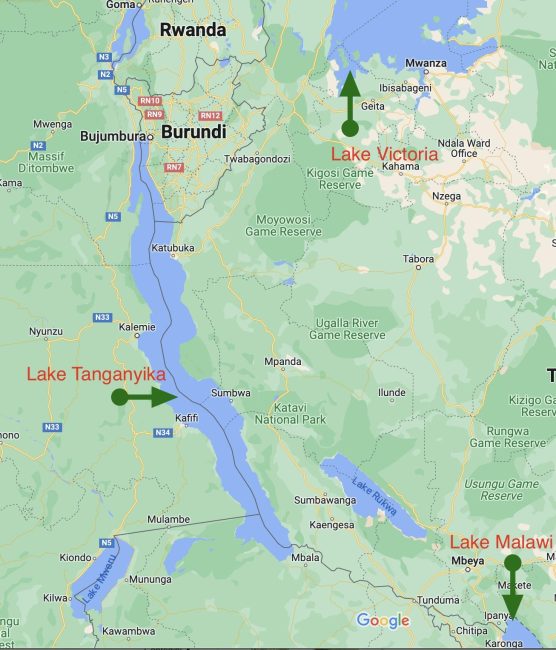
Map of Lake Tanganyika
One of the most important things to understand when planning a Lake Tanganyika trip is that the lake is so large that there is no single experience that represents the entire destination. Kigoma feels different from Mahale, Mahale feels different from Bujumbura, and the Zambian shoreline offers yet another style of travel. Your choice of where to visit should therefore be based on what you want to experience rather than simply choosing a point on a map.
This guide explains where Lake Tanganyika is located, which countries share it, how large and deep it is, what you can do there, where to stay, how to reach the different tourism areas, when to visit, what to pack, and how to design an itinerary that makes the most of your time. Whether you are interested in chimpanzees, beaches, boating, fishing, hiking, photography, wildlife or simply discovering a less-visited part of Africa, Lake Tanganyika offers plenty of possibilities.
Where Is Lake Tanganyika Located?
Lake Tanganyika is located in East-Central Africa within the western branch of the Great Rift Valley. Its long, narrow shape follows the geological structure of the Rift Valley, which is also responsible for the steep mountains and escarpments found beside parts of the shoreline. The lake stretches from the northern end near Burundi to the southern end near Zambia, with Tanzania occupying much of the eastern shoreline and the Democratic Republic of the Congo occupying much of the western shoreline.
The four countries that share Lake Tanganyika are Tanzania, the Democratic Republic of the Congo, Burundi and Zambia. Each country provides a different entry point and a different style of travel. Tanzania is particularly important for wildlife travellers because Kigoma provides access to Gombe National Park while Mahale Mountains National Park lies farther south along the lake. Burundi is convenient for travellers who want a combination of urban accommodation, beaches, boating and cultural attractions around Bujumbura. Zambia provides access to the southern lake through Mpulungu and the wilderness of Nsumbu National Park. The Democratic Republic of the Congo has a long western shoreline and important lakeside communities, with Kalemie being one of the main urban centres.
Because the lake crosses international borders, it is important not to assume that travelling from one end to another is like driving around an ordinary inland lake. Distances are large, transport infrastructure varies, and some routes require a combination of road travel, domestic flights and boats. Border crossings also have their own immigration requirements. For this reason, most visitors choose one main section of the lake rather than attempting to circle the entire shoreline.
For first-time visitors, western Tanzania is particularly attractive because it combines the lake itself with two internationally recognised chimpanzee destinations. Travellers who prefer a more conventional hotel and beach environment may find Bujumbura more convenient, while visitors seeking a remote wilderness experience may prefer Mahale or the Nsumbu area in Zambia.
How Large and Deep Is Lake Tanganyika?
Lake Tanganyika is enormous by any standard. It covers roughly 32,900 square kilometres and extends for approximately 670 to 676 kilometres from north to south. Its great length makes it the world’s longest freshwater lake, while its maximum depth of more than 1,400 metres makes it the second-deepest lake in the world after Lake Baikal.
The lake’s extraordinary depth is a direct consequence of its geological origin. It occupies a deep Rift Valley basin created by tectonic activity over millions of years. The mountains and escarpments surrounding parts of the lake are reminders that this is not simply a shallow depression filled with water but one of the world’s great geological landscapes.
Its size also affects the way visitors experience it. In many places the opposite shore is so distant that the water resembles a sea. Weather can change the character of the lake quickly, with calm mornings sometimes giving way to stronger winds and waves later in the day. This is important for travellers using boats because transfer times and water conditions can vary.
The lake’s depth and age have also contributed to its exceptional biodiversity. Lake Tanganyika contains hundreds of fish species, including a remarkable concentration of cichlids, many of which are endemic. This makes the lake important not only as a tourism destination but also as a major freshwater ecosystem of scientific and conservation significance.
The Four Countries That Share Lake Tanganyika
Although Lake Tanganyika is one body of water, the experience of visiting it changes considerably from one country to another. Understanding the differences between the four shores is therefore one of the most useful steps when planning a trip.
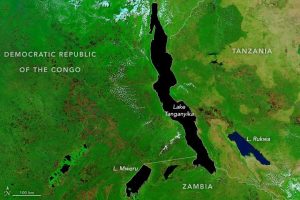
Tanzania occupies a large portion of the eastern shoreline and contains the lake’s most famous chimpanzee tourism areas. Kigoma is the main gateway and provides access to Gombe National Park, while Mahale Mountains National Park lies farther south. The Tanzanian side is therefore particularly attractive to travellers who want to combine lake scenery with primate trekking, hiking and wilderness experiences.
Burundi occupies the northern end of the lake. Bujumbura, the country’s largest city, sits beside Lake Tanganyika and provides easy access to beaches, hotels, restaurants, boating and cultural attractions. The northern lake is a practical choice for travellers who want to combine a city stay with time beside the water.
The Democratic Republic of the Congo controls much of the western shoreline. Kalemie is the best-known urban centre on this side of the lake. The DRC shore has significant tourism potential, but travel logistics are more complex and visitors should obtain current information about local transport, border arrangements, accommodation and security before planning an itinerary.
Zambia occupies the southern part of the lake around Mpulungu and Nsumbu. This section is particularly interesting because Lake Tanganyika is incorporated into a wider wildlife landscape. Nsumbu National Park provides the opportunity to combine safari activities, fishing and boating with beaches and dramatic lake scenery.
Lake Tanganyika in Tanzania: Kigoma, Gombe and Mahale
The Tanzanian side of Lake Tanganyika is arguably the most diverse section for travellers because it connects a major lakeside town with two important primate destinations. Kigoma acts as the practical gateway, while Gombe and Mahale provide very different wildlife experiences.
Kigoma is a useful base for travellers who want accommodation, restaurants, transport connections and access to lake excursions without immediately moving into a remote national park. From Kigoma, visitors can explore Ujiji and sites connected with the history of David Livingstone and Henry Morton Stanley, visit fishing communities, enjoy boat trips or arrange travel toward Gombe.
Gombe National Park is famous around the world because of the chimpanzee research associated with Jane Goodall. The park is small compared with Tanzania’s huge safari reserves, but its importance comes from its forest, chimpanzees and location directly on Lake Tanganyika. Visitors generally explore the park on foot with guides and rangers rather than from safari vehicles.
Mahale Mountains National Park offers a more remote experience. Forested mountains rise behind sandy beaches, and habituated chimpanzees live within the forest. Visitors can combine chimpanzee trekking with hiking, kayaking, snorkeling, fishing and relaxation beside the lake. Reaching Mahale is itself part of the adventure because access commonly involves a flight followed by a boat transfer.
For travellers who want the broadest combination of experiences, the Kigoma-Gombe-Mahale region can form the centrepiece of a Lake Tanganyika itinerary. It is possible to design a trip that begins with history and lake activities in Kigoma, continues to chimpanzee trekking, and finishes with several quiet days on a remote beach in Mahale.
Lake Tanganyika in Burundi: Bujumbura and the Northern Shore
The Burundian shore offers a different interpretation of Lake Tanganyika. Instead of focusing primarily on remote wilderness, the northern end combines the lake with Bujumbura, a city that has historically served as one of the region’s important urban centres.
The city provides access to beaches, hotels, restaurants, markets and cultural attractions, allowing travellers to enjoy the lake without giving up the convenience of urban accommodation. Activities promoted around Lake Tanganyika in Burundi include swimming, sailing, boating and water sports, while the surrounding region also has historical attractions connected with the history of exploration.
One attraction of the northern shore is the opportunity to experience local lake life at a relatively accessible pace. Visitors can spend a morning exploring the city, an afternoon beside the water and an evening at a lakeside hotel or restaurant. This makes Bujumbura useful for travellers with only a few days available.
The northern end is also suitable as part of a wider Great Lakes itinerary. Because Burundi is geographically close to Rwanda and the eastern Democratic Republic of the Congo, travellers interested in exploring the wider region can potentially connect Lake Tanganyika with other destinations, provided they carefully check current border and visa requirements before travelling.
Lake Tanganyika in Zambia: Mpulungu and Nsumbu National Park
The Zambian side of Lake Tanganyika is especially interesting for travellers who want to combine a lake holiday with wildlife. Mpulungu is an important gateway to the southern end, while Nsumbu National Park protects a large wilderness area along the shoreline.
Nsumbu is unusual because the lake is not simply an attraction outside the park. It forms an integral part of the landscape. The shoreline includes sandy beaches, rocky coves, bays, cliffs and stretches of open water, while the surrounding national park supports wildlife including elephant and a variety of antelope and predators.
This creates a rare type of safari experience. You can spend part of the day on a game drive, then move toward the lake for a boat excursion or fishing trip. The transition between wildlife landscape and freshwater beach can happen within the same destination.
Fishing is also important on the Zambian side. Lake Tanganyika supports both local fisheries and recreational angling opportunities. Travellers interested in fishing should use established operators and follow current local rules so that recreational activities do not conflict with conservation requirements or local livelihoods.
Lake Tanganyika in the Democratic Republic of the Congo
The Democratic Republic of the Congo contains a substantial portion of Lake Tanganyika’s western shoreline, making the country an important part of the lake’s geography even though its tourism infrastructure is less developed than some other sections.
Kalemie is the principal urban centre associated with the Congolese shore. It is an important port and commercial town and provides access to beaches, fishing communities and lake transportation. The area has considerable potential for travellers interested in discovering destinations that receive fewer international visitors.
However, a trip to this side of Lake Tanganyika requires more preparation. Transport schedules, border arrangements, accommodation availability and local conditions can change, and travellers should obtain current information from reliable local authorities and experienced operators before committing to a route.
For most visitors, the DRC shore is better approached as a specialised adventure destination rather than as a simple extension of a conventional safari itinerary. Those who do visit should allow flexibility in their schedule and avoid relying on tight connections between different modes of transport.
The Best Things to Do Around Lake Tanganyika
Lake Tanganyika offers far more than simply sitting beside the water. Depending on the section you visit, activities can include chimpanzee trekking, forest hiking, boating, kayaking, snorkeling, fishing, swimming, birdwatching, photography, historical sightseeing and cultural experiences.
The most important difference between the activities is the environment in which they take place. A boat trip near Kigoma may be a relaxed excursion across open water, while a boat transfer to Mahale is part of a remote wilderness journey. A swim near a managed beach in Bujumbura is different from entering the water at a remote national park shoreline. Likewise, fishing in Zambia may be part of a dedicated sport-fishing experience, while fishing villages elsewhere around the lake provide insight into local livelihoods.
This variety is what makes Lake Tanganyika particularly attractive for longer journeys. Rather than repeating the same activity every day, travellers can combine active mornings with relaxed afternoons. One day can be dedicated to chimpanzee trekking, the next to kayaking, another to hiking, and another to simply watching the sun set over the lake.
Chimpanzee Trekking in Mahale Mountains National Park
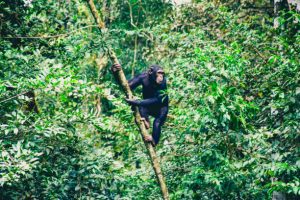
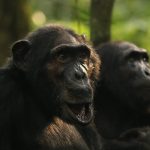
Chimpanzee trekking is one of the signature experiences around Lake Tanganyika and one of the main reasons international travellers choose the Tanzanian shore. Mahale Mountains National Park protects forest habitat on the eastern side of the lake, where habituated chimpanzee communities can be visited with trained guides and park authorities.
The experience is very different from a traditional vehicle safari. Visitors walk through forest trails, sometimes over steep terrain, following signs and sounds to locate chimpanzees. The trek can be physically demanding because the animals are free to move through their natural habitat and their location cannot be guaranteed in advance.
The reward is an intimate forest experience that combines wildlife with the landscape of Mahale. After spending time in the forest, visitors return to a shoreline where the mountains rise behind clear water and sandy beaches. This combination of chimpanzee trekking and tropical-looking lake scenery is one of the destination’s defining characteristics.
Travellers should follow all park rules during chimpanzee encounters. Maintaining the required distance, avoiding sudden movements, respecting the time limits and not visiting wildlife when sick are important measures for protecting both visitors and the animals.
Chimpanzee Trekking in Gombe National Park
Gombe National Park is another major chimpanzee destination on Lake Tanganyika and is historically associated with Jane Goodall’s long-running research into chimpanzee behaviour. The park’s forests descend toward the lake, creating a compact but biologically rich environment.
Visitors normally explore Gombe on foot with guides and rangers. The experience can involve walking along forest paths and steep slopes, so comfortable footwear and reasonable physical fitness are useful. The reward is the opportunity to observe chimpanzees and other primates in a natural forest environment.
Gombe is particularly convenient for travellers who are already staying in Kigoma. The town provides a wider choice of accommodation and services, while boats connect the lakeside city with the national park. Travellers who have limited time can therefore use Kigoma as their base and make Gombe part of a short Lake Tanganyika itinerary.
Boat Trips, Kayaking and Exploring the Lake by Water
A boat trip is one of the simplest ways to understand the scale of Lake Tanganyika. From the shoreline, it can be difficult to appreciate how enormous the lake is. Once you move away from land, the surrounding mountains and distant coastlines put its size into perspective.
Boat excursions can range from short sunset cruises to longer journeys connecting lodges, beaches, fishing areas and national parks. In Mahale, boats are an essential part of the visitor experience because many travellers arrive from the airstrip by water. In Kigoma, boats can be used for excursions and trips toward Gombe.