
About Katavi National Park
Think of a place distant and untouched by the pressures of modern civilization. This is exactly how Katavi National Park can be described. Visitors to this park have described it as a place frozen in time. It preserves untouched wilderness dictated by the forces of nature and climate. This is what makes Katavi National Park one of the best safari destinations in the world. Its uniqueness is its treasure, since it is not highly explored and its natural state is preserved.
Katavi National Park ranks among Tanzania’s best protected areas. It is the third largest protected area in the country, covering about 4,471 square kilometers. Katavi is smaller than Ruaha National Park and Serengeti National Park. This national park is situated in the western safari circuit of Tanzania that hosts protected areas like Mahale Mountain National Park, Lake Tanganyika, and Gombe National Park. It is a prime safari destination harboring a variety of wildlife species.
It is located in the Katavi region, crossing the districts of Mlele and Nsimbo in the far western side of Tanzania. The park’s biodiversity is vast, dominated by savannah floodplains that transform into a lake called Lake Chada during the peak rainy/wet season. The River Katuma further drains Katavi National Park. There are also scattered seasonal lakes like Katabi, which are an important water source for the wildlife.
The park gets its name from the traditional spirit called Katabi, worshipped by the tribes of Pimbwe and Wabende neighbouring the park. This hunter spirit is believed to inhabit a sacred tree near Lake Katabi. These tribes and residents near the park still worship this spirit even today. They believe it heals diseases and blesses their lands. Katavi National Park is a place for visitors seeking a private safari adventure.
Brief history of Katavi National Park
From the time of its recognition as a wildlife sanctuary during the colonial era, Katavi was designated as a game reserve. This was done to protect the wildlife species that inhabited these lands. It was also done to conserve the natural habitat of the wildlife from encroachment by the early residents like the Rungwa and Kimbu people.
With growing numbers of wildlife and its massive size, this game reserve was elevated to national park status. This was officially affirmed in 1974, and by then it covered an area of about 1,823 square kilometers. The need for expansion came quickly after its establishment as a national park. Katavi National Park was then expanded to 4,471 square kilometers, where it is currently. When the country gained independence in 1961 and later, by 1964, unified as Tanzania, the management of the park fell to the Tanzania National Parks Authority.
What to see in Katavi National Park? – Attractions
Several attractions can be spotted and encountered in this national park. Katavi National Park has pristine jungle that features some of the unique species that are worth encountering. Below are some of these attractions available for exploration.
Wildlife species
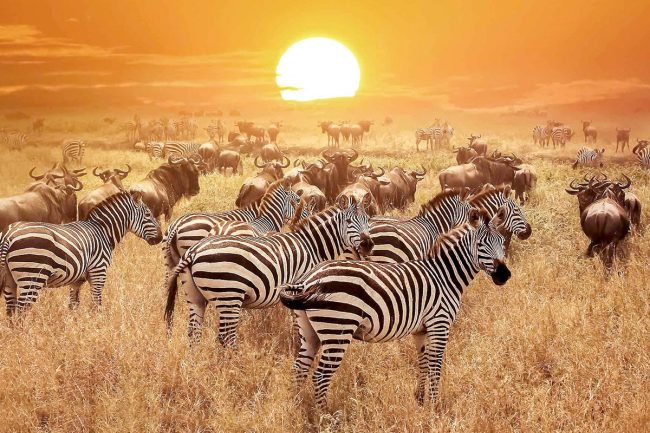
Like most national parks, Katavi’s major attractions are the wildlife species. These wildlife species are the faces of the park and the reason for the high turnout of visitors. The park hosts a variety of wildlife, including the savannah grazers, apex predators, and the formidable aquatic species. Katavi hosts one of the largest concentrations of Cape buffaloes in the world, spotted roaming the floodplains. Several other common grazers to spot in the park include elephants, antelopes, zebras, topis, waterbucks, hartebeests, giraffes, elands, duikers, and impalas, among others.
The notable apex predators in Katavi National Park include lions, hyenas, leopards, wild dogs, and cheetahs, among others. These predators balance and maintain the population of the grazers by keeping them in check. Cheetahs are rarely spotted but usually roam and hunt from the floodplains, especially in the dry season. With a variety of freshwater sources dotted across the park, the aquatic life thrives. The aquatic life and deep waters of the park are inhabited by hippos and crocodiles. A freshwater lake like Katabi can host over 600 hippos once in a good season. Visitors are absolutely assured of spotting incredible animals once in the park.
Birdlife
The birdlife of this park is something to reckon with due to its unique species that reside there. Katavi National Park is a massive protected area with a variety of ecological systems. These range from the floodplains, the savannah woodland, and riverine vegetation. These ecosystems combined host over 450 bird species. The park is home to migratory or seasonal bird species spotted in specific seasons. The park also hosts endemic resident birds, present all year round. The common bird species to spot include the lilac-breasted roller, yellow-billed stork, African spoonbill, white-backed vulture, crested barbet, little bee-eater, saddle-billed stork, African fish eagle, Bateleur eagle, black cuckoo shrike, and red-billed hornbill, among others.
Katabi tree
One of the notable attractions in this park, and probably the most hilarious, is the Katabi tree. Many visitors are stunned by the uniqueness of this particular tree and how significant it is to the locals. There are several trees in this park, but this particular Katabi tree commands respect and attention. The Katabi tree is located near Lake Katabi, and it hosts the Katavi spirit. This spirit is a hunter spirit, as described by the locals. The locals believe it offers them good fortune when they pray and offer it sacrifices. The unique nature and its significance to the locals are one thing that strikes visitors.
Katsunga plains
Visitors interested in having a scenic and beautiful view in the park then the Katsunga plains are the place. The Katsunga plains are vast, stretching as far as the eye can see with savannah grassland and scattered woodlands. These plains attract large concentrations of wildlife, such as buffaloes, a variety of antelopes, elephants, and other grazers. This is because of the abundant pasture. The predators, including lions, leopards, cheetahs, and hyenas, follow closely, offering an incredible, action-packed adventure.
What to do – Tourist activities
The tourist activities in this park offer visitors a breathtaking, private, and more intimate experience. Some of the things to do in Katavi National Park include the following.
Game drives
Game viewing is the main tourist activity in the park. This is a great way to safely explore and spot several wildlife species. Game drives involve visitors navigating the vast plains of the park in the comfort and safety of a 4×4 safari vehicle. This ensures visitors get closer to some of the wildlife species while remaining safe. It is the best way to enjoy a hunting expedition as predators battle it out with their prey.
Birding
With over 450 bird species nesting in the various ecological systems in Katavi National Park, it qualifies as an important birding area. Birding seeks to uncover some of the many bird species in this park. Birding is done along designated birding areas that offer common sightings. It is carried out by experienced and professional birding guides that led visitors straight to some of the birding sights that have high concentrations of birds.
Guided nature walks
Guided nature walks are also done here in this park. These guided walks give an intimate and private exploration of the park. Armed professional rangers lead visitors during this experience. Visitors can have some of the best scenic views of the park and also spot some animals like elephants, antelopes, etc.
How to get there?
Katavi National Park can be accessed by both air and road. Traveling to the park by road is not very common, but it is possible. The journey from the country’s major gateways like Arusha and Mwanza takes about 16-20 hours. This means an entire journey from one of those major cities and towns can last days. The roads leading to the park are a mixture of paved and unpaved roads.
Flying from the major entry points of Tanzania, Kilimanjaro International Airport or Arusha Airport, takes about 3-4 hours. Scheduled charter domestic flights can be arranged from either of these airports to Mpanda Airport in Mpanda district, and then drive to the park. Smaller aircraft can fly directly into the park to Sitalike and Ikuu airstrips. Traveling by air is the most convenient and fastest way to get to the park.
When to visit?
Depending on the particular activity a visitor is interested in, the park is open all year round. However, the best time to visit the park is always the dry season. This is because it offers the best conditions for exploration. The dry season is a period of prolonged sunny days and scattered light rains or no rain. This leaves the park tracks and floodplains dry, easing navigation and increasing visibility with the clear weather. There are chances of spotting many wildlife species since it is easy to find since they are always concentrated near the few remaining water sources in the park. From June to September and December to February is when the dry season occurs.
Katavi National Park can also be explored in the wet season. This season presents a challenging but very adventurous experience in the park. The wet season shows a completely new picture of the park as the floodplains come to life after filling with water and transforming into a seasonal lake. This is the best time for birding as the migratory birds are also present in the park since it is a breeding season. The wet season occurs in March, April, May, October, and November.
Where to stay?
The accommodation facilities in the park range from luxury and midrange to budget. This classification and categorization ensures that all visitors can find where to stay. Some of the accommodations include Katavi Wildlife Camp, Palahala Luxury Camp, Chada Katavi Camp, Mbali Mbali Katavi Lodge, etc.
In conclusion, Epic Uganda Vacation is the best company that can make your exploration dream of venturing into Katavi National Park. This park is one of the best safari destinations in the world, situated in Tanzania. It has a variety of attractions, including wildlife species, birds, and the famous Katabi tree, among others. Venture to the park by road or air and explore its plains through different activities like game drives, birding, and nature walks in the dry season, since it’s the best time.


