The Ultimate 2026 Guide to Bird-Watching Photography in Uganda: Capturing the Pearl of Africa
Uganda, famously known as the “Pearl of Africa,” stands as a premier global sanctuary for bird watchers and wildlife photographers. Indeed, this East African gem boasts a staggering population of over 1,080 bird species, including the iconic Grey Crowned Crane. Its diverse ecosystems—ranging from the mist-shrouded montane forests of the southwest to the sun-drenched savannas of the north—create a unique theater for avian life. For photographers aiming to capture the intricate details of rare species in their natural habitats, Uganda offers an unparalleled blend of technical challenges and breathtaking rewards.
The Exceptional Diversity of Avian Life in Uganda
The country’s remarkable bird diversity stems from its position at the meeting point of the East African savanna, the West African rainforest, and the semi-desert of the north. Specifically, the Bwindi Impenetrable National Park is a UNESCO World Heritage site that protects 24 Albertine Rift endemics, such as the African Green Broadbill. Conversely, the vast wetlands of the Lake Victoria basin serve as the last stronghold for the prehistoric Shoebill Stork.
Challenges and Rewards of Bird-Watching Photography
Capturing a “perfect shot” in the dense Ugandan jungles requires more than just high-end gear; it demands extreme patience and a deep understanding of bird behavior. Consequently, photographers must adapt to low-light conditions under thick canopies and the unpredictable movements of fast-flying species like the Great Blue Turaco. However, the reward of documenting a species found nowhere else on earth makes Uganda wildlife photography safaris a bucket-list experience.
Top Photography Hotspots: Where to Find Uganda’s Treasures
1. Queen Elizabeth National Park: The Biodiversity King
This park holds the highest bird count on the continent, with over 600 recorded species. Notably, the Kazinga Channel is a goldmine for water bird photography in Uganda.
-
Key Species: African Fish Eagle, Pink-backed Pelican, Malachite Kingfisher, and the elusive Martial Eagle.
-
Pro Tip: Take the boat cruise at sunrise to capture the “Golden Hour” light reflecting off the water as eagles dive for prey.
2. Mabamba Swamp: The Shoebill Sanctuary
Located on the edge of Lake Victoria, Mabamba is the most reliable place in the world to photograph the Shoebill Stork. Essentially, local guides navigate narrow papyrus channels in traditional canoes. This allows you to get within a few meters of these silent hunters. According to BirdLife International, these wetlands are critical for the survival of several threatened species.
3. Murchison Falls National Park: Savanna and Sea
Where the Nile River explodes through a narrow gorge, you find a paradise for raptors and water-associated birds. Furthermore, the Albert Delta is a critical site for seeing the Shoebill in a more open, savanna-like environment. Typically, you can spot the Abyssinian Ground Hornbill and the Goliath Heron along the riverbanks.
4. Kibale Forest National Park: The Primate and Pitta Haven
While famous for chimpanzee tracking, Kibale is the best place to find the rare Green-breasted Pitta. Indeed, photographers often search the forest floor for this colorful bird before it disappears into the canopy.
Expert Tips for High-Quality Bird Photography
-
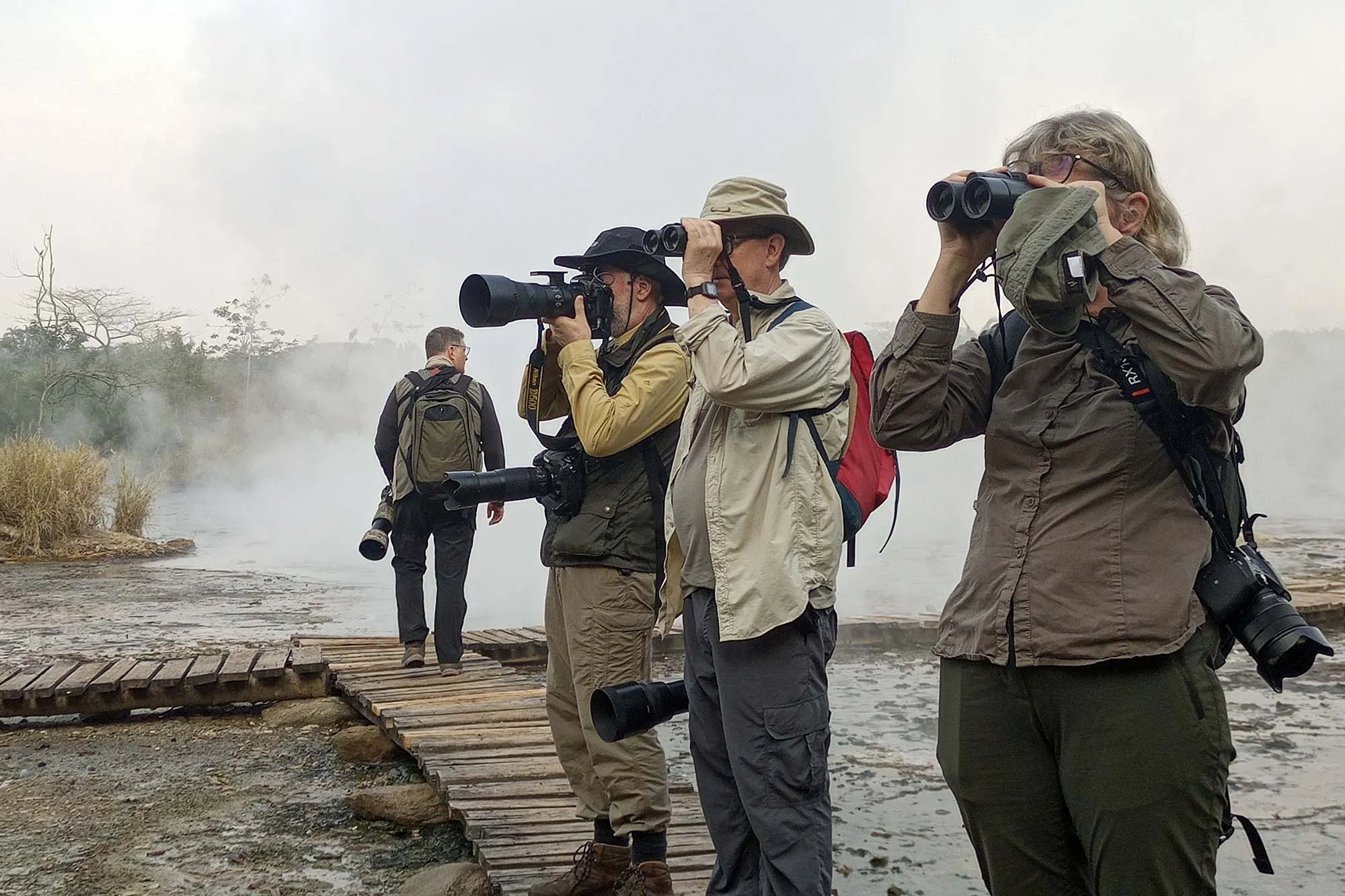
Pack Professional Gear: A 400mm to 600mm telephoto lens is essential. Additionally, bring a fast prime lens ($f/2.8$ or $f/4$) for the low-light conditions of the rainforest floor.
-
Master Manual Settings: Forest light changes rapidly. Therefore, mastering your ISO and shutter speed is crucial to avoid “motion blur” in the dark undergrowth.
-
Ethical Interaction: Always follow Uganda Wildlife Authority guidelines. Use a local guide to ensure you do not disturb nesting sites or stress the animals.
-
Seek Local Expertise: Engaging specialized birding guides will increase your “hit rate” significantly. They know the specific “calls” and “territories” of rare endemics.
Best Time for Bird-Watching Photography in Uganda
Choosing the right season can determine the success of your portfolio. Typically, Uganda has two primary seasons:
The Dry Season (June to August & December to February)
Overall, this is the best time for general wildlife and bird photography. The skies are clear, and the reduced foliage makes spotting birds in the canopy much easier. Moreover, many resident species begin their breeding cycles, showing off their most vibrant plumage.
The Wet Season (March to May & October to November)
Although travel can be more difficult, the wet season is the “Green Season” for photographers. The landscapes are lush and vibrant. Notably, this is when migratory birds from Europe and Northern Africa arrive in accordance with migration data from Avibase.
A Masterpiece in the Making
Ultimately, bird-watching photography in Uganda is an immersive journey into the heart of Africa’s natural wonders. From the prehistoric silhouette of the Shoebill to the iridescent shimmer of a Sunbird, every click of the shutter captures a piece of the “Pearl of Africa.” Whether you are a professional or a passionate amateur, Uganda’s hotspots provide the perfect canvas for your next wildlife masterpiece.