Best Time to See Shoebill Storks in Uganda: A Complete Birdwatching Guide
Introduction: When Is the Best Time to See Shoebill Storks in Uganda?
Seeing a shoebill stork in its natural habitat is one of the most extraordinary wildlife experiences in Uganda. With its enormous shoe-shaped bill, prehistoric appearance and fascinating hunting behaviour, the shoebill is one of Africa’s most sought-after birds.
For international birdwatchers, wildlife photographers and nature enthusiasts, Uganda is among the best destinations in Africa to encounter this remarkable species.
But when is the best time to see shoebill storks in Uganda?
The good news is that shoebills are resident birds in Uganda and can be observed throughout the year. However, the time of day, seasonal water levels, weather conditions and feeding patterns can influence the quality of your birdwatching experience.
Mabamba Swamp, located along the northern shores of Lake Victoria near Entebbe, is one of the most famous and accessible places to see shoebills in Uganda.
Early morning excursions, particularly between 7:00 AM and 10:00 AM, are generally recommended because of the favourable temperatures, softer photography light and opportunities to observe birds during their feeding activities.
At Epic Uganda Vacation, we help visitors organise memorable shoebill tracking experiences at Mabamba Swamp, combining expert local birding guides, traditional canoe excursions and opportunities to discover Uganda’s incredible wetland biodiversity.
In this guide, we explore the best months, times of day, locations and practical tips for seeing shoebills in Uganda.
1. Is Uganda a Good Destination for Seeing Shoebill Storks?
Absolutely!
Uganda is one of Africa’s outstanding destinations for shoebill birdwatching.
The country has extensive freshwater wetlands, papyrus swamps, shallow lakes and marshlands that provide suitable habitats for shoebills.
The shoebill (Balaeniceps rex) is a large African wetland bird recognised by its enormous bill, broad wings, grey plumage and striking appearance.
It is sometimes described as a prehistoric-looking bird because of its unusual features.
Shoebills generally inhabit freshwater swamps where they hunt fish, particularly lungfish, using a patient hunting technique.
They can remain motionless for long periods while waiting for prey before suddenly striking with their powerful bills.
Uganda offers several important shoebill habitats, including:
-
- Mabamba Bay Wetland.
-
- Murchison Falls National Park.
-
- Ziwa Rhino Sanctuary’s wider wetland environment.
-
- Other suitable freshwater wetlands around the country.
Among these destinations, Mabamba Swamp is particularly popular because of its accessibility from Entebbe and its established community-guided birding excursions.
2. Best Time of Day to See Shoebill Storks in Uganda
Although shoebills can be encountered throughout the day, early morning is generally the preferred time for shoebill tracking at Mabamba Swamp.
Early Morning: 7:00 AM – 10:00 AM
Early morning is one of the best periods to explore Mabamba Swamp.
There are several reasons why we recommend starting your shoebill excursion early.
Cooler temperatures: Morning temperatures are generally more comfortable for visitors and birds.
Better photography conditions: Soft morning light is often ideal for photographing shoebills without the harsh shadows associated with midday sunshine.
Feeding opportunities: Shoebills may be actively searching for fish in shallow water and suitable feeding areas.
Comfortable canoe excursions: Early departures can provide a pleasant experience before temperatures rise.
Starting early also allows you to explore several wetland channels without feeling rushed.
Mid-Morning: 10:00 AM – 12:00 PM
Mid-morning can also provide rewarding birdwatching opportunities.
Shoebills may still be feeding, standing in shallow water or resting among papyrus vegetation.
However, conditions may become warmer, and lighting can become more challenging for photography.
Visitors arriving later in the morning can still enjoy an excellent experience, depending on bird movements and local conditions.
Afternoon: 12:00 PM – 4:00 PM
Afternoon shoebill tracking is possible, although many visitors prefer morning excursions.
Shoebills may be resting, moving between feeding areas or remaining hidden within vegetation.
If your schedule does not permit an early morning excursion, afternoon visits can still be worthwhile.
However, we recommend confirming the best departure time with your local birding guide.
3. Best Months to See Shoebill Storks in Uganda
One of the biggest advantages of planning a shoebill tracking safari in Uganda is that the birds are present throughout the year.
There is no single month when shoebills disappear completely from Mabamba Swamp.
However, Uganda’s seasonal weather patterns influence wetland conditions and accessibility.
June to August: Excellent Dry-Season Birdwatching
The months of June, July and August are part of Uganda’s main dry season.
These months are generally favourable for visiting Mabamba Swamp because rainfall is usually lower than during the main rainy season.
Advantages include:
-
- Generally favourable road access.
-
- Comfortable conditions for canoe excursions.
-
- Opportunities for wildlife photography.
-
- Pleasant weather for combining birdwatching with other activities.
This period is particularly attractive for international visitors planning Uganda birding safaris.
December to February: Another Good Period
December, January and February are generally part of another relatively dry period.
These months are also suitable for shoebill tracking.
The reduced rainfall can make travel arrangements easier and provide favourable conditions for exploring the wetland.
January and February are especially attractive for visitors combining Mabamba with other Uganda safari destinations.
March to May: Main Rainy Season
The period from March to May generally receives more rainfall.
Although the wetland remains accessible, heavy rain can affect road conditions, boat operations and general comfort.
However, rainy weather does not mean that shoebills cannot be seen.
Mabamba remains an important shoebill habitat throughout this period.
Visitors should carry rain protection and confirm local conditions before departure.
September to November: Second Rainy Season
September, October and November generally experience another rainy period.
The wetland can be particularly lush, with changing water levels and vegetation conditions.
Shoebill tracking remains possible, although some access roads may become muddy.
For travellers interested in birdwatching beyond shoebills, this period can also offer interesting wetland bird activity.
Summary: Best Months for Shoebill Tracking
| Month | Conditions | Recommendation |
|---|---|---|
| January | Generally dry | Very good |
| February | Generally dry | Very good |
| March | Increasing rainfall | Good |
| April | Rainy season | Good, weather permitting |
| May | Rainy season | Good, weather permitting |
| June | Generally dry | Very good |
| July | Generally dry | Very good |
| August | Generally dry | Very good |
| September | Variable rainfall | Good |
| October | Rainy season | Good, weather permitting |
| November | Rainy season | Good, weather permitting |
| December | Generally dry | Very good |
Important: These are general weather-based recommendations, not guaranteed rankings of shoebill sightings. Actual sightings depend on the birds’ movements, feeding patterns and local wetland conditions.
4. Best Place to See Shoebill Storks in Uganda
Mabamba Swamp: Uganda’s Most Famous Shoebill Destination
Mabamba Swamp is one of the most popular destinations for shoebill tracking in Uganda.
Located on the northern shores of Lake Victoria, southwest of Entebbe, the wetland is an internationally recognised Ramsar site.
Its extensive papyrus channels, shallow waters and rich aquatic ecosystem provide an important habitat for shoebills.
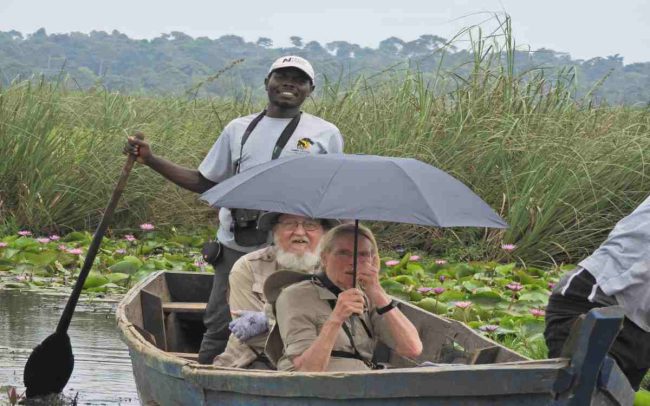
Visitors explore the wetland using traditional wooden canoes or motorised boats accompanied by experienced local birding guides.
The guides understand the wetland’s channels and regularly monitor areas where shoebills are encountered.
During your excursion, you may observe a shoebill:
-
- Standing motionless in shallow water.
-
- Searching for lungfish.
-
- Hunting in papyrus channels.
-
- Resting near wetland vegetation.
-
- Flying between feeding areas.
Mabamba is particularly convenient for travellers arriving through Entebbe International Airport.
It is possible to organise a half-day or full-day excursion from Entebbe or Kampala.
Other Places to See Shoebills in Uganda
Although Mabamba is the most famous location, other wetlands and protected areas in Uganda also provide opportunities to encounter shoebills.
Murchison Falls National Park
The extensive Nile River system and associated wetlands support shoebill habitats.
Birdwatching excursions in the Nile Delta area provide opportunities to search for this remarkable species.
Semuliki National Park
The wetlands and aquatic habitats around the Semuliki ecosystem offer interesting birdwatching opportunities, including searches for specialised wetland birds.
Lugogo and other Lake Victoria wetlands
Several wetland habitats around Lake Victoria support important bird populations and may offer opportunities for shoebill observation.
Mabamba remains our recommended starting point for first-time visitors because of its accessibility and established birding infrastructure.
5. What Makes Mabamba Swamp Special for Shoebill Tracking?
Mabamba Bay Wetland is one of Uganda’s most important bird conservation areas.
Its ecological importance is recognised internationally through its Ramsar designation.
The wetland supports a rich variety of aquatic habitats, including:
-
- Extensive papyrus swamps.
-
- Shallow freshwater channels.
-
- Floating vegetation.
-
- Open water areas.
-
- Wetland grasslands.
These habitats support fish and other aquatic organisms that provide food for numerous bird species.
The shoebill benefits from these freshwater ecosystems, particularly areas where it can hunt fish in shallow water.
The wetland is also home to numerous other bird species, making it a rewarding destination for both experienced birdwatchers and beginners.
6. What Does a Shoebill Tracking Experience Look Like?
A shoebill tracking excursion at Mabamba is an exciting boat-based birdwatching activity.
The experience generally takes two to three hours, depending on the location of the birds and the route followed.
Step 1: Early Morning Departure
Your Epic Uganda Vacation driver-guide picks you up from your accommodation in Kampala or Entebbe.
We recommend departing early to reach Mabamba before the morning birdwatching period is well underway.
Step 2: Arrival at Mabamba Landing Site
Upon arrival, you meet your local community birding guide.
The guide provides a briefing about the wetland and the shoebill tracking experience.
Step 3: Canoe Excursion Through the Papyrus Channels
You board a traditional canoe or suitable motorised boat and begin navigating through the wetland.
The narrow papyrus channels provide an interesting environment for observing wetland birds.
Step 4: Searching for the Shoebill
Your guide carefully searches the likely feeding areas and channels.
Local knowledge is particularly valuable because shoebills can remain hidden among papyrus vegetation.
Step 5: Shoebill Observation and Photography
Once a shoebill is located, the boat approaches carefully.
You have an opportunity to observe the bird and take photographs while following responsible wildlife-viewing guidelines.
Step 6: Return to the Landing Site
After exploring the wetland, you return to the landing site and can continue with other activities around Entebbe.
Shoebill sightings are not guaranteed, but experienced local guides can improve your chances of locating the birds.
7. Tips for Photographing Shoebill Storks in Uganda
For wildlife photographers, Mabamba Swamp offers excellent opportunities to capture one of Africa’s most unusual birds.
Here are some useful photography tips.
Carry a telephoto lens: A zoom lens helps you photograph the shoebill without approaching too closely.
Visit early: Morning light is generally softer and more favourable for bird photography.
Use a fast shutter speed: Shoebills may suddenly move or take flight, so a suitable shutter speed helps capture sharp images.
Bring binoculars: These are useful for locating birds before attempting photography.
Protect your equipment: A waterproof camera bag is important because you will be travelling by boat.
Be patient: Shoebills are known for remaining motionless for extended periods. Patience can reward you with excellent photographs.
Respect the bird: Avoid excessive noise, sudden movements and attempts to force the bird into flight.
8. What Other Birds Can You See at Mabamba Swamp?
Mabamba is not only famous for shoebills.
It is also an excellent destination for observing Uganda’s wetland bird diversity.
Other species you may encounter include:
-
- African jacana.
-
- Malachite kingfisher.
-
- Pied kingfisher.
-
- African pygmy goose.
-
- Goliath heron.
-
- Grey heron.
-
- Papyrus gonolek.
-
- African fish eagle.
-
- Yellow-billed duck.
-
- Various species of egrets and cormorants.
For dedicated birdwatchers, the wetland offers an opportunity to discover several species within a relatively short excursion.
9. What Should You Pack for Shoebill Tracking?
Proper preparation makes your excursion more enjoyable.
We recommend bringing:
-
- Binoculars.
-
- A camera with a telephoto lens.
-
- A hat or cap.
-
- Sunscreen.
-
- Insect repellent.
-
- Drinking water.
-
- Comfortable lightweight clothing.
-
- A waterproof camera bag.
-
- A light rain jacket.
-
- Fully charged batteries.
-
- Comfortable shoes.
Avoid bringing unnecessary luggage because space in traditional canoes may be limited.
10. Can You Combine Shoebill Tracking with Other Uganda Safari Activities?
Absolutely!
One of the advantages of visiting Mabamba Swamp is its location near Entebbe, which allows travellers to combine birdwatching with other attractions.
Entebbe Botanical Gardens
Explore the botanical gardens along Lake Victoria and enjoy a relaxing nature walk.
Uganda Wildlife Conservation Education Centre
Discover Uganda’s wildlife conservation initiatives and learn about native animal species.
Ngamba Island Chimpanzee Sanctuary
Take a boat trip to Ngamba Island to learn about rescued chimpanzees and their rehabilitation.
Lake Victoria Boat Excursion
Enjoy the scenery of Lake Victoria and explore its beautiful shoreline.
Longer Uganda Birding Safari
Extend your trip to include Murchison Falls National Park, Queen Elizabeth National Park, Kibale National Park and other important birdwatching destinations.
11. Sample One-Day Mabamba Shoebill Tracking Tour
Epic Uganda Vacation can organise a private shoebill tracking excursion from Kampala or Entebbe.
6:30 AM – Hotel pickup
Meet your safari driver-guide and begin your journey to Mabamba Swamp.
7:30 AM – Arrival at Mabamba
Meet your local birding guide and prepare for your canoe excursion.
7:45 AM – 10:30 AM – Shoebill tracking
Navigate through the papyrus channels in search of the famous shoebill.
Enjoy birdwatching, wildlife photography and explanations about the wetland ecosystem.
10:30 AM – Return to the landing site
After the excursion, return to the landing site.
11:30 AM – Optional Entebbe excursion
Depending on your interests, visit the botanical gardens or enjoy lunch overlooking Lake Victoria.
Afternoon – Return to your hotel
Conclude your excursion with a transfer to your hotel or another destination.
This itinerary can be adjusted depending on your departure point and onward travel arrangements.
12. Why Book Your Shoebill Tracking Tour with Epic Uganda Vacation?
At Epic Uganda Vacation, we specialise in organising memorable wildlife and birdwatching experiences in Uganda.
Our shoebill tracking excursions are designed to help visitors discover the remarkable biodiversity of Mabamba Swamp while supporting responsible community-based tourism.
When you book with us, we can arrange:
-
- Private transportation from Kampala or Entebbe.
-
- Experienced English-speaking safari guides.
-
- Local community birding guides.
-
- Canoe or motorboat excursions.
-
- Shoebill tracking experiences.
-
- Birdwatching and photography trips.
-
- Airport transfers.
-
- Accommodation arrangements.
-
- Customised Uganda birding safari packages.
Whether you are an experienced birder, wildlife photographer, solo traveller or first-time visitor to Uganda, we can customise your experience to suit your interests and budget.
Our aim is to make your shoebill tracking adventure comfortable, informative and unforgettable.
Frequently Asked Questions About the Best Time to See Shoebill in Uganda
1. What is the best time to see shoebill storks in Uganda?
Shoebills can be seen throughout the year. Early morning, particularly between 7:00 AM and 10:00 AM, is generally recommended for birdwatching at Mabamba Swamp.
2. Which month is best for shoebill tracking in Uganda?
June, July, August, December, January and February are generally favourable months because they fall within Uganda’s relatively drier periods.
However, shoebills are resident birds and can be encountered throughout the year.
3. Where is the best place to see shoebills in Uganda?
Mabamba Swamp is one of the best and most accessible places to see shoebill storks in Uganda.
4. Can I see shoebills at Mabamba Swamp throughout the year?
Yes. Shoebills are resident in the wetland and can be encountered throughout the year, although their location and visibility vary.
5. What time should I arrive at Mabamba Swamp?
We recommend arriving around 7:00 AM to begin your birdwatching excursion during the early morning hours.
6. How long does shoebill tracking take?
A typical canoe or boat excursion takes approximately two to three hours.
7. Are shoebill sightings guaranteed?
No. Shoebills are wild birds, and sightings depend on their movements, feeding behaviour, weather and wetland conditions.
8. Is Mabamba Swamp accessible from Entebbe?
Yes. Mabamba is relatively close to Entebbe and can be reached by road, or through a combination of ferry and road transport.
9. Can I see shoebills from Kampala on a day trip?
Yes. A private day trip from Kampala is possible, although an early departure is recommended to avoid traffic and maximise your time at the wetland.
10. What is the best weather for shoebill photography?
Clear or partly cloudy mornings often provide favourable natural light. However, photography opportunities depend on the bird’s position, visibility and weather conditions.
11. What other birds can I see at Mabamba?
You may encounter African jacanas, kingfishers, herons, egrets, African pygmy geese, papyrus gonoleks and numerous other wetland species.
12. Can Epic Uganda Vacation arrange a shoebill tracking tour?
Yes. Epic Uganda Vacation can arrange transportation, local birding guides and canoe excursions to Mabamba Swamp from Kampala or Entebbe.
Conclusion: Plan Your Shoebill Tracking Safari in Uganda
Uganda is an outstanding destination for travellers hoping to see the remarkable shoebill stork.
Although these extraordinary birds can be encountered throughout the year, early morning excursions at Mabamba Swamp offer some of the most rewarding opportunities for birdwatching and photography.
The dry seasons of June to August and December to February generally provide favourable travel conditions, but there is no single season that guarantees a sighting.
With knowledgeable local birding guides, a traditional canoe excursion and a little patience, visitors can explore the beautiful papyrus channels of Mabamba in search of one of Africa’s most fascinating birds.
If seeing a shoebill is on your Uganda travel bucket list, let Epic Uganda Vacation help you make it happen.
BOOK YOUR MABAMBA SHOEBILL TRACKING TOUR WITH EPIC UGANDA VACATION!
Contact us to organise your private shoebill tracking excursion, birdwatching safari or customised Uganda wildlife holiday.
Website: https://www.epicugandavacation.com/
Epic Uganda Vacation – Discover the Pearl of Africa!