African Finfoot: Habitat, Identification and Where to See It
Introduction: Discover the Secretive African Finfoot
The African Finfoot (Podica senegalensis) is one of Africa’s most fascinating and elusive waterbirds. Often difficult to spot because of its shy behaviour and preference for secluded waterways, this unusual bird inhabits forested rivers, freshwater lakes, wetlands and streams across much of sub-Saharan Africa.
Unlike many familiar waterbirds, the African Finfoot is rarely seen in open water or exposed shorelines. It prefers quiet stretches of water with overhanging trees, dense vegetation and plenty of natural cover. When disturbed, it may slip quietly into the water or disappear among riverside vegetation.
For birdwatchers visiting Uganda, the African Finfoot is a particularly exciting species to look for around Lake Mburo National Park, where it has been recorded along suitable lakeshore habitats. Spotting one requires patience, careful observation and a knowledgeable local birding guide.
1. African Finfoot Identification and Physical Characteristics
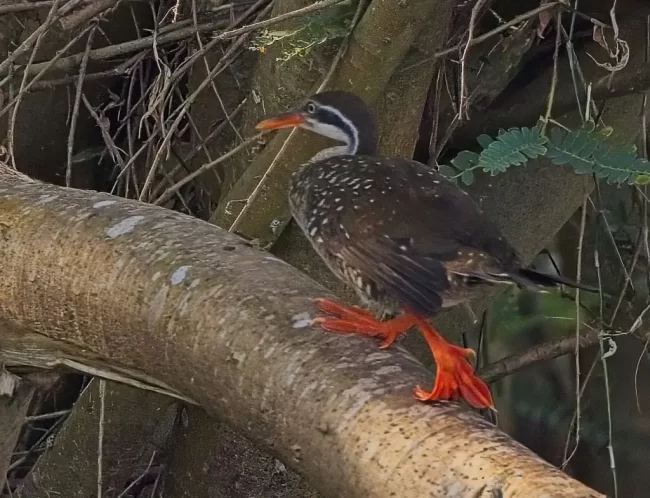
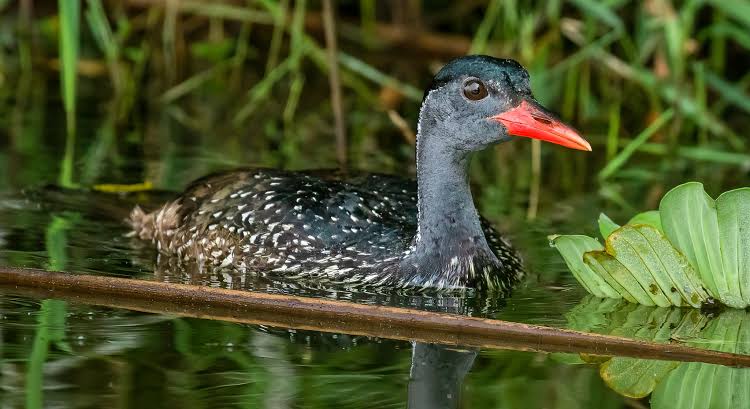
The African Finfoot is a medium-to-large aquatic bird with a distinctive appearance. Its elongated body, slender neck, pointed bill and brightly coloured legs make it relatively easy to recognise when seen clearly.
Its plumage is generally dark brown, grey and black, with white markings and speckles that help it blend into shaded riverbanks and vegetation.
Important identification features include:
-
Bill: A long, pointed bill, often bright orange-red.
-
Legs and feet: Strong, brightly coloured legs with distinctive lobed toes.
-
Body: Streamlined and adapted for swimming.
-
Plumage: Brownish upperparts with pale spotting and contrasting markings.
-
Neck: Relatively long and slender.
-
Behaviour: Usually swims quietly, often close to vegetation or overhanging branches.
The African Finfoot belongs to the family Heliornithidae, a small family of unusual tropical waterbirds. It is not a duck, although its aquatic lifestyle may initially suggest similarities.
2. Male and Female African Finfoot
Male and female African Finfoots have differences in their plumage and facial markings. Females generally show more prominent pale facial stripes and contrasting markings, while males tend to appear darker and more subdued.
These differences can help experienced birdwatchers distinguish the sexes when the birds are seen at close range.
Juveniles may have different plumage patterns from adults, making identification more challenging. A good view of the head, bill, body markings and feet is useful when recording a sighting.
3. African Finfoot Habitat
The African Finfoot prefers quiet freshwater environments where vegetation provides shelter and feeding opportunities. It is closely associated with natural waterways that have suitable cover along their banks.
Its preferred habitats include:
-
Forest-fringed rivers and streams.
-
Quiet freshwater lakes.
-
River backwaters and sheltered channels.
-
Wetlands with overhanging vegetation.
-
Wooded waterways with fallen branches and aquatic plants.
-
Mangrove-lined waterways in suitable coastal regions.
The species is generally less likely to be encountered along exposed, heavily disturbed or open shorelines. Its secretive nature makes undisturbed waterways especially important.
4. Where Is the African Finfoot Found?
The African Finfoot has a broad distribution across sub-Saharan Africa, although its occurrence is often localised because it depends on suitable freshwater habitat.
It is recorded in several countries, including Uganda, Rwanda, Kenya, Tanzania, the Democratic Republic of Congo, Ghana, Gabon, Cameroon and parts of southern Africa.
In many areas, the bird is uncommon or difficult to observe. Its presence is closely connected to the availability and quality of suitable rivers, lakes and wetlands.
5. Where to See the African Finfoot in Uganda
Uganda offers several freshwater and wetland environments where birdwatchers may look for the African Finfoot. However, sightings are not guaranteed, and the likelihood of finding the species depends on the particular waterway, season and local conditions.
Lake Mburo National Park
Lake Mburo National Park is one of the notable places to search for the African Finfoot in Uganda. The park contains lakes, sheltered shorelines, papyrus wetlands and wooded water edges that provide suitable habitat.
The bird has been photographed and recorded around Lake Mburo, making the park an especially interesting destination for birdwatchers hoping to see this elusive species.
A guided boat excursion or careful observation along suitable lakeshore vegetation may offer opportunities to spot it.
Other birds to look for during a Lake Mburo birding excursion include:
-
African Fish Eagle
-
Malachite Kingfisher
-
Pied Kingfisher
-
African Jacana
-
Great Egret
-
African Darter
-
Papyrus Gonolek in suitable wetland habitats
Murchison Falls National Park
Murchison Falls National Park has extensive riverine and wetland habitats associated with the Victoria Nile and surrounding waterways.
Although the park is famous for its large mammals, boat safaris and spectacular waterfalls, it also offers excellent birdwatching opportunities. Birders can explore suitable sheltered waterways and vegetated riverbanks while looking for water-associated species, including the African Finfoot where locally recorded.
Queen Elizabeth National Park
Queen Elizabeth National Park is another important birding destination, with lakes, wetlands, forest patches and the Kazinga Channel.
The park supports a rich variety of waterbirds. Birdwatchers exploring suitable sheltered habitats may look for the African Finfoot alongside kingfishers, herons, egrets and other aquatic species.
Semliki and Lake Albert Region
The Semliki River and Lake Albert region contain extensive freshwater habitats, forested riverbanks and wetlands. These environments are valuable for many waterbirds and other wildlife.
Birdwatchers exploring this region can combine riverine birding with visits to forest habitats and other birding locations in western Uganda.
Note: These are broader birding destinations with suitable or documented regional habitats; they should not all be presented as guaranteed African Finfoot sighting locations.
6. What Does the African Finfoot Eat?
The African Finfoot is primarily carnivorous, feeding on small aquatic animals found in freshwater habitats.
Its diet may include:
-
Aquatic insects and their larvae.
-
Small fish.
-
Crustaceans.
-
Frogs and tadpoles.
-
Molluscs and other small aquatic invertebrates.
It searches for food in shallow water, among aquatic vegetation and around submerged branches. Its ability to swim quietly helps it approach prey without attracting much attention.
7. Behaviour and Adaptations
One of the most interesting features of the African Finfoot is its secretive behaviour. It generally avoids open spaces and prefers to move through sheltered waterways.
It may swim low in the water, keeping close to vegetation and disappearing quickly when disturbed.
Its feet are particularly distinctive. Unlike ducks, which have fully webbed feet, the African Finfoot has lobed toes that help it move through water. These specialised feet are an important adaptation for its aquatic lifestyle.
The bird is usually encountered alone or in pairs rather than in large flocks.
8. Breeding and Reproduction
The African Finfoot generally breeds near suitable freshwater habitats. Its nest is typically placed in vegetation, branches or other sheltered structures close to water.
Breeding behaviour and timing vary across its extensive African range, depending partly on local rainfall and habitat conditions.
The nest is usually concealed, making breeding activity difficult for birdwatchers to observe. As with other wildlife, visitors should avoid approaching nests or disturbing birds during breeding.
9. Conservation Status and Threats
The African Finfoot is classified globally as Least Concern on the IUCN Red List. However, this does not mean that the species is free from threats.
Because it depends on relatively undisturbed freshwater habitats, local populations can be affected by environmental changes.
Important threats include:
-
Wetland drainage and destruction.
-
Deforestation along riverbanks.
-
Water pollution.
-
Agricultural expansion.
-
Excessive disturbance from human activities.
-
Degradation of natural waterways.
In Uganda, the species has been assessed as Vulnerable at the national level in the Uganda Red List. This highlights the importance of protecting suitable freshwater habitats even where the species has a less concerning global conservation classification.
10. Best Time to See the African Finfoot in Uganda
The African Finfoot can be searched for throughout the year in suitable habitats. However, birdwatching conditions may vary with rainfall, water levels and vegetation growth.
For a better experience:
-
Consider the drier periods when access to some birding locations may be easier.
-
Plan early-morning excursions when bird activity is often high.
-
Use a knowledgeable local birding guide.
-
Explore quiet shorelines and sheltered waterways.
-
Allow enough time for patient observation.
The bird is naturally elusive, so even a well-planned excursion cannot guarantee a sighting.
11. Birdwatching Tips for Finding the African Finfoot
Finding an African Finfoot can be challenging, even for experienced birdwatchers. Its preference for secluded habitats means that patience and careful observation are essential.
Useful birding tips include:
-
Move quietly: Avoid loud conversations and sudden movements near the water.
-
Search sheltered areas: Look around overhanging trees, fallen branches and thick riverside vegetation.
-
Use binoculars: Scan the edges of the water without approaching too closely.
-
Take a guided boat excursion: A local guide may know where the species has recently been observed.
-
Visit early: Morning birding can provide favourable observation conditions.
-
Be patient: The bird may remain hidden for long periods before appearing briefly.
A camera with a suitable telephoto lens is useful for photography, but avoid approaching too closely just to obtain a photograph.
12. Other Birds to See During an African Finfoot Birding Safari
Uganda is one of Africa’s rewarding birdwatching destinations, with a wide range of habitats supporting forest birds, savannah species and wetland specialists.
Depending on the destination, birdwatchers may combine an African Finfoot search with opportunities to see:
-
Shoebill
-
African Fish Eagle
-
Malachite Kingfisher
-
Pied Kingfisher
-
Great Blue Turaco
-
African Jacana
-
Papyrus Gonolek
-
African Darter
-
Grey Crowned Crane
-
Saddle-billed Stork
The exact species available will depend on the location and habitat being explored.
13. Combine African Finfoot Birding with Other Uganda Safaris
An African Finfoot search can be included in a broader Uganda birding or wildlife safari. Lake Mburo, in particular, offers opportunities to combine birdwatching with other activities.
Visitors can consider combining birdwatching with:
-
Boat safaris: Explore suitable lake habitats and look for waterbirds.
-
Game drives: Search for zebras, impalas, elands, buffaloes and other wildlife.
-
Nature walks: Discover smaller wildlife, plants and bird species with an experienced guide.
-
Cultural experiences: Learn about communities and traditional lifestyles around the park.
Travellers with more time can extend their itinerary to include Queen Elizabeth National Park, Bwindi Impenetrable National Park or Murchison Falls National Park.
14. Frequently Asked Questions About the African Finfoot
Is the African Finfoot rare?
The species is globally classified as Least Concern, but it is secretive and locally uncommon in many places. Its dependence on suitable freshwater habitats makes sightings unpredictable.
What is the scientific name of the African Finfoot?
Its scientific name is Podica senegalensis. It belongs to the family Heliornithidae.
Where can I see the African Finfoot in Uganda?
Lake Mburo National Park is a notable location where the species has been recorded. Other freshwater and riverine areas in Uganda may also offer suitable habitats, but sightings are not guaranteed.
Does the African Finfoot swim?
Yes. It is an aquatic bird that swims and forages in freshwater environments, often staying close to vegetation and sheltered riverbanks.
What does the African Finfoot eat?
Its diet includes aquatic insects, small fish, crustaceans, frogs, molluscs and other small aquatic animals.
Is the African Finfoot endemic to Uganda?
No. It occurs across much of sub-Saharan Africa and is found in several African countries.
What makes the African Finfoot special?
Its secretive behaviour, unusual lobed toes, distinctive plumage and preference for secluded freshwater habitats make it an interesting species for birdwatchers.
Plan an African Finfoot Birding Experience with Epic Uganda Vacation
Uganda offers excellent opportunities for exploring freshwater habitats, forest ecosystems and diverse birdlife. The African Finfoot is one of the rewarding species to search for, particularly for birdwatchers interested in unusual and elusive waterbirds.
At Epic Uganda Vacation, we can help organise birdwatching excursions to Lake Mburo National Park and other important birding destinations across Uganda. Our safari experiences can be tailored to your interests, travel dates and birdwatching experience.
Whether you are planning a dedicated birding safari or combining birdwatching with wildlife viewing, we can help you create a memorable Uganda safari.
Contact Epic Uganda Vacation to plan your birdwatching experience.