Kitagata Hot Springs, Uganda: A Complete Guide to Visiting the Natural Hot Springs in Western Uganda
Kitagata Hot Springs is one of Uganda’s fascinating natural attractions, offering visitors an opportunity to experience the country’s remarkable geothermal features, local traditions and beautiful countryside. Located in Sheema District in western Uganda, the hot springs are known for their naturally heated water, traditional healing beliefs and cultural significance among surrounding communities.
Unlike Uganda’s famous wildlife destinations, such as Bwindi Impenetrable National Park, Queen Elizabeth National Park and Murchison Falls National Park, Kitagata offers a different kind of tourism experience. It introduces visitors to the country’s natural heritage beyond wildlife viewing, combining nature exploration, cultural encounters and relaxation.
The hot springs are particularly interesting to travellers exploring western Uganda, especially those travelling between Mbarara, Bushenyi, Queen Elizabeth National Park and other destinations in the region.
For visitors interested in cultural tourism, natural attractions and lesser-known places in Uganda, a visit to Kitagata Hot Springs can be a worthwhile addition to a western Uganda safari.
This comprehensive guide explores the location of Kitagata Hot Springs, their history, cultural importance, natural characteristics, activities, accessibility, best time to visit and how to include them in a Uganda safari itinerary.
Where Are Kitagata Hot Springs Located?
Kitagata Hot Springs are located approximately 2 kilometres southeast of Kitagata town, along the Ishaka–Kagamba Road in Sheema District. They are approximately 62 kilometres west of Mbarara, making them accessible to travellers exploring western Uganda.
The attraction consists of two neighbouring geothermal spring areas, traditionally known as Mulago and Ekyomugabe. They are separated by the Ishaka–Kitagata–Kagamba road and have different cultural histories.
The surrounding landscape is characterised by green vegetation, rolling hills, wetlands and rural settlements. The natural environment provides an interesting setting for visitors seeking to explore Uganda’s lesser-known attractions.
The History of Kitagata Hot Springs
Kitagata Hot Springs have a long history within the cultural traditions of the Ankole region.
For generations, local communities have regarded the springs as important natural resources. They have traditionally been used for bathing, relaxation and practices associated with traditional healing.
The springs also have historical connections to the former Kingdom of Ankole, particularly the royal household.
According to local accounts, one of the springs was reserved for the Omugabe, the traditional king of Ankole, and selected members of his royal entourage. The other became a popular bathing place for ordinary members of the community.
Over the years, the hot springs attracted visitors from different parts of Uganda, including people who travelled long distances because of the traditional belief that the water could relieve various physical ailments.
Today, Kitagata is recognised as an important natural and cultural tourism attraction in Sheema District.
The Two Main Kitagata Hot Springs
One of the interesting aspects of visiting Kitagata is discovering the two adjoining spring areas and understanding their different cultural identities.
1. Mulago Hot Springs
Mulago is the spring traditionally associated with healing and public bathing.
Its name is derived from Mulago National Referral Hospital in Kampala, reflecting the local belief in the spring’s medicinal properties.
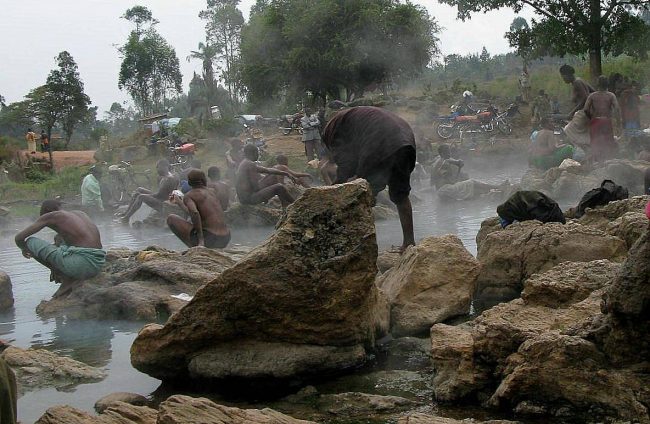
People from surrounding communities and other parts of Uganda visit Mulago to bathe in the naturally heated water. Some visitors believe that soaking in the water helps relieve muscular discomfort, joint pains and certain skin conditions.
The spring has historically attracted considerable numbers of people, making it an important social gathering place.
Visitors may encounter people bathing, collecting water and sharing stories about their experiences at the springs.
It is important to understand that these are traditional beliefs rather than medically established treatments. There is no reliable clinical evidence that bathing in Kitagata’s water cures diseases. Visitors should not substitute the springs for professional medical treatment.
2. Ekyomugabe (The King’s Hot Spring)
Ekyomugabe is traditionally known as the King’s Spring.
According to local history, it was used by the former Omugabe of Ankole and members of the royal household.
The name Ekyomugabe reflects its historical connection to the monarchy and the cultural heritage of the Ankole Kingdom.
Unlike Mulago, which became widely associated with public bathing, Ekyomugabe historically had a more exclusive royal identity.
Today, the King’s Spring is also part of government efforts to develop Kitagata into a more organised tourism destination.
The two springs offer visitors an opportunity to appreciate how natural resources can become deeply connected to local history, traditional beliefs and cultural identity.
How Were Kitagata Hot Springs Formed?
Kitagata Hot Springs are geothermal features formed through natural geological processes beneath the Earth’s surface.
The springs are associated with geological fractures within the rocks of western Uganda.
Rainwater and other groundwater sources seep underground through cracks and fractures. As the water moves deeper into the Earth’s crust, it encounters warmer geological environments and becomes heated.
The heated water subsequently rises towards the surface through natural pathways, eventually emerging as hot springs.
Research on Uganda’s geothermal resources has documented the geological characteristics of Kitagata, including hot water emerging through fractures in underlying gneiss rocks.
The temperature of the water varies depending on the spring, location and environmental conditions. Scientific investigations have recorded temperatures reaching approximately 64°C at a monitored spring location, although actual temperatures can vary.
This is sufficiently hot to cause serious burns. Visitors should never assume that all sections of the springs are safe for bathing or touching.
Why Are Kitagata Hot Springs Important to Local Communities?
Kitagata Hot Springs are more than a natural attraction. They are part of the cultural, social and economic identity of the surrounding communities.
Cultural and Traditional Importance
The springs have been used for generations and remain associated with traditional healing practices, local beliefs and the history of the Ankole Kingdom.
The distinction between Mulago and Ekyomugabe also reflects the historical social organisation surrounding the springs.
Community Tourism
The hot springs attract domestic visitors and international tourists interested in Uganda’s natural and cultural heritage.
Their popularity creates opportunities for local businesses, including accommodation providers, food vendors, transport operators and community tourism initiatives.
Local Economic Development
Tourism development around Kitagata has the potential to support employment, improve local infrastructure and encourage investment in hospitality services.
The government has also identified the springs as an attraction with potential for development into an eco-adventure and wellness tourism destination.
What to Expect When Visiting Kitagata Hot Springs
A visit to Kitagata is different from visiting a conventional wellness spa.
The attraction has traditionally operated as a community bathing site, where visitors can observe local bathing practices and learn about the cultural importance of the geothermal waters.
Depending on the area accessible during your visit, you may encounter:
-
Naturally heated water emerging from the ground.
-
Local residents bathing in the spring pools.
-
Visitors collecting water.
-
Stories about traditional healing practices.
-
The historical association with the Ankole royal family.
-
Surrounding wetlands and green countryside.
Visitors should approach the attraction with cultural sensitivity. Some bathing areas are used by local residents, and photography should only be undertaken with permission.
Important visitor information: Development and management arrangements at Kitagata have been changing. A November 2024 report described community-led conservation efforts, while a November 2026 report highlighted delays in the development of the royal springs tourism project and indicated that Mulago remained operational. Confirm access to the individual spring areas and available visitor facilities before travelling.
Things to Do at Kitagata Hot Springs
Although the springs are the main attraction, a visit can involve several activities that help visitors understand the natural and cultural significance of the destination.
1. Explore the Natural Hot Springs
The main activity is exploring the two geothermal spring areas.
Visitors can observe how naturally heated water emerges from the ground and flows into the surrounding pools.
This is particularly interesting for travellers interested in geology, natural phenomena and Uganda’s diverse landscapes.
Always follow local safety instructions and avoid entering water unless the temperature and bathing area have been confirmed safe.
2. Learn About the Traditional Healing Beliefs
Kitagata is widely known for traditional beliefs surrounding the healing properties of its geothermal waters.
During your visit, you can learn from local residents about the historical uses of the springs and why people continue to travel there.
These stories provide insight into the relationship between traditional knowledge, culture and natural resources in western Uganda.
3. Discover Ankole Cultural Heritage
The association between Ekyomugabe and the former Ankole monarchy makes the springs an interesting destination for visitors exploring the cultural heritage of southwestern Uganda.
A knowledgeable local guide can explain the historical importance of the Omugabe and the traditions associated with the royal spring.
4. Enjoy the Surrounding Countryside
The area surrounding Kitagata offers beautiful views of western Uganda’s rural landscape.
Visitors can appreciate the green vegetation, agricultural settlements, rolling hills and wetlands while travelling through the region.
5. Experience Community Tourism
A visit to Kitagata provides an opportunity to interact with local residents and learn about everyday life in Sheema District.
Visitors can also support local businesses by purchasing locally produced goods, using community services and choosing local guides where available.
Best Time to Visit Kitagata Hot Springs
Kitagata Hot Springs can generally be incorporated into a Uganda safari at different times of the year.
However, rainfall can influence the surrounding environment and accessibility.
Uganda experiences two main dry periods and two wetter periods.
June to September
This is generally one of the favourable periods for exploring western Uganda.
Visitors can often enjoy more manageable road conditions and combine the springs with wildlife destinations in the region.
December to February
These months are also popular for travelling around western Uganda.
The relatively drier conditions can make it easier to combine Kitagata with other attractions and national parks.
March to May
This is generally a wetter period in much of western Uganda.
The surrounding vegetation becomes lush, but heavy rainfall can affect some rural roads.
October to November
These months also receive rainfall, although conditions vary.
One interesting aspect of Kitagata is that heavy rainfall and flooding in the surrounding river and wetland system have historically affected the temperature of the springs. Visitors should therefore avoid assuming that the water will always be equally hot.
Recommendation: June to September and December to February are good periods to consider when planning a wider western Uganda safari, although Kitagata itself does not have a strict seasonal visiting window.
How to Get to Kitagata Hot Springs
Kitagata Hot Springs can be accessed by road from Kampala, Entebbe, Mbarara, Bushenyi and other towns in western Uganda.
A private safari vehicle is a convenient option, particularly for visitors combining the springs with other destinations.
From Kampala or Entebbe
Travellers departing from Kampala or Entebbe generally follow the southwestern Uganda route through Masaka and Mbarara before proceeding towards Sheema District.
The road journey from Kampala is approximately 350 kilometres, depending on the route and starting point.
Travel time can vary according to traffic, road conditions and stopovers.
From Mbarara
Mbarara is one of the most convenient major towns from which to access Kitagata.
The springs are approximately 62 kilometres west of Mbarara by road.
Visitors travel towards Bushenyi and Ishaka before proceeding to Kitagata.
From Bushenyi and Ishaka
Travellers can access the springs through Ishaka along the Ishaka–Kagamba Road.
Kitagata town is approximately two kilometres from the attraction.
What Type of Vehicle Is Recommended?
A standard vehicle may be suitable under favourable road conditions, but a 4×4 safari vehicle is recommended for travellers exploring several destinations in western Uganda, particularly during rainy periods.
For a comfortable safari, Epic Uganda Vacation can organise private transportation with an experienced English-speaking driver-guide.
Places to Visit Near Kitagata Hot Springs
One advantage of visiting Kitagata is its location within western Uganda, a region with several interesting wildlife, cultural and natural attractions.
Travellers can combine the hot springs with other destinations to create a more comprehensive Uganda safari.
1. Queen Elizabeth National Park
Queen Elizabeth National Park is one of Uganda’s most popular wildlife destinations.
The park is famous for its diverse landscapes, savannah wildlife, crater lakes, wetlands and the Kazinga Channel.
Activities include:
-
Morning and afternoon game drives.
-
Boat cruises along the Kazinga Channel.
-
Tree-climbing lion viewing in the Ishasha sector.
-
Chimpanzee tracking in Kyambura Gorge.
-
Birdwatching.
-
Community cultural experiences.
A combination of Kitagata and Queen Elizabeth National Park is suitable for travellers interested in both cultural attractions and traditional African wildlife safaris.
2. Lake Mburo National Park
Lake Mburo National Park is another excellent destination to combine with Kitagata.
The park is known for its populations of zebras, impalas, elands, buffaloes, giraffes and several other wildlife species.
Visitors can enjoy:
-
Game drives.
-
Boat cruises.
-
Guided nature walks.
-
Birdwatching.
-
Horseback safaris.
-
Cycling experiences.
Lake Mburo is particularly convenient for travellers approaching western Uganda from Kampala or Entebbe.
3. Bwindi Impenetrable National Park
Bwindi is internationally recognised for mountain gorilla trekking.
Travellers can combine Kitagata with a visit to Bwindi to experience Uganda’s exceptional primate conservation heritage.
Activities include standard gorilla trekking, gorilla habituation, birdwatching and Batwa cultural experiences.
4. Mgahinga Gorilla National Park
Mgahinga Gorilla National Park is another important destination in southwestern Uganda.
It offers mountain gorilla trekking, golden monkey tracking, volcano hiking and Batwa cultural experiences.
Visitors interested in primates and mountain landscapes can include Mgahinga in a longer western Uganda itinerary.
5. Lake Bunyonyi
Lake Bunyonyi is one of Uganda’s most beautiful highland lakes.
It is surrounded by terraced hills and dotted with numerous islands.
Activities include canoeing, boat rides, island visits, birdwatching and relaxation at lakeside accommodation.
Lake Bunyonyi is a particularly attractive stop for travellers combining gorilla trekking with scenic experiences.
6. Rwenzori Mountains National Park
The Rwenzori Mountains offer a completely different experience for adventure travellers.
The mountain range is famous for its dramatic scenery, alpine vegetation, glaciers and challenging hiking routes.
Visitors can organise mountain hiking experiences and guided nature excursions.
Suggested Uganda Safari Itinerary Including Kitagata Hot Springs
Kitagata can be incorporated into different safari itineraries depending on the traveller’s interests and available time.
Here is an example of a western Uganda itinerary that combines cultural attractions, wildlife and primate experiences.
Day 1: Kampala – Lake Mburo National Park
Travel to Lake Mburo National Park, with an opportunity for an afternoon game drive.
Day 2: Lake Mburo – Kitagata Hot Springs – Queen Elizabeth National Park
Enjoy an early morning wildlife activity before proceeding towards Kitagata for a cultural and natural attraction visit. Continue to Queen Elizabeth National Park for an overnight stay.
Day 3: Queen Elizabeth National Park
Enjoy a morning game drive in the Kasenyi Plains and an afternoon boat cruise along the Kazinga Channel.
Day 4: Queen Elizabeth – Bwindi Impenetrable National Park
Travel to Bwindi through the Ishasha region, with opportunities to search for tree-climbing lions depending on the route and wildlife sightings.
Day 5: Gorilla Trekking in Bwindi
Participate in the unforgettable mountain gorilla trekking experience.
Day 6: Bwindi – Lake Bunyonyi
Transfer to Lake Bunyonyi for relaxation and an optional canoeing or boat excursion.
Day 7: Lake Bunyonyi – Kampala or Entebbe
Return to Kampala or Entebbe, concluding your western Uganda safari.
This itinerary can be customised according to the preferred accommodation category, travel dates and activities.
Responsible Tourism at Kitagata Hot Springs
Responsible tourism is important when visiting natural and culturally significant attractions such as Kitagata.
Visitors should respect the local communities, traditional practices and natural environment.
Consider the following guidelines:
-
Respect local customs and cultural traditions.
-
Ask permission before photographing people.
-
Avoid littering around the springs.
-
Do not enter restricted areas.
-
Follow instructions from local caretakers.
-
Avoid touching water directly at boiling or excessively hot outlets.
-
Do not drink untreated spring water.
-
Avoid bathing if you have open wounds or a medical condition that could be aggravated by heat.
-
Support local businesses and community tourism initiatives.
The long-term conservation of Kitagata depends on responsible management, community participation and protection of the surrounding wetlands.
Frequently Asked Questions About Kitagata Hot Springs
1. Where are Kitagata Hot Springs located?
Kitagata Hot Springs are located in Kitagata Town Council, Sheema District, western Uganda, approximately 62 kilometres west of Mbarara.
2. How many hot springs are found at Kitagata?
The attraction is traditionally associated with two main spring areas: Mulago and Ekyomugabe.
3. Why are Kitagata Hot Springs famous?
They are famous for their naturally heated geothermal waters, traditional healing beliefs and historical association with the former King of Ankole.
4. What is the difference between Mulago and Ekyomugabe?
Mulago is traditionally associated with public bathing and healing beliefs, while Ekyomugabe is historically associated with the former Omugabe of Ankole.
5. Can visitors bathe in Kitagata Hot Springs?
Bathing has traditionally taken place at the accessible spring areas, particularly Mulago. However, visitors should confirm current access arrangements and only use areas that local caretakers have designated as safe.
6. How hot is the water at Kitagata?
Temperatures vary between spring outlets and pools. Scientific research has recorded temperatures of approximately 64°C at a monitored location. Some outlets can therefore be dangerously hot.
7. Do Kitagata Hot Springs have medicinal properties?
Local communities traditionally believe that the water has healing properties and use it for bathing. However, these claims have not been scientifically established as medical treatments.
8. How far are Kitagata Hot Springs from Kampala?
The attraction is approximately 350 kilometres from Kampala by road, although the actual distance depends on the route.
9. How far are Kitagata Hot Springs from Mbarara?
They are approximately 62 kilometres west of Mbarara by road.
10. Can I visit Kitagata Hot Springs during a Uganda safari?
Yes. Kitagata can be included in a western Uganda safari, particularly when combining destinations such as Queen Elizabeth National Park, Lake Mburo National Park and Bwindi Impenetrable National Park.
11. What is the best time to visit Kitagata Hot Springs?
June to September and December to February are generally favourable periods for exploring western Uganda because rainfall is often lower.
12. Is there accommodation near Kitagata Hot Springs?
There are accommodation options in the wider Sheema, Bushenyi and Mbarara areas. Visitors can also include the attraction as a stopover while staying at lodges around nearby national parks.
Conclusion: Include Kitagata Hot Springs in Your Uganda Safari
Kitagata Hot Springs is an interesting destination that reveals another side of Uganda’s tourism potential. Beyond the country’s famous mountain gorillas, savannah wildlife and spectacular waterfalls, the springs offer a fascinating combination of geothermal activity, traditional beliefs and Ankole cultural heritage.
The historical distinction between Mulago and Ekyomugabe makes the attraction particularly interesting, while its natural setting provides an opportunity to appreciate the beauty of western Uganda.
For travellers exploring the western region, Kitagata can be included in an itinerary combining Queen Elizabeth National Park, Lake Mburo National Park, Bwindi Impenetrable National Park and Lake Bunyonyi.
Plan your western Uganda adventure with Epic Uganda Vacation. We organise customised Uganda safaris featuring wildlife encounters, gorilla trekking, cultural experiences, nature excursions and lesser-known attractions such as Kitagata Hot Springs.
Contact Epic Uganda Vacation to start planning your next Uganda holiday.