Mara River Crossing: The Ultimate Guide to Witnessing the Great Wildebeest Migration
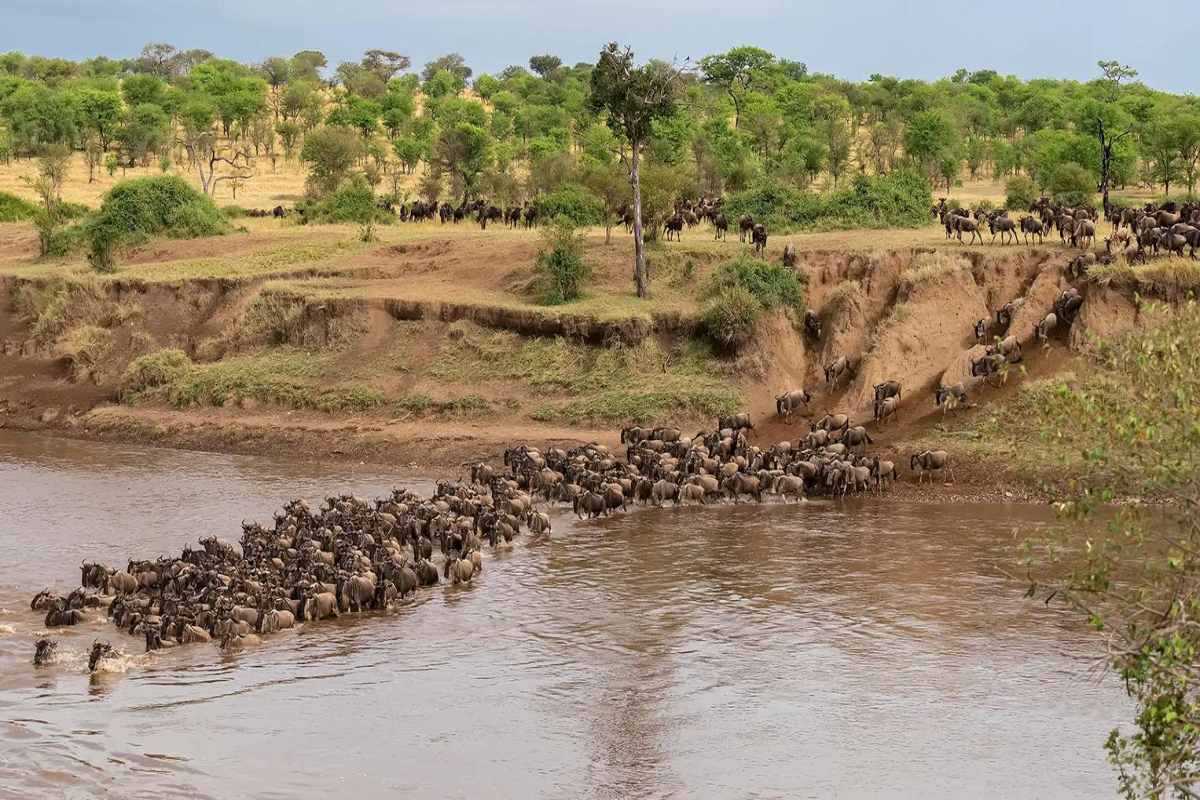
Introduction: Experience the Spectacle of the Mara River Crossing
The Mara River crossing is one of the most extraordinary wildlife spectacles in Africa. Every year, hundreds of thousands of wildebeest, accompanied by zebras and other grazing animals, move through the vast plains of Tanzania’s Serengeti National Park and Kenya’s Maasai Mara ecosystem in search of fresh grass and water.
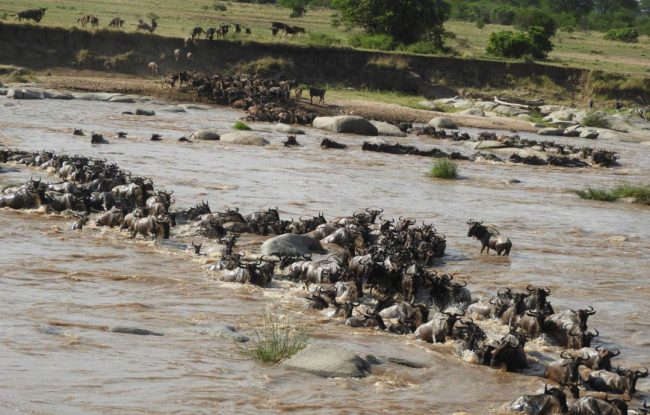
As the migrating herds reach the Mara River, they face one of their greatest natural challenges. Steep riverbanks, strong currents, deep water, and lurking Nile crocodiles make crossing a dangerous undertaking. Herds gather at the water’s edge, hesitate, and sometimes retreat before suddenly surging into the river in a breathtaking display of instinct, movement, and survival.
For wildlife enthusiasts, photographers, and safari travelers, witnessing a Mara River crossing is a once-in-a-lifetime experience. The thundering hooves, splashing water, swirling dust, and sheer number of animals create a powerful encounter with nature.
At Epic Uganda Vacation, travelers can explore the wider East African safari experience and discover how a Mara River crossing can fit into a memorable regional wildlife adventure.
Whether you are planning your first African safari or returning to experience the Great Migration, understanding when the crossings happen, where to view them, and how to prepare will help you plan a more rewarding journey.
What Is the Mara River Crossing?
The Mara River crossing is a dramatic stage of the Great Wildebeest Migration, the annual movement of wildebeest and other herbivores across the Serengeti–Maasai Mara ecosystem.
The Mara River flows through northern Tanzania and southwestern Kenya, providing water for wildlife and supporting a diverse ecosystem of fish, hippos, crocodiles, birds, and mammals.
During the migration season, large herds reach the river while moving between grazing areas on either side of the Kenya–Tanzania border. They may cross the river in either direction, depending on rainfall, grass availability, and changing environmental conditions.
Unlike a scheduled wildlife event, a Mara River crossing is unpredictable. Wildebeest may gather on a riverbank for hours, move along the water in search of a suitable entry point, or turn away without crossing. When the herd finally commits, thousands of animals can enter the water in rapid succession.
The spectacle is both beautiful and harsh. Some animals reach the opposite bank safely, while others face exhaustion, injury, drowning, or predation.
These challenges are part of the natural ecological process that makes the Great Migration one of the world’s most remarkable wildlife movements.
Why Is the Mara River Crossing So Famous?
The Mara River crossing attracts travelers from around the world because it combines enormous wildlife numbers, dramatic landscapes, and unpredictable animal behavior.
1. The scale of the Great Migration
The Great Migration involves roughly 1.5 million wildebeest, alongside large numbers of zebras and gazelles, although the exact numbers and distribution vary.
As the herds move through the northern Serengeti and Maasai Mara, they create vast gatherings across open grasslands. At the river, the concentration of animals can be especially impressive.
2. A dramatic test of survival
Crossing the river requires the animals to overcome steep banks, currents, deep water, and the threat of predators.
Wildebeest often hesitate before entering the water. Once one animal begins moving, others may follow, producing a sudden rush that transforms a quiet riverbank into a scene of extraordinary activity.
3. Nile crocodiles and other predators
The Mara River is home to Nile crocodiles that prey on animals entering the water. Lions, leopards, cheetahs, hyenas, and other predators also benefit from the seasonal concentration of prey across the wider ecosystem.
Although predation is possible, not every crossing involves a crocodile attack. The experience varies with the animals’ behavior and local conditions.
4. Exceptional wildlife photography
The crossing provides opportunities to photograph animals leaping from riverbanks, swimming through the water, climbing onto muddy shores, and rejoining the herd.
The surrounding landscapes, dramatic skies, and large concentrations of wildlife make the area particularly appealing to photographers.
5. A rare connection with nature
Beyond the spectacle, a Mara River crossing offers insight into the relationships between rainfall, grasslands, animal migration, predator-prey interactions, and survival.
It is a reminder that African wildlife operates according to natural rhythms rather than human schedules.
Where Does the Mara River Crossing Take Place?
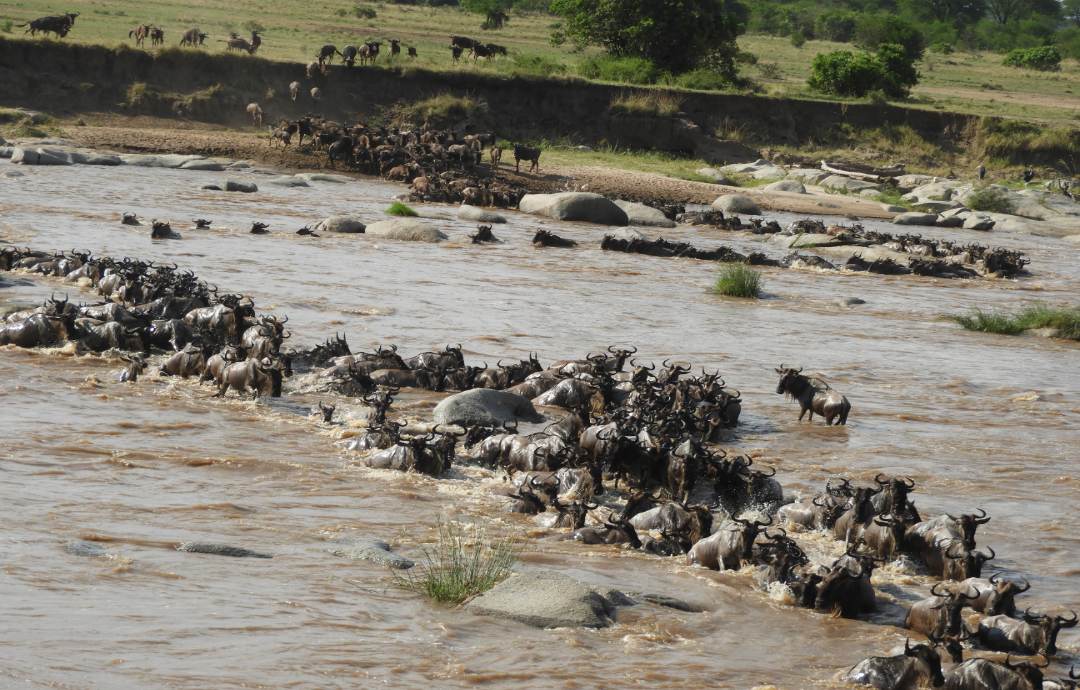
The Mara River crossing takes place at different locations along the river as the migrating herds move through the northern Serengeti in Tanzania and the Maasai Mara in Kenya.
The best viewing location changes according to herd movements, river conditions, access routes, and the availability of suitable crossing points.
1. Northern Serengeti, Tanzania
The northern Serengeti is one of the most important destinations for travelers hoping to witness Mara River crossings.
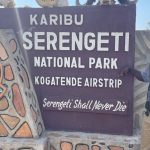
Areas around Kogatende and Lamai are particularly well known for migration viewing. The region offers broad grasslands, riverine habitats, and access to sections of the Mara River used by migrating herds.
A safari based in the northern Serengeti can be especially attractive for travelers who want to spend several days following the migration while enjoying the wider wildlife experience of Serengeti National Park.
Best for: Travelers seeking a migration-focused safari with time to explore multiple river-viewing areas.
2. Maasai Mara National Reserve, Kenya
The Maasai Mara is the Kenyan extension of the greater Serengeti–Mara ecosystem and is another renowned destination for witnessing the Great Migration.
The reserve’s open plains support large concentrations of wildlife, while sections of the Mara River provide opportunities to observe migrating herds when they reach the area.
The Maasai Mara is also famous for its resident lions, elephants, giraffes, cheetahs, and leopards, making it an excellent destination even when no river crossing occurs.
Best for: Travelers who want to combine migration viewing with classic savannah game drives and diverse wildlife encounters.
3. The Mara Triangle, Kenya
The Mara Triangle is a wildlife-rich section of the Maasai Mara ecosystem, bordered by the Mara River and the Oloololo Escarpment.
Its varied landscapes and wildlife populations make it an appealing base for a migration safari. The possibility of seeing a crossing depends on where the herds are located and which river sections they approach.
Travelers should choose accommodation based on access to suitable viewing areas rather than assuming that every camp will be close to active crossings.
Best for: Visitors seeking a combination of migration viewing, scenic landscapes, and broader wildlife encounters.
How should you choose between Kenya and Tanzania?
Both countries offer opportunities to see the Mara River crossing. Neither guarantees a better experience on every date.
The most important factors are the current position of the herds, the number of nights available, camp location, road access, guide experience, and your overall safari itinerary.
If your main objective is to see a crossing, consider choosing your destination around the likely migration route rather than selecting a country based on reputation alone.
When Is the Best Time to See the Mara River Crossing?
The main Mara River crossing season generally runs from July to October, with August and September often considered strong months for migration activity in the northern Serengeti and Maasai Mara.
However, rainfall patterns and grazing conditions influence the movement of the herds, so the timing can change from year to year.
Mara River crossing season by month
| Month | What to expect |
|---|---|
| June | Herds move through parts of the Serengeti; the Mara River crossing season may not yet be fully established. |
| July | Herds may begin reaching the northern Serengeti and Mara River, with early crossing attempts possible. |
| August | Often a strong month for river-crossing opportunities, depending on herd location. |
| September | Another excellent period to consider, with herds potentially active on either side of the border. |
| October | Crossings may continue as some herds begin moving south, but activity varies considerably. |
| November onward | Many herds move farther south as seasonal conditions change, reducing the likelihood of northern Mara River crossings. |
These periods are general planning guidelines, not a fixed migration calendar.
July: The beginning of the northern migration season
July can offer opportunities to see herds arriving in the northern Serengeti and moving toward the Mara River.
Early-season activity may be less concentrated than during peak periods. Travelers visiting in July should allow enough time for the herds to reach accessible river sections.
August: A popular month for Mara River crossings
August is one of the most popular months for migration safaris because large herds may gather in the northern Serengeti and Maasai Mara.
The possibility of dramatic crossings makes this an attractive period for wildlife photographers and first-time migration travelers.
However, demand for accommodation can be high, and famous viewing areas may become crowded.
September: Another excellent migration window
September can offer outstanding migration viewing, including possible river crossings and large concentrations of wildebeest.
The herds may move back and forth across the river, so travelers can experience different migration patterns throughout their stay.
For many visitors, September offers a strong balance of migration activity and wider wildlife viewing, provided the herds are in the region.
October: Opportunities continue, but conditions change
October can still provide memorable river-crossing experiences, particularly when herds remain in the northern ecosystem.
As seasonal rainfall and grazing conditions change, however, the distribution of the animals can shift. Travelers should check recent wildlife reports before finalizing their plans.
What is the single best month?
If your primary goal is to see a Mara River crossing, August or September is a sensible starting point for planning.
The best month for your particular trip depends on the expected herd location, the exact safari dates, and how long you can stay near the river.
No responsible safari operator can guarantee a crossing on a particular day.
How Does a Mara River Crossing Happen?
Understanding the crossing process makes the experience even more fascinating.
Step 1: The herd approaches the river
The migrating wildebeest move across the plains in search of fresh grazing. When they reach the Mara River, they may gather along the banks in large numbers.
Some animals begin drinking or grazing while others move along the river, apparently assessing possible crossing locations.
Step 2: The animals hesitate
Wildebeest do not always enter the water immediately. Steep banks, deep water, currents, crocodiles, and uncertainty about the opposite bank can delay their movement.
The herd may remain near the river for an extended period. It may even abandon one location and move to another.
This uncertainty is one of the most important things for safari travelers to understand.
Step 3: One movement triggers another
A crossing may begin when a few animals enter the water and others follow.
As the movement gathers momentum, a large section of the herd can rush down the bank. The resulting noise and movement can be overwhelming, especially when thousands of animals are involved.
Step 4: The herd enters the water
The wildebeest swim or wade across the river, navigating currents, other animals, and uneven riverbeds.
Some animals become separated from the main group, while others struggle to climb out on the opposite bank.
Step 5: The animals reach the other side
After emerging from the water, the herd gradually spreads out across the grassland.
Depending on grazing conditions and herd movement, some animals may cross back again later.
A crossing can last minutes or continue in waves for much longer. Its duration and intensity depend on the number of animals, river conditions, and herd behavior.
What Wildlife Can You See During a Mara River Crossing Safari?
Although the crossing is the main attraction, the surrounding ecosystem offers much more to discover.
Wildebeest
Wildebeest are the principal participants in the Great Migration. Their enormous numbers, coordinated movements, and seasonal journeys define the spectacle.
Zebras
Zebras frequently travel alongside wildebeest. Their movements are influenced by the availability of suitable grazing, and they add variety to the herds moving across the plains.
Nile crocodiles
Nile crocodiles inhabit the Mara River and may prey on animals attempting to cross. Seeing a crocodile in its natural environment is an important part of understanding the river ecosystem, although dramatic predation is never guaranteed.
Lions
Lions often hunt in areas where migrating herbivores are abundant. A migration safari can provide opportunities to observe lions resting, stalking prey, or interacting with their pride.
Cheetahs and leopards
Cheetahs may be seen hunting in open grasslands, while leopards are often associated with areas of thicker vegetation and riverine woodland.
Sightings depend on local conditions, time of day, and the animals’ behavior.
Hyenas and vultures
Spotted hyenas are important predators and scavengers in the ecosystem. Vultures also play a vital role by consuming carcasses and helping recycle nutrients.
Elephants, giraffes, and other resident wildlife
The wider Serengeti–Mara ecosystem supports numerous resident species. Even on days without a crossing, game drives may produce excellent wildlife sightings.
How to Plan a Successful Mara River Crossing Safari
A successful migration safari requires more than choosing the right month. Accommodation, location, transport, guiding, and flexibility all influence the experience.
1. Choose the right travel dates
Start by identifying your preferred travel period between July and October.
If your dates are flexible, ask your safari planner which period offers the most suitable prospects based on recent herd movements and current field reports.
2. Spend several nights near the river
A short visit may coincide with a crossing, but it provides limited time to wait for unpredictable wildlife behavior.
For a crossing-focused itinerary, consider at least three nights in a well-positioned camp. Four or more nights can provide additional opportunities to observe changing herd activity.
Extra nights improve your opportunities, but they do not guarantee a sighting.
3. Select accommodation strategically
The location of your camp can influence how much time you spend reaching promising viewing areas.
Consider:
-
- Proximity to the northern Serengeti or suitable Mara River sectors.
-
- Access to established game-drive routes and crossing-viewing areas.
-
- The experience of the guides and their knowledge of seasonal wildlife movements.
-
- Whether the accommodation suits your budget and preferred comfort level.
-
- Current reports on herd location and local road conditions.
A remote camp close to the likely migration route may be more useful than a luxurious property far from the areas where the herds are moving.
4. Travel with an experienced safari guide
An experienced guide can interpret wildlife behavior, monitor herd movements, identify suitable viewing areas, and explain the ecological significance of the migration.
Good guiding also involves knowing when to wait and when to move elsewhere without disturbing the animals.
5. Remain flexible
Even during peak season, the herds may not cross where expected.
Allowing flexibility in your daily schedule gives your guide more opportunities to respond to changing conditions. Avoid planning every day around the assumption that a crossing will happen at a particular hour.
6. Prepare for different weather conditions
Dry-season safari conditions can include dust, strong sunlight, and cool early mornings. Rain may still occur, and road conditions can change.
Pack lightweight clothing, a warm layer, comfortable footwear, sun protection, and a camera suitable for wildlife photography.
Photography Tips for the Mara River Crossing
The Mara River crossing offers exceptional photographic opportunities, but preparation is essential because the action can unfold suddenly.
Use a suitable camera and lens
A telephoto lens helps capture animals across the river without requiring you to approach them. A versatile zoom lens can also be useful for photographing wider scenes and changing herd formations.
Binoculars are valuable for observing distant activity before a crossing begins.
Adjust your camera settings in advance
Use a sufficiently fast shutter speed to freeze running animals and splashing water. Continuous autofocus and burst shooting can help you capture fast-moving sequences.
The best settings depend on available light, your equipment, and the speed of the animals.
Pay attention to light
Early morning and late afternoon often provide attractive natural light. However, a crossing may happen at any time, so be prepared to photograph in changing conditions.
Capture the wider story
Do not focus only on animals entering the water. Photograph the gathering herd, the riverbank, the surrounding landscape, animals climbing out, and the wildlife activity that follows.
These images help tell the complete story of the migration.
Follow wildlife photography ethics
Never ask a driver to block animals, leave designated areas, or approach too closely for a photograph. Avoid distracting wildlife or pressuring your guide to pursue a crossing at the expense of animal welfare.
The best wildlife photograph is one that does not compromise the animals’ freedom or safety.
Responsible Tourism at the Mara River
The Mara River is a sensitive ecological area, and responsible tourism is essential to preserving its wildlife.
When many safari vehicles converge on a crossing point, careless driving can obstruct animals and disrupt their movement.
Serengeti National Park’s official migration-crossing guidelines emphasize designated viewing areas, appropriate vehicle positioning, safe speeds, and giving wildlife sufficient room to move.
Visitors should follow these principles throughout their safari.
-
- Remain inside your vehicle unless authorized park personnel instruct otherwise.
-
- Stay within designated viewing areas and respect park rules.
-
- Keep a respectful distance from wildlife.
-
- Never block the animals’ route into or out of the river.
-
- Avoid shouting, sudden movements, or actions that could disturb the herd.
-
- Do not pressure your driver to chase animals or break park regulations.
-
- Follow the instructions of guides, rangers, and conservation authorities.
-
- Support safari operators that prioritize responsible wildlife viewing.
A responsible safari contributes to a better experience for visitors while protecting the natural behavior that makes the crossing so extraordinary.
Mara River Crossing Safari: Kenya or Tanzania?
One of the most common questions travelers ask is whether Kenya or Tanzania is better for seeing the Mara River crossing.
Both destinations can provide excellent opportunities, but the right choice depends on the season, herd location, itinerary, and preferred style of travel.
A Mara River crossing safari in Kenya
Kenya’s Maasai Mara offers access to important migration habitat, extensive wildlife-viewing opportunities, and a range of safari accommodation options.
It is particularly appealing to travelers who want to combine migration viewing with game drives across the reserve and surrounding conservancies.
The main consideration is that herds do not remain in the same area throughout the season. Camp location and current wildlife information remain important.
A Mara River crossing safari in Tanzania
Tanzania’s northern Serengeti provides access to areas such as Kogatende and Lamai, which are well known for migration viewing.
A northern Serengeti itinerary is attractive for travelers who want to concentrate on the river and explore the surrounding wilderness.
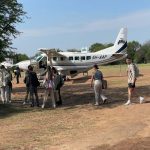
Travel logistics can be more demanding in remote areas, making advance planning particularly valuable.
Which destination should you choose?
Choose the destination that best matches the likely location of the herds during your travel dates.
If you have enough time and budget, a broader Kenya–Tanzania safari may offer greater flexibility. However, cross-border itineraries require careful planning around transport, immigration requirements, park fees, and accommodation.
A well-planned safari in either country can be rewarding even if a river crossing does not occur.
Can You Combine a Mara River Crossing Safari With a Uganda Safari?
Yes. A Mara River crossing safari can be combined with a broader East African itinerary that includes Uganda’s exceptional wildlife and landscapes.
For travelers interested in more than the Great Migration, Uganda offers a different set of experiences, including mountain gorilla trekking, chimpanzee tracking, savannah game drives, birdwatching, and scenic adventures.
A combined itinerary may include:
-
- Uganda: Explore selected national parks, go gorilla trekking where permits and availability allow, or enjoy a savannah safari.
-
- Kenya: Visit the Maasai Mara for wildlife viewing and potential Mara River crossings.
-
- Tanzania: Explore the Serengeti, particularly the northern region during the main river-crossing season.
The most suitable route depends on the total number of days available, your budget, flight connections, travel preferences, and gorilla trekking permit availability.
Because the migration follows seasonal patterns, plan the itinerary around the expected location of the herds and then add other destinations that fit your route.
Epic Uganda Vacation can use this wider East African perspective to help travelers explore the possibilities of combining Uganda’s wildlife experiences with a Kenya or Tanzania migration safari.
What Should You Pack for a Mara River Crossing Safari?
Packing appropriately will help you remain comfortable during long game drives and extended periods of wildlife viewing.
Essential items include:
-
- Neutral-colored, lightweight clothing.
-
- A warm jacket or fleece for early mornings.
-
- Comfortable walking shoes for use around your accommodation.
-
- A wide-brimmed hat and sunglasses.
-
- Sunscreen and insect repellent.
-
- Binoculars for observing distant animals.
-
- A camera, suitable lenses, spare batteries, and memory cards.
-
- A reusable water bottle, where permitted.
-
- Personal medication and basic travel essentials.
-
- Travel documents and appropriate insurance details.
If photography is a priority, consider bringing a dust-resistant camera bag and lens-cleaning equipment.
Check the weather forecast and your accommodation’s recommendations before departure, especially if traveling during a period when rainfall could affect road conditions.
How Much Does a Mara River Crossing Safari Cost?
The cost of a Mara River crossing safari varies according to the destination, accommodation standard, length of stay, transport arrangements, travel dates, and number of travelers.
Peak migration periods, particularly August and September, can be more expensive because demand for camps, lodges, and safari services is high.
Common cost components include:
-
- Accommodation and meals.
-
- Park or conservancy fees.
-
- Safari vehicle and guide services.
-
- Road transfers or domestic flights.
-
- Airport transfers.
-
- Optional activities and additional excursions.
-
- International flights and travel insurance.
A budget-conscious traveler may choose simpler accommodation and road transfers where practical. A luxury traveler may prefer high-end lodges, fly-in connections, and private guiding.
When comparing safari quotations, check exactly what is included rather than comparing the headline price alone.
For the best value, book accommodation early for peak-season travel and ask your safari planner to explain how the proposed camp location supports your migration-viewing goals.
Common Mistakes to Avoid When Planning a Mara River Crossing Safari
Even a well-planned safari can be disappointing if expectations are unrealistic. Avoid these common mistakes.
Expecting a crossing on a specific date
Crossings are natural events, not scheduled performances. Plan around the season rather than expecting an exact date or time.
Booking too few nights
A one-night stay provides very limited opportunities. Several nights near a suitable river sector give you more time to observe the herds and respond to changing conditions.
Choosing accommodation without considering location
A beautiful lodge may be far from the herds during your visit. Research the seasonal migration route before choosing where to stay.
Ignoring the wider wildlife experience
The Mara River crossing is spectacular, but a safari can offer excellent wildlife encounters without one. Keep an open mind about game drives, predator sightings, landscapes, and birdlife.
Prioritizing photographs over responsible viewing
Chasing the perfect image can put wildlife at risk and diminish the experience for other visitors. Choose ethical viewing over getting closer.
Booking too late for peak season
Popular camps and lodges can fill well in advance. Early planning provides more accommodation choices and more flexibility when designing an itinerary.
Frequently Asked Questions About the Mara River Crossing
1. When is the best time to see the Mara River crossing?
The main season is generally July to October, with August and September often offering strong opportunities. Exact timing varies according to rainfall, grazing conditions, and herd movements.
2. Where is the best place to see the Mara River crossing?
The northern Serengeti in Tanzania and the Maasai Mara ecosystem in Kenya are the principal destinations. Areas around Kogatende, Lamai, and suitable Mara River sectors in Kenya can offer opportunities, depending on where the herds are located.
3. Are Mara River crossings guaranteed?
No. Even during peak migration season, wildebeest may gather at the river without crossing. Spending several nights near suitable viewing areas can improve your opportunities but cannot guarantee a sighting.
4. How many days should I spend on a Mara River crossing safari?
For a crossing-focused safari, consider at least three nights near the river. Four or more nights offer additional opportunities to follow the herds and respond to changing conditions.
5. Do wildebeest cross the Mara River every day?
No. Crossings are unpredictable. Some days may bring dramatic activity, while on other days the herds may wait, move elsewhere, or remain on the same side of the river.
6. Why do wildebeest cross the Mara River?
The animals move between grazing areas as seasonal conditions change. The river forms part of their migration route, and crossing it allows them to reach different pastures and water sources.
7. Are crocodiles always present during a crossing?
Nile crocodiles inhabit the Mara River and can pose a significant danger to migrating animals. However, their visibility and activity vary, and not every crossing involves a crocodile attack.
8. Is the Mara River crossing suitable for families?
It can be suitable for families, depending on children’s ages, safari duration, accommodation policies, and individual comfort with natural predation. Parents should understand that crossings can involve distressing scenes of injury, drowning, or predation.
9. Can I see a Mara River crossing on a short safari?
It is possible, but a short safari offers limited opportunities because the herds may not cross during your visit. If witnessing a crossing is your main objective, allow several nights near the river whenever possible.
10. What happens if I do not see a crossing?
Enjoy the wider safari experience. The Maasai Mara and Serengeti support remarkable wildlife populations, and you may encounter large herds, lions, elephants, cheetahs, giraffes, zebras, and many other species.
11. Is it better to visit Kenya or Tanzania for the crossing?
Neither destination is universally better. The most suitable choice depends on the expected herd location, camp access, travel dates, and your wider itinerary.
12. Can I combine a Mara River crossing with gorilla trekking in Uganda?
Yes. A multi-country East African safari can combine Uganda’s gorilla trekking and other wildlife experiences with migration viewing in Kenya or Tanzania. The itinerary should account for travel time, permit availability, and seasonal migration patterns.
Conclusion: Plan Your Mara River Crossing Safari With Epic Uganda Vacation
The Mara River crossing is one of Africa’s most captivating natural events. It brings together enormous migrating herds, dramatic river landscapes, predator-prey interactions, and the powerful story of survival that defines the Great Wildebeest Migration.
The best way to experience this remarkable spectacle is to plan around the migration season, choose accommodation close to suitable wildlife-viewing areas, allow several nights near the river, and travel with knowledgeable guides who understand the importance of responsible wildlife viewing.
August and September are excellent months to consider, although July and October can also provide opportunities when the herds are in the right locations.
Above all, remember that the Mara River crossing is unpredictable. The most rewarding safari combines realistic expectations with patience, flexibility, and an appreciation for the wider ecosystem.
Ready to plan your East African wildlife adventure?
Explore the possibilities with Epic Uganda Vacation and discover how a Mara River crossing safari could fit into a wider journey through Uganda, Kenya, and Tanzania. Whether your dream is to witness the Great Migration, explore Uganda’s national parks, or combine savannah wildlife with mountain gorilla trekking, a thoughtfully planned itinerary can bring you closer to some of Africa’s most extraordinary natural experiences.
Contact Epic Uganda Vacation to discuss your preferred travel dates, safari duration, accommodation style, and wildlife interests, and start planning an unforgettable African adventure.
Suggested SEO Implementation
Internal linking opportunities
Add contextual links to relevant pages on Epic Uganda Vacation, where available:
-
- Uganda safari packages.
-
- Uganda gorilla trekking safaris.
-
- Uganda wildlife safaris.
-
- East African safari packages.
-
- Kenya and Tanzania safari itineraries.
-
- Contact or safari inquiry page.
Image SEO recommendations
Use original or properly licensed wildlife photographs, ideally showing:
-
- Wildebeest entering the Mara River.
-
- A herd gathering along a riverbank.
-
- Wildebeest climbing out of the water.
-
- Zebras moving with migrating herds.
-
- The Mara River landscape in the northern Serengeti or Maasai Mara.
Suggested image alt text:
-
Wildebeest crossing the Mara River during the Great Migration
-
Great Wildebeest Migration herds gathering along the Mara River
-
Wildebeest and zebras moving through the Serengeti during migration
-
Mara River crossing safari in the Maasai Mara ecosystem
Use descriptive alt text that accurately matches each photograph rather than repeating the same keyword across every image.
Recommended content strategy
Support this pillar article with related articles on the Great Wildebeest Migration calendar, the best time to visit Uganda, gorilla trekking in Uganda, Serengeti versus Maasai Mara safaris, and multi-country East African safari itineraries.
This creates opportunities to connect migration-related search traffic with Epic Uganda Vacation’s core Uganda safari offerings while providing useful information to travelers planning a wider East African adventure.