Uganda Wildlife Conservation Education Centre (UWEC): A Complete Visitor Guide to Entebbe Zoo
The Uganda Wildlife Conservation Education Centre (UWEC) is one of Uganda’s most interesting wildlife attractions, located in the beautiful lakeside town of Entebbe. Popularly known as Entebbe Zoo, this conservation centre provides visitors with an opportunity to discover Uganda’s wildlife, learn about animal conservation and enjoy educational encounters with some of Africa’s most fascinating species.
Situated along the shores of Lake Victoria, UWEC is an excellent destination for families, wildlife enthusiasts, students, photographers and international travellers looking for things to do in Entebbe.
Unlike a traditional zoo, the Uganda Wildlife Conservation Education Centre combines wildlife conservation, animal rescue, rehabilitation, environmental education and recreation. Visitors can encounter lions, chimpanzees, giraffes, elephants, rhinoceroses, zebras, shoebill storks and several other wildlife species.
The centre is particularly convenient for travellers arriving through Entebbe International Airport because it is located within Entebbe town and can easily be included in a short excursion or a longer Uganda safari.
Whether you are spending a few hours in Entebbe or planning a complete wildlife holiday, a visit to UWEC offers an excellent introduction to Uganda’s remarkable biodiversity.
Where Is the Uganda Wildlife Conservation Education Centre Located?
The Uganda Wildlife Conservation Education Centre is located on Plot 56/57 Lugard Avenue in Entebbe, Wakiso District, along the northern shores of Lake Victoria.
The centre is approximately:
- 5 kilometres from Entebbe International Airport.
- 1.5 kilometres from Entebbe town centre.
- 40 kilometres from Kampala, depending on the route and starting point.
Its location makes it one of the most accessible wildlife attractions in Uganda.
Visitors can reach UWEC by private vehicle, taxi, hotel transfer or through an organised Entebbe city tour.
The centre is also conveniently located near other attractions, including Entebbe Botanical Gardens, Lake Victoria beaches and the Uganda Reptile Village.
What Is the Uganda Wildlife Conservation Education Centre?
The Uganda Wildlife Conservation Education Centre is a national wildlife conservation institution established to promote wildlife education, animal rescue, rehabilitation and conservation awareness.
It was originally opened in 1952 as a reception centre for injured, orphaned and confiscated wildlife.
Over the years, the institution developed into a major conservation education facility, popularly known as Entebbe Zoo.
Today, UWEC plays an important role in promoting understanding of Uganda’s wildlife and natural ecosystems.
Its activities include:
- Rescuing injured and confiscated wild animals.
- Providing veterinary treatment and animal care.
- Supporting wildlife rehabilitation.
- Promoting environmental education.
- Conducting conservation awareness programmes.
- Supporting wildlife research and conservation initiatives.
- Providing educational experiences for local and international visitors.
UWEC also works with conservation organisations, government institutions, communities and other stakeholders to protect Uganda’s wildlife heritage.
Wildlife You Can See at UWEC
One of the main reasons travellers visit the Uganda Wildlife Conservation Education Centre is the opportunity to see different wildlife species in one location.
The centre provides a convenient introduction to animals found in Uganda’s savannahs, forests, wetlands and other natural habitats.
1. Lions
Lions are among the most popular animals at UWEC.
Visitors can observe these powerful predators and learn about their behaviour, feeding patterns, social structures and importance in maintaining healthy ecosystems.
Lions are also among the most iconic animals of Uganda’s national parks, particularly Queen Elizabeth National Park and Murchison Falls National Park.
2. African Elephants
African elephants are among the largest land mammals in the world.
At UWEC, visitors can learn about elephant intelligence, family structures, feeding habits and conservation challenges.
Elephants play an important ecological role by influencing vegetation, dispersing seeds and creating habitats for other wildlife.
3. Chimpanzees
Chimpanzees are among the most intelligent primates and share many behavioural characteristics with humans.
Visitors can observe chimpanzees in their managed environment and learn about their social behaviour, communication and conservation.
UWEC also offers specialised chimpanzee experiences subject to current programme arrangements.
For travellers interested in wild chimpanzees, Kibale Forest National Park offers a different experience through guided chimpanzee tracking.
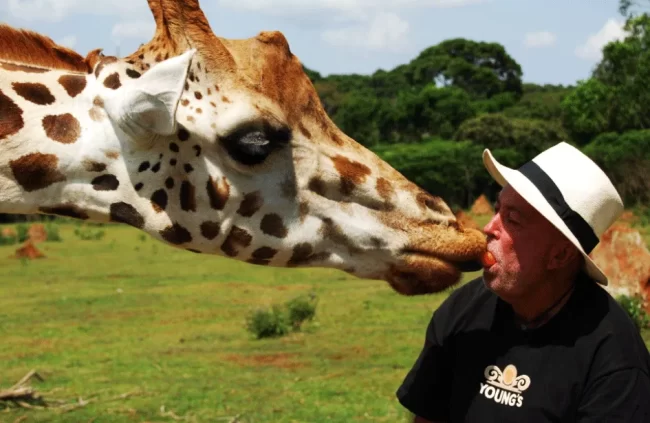
4. Giraffes
Giraffes are recognised for their long necks, distinctive coat patterns and graceful movements.
At UWEC, visitors can learn about giraffe feeding behaviour, adaptation and conservation.
They are particularly popular with children and photographers.
5. Rhinoceroses
Rhinoceroses are among Africa’s most remarkable mammals and have faced significant threats from poaching and habitat loss.
The centre provides opportunities to learn about rhino conservation and the importance of protecting endangered wildlife.
Visitors interested in seeing rhinoceroses in a protected natural environment can also consider Ziwa Rhino Sanctuary in Nakasongola.
6. Zebras
Zebras are easily recognised by their distinctive black-and-white stripes.
At UWEC, visitors can learn about their social behaviour, grazing habits and ecological importance.
They are also among the animals commonly encountered during wildlife safaris in Uganda’s savannah parks.
7. Shoebill Storks
The shoebill is one of Africa’s most fascinating birds, famous for its enormous shoe-shaped bill.
It inhabits wetlands and swamps, where it hunts fish and other aquatic animals.
Uganda is one of the best destinations for travellers hoping to see this extraordinary bird.
Visitors interested in seeing wild shoebills can arrange a birdwatching excursion to Mabamba Swamp near Entebbe.
8. Other Wildlife Species
Depending on current animal collections and exhibit availability, visitors may also encounter:
- Ostriches.
- African rock pythons.
- Leopards.
- Cheetahs.
- Tortoises.
- Monkeys.
- Various bird species.
- Other rescued and protected wildlife.
The animal collection and exhibits can change as conservation and animal care needs evolve.
Top Things to Do at Uganda Wildlife Conservation Education Centre
UWEC offers more than simply walking around animal exhibits. The centre has several activities designed to make wildlife education engaging and memorable.
1. Wildlife Viewing and Educational Tours
A general wildlife visit is the most popular activity at UWEC.
Visitors walk through designated pathways and observe different animals in their respective habitats.
The experience introduces travellers to Uganda’s wildlife and provides information about animal behaviour, feeding, habitat requirements and conservation.
A guided tour is an excellent way to understand the animals and their ecological importance.
UWEC indicates that guide services are included in the standard entrance ticket, although visitors should confirm the current arrangements at reception.
2. Behind-the-Scenes Experience
The Behind-the-Scenes experience provides visitors with a closer look at selected animal care and management activities.
It is designed to help visitors understand how the centre looks after its animals and manages conservation programmes.
Depending on the current programme, participants may learn about animal feeding, veterinary care, habitat management and wildlife handling.
This experience requires advance arrangements and may have specific health and participation requirements.
It is particularly interesting for wildlife enthusiasts, photographers and visitors who want to learn more about conservation work beyond the regular visitor tour.
3. Chimpanzee Close-Up Experience
UWEC offers a specialised chimpanzee experience for visitors interested in learning more about these intelligent primates.
The programme is designed to provide an educational encounter under the centre’s supervision.
Availability, eligibility and health requirements should be confirmed directly with UWEC before booking.
Visitors seeking a wild chimpanzee trekking experience should consider Kibale Forest National Park instead.
4. Keeper for a Day Experience
The Keeper for a Day programme provides visitors with an opportunity to learn about the daily responsibilities of animal caregivers.
Participants gain insight into the work involved in maintaining animal welfare, preparing food, monitoring animal health and caring for wildlife.
This experience is particularly attractive to students, families and people interested in veterinary medicine, zoology and conservation.
Special arrangements and advance reservations are required.
5. Forest Trail Experience
The forest trail provides an opportunity to explore the natural vegetation around the centre.
Visitors can discover different plant species, enjoy a peaceful nature walk and observe some of the free-ranging wildlife.
UWEC’s hillside forest also supports birdlife and primates, making it an interesting addition to a general wildlife visit.
6. Birdwatching
UWEC is an interesting destination for birdwatching, with more than 120 bird species recorded around the centre.
The surrounding vegetation, forest habitats and proximity to Lake Victoria attract different bird species.
Birdwatchers can look out for:
- African fish eagle.
- Great blue turaco.
- Giant kingfisher.
- Hamerkop.
- Various sunbirds.
- Other forest and lakeshore birds.
A camera and binoculars are useful for visitors interested in bird photography.
7. Family Recreation and Children’s Activities
UWEC is also a family-friendly destination with recreational facilities.
Children can enjoy designated play areas while adults explore the wildlife exhibits and educational activities.
The centre also provides a restaurant and other visitor facilities.
Families should confirm the availability of individual recreational activities before their visit.
History of Uganda Wildlife Conservation Education Centre
The history of UWEC dates back to 1952, when it was established as a reception facility for injured, orphaned and confiscated wild animals.
The centre was initially developed to care for animals that had been rescued from illegal wildlife trade or found injured in different parts of Uganda.
Over time, its role expanded beyond animal care to include wildlife education and public awareness.
In 1994, the institution was established as the Uganda Wildlife Education Centre Trust.
The Uganda Wildlife Conservation Education Centre later became a statutory body under the Uganda Wildlife Conservation Education Centre Act of 2015.
Today, UWEC continues to play an important role in wildlife rescue, conservation education, research and public engagement.
Its work helps visitors appreciate the importance of protecting Uganda’s wildlife and natural ecosystems.
Best Time to Visit Uganda Wildlife Conservation Education Centre
UWEC can be visited throughout the year because it is a permanent wildlife attraction rather than a seasonal national park destination.
However, weather conditions can influence the comfort of walking around the centre.
June to September: These months are generally part of Uganda’s drier season and provide comfortable conditions for walking, wildlife viewing and photography.
December to February: Another relatively dry period suitable for visiting Entebbe and exploring outdoor attractions.
March to May: Rainfall is generally higher, although the centre remains an attractive destination for visitors.
October to November: These months also receive rainfall, but visitors can still enjoy wildlife viewing and educational experiences.
Morning visits are particularly recommended because visitors can explore the centre comfortably before the warmer afternoon hours.
Uganda Wildlife Conservation Education Centre Entrance Fees
UWEC charges entrance fees according to visitor categories, including East African citizens, residents, international visitors and children.
Its published day-visit tariff has listed the following rates:
| Visitor category | Published entrance fee |
|---|---|
| East African adults | UGX 20,000 |
| East African children | UGX 10,000 |
| Residents, adults | USD 10 |
| Residents, children | USD 5 |
| International non-resident adults | USD 15 |
| International non-resident children | USD 10 |
These are published rates and may change. Additional programmes, such as Behind-the-Scenes, Chimpanzee Close-Up and Keeper for a Day