Uganda Photography Safari: Wildlife, Gorillas, Birds and Landscapes
A Uganda photography safari is an opportunity to experience Africa through a camera lens while exploring some of the continent’s most diverse landscapes and wildlife habitats.
Known as the Pearl of Africa, Uganda combines tropical forests, open savannahs, volcanic mountains, wetlands, rivers and lakes within one relatively compact country. This diversity makes it an exceptional destination for wildlife, bird, landscape, cultural and travel photography.
From photographing mountain gorillas deep in the forests of Bwindi to capturing elephants on the savannahs of Murchison Falls, tree-climbing lions in Ishasha and colourful birds in Uganda’s wetlands, every region offers a different photographic experience.
You do not have to be a professional photographer to enjoy a Uganda photography safari. Whether you are travelling with a professional camera, a telephoto lens, a mirrorless system or simply a good travel camera, Uganda provides countless opportunities to create memorable images.
Why Choose Uganda for a Photography Safari?
Uganda stands out because of its remarkable combination of ecosystems and wildlife.
In a single trip, photographers can move from tropical rainforest to savannah, wetlands and high-altitude mountain environments. This means that a well-planned itinerary can produce a much wider range of photographs than a safari focused on only one habitat.
A Uganda photography safari can include:
- Mountain gorilla photography
- Chimpanzee and primate photography
- Big-game wildlife photography
- Lion and leopard photography
- Elephant photography
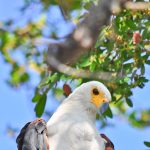
- Bird photography
- Landscape photography
- Cultural photography
- Wetland photography
- River and waterfall photography
- Sunrise and sunset photography
Another advantage is the opportunity to combine wildlife photography with genuine cultural and community experiences.
For photographers looking for variety, Uganda offers far more than the traditional savannah safari.
Gorilla Photography in Bwindi Impenetrable National Park
For many photographers, Bwindi Impenetrable National Park is the highlight of a Uganda photography safari.
Located in southwestern Uganda, Bwindi is famous for its mountain gorillas and ancient rainforest. The forest’s dense vegetation, misty atmosphere and dramatic terrain create a unique setting for wildlife photography.
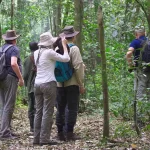
Gorilla trekking allows visitors to spend a regulated period observing a habituated gorilla family in its natural environment.
The photographic experience is different from photographing animals on open savannah.
You may be surrounded by thick vegetation, low light and constantly changing conditions. A gorilla might sit quietly among the vegetation, move through the forest or appear briefly through a gap in the foliage.
These conditions make patience and preparation particularly important.
What Can You Photograph in Bwindi?
Mountain gorillas are the main attraction, but they are not the only photographic subjects.
Bwindi is also known for its exceptional forest biodiversity, including:
- Forest birds
- Monkeys
- Baboons
- Butterflies
- Forest plants
- Ancient trees
- Mist-covered landscapes
For bird photographers, Bwindi is particularly attractive because the Albertine Rift region supports numerous forest species, including several species with restricted ranges.
Birding targets may include species such as the African Green Broadbill, African Emerald Cuckoo, Handsome Francolin and Yellow-eyed Black Flycatcher, depending on the area and conditions.
You can learn more about the destination in our Bwindi Impenetrable National Park guide.
Wildlife Photography in Queen Elizabeth National Park
Queen Elizabeth National Park is one of Uganda’s most versatile destinations for wildlife photography.
The park contains a mixture of savannah, wetlands, woodland and lakeshore habitats, supporting a wide variety of wildlife.
Photographers may encounter:
- Elephants
- Lions
- Leopards
- Buffaloes
- Hippos
- Warthogs
- Uganda kob
- Waterbucks
- Various antelope species
- Numerous bird species
The park’s changing landscapes provide opportunities for both close wildlife portraits and wider environmental photographs.
Photographing Tree-Climbing Lions in Ishasha
One of the most distinctive photographic experiences in western Uganda is searching for the famous tree-climbing lions of Ishasha.
Ishasha lies in the southern sector of Queen Elizabeth National Park and is particularly associated with lions that sometimes rest in large fig or acacia trees.
When conditions are right, photographers can capture unusual images of lions elevated above the ground, often surrounded by the green landscape of Ishasha.
However, wildlife is unpredictable, and sightings of tree-climbing lions cannot be guaranteed. Their behaviour and location can change from day to day.
This uncertainty is part of what makes wildlife photography a genuine safari experience rather than a staged encounter.
Kazinga Channel Photography
A boat cruise along the Kazinga Channel provides another excellent opportunity for photographers.
The channel connects Lake Edward and Lake George and is famous for its concentration of wildlife along the shoreline.
From a boat, you can photograph:
- Hippos
- Nile crocodiles
- Elephants
- Buffaloes
- Waterbirds
- African fish eagles
- Kingfishers and other aquatic species
The low position of a boat can also provide attractive angles for wildlife photography, particularly when animals are close to the shoreline.
Murchison Falls Photography Safari
Murchison Falls National Park is Uganda’s largest national park and one of the country’s most rewarding destinations for wildlife and landscape photography.
The park contains broad savannah plains, woodland, riverine habitats and the dramatic Nile River.
A typical photography experience can combine game drives with a boat cruise towards the base of Murchison Falls.
Wildlife Photography in Murchison Falls
The open landscapes of Murchison Falls are particularly suitable for wildlife photography.
Depending on the area and season, photographers may encounter:
- Elephants
- Lions
- Leopards
- Buffaloes
- Rothschild’s giraffes
- Jackson’s hartebeest
- Uganda kob
- Warthogs
- Hippos
- Crocodiles
Early morning game drives are particularly valuable for photography because the softer light can create attractive images while wildlife is often more active.
Late afternoon also provides opportunities for warm light and dramatic silhouettes.
Nile Boat Photography
A boat trip on the Victoria Nile adds another photographic dimension to the safari.
The river supports large numbers of hippos, crocodiles and waterbirds, while the surrounding landscape provides opportunities for wide environmental compositions.
The approach toward Murchison Falls is particularly dramatic, as the Nile is forced through a narrow gorge before continuing downstream.
The falls themselves provide an impressive landscape photography subject, especially when combined with the surrounding cliffs, vegetation and river.
You can also explore our Murchison Falls birding experience.
Chimpanzee and Primate Photography in Kibale
Uganda is one of Africa’s best destinations for primate encounters, and Kibale National Park is central to that experience.
The park is particularly famous for chimpanzee trekking.
Photographers can also encounter other primates in the wider Kibale ecosystem, including:
- Red-tailed monkeys
- Black-and-white colobus monkeys
- Blue monkeys
- L’Hoest’s monkeys
- Olive baboons
The forest environment creates a very different photographic challenge from open savannah.
Light can be limited, animals can move quickly through vegetation and branches can obstruct clear views.
A fast lens and good low-light performance can therefore be particularly useful.
Photography Around Bigodi Wetland
A visit to Bigodi Wetland Sanctuary can complement chimpanzee trekking in Kibale.
The community-managed wetland is known for guided nature walks, birding and primate viewing.
For photographers, it offers opportunities to capture forest-edge wildlife, wetland birds, vegetation and local community life.
The Great Blue Turaco is one of the birds many birdwatchers hope to photograph in the Kibale area.
Read our Bigodi Wetland Sanctuary guide to learn more.
Bird Photography in Uganda
Uganda is an excellent destination for bird photography in Africa.
The country’s wide range of habitats supports an impressive diversity of birdlife, from wetlands and savannah to tropical forests and high-altitude ecosystems.
A specialist bird photography safari can target species in locations such as:
- Mabamba Wetland
- Murchison Falls National Park
- Kibale National Park
- Bigodi Wetland
- Queen Elizabeth National Park
- Bwindi Impenetrable National Park
- Mgahinga Gorilla National Park
- Lake Mburo National Park
- Semuliki National Park
Shoebill Photography at Mabamba Wetland
For many photographers, the Shoebill is one of Uganda’s most exciting bird photography targets.
Mabamba Wetland, near Entebbe on the shores of Lake Victoria, is one of the country’s best-known locations for searching for this remarkable bird.
The Shoebill’s enormous bill, prehistoric appearance and distinctive posture make it an exceptional photographic subject.
A canoe excursion through the wetland provides a quiet way to explore the channels while searching for the Shoebill and other wetland birds.
For photographers arriving in Uganda through Entebbe, Mabamba can also be incorporated into the beginning or end of a safari.
Landscape Photography in Uganda
Uganda’s wildlife is only part of the photographic story.
The country has an extraordinary variety of landscapes.
Photographers can capture:
Rwenzori Mountains
The Rwenzori Mountains, also known as the Mountains of the Moon, offer dramatic high-altitude scenery, including peaks, valleys, forests and unusual vegetation.
For serious mountain photographers, the Rwenzori provide an entirely different visual experience from Uganda’s savannah parks.
Kidepo Valley
In northeastern Uganda, Kidepo Valley National Park offers vast open landscapes, rugged mountains and remote savannah.
The combination of dramatic skies, distant mountains and wildlife makes Kidepo particularly attractive for landscape and wildlife photography.
Murchison Falls
The Nile River and Murchison Falls provide opportunities for both landscape and action photography.
Bwindi
The mist-covered rainforest of Bwindi creates atmospheric images that are very different from the bright open landscapes of Uganda’s savannah parks.
Lakes and Wetlands
Uganda’s lakes, rivers and wetlands provide opportunities for reflections, bird photography, sunrise images and environmental compositions.
Cultural Photography in Uganda
A photography safari should not focus only on animals.
Uganda is culturally diverse, with many communities, traditions, crafts, music, dance and agricultural landscapes.
Responsible cultural photography can provide a deeper understanding of the people and places you visit.
Potential experiences include:
- Traditional dance performances
- Local craft demonstrations
- Community walks
- Traditional food experiences
- Village visits
- Agricultural activities
- Cultural storytelling
- Meetings with local artisans
Popular cultural experiences can be incorporated around destinations such as Kibale, Kidepo, Bwindi and Lake Mburo.
When photographing people, always ask for permission before taking close-up portraits. Respect for local communities should be as important as respect for wildlife.
Photography and the Batwa Community
The Batwa have a long historical connection with the forests of southwestern Uganda and the wider Great Lakes region.
Cultural experiences involving Batwa communities should be approached respectfully and through established community tourism initiatives.
Rather than treating people as photographic subjects, a responsible cultural experience focuses on learning, interaction and supporting local livelihoods.
This can make cultural photography more meaningful and ethical.
Photography in Lake Mburo National Park
Lake Mburo National Park is another excellent addition to a Uganda photography itinerary.
Its landscapes of rolling hills, acacia woodland, wetlands and open grassland create a different photographic environment from the larger western parks.
Wildlife photography opportunities include:
- Zebras
- Impalas
- Elands
- Buffaloes
- Warthogs
- Giraffes
- Hippos
- Waterbirds
Lake Mburo also offers opportunities for walking safaris and boat experiences, giving photographers different perspectives compared with a traditional vehicle-based game drive.
What Is the Best Time for a Uganda Photography Safari?
Uganda is a year-round photography destination, but the best time depends on the type of photography you want to do.
The relatively drier periods are generally June to September and December to February.
During these periods, roads and some forest trails may be easier to navigate, while wildlife in savannah areas can become easier to locate around water sources.
The wetter months can also be rewarding.
Green landscapes, dramatic clouds, fresh vegetation and fewer tourists can create excellent photographic conditions.
For bird photographers, seasonal changes can also influence bird activity and the presence of migratory species.
Rather than choosing a month solely because it is labelled “dry season,” it is better to plan around your photographic priorities.
Photography Equipment for a Uganda Safari
You do not need an enormous amount of equipment to photograph Uganda successfully.
However, the right equipment can make a significant difference.
Consider bringing:
- Camera body
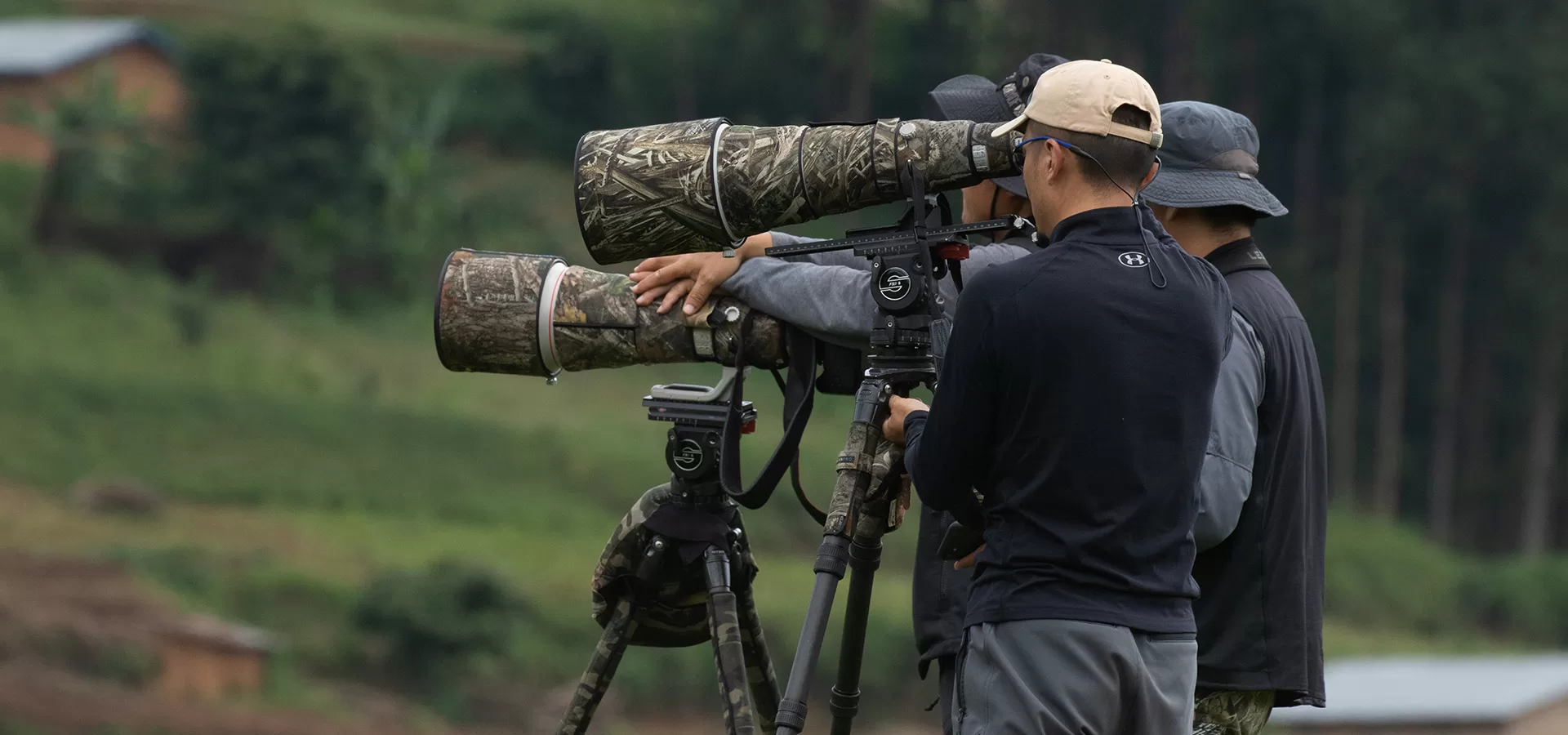
- Telephoto lens for wildlife
- Wide-angle lens for landscapes
- Spare batteries
- Extra memory cards
- Beanbag or suitable camera support
- Rain protection
- Lens cloth
- Binoculars
- Lightweight tripod or monopod where practical
For gorilla and forest photography, a versatile zoom lens can be particularly useful because conditions can change quickly.
For bird photography, a longer telephoto lens is usually advantageous.
Protect Your Camera From Rain and Dust
Uganda’s tropical environment means that rain is always possible.
Keep your camera equipment protected with:
- Waterproof camera covers
- Dry bags
- Plastic protection for backpacks
- Microfibre cloths
- Silica gel packs
Protecting your equipment is particularly important when moving between safari vehicles, boats and forest environments.
Photography Ethics on Safari
Great wildlife photography begins with responsible behaviour.
Photographers should never ask a guide to drive too close to an animal simply to obtain a better photograph.
Do not attempt to attract wildlife using food, sounds or other artificial methods.
During gorilla and chimpanzee experiences, follow the instructions of park staff and guides at all times.
Responsible photography means putting the welfare of the animal ahead of getting the perfect photograph.
The best image is never worth disturbing wildlife.
How Long Should a Uganda Photography Safari Be?
The ideal length depends on your goals.
A short 5–7 day Uganda photography safari can focus on one or two major destinations.
A 10–14 day photography safari allows you to combine wildlife, primates, landscapes and birding.
A longer itinerary of 15–22 days can include a much broader range of ecosystems, including northern Uganda, western forests, wetlands and specialist birding locations.
For serious bird photographers, longer itineraries are particularly useful because different habitats can be explored at a slower pace.
Example Uganda Photography Safari Route
A photography-focused itinerary could be designed around:
Entebbe → Mabamba Wetland → Murchison Falls → Kibale → Queen Elizabeth → Bwindi → Lake Mburo → Entebbe
This route provides a combination of:
- Shoebill and wetland photography
- Savannah wildlife
- Nile landscapes
- Chimpanzees
- Forest birds
- Mountain gorillas
- Tree-climbing lion opportunities
- Wetland landscapes
- Cultural experiences
For specialist photographers, the itinerary can be adjusted to spend additional nights in destinations where particular species or photographic conditions are the priority.
Uganda Photography Safari With Epic Uganda Vacation
A photography safari should not be rushed.
If photography is your main reason for visiting Uganda, your itinerary should allow enough time at each destination to work with changing light, wildlife behaviour and weather conditions.
At Epic Uganda Vacation, we can design Uganda photography safaris around your interests, whether your priority is mountain gorillas, birds, big wildlife, landscapes, primates or cultural photography.
We can also combine photography with traditional safari experiences, gorilla trekking and chimpanzee trekking.
Our goal is to create a journey that gives you time to experience Uganda rather than simply drive between destinations.
Frequently Asked Questions About Uganda Photography Safaris
Is Uganda good for photography?
Yes. Uganda offers exceptional opportunities for wildlife, bird, landscape, primate and cultural photography because of its diverse ecosystems.
What animals can I photograph in Uganda?
Depending on your itinerary, you may photograph mountain gorillas, chimpanzees, lions, elephants, leopards, buffaloes, giraffes, hippos, zebras, antelopes, monkeys and many bird species.
Can I photograph mountain gorillas in Uganda?
Yes. Gorilla trekking in Bwindi Impenetrable National Park and Mgahinga Gorilla National Park provides opportunities to photograph habituated mountain gorilla families while following official trekking guidelines.
Where is the best place for wildlife photography in Uganda?
There is no single best location. Murchison Falls, Queen Elizabeth, Kidepo Valley and Lake Mburo each offer different photographic opportunities.
Where can I photograph Shoebills in Uganda?
Mabamba Wetland near Entebbe is one of Uganda’s best-known destinations for searching for the Shoebill.
Can I combine gorilla trekking and wildlife photography?
Yes. A Uganda photography safari can combine gorilla trekking in Bwindi with wildlife photography in Queen Elizabeth, Murchison Falls or other national parks.
What camera should I take on a Uganda safari?
A camera with good autofocus and interchangeable lenses is ideal, but even advanced compact or bridge cameras can produce excellent safari photographs. A telephoto lens is particularly useful for wildlife and bird photography.
Can professional photographers do a specialist photography safari in Uganda?
Absolutely. Specialist itineraries can be designed around particular species, habitats, lighting conditions and photographic objectives, with additional time allocated to priority destinations.
Start Planning Your Uganda Photography Safari
Uganda offers something that few African destinations can match: the opportunity to combine mountain gorillas, chimpanzees, savannah wildlife, rare birds, dramatic landscapes and vibrant cultures within one photography journey.
From the misty forests of Bwindi to the open plains of Murchison Falls and the volcanic landscapes of southwestern Uganda, every destination tells a different story.
If your goal is to return home with more than ordinary holiday photographs, Uganda deserves a place on your photography travel list.
Contact Epic Uganda Vacation to design a tailor-made Uganda photography safari around the wildlife, birds, landscapes and cultural experiences you most want to capture.