Mubare Gorilla Family in Bwindi: History, Members, Location and Trekking Guide
Mubare Gorilla Family in Bwindi Impenetrable National Park
The Mubare Gorilla Family is one of the most historically significant mountain gorilla groups in Uganda. Located in the Buhoma sector of Bwindi Impenetrable National Park, this family holds a special place in the country’s conservation and tourism history as the first mountain gorilla group habituated for tourism in Uganda.
The habituation process began in 1991, and the family received its first official tourists in 1993. Since then, Mubare has experienced remarkable changes, including the loss of group members, leadership struggles, the death of its famous silverback Ruhondeza and the emergence of new leadership.
Despite these challenges, the Mubare family remains an important part of Bwindi’s mountain gorilla conservation story. Visiting this group offers travellers an opportunity to observe endangered mountain gorillas while learning about the history of gorilla tourism in Uganda.
Whether you are planning your first gorilla trekking safari or returning to Bwindi to explore another gorilla family, Mubare is a meaningful group to include in your Uganda travel plans.
Where Is the Mubare Gorilla Family Located?
The Mubare Gorilla Family lives in the Buhoma sector of Bwindi Impenetrable National Park, in southwestern Uganda. Buhoma is located in Kanungu District, on the northern side of the protected forest.
The family derives its name from the Mubare Hills, where the gorillas were first encountered by researchers and trackers during the early habituation period.
Buhoma is one of Bwindi’s four main gorilla trekking sectors, alongside Ruhija, Rushaga and Nkuringo. It is also the area where organised gorilla tourism in Bwindi began.
The location makes Mubare accessible to travellers staying in Buhoma and those arriving from other destinations in southwestern Uganda.
History of the Mubare Gorilla Family
The history of Mubare is closely connected to the development of mountain gorilla tourism in Uganda.
Habituation Began in 1991
The Mubare group was among the first mountain gorilla families selected for habituation in Bwindi. The process started in 1991, when researchers, conservationists and trackers began gradually introducing the gorillas to the presence of humans.
Habituation is a carefully managed conservation process through which wild gorillas become accustomed to people observing them without changing their natural behaviour significantly.
The process takes considerable time, patience and daily monitoring. Mubare became one of the first groups in Bwindi to complete this process and welcome tourists.
First Tourists in 1993
In 1993, Mubare became the first mountain gorilla family in Uganda to receive visitors for gorilla trekking. This milestone helped establish Bwindi as an important destination for mountain gorilla tourism.
The group originally consisted of approximately 12 individuals when it was habituated. Over the following years, its population increased, reportedly reaching around 18 members at one stage.
The family became particularly well known because of its dominant silverback, Ruhondeza, who led the group for many years.
The Leadership of Silverback Ruhondeza
Ruhondeza was the historical leader of the Mubare Gorilla Family and one of the best-known silverbacks in Bwindi’s gorilla tourism history.
He maintained leadership for more than two decades, guiding the group through territorial encounters, changes in membership and the challenges of living in the forest.
Ruhondeza was known for his strong control over the group and intolerance of competing males. His leadership helped make Mubare one of the most recognised gorilla families in Bwindi.
However, as he became older, the group experienced changes in its structure and membership.
Ruhondeza died in June 2012, reportedly due to old age. His death marked the end of a significant period in the history of the Mubare family.
Kanyonyi Takes Over Leadership
Following Ruhondeza’s death, leadership passed to his surviving oldest son, silverback Kanyonyi.
Kanyonyi inherited a group that had already experienced years of membership changes and challenges. His leadership, however, was eventually interrupted by a violent encounter with another silverback.
Maraya Takes Over the Family
In November 2017, a silverback named Maraya, formerly a solitary male, fought Kanyonyi and killed him before taking over the Mubare group.
According to the International Gorilla Conservation Programme (IGCP), Kanyonyi had previously sustained injuries after falling from a high tree. These injuries left him weakened and more vulnerable during the confrontation.
Following the takeover, several members left the group, and some infants reportedly died through infanticide associated with the leadership change.
Such events illustrate the complex social relationships and natural competition that can occur within mountain gorilla populations.
Maraya subsequently became the dominant silverback of the Mubare family.
How Many Members Are in the Mubare Gorilla Family?
The number of gorillas in Mubare has changed several times because of births, deaths, migration and leadership changes.
According to the International Gorilla Conservation Programme’s family profile, the Mubare group had seven members as of 31 January 2024.
The recorded composition was:
| Gorilla category | Number |
|---|---|
| Silverback | 1 |
| Adult females | 3 |
| Blackbacks | 0 |
| Sub-adult females | 0 |
| Juveniles | 1 |
| Infants | 2 |
| Total | 7 |
The group was recorded under the leadership of silverback Maraya.
These figures are a dated conservation record, not a confirmed live population count. Gorilla family sizes can change as young gorillas are born, individuals die or members move between groups. Travellers should check with Uganda Wildlife Authority or their safari operator for the latest available information before visiting.
What Makes the Mubare Gorilla Family Special?
Mubare is important for several reasons beyond its individual gorilla members.
1. Uganda’s First Habituated Gorilla Family for Tourism
Mubare holds a special place in Uganda’s tourism history. It was the first mountain gorilla group in the country to receive tourists, helping establish gorilla trekking as a major conservation-based tourism activity.
2. A Long and Remarkable Leadership History
The group has experienced several important leadership periods, particularly under Ruhondeza, Kanyonyi and Maraya.
These transitions provide insight into the social structure of mountain gorillas and the challenges that can arise when a dominant silverback loses control of a family.
3. A Valuable Conservation Story
Mubare demonstrates how conservation and responsible tourism can work together. Gorilla trekking provides income that contributes to protected-area management and creates economic opportunities for communities around Bwindi.
4. An Opportunity to Observe Mountain Gorilla Behaviour
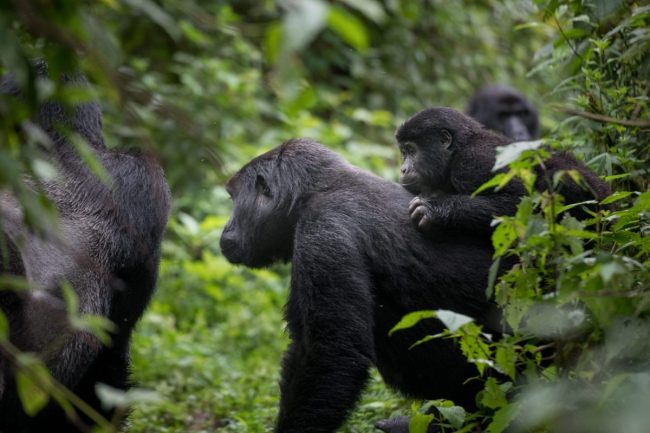
Visitors trekking Mubare may observe different aspects of gorilla social life, depending on the family’s location and behaviour on the day.
These may include feeding, resting, grooming, playing, maternal care and interactions between the silverback and other family members.
Every trek is different because mountain gorillas are wild animals moving freely through their natural habitat.
Gorilla Trekking to See the Mubare Family
Gorilla trekking is the main activity for visitors hoping to encounter the Mubare Gorilla Family.
The experience takes place in Bwindi Impenetrable National Park, where visitors are accompanied by trained Uganda Wildlife Authority rangers and trackers.
Where Does the Trek Start?
Visitors trekking the Mubare family report to the Buhoma park headquarters for registration and the morning briefing.
During the briefing, park officials explain the trekking guidelines, conservation requirements and safety procedures. Visitors are then assigned to their respective gorilla families and guided into the forest.
Although Mubare is associated with the Buhoma sector, the actual trekking route and duration depend on where the gorillas have moved.
How Difficult Is the Mubare Gorilla Trek?
The difficulty of trekking Mubare depends on the family’s location, forest conditions and the terrain encountered during the search.
Some treks may involve relatively manageable forest trails, while others require walking through steep slopes, thick vegetation, muddy ground and uneven paths.
A trek may take several hours, depending on how far the gorillas have moved from the starting point.
Visitors should prepare for changing weather and physically demanding conditions. Hiring a local porter is recommended, particularly for travellers carrying heavy bags or those who would benefit from additional assistance.
How Long Do Visitors Spend with the Gorillas?
Once the Mubare family is located, visitors are generally allowed one hour to observe the gorillas.
During this time, trekkers may watch the silverback, adult females, juveniles and infants as they feed, rest, groom or interact with one another.
The ranger guide provides information about gorilla behaviour and ensures visitors maintain the required distance and follow conservation guidelines.
Gorilla sightings and the exact behaviour of individual members cannot be guaranteed.
How to Book a Mubare Gorilla Trekking Permit
Visitors require a valid Uganda gorilla trekking permit to participate in the activity.
Permits are issued by Uganda Wildlife Authority (UWA), which manages gorilla trekking in Bwindi Impenetrable National Park and Mgahinga Gorilla National Park.
When arranging a Mubare trek, travellers should:
- Choose their preferred travel date.
- Request availability for the Buhoma sector.
- Ask whether a Mubare allocation can be confirmed for the requested date.
- Provide the required traveller information.
- Complete the permit booking and payment through the authorised process.
- Confirm the trekking location and accommodation arrangements.
Important: Booking a Buhoma-sector permit does not automatically guarantee allocation to the Mubare family. Final family allocation is managed through the park’s operational arrangements and should be confirmed with Uganda Wildlife Authority or your licensed safari operator.
Uganda Gorilla Trekking Permit Cost
The permit price depends on the visitor’s residency category and the applicable Uganda Wildlife Authority conservation tariff.
UWA’s published July 2024–June 2026 tariff listed the standard gorilla trekking permit at:
- Foreign non-residents: US$800 per person.
- Foreign residents: US$700 per person.
- Rest of Africa: US$500 per person.
- East African Community citizens: UGX 300,000 per person.
These are the rates in the July 2024–June 2026 tariff, not a guarantee of the applicable price for a future booking. As tariffs can change, obtain written confirmation of the current permit cost from UWA or a licensed tour operator before making payment.
Foreign non-residents are required to purchase their gorilla permits through tour operators licensed by the Uganda Tourism Board, according to UWA’s published booking guidelines.
Rules and Regulations for Trekking the Mubare Gorilla Family
Gorilla trekking is carefully regulated to protect mountain gorillas from disturbance and disease transmission.
Visitors should observe the following guidelines:
- The minimum age for gorilla trekking is 15 years.
- A maximum of eight tourists may visit a habituated gorilla family per day.
- Visitors are allowed one hour with the gorillas.
- Do not trek if you have an infectious illness.
- Follow the ranger guide’s instructions throughout the experience.
- Maintain the distance specified by the park authorities.
- Avoid eating, drinking or smoking while observing the gorillas.
- Do not use flash photography.
- Keep your voice low and avoid sudden movements.
- Do not touch the gorillas, even if they approach.
- Do not leave rubbish in the forest.
- Cover your mouth and turn away when coughing or sneezing.
These measures reduce disturbance and help protect the gorillas from diseases that can pass between humans and wildlife.
Best Time to Trek the Mubare Gorilla Family
Mubare can be visited throughout the year, but weather conditions influence trekking experiences in Bwindi.
June to August
These months are generally part of the drier season and are popular for gorilla trekking. Forest trails may be easier to navigate, although rainfall remains possible.
December to February
This is another generally favourable period for trekking. The relatively drier conditions can make walking through the forest more comfortable.
March to May
These months are generally wetter. Trails can become muddy and slippery, and visitors should prepare for rain.
September to November
Rainfall may increase during this period, although conditions vary. The forest remains beautiful, and trekking continues subject to park operations and weather conditions.
Gorilla trekking takes place throughout the year. The best time for your trip also depends on permit availability, accommodation preferences and the wider safari itinerary.
Where to Stay for Mubare Gorilla Trekking
The most convenient accommodation for visitors trekking Mubare is around Buhoma, where the gorilla trekking headquarters are located.
Accommodation options include luxury lodges, mid-range properties and budget guesthouses.
Examples of places to consider include:
Luxury Accommodation
- Sanctuary Gorilla Forest Camp: A luxury forest lodge in the Buhoma area.
- Bwindi Lodge: A well-known lodge overlooking the forest.
- Mahogany Springs Lodge: Offers accommodation close to the Buhoma trekking area.
Mid-Range Accommodation
- Engagi Lodge: A lodge in the Buhoma area with views of the surrounding forest landscape.
- Buhoma Haven Lodge: An accommodation option convenient for visitors trekking in Buhoma.
Budget Accommodation
- Buhoma Community Rest Camp: A community-oriented accommodation option.
- Buhoma area guesthouses: Useful for travellers looking for more affordable accommodation close to the trekking headquarters.
Check room availability, current rates, meal arrangements and transfer distances before booking.
Other Activities to Enjoy in Buhoma
A gorilla trekking safari does not have to end after visiting Mubare. Buhoma and the wider Bwindi region offer additional nature and cultural experiences.
Batwa Cultural Experience
The Batwa are an Indigenous community with a long history connected to the forests of the Albertine Rift.
A guided cultural experience can introduce visitors to aspects of Batwa history, traditional forest knowledge, music and cultural practices.
Choose a community-led experience that respects the dignity, rights and voices of the people involved.
Birdwatching in Bwindi
Bwindi is an important birdwatching destination, particularly for travellers interested in Albertine Rift species.
Birdwatchers may look for species such as the African green broadbill, handsome francolin, Rwenzori turaco and other forest birds, depending on the location and season.
Buhoma Community Walks
Community walks provide opportunities to learn about local livelihoods, farming, crafts and cultural traditions around the park.
Visitors can also support local businesses by purchasing locally made products and using community-based services.
Queen Elizabeth National Park
Travellers with additional time can combine Bwindi with Queen Elizabeth National Park for wildlife viewing, game drives and boat cruises along the Kazinga Channel.
Lake Bunyonyi
Lake Bunyonyi is another rewarding extension to a gorilla trekking safari. Visitors can enjoy canoeing, island visits, birdwatching and relaxation beside the lake.
Suggested 3-Day Mubare Gorilla Trekking Safari
Day 1: Transfer to Bwindi Impenetrable National Park
Depart from Kampala, Entebbe or another agreed location and travel to Buhoma in northern Bwindi.
The journey passes through Uganda’s countryside, with opportunities for scenic stops along the way.
Arrive at your lodge, check in and relax in preparation for the following day’s gorilla trekking experience.
Day 2: Gorilla Trekking with the Mubare Family
After an early breakfast, proceed to the Buhoma park headquarters for registration and a briefing by Uganda Wildlife Authority rangers.
Begin the guided forest trek in search of the assigned gorilla family. If Mubare has been allocated and is located, enjoy the permitted one-hour observation period.
After the trek, return to your lodge for lunch and relaxation.
In the afternoon, you may arrange an optional community walk or simply enjoy the forest surroundings.
Day 3: Departure from Bwindi
After breakfast, leave Buhoma and travel to your next destination.
Depending on your itinerary, you can continue to Lake Bunyonyi, Queen Elizabeth National Park, Mgahinga Gorilla National Park, Kigali or Kampala.
Frequently Asked Questions About the Mubare Gorilla Family
1. Where is the Mubare Gorilla Family found?
The Mubare Gorilla Family is found in the Buhoma sector of Bwindi Impenetrable National Park in southwestern Uganda.
2. Why is Mubare famous?
Mubare is famous for being the first mountain gorilla family in Uganda to be habituated for tourism. It received its first official visitors in 1993.
3. When did Mubare gorilla habituation begin?
The habituation process began in 1991, and the group opened for tourism in 1993.
4. Who was the first silverback to lead Mubare?
Ruhondeza was the historical leader of the Mubare Gorilla Family. He led the group for more than two decades and died in June 2012.
5. Who leads the Mubare Gorilla Family?
The International Gorilla Conservation Programme recorded silverback Maraya as the group’s leader in its family profile updated on 31 January 2024. Visitors should confirm the latest leadership information before publication or travel.
6. How many gorillas are in the Mubare family?
IGCP recorded seven members as of 31 January 2024: one silverback, three adult females, one juvenile and two infants. The number may have changed since that record.
7. Can I specifically request to trek Mubare?
You can request Mubare when arranging your Buhoma-sector gorilla trekking permit. However, a particular family allocation is not guaranteed unless confirmed through the park’s official arrangements.
8. How long does it take to trek Mubare?
The duration depends on where the gorillas are located on the day of trekking. Some visitors may find the family relatively quickly, while others may spend several hours walking through the forest.
9. How long can I stay with the Mubare gorillas?
Visitors are generally allowed one hour with a habituated gorilla family after locating it.
10. What is the minimum age for trekking Mubare?
The minimum age for gorilla trekking in Uganda is 15 years.
11. Can I combine Mubare gorilla trekking with other destinations?
Yes. Mubare trekking can be combined with Lake Bunyonyi, Queen Elizabeth National Park, Mgahinga Gorilla National Park and other destinations in Uganda. It can also form part of a Rwanda–Uganda safari.
Book Your Mubare Gorilla Trekking Safari with Book Gorilla Tracking
The Mubare Gorilla Family is more than a mountain gorilla group; it represents an important chapter in Uganda’s conservation and tourism history. From the early habituation efforts of the 1990s to the leadership of Ruhondeza, Kanyonyi and Maraya, its story reflects the changing social structure of mountain gorillas in Bwindi.
A trek to see Mubare offers an opportunity to encounter endangered mountain gorillas in their natural forest habitat while supporting conservation and community livelihoods.
At Book Gorilla Tracking, we can help you plan a gorilla trekking safari in Bwindi, arrange permit enquiries, organise accommodation and transport, and combine your experience with other destinations in Uganda and Rwanda.
Start planning your Mubare Gorilla Family trekking experience: Contact our team to check your preferred travel dates and discuss your safari arrangements.