The Giant of the Jungle: A Guide to Eastern Lowland Gorillas
When most people think of gorillas, they immediately picture the famous Mountain Gorillas (Gorilla beringei beringei). However, did you know that there is another subspecies that holds the title for the largest primate on planet Earth?
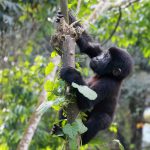
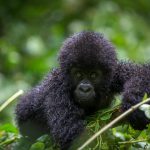
Meet the Eastern Lowland Gorilla (also known as Grauer’s Gorilla). While their cousins inhabit the high-altitude volcanic slopes, these giants are the true kings of the deep Congolese rainforest.
Identifying the World’s Largest Primate
Scientifically classified as Gorilla beringei graueri, these apes are found exclusively in the eastern Democratic Republic of Congo (DRC)—primarily within Kahuzi-Biega National Park, Maiko National Park, and the Tayna Gorilla Reserve.
Key Physical Facts:
-
Massive Size: Adult males (Silverbacks) can weigh up to 210kg, while females average around 100kg.
-
Stature: They stand between 4 to 6 feet tall.
-
Unique Features: They have shorter, thicker fur compared to the shaggy coats of Mountain Gorillas, and their muzzles are slightly shorter and broader.
Life in the Rainforest: Diet and Social Structure
You might wonder what these massive primates eat to maintain their size. In fact, their diet is purely organic, consisting of stems, leaves, bark, and a high volume of seasonal fruits. Occasionally, they also supplement their diet with insects like ants and termites.
Social Dynamics:
-
Group Size: They live in cohesive families of up to 30 individuals.
-
The Silverback: Just like their mountain cousins, each group is led by a dominant alpha male. He is responsible for protecting the family, settling disputes, and leading the group to new feeding grounds.
-
Maturity: Females reach maturity at age 8, while males take until age 12 to become fully grown.
Fascinating Fact: The reproduction of Eastern Lowland Gorillas is strikingly similar to humans. Females have a 9-month gestation period and typically give birth to a single infant. Twins are an extremely rare and celebrated occurrence in the wild!
Conservation Status: A Critical Challenge
Regrettably, the Eastern Lowland Gorilla is currently Critically Endangered. Research suggests that only about 6,000 to 6,500 individuals remain on Earth. Their population has faced severe threats over the last few decades:
-
Poaching: Driven by the illegal bushmeat trade in areas near mining and logging camps.
-
Habitat Loss: Encroachment for farming, charcoal production, and livestock grazing.
-
Regional Conflict: Civil instability and the presence of armed groups have historically disrupted conservation efforts.
Due to these pressures, Kahuzi-Biega National Park was placed on the UNESCO List of World Heritage in Danger in 1997—a status that remains a high priority for international conservationists today.
Trekking in Kahuzi-Biega National Park
For the adventurous traveler, Kahuzi-Biega National Park offers the most accessible and professional lowland gorilla trekking experience. The park is named after two dormant volcanoes: Mt. Kahuzi and Mt. Biega.
What to Expect on Your Trek:
-
Duration: The trek through the dense jungle can take anywhere from 2 to 6 hours.
-
The Encounter: Once you find the family, you are allowed one hour of observation to learn about their movements and social behaviors.
-
2026 Permit Pricing: Currently, a lowland gorilla permit in DRC costs $400 USD, making it a fantastic budget-friendly alternative to Rwanda’s $1,500 permit.
✅ Traveler’s Advisory (March 2026)
While Kahuzi-Biega is generally considered more stable than other parts of Eastern Congo, it is mandatory to book through a reputable tour operator. All treks are accompanied by armed park rangers and ICCN security to ensure a safe and seamless experience.
Ready to stand in the presence of the world’s largest primate? Contact Epic Uganda Vacation today. Our experts are standing by to help you secure your permit and plan the adventure of a lifetime.