Dzanga-Sangha Protected Areas: A Complete Travel Guide to Gorillas and Forest Elephants
Dzanga-Sangha Protected Areas in the Central African Republic (CAR) are among the most remarkable wildlife destinations in the Congo Basin. Located in the country’s remote southwestern corner, this vast rainforest landscape is famous for its western lowland gorillas, forest elephants, rare forest antelopes and diverse birdlife.
For adventurous wildlife enthusiasts, Dzanga-Sangha offers a different experience from the savannah safaris of East Africa. Instead of watching lions and elephants across open plains, visitors explore dense tropical forests, observe forest elephants gathering at mineral-rich clearings and follow experienced trackers in search of habituated western lowland gorillas.
The protected areas also offer opportunities to learn about Ba’Aka Indigenous culture through community-led activities. Together with neighbouring protected areas in Cameroon and the Republic of the Congo, Dzanga-Sangha forms part of the Sangha Trinational UNESCO World Heritage Site, recognised for its exceptional biodiversity and largely intact forest ecosystems.
Important travel note: The Central African Republic currently faces serious security risks. As of October 2026, several governments advise against travel to the country or most areas outside the capital. Check your government’s latest travel advisory and obtain professional security advice before considering a visit. Wildlife tourism opportunities do not mean that travel to the region is currently safe.
Where Is Dzanga-Sangha Located?
Dzanga-Sangha is situated in the southwestern part of the Central African Republic, near the borders with Cameroon and the Republic of the Congo. It lies within the northwestern Congo Basin, one of the world’s most important tropical rainforest regions.
The protected landscape includes Dzanga-Ndoki National Park and the Dzanga-Sangha Dense Forest Special Reserve. Together with Lobéké National Park in Cameroon and Nouabalé-Ndoki National Park in the Republic of the Congo, these areas form the transboundary Sangha Trinational conservation complex.
The village of Bayanga serves as an important base for reserve administration, conservation activities and tourism arrangements. The surrounding forests contain a network of rivers, wetlands, mineral-rich clearings and evergreen rainforest that supports a remarkable variety of wildlife.
Why Visit Dzanga-Sangha?
Dzanga-Sangha stands out because it combines rare primate encounters, exceptional forest wildlife and cultural experiences in one remote destination.
Unlike conventional safari parks, where animals are often observed from a vehicle, many activities here involve walking through rainforest with trained guides. Wildlife sightings depend on natural animal movements, weather and forest conditions.
The destination is particularly attractive to travellers interested in:
- Western lowland gorilla tracking.
- Observing forest elephants at Dzanga Bai.
- Birdwatching in the Congo Basin rainforest.
- Tracking monkeys and other forest wildlife.
- Learning about Ba’Aka traditions through respectful, locally organised experiences.
- Exploring one of Central Africa’s important conservation landscapes.
Top Things to Do in Dzanga-Sangha
1. Observe Forest Elephants at Dzanga Bai
Dzanga Bai is one of the best-known attractions in the Dzanga-Sangha Protected Areas. A bai is a natural forest clearing, often with mineral-rich soils that attract wildlife.
At Dzanga Bai, forest elephants gather to feed, drink and interact. Visitors can observe these elusive animals from a designated viewing platform overlooking the clearing.
Forest elephants are smaller than African savannah elephants and are adapted to life in dense tropical forests. Their movements through the forest can be surprisingly quiet, making the open clearing a valuable place to observe their behaviour.
Depending on the conditions, visitors may also see forest buffaloes, bongos, sitatungas, duikers and numerous birds. The official Dzanga-Sangha tourism website describes the bai as a major wildlife viewing site.
For photographers and wildlife enthusiasts, the clearing offers opportunities to observe natural behaviour without following the elephants through dense vegetation.
2. Track Western Lowland Gorillas
One of the most distinctive experiences in Dzanga-Sangha is tracking western lowland gorillas.
These gorillas differ from the mountain gorillas found in Uganda, Rwanda and the Democratic Republic of the Congo. Western lowland gorillas inhabit the tropical forests and swamp forests of Central Africa and are generally smaller than mountain gorillas.
At Dzanga-Sangha, trained guides and trackers lead visitors into the forest to search for habituated gorilla groups. The experience involves walking along forest trails and observing the gorillas under established wildlife-viewing rules.
The time required to locate a group varies. Visitors should be prepared for humid conditions, uneven terrain and potentially muddy paths.
Gorilla tracking availability, group access, permits and current operating arrangements should be confirmed with the protected-area authorities before planning a trip.
3. Explore the Congo Basin Rainforest
The rainforest itself is a major attraction. Dzanga-Sangha protects a diverse landscape of tall evergreen trees, shaded forest trails, wetlands and natural clearings.
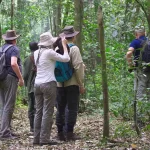
Guided forest walks reveal how plants, insects, birds and mammals depend on one another. Visitors may encounter animal tracks, feeding signs, forest fruit and the calls of monkeys hidden in the canopy.
The experience is especially rewarding for travellers interested in ecology and conservation because the forest is not simply a backdrop for wildlife sightings. It is a complex ecosystem that supports endangered species and helps maintain the ecological health of the wider Congo Basin.
4. Go Birdwatching in Dzanga-Sangha
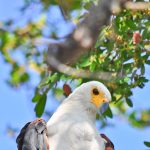
Dzanga-Sangha is an appealing destination for birdwatchers exploring Central Africa. Its forest habitats support a variety of rainforest birds, including species associated with the Congo Basin.
Birdwatching is often conducted along forest trails, river edges and clearings. Different habitats may produce different sightings, so a knowledgeable local guide can make a substantial difference to the experience.
Birders should bring binoculars, a field notebook or birding app, and a camera suitable for low-light forest conditions. Lightweight rain protection is also useful because showers can occur throughout the year.
The precise species recorded during a visit will depend on the route, season and local conditions.
5. Track Monkeys and Other Forest Mammals
Beyond gorillas and elephants, Dzanga-Sangha supports an impressive range of forest mammals. These include agile mangabeys, chimpanzees, forest buffaloes, duikers and several other primates and antelope species.
Guided tracking activities can help visitors learn to recognise animal calls, footprints, feeding signs and movement patterns. Mangabey tracking is one of the specialised experiences that has been offered in the area.
Not every species is easy to see. Some animals remain high in the canopy or move quickly through thick vegetation, so patience is essential.
6. Experience Ba’Aka Indigenous Culture Respectfully
The Ba’Aka are Indigenous forest peoples whose knowledge, traditions and livelihoods are closely connected to the rainforest.
Community-organised experiences in Dzanga-Sangha have included traditional music and dance, forest walks, knowledge of useful plants, fishing activities and demonstrations of traditional forest skills.
These experiences can offer valuable insights into relationships between people and the forest. They should be arranged through responsible local organisations and conducted with the consent and participation of community members.
Visitors should ask before taking photographs, respect restrictions on cultural activities and avoid treating people or traditions as tourist spectacles. Responsible cultural tourism should support local priorities, dignity and fair compensation.
7. Take a Canoe Trip on the Sangha River
The Sangha River is an important geographical feature of the region and a significant part of the wider Congo Basin landscape.
Where local operators confirm that conditions and security permit, canoe trips can offer a different perspective on the forest. Travellers may observe riverbank vegetation, waterbirds and local river activities while learning about the area’s ecology and livelihoods.
River excursions depend on water levels, weather, operational arrangements and security conditions. Confirm availability before including one in a proposed itinerary.
Wildlife You May See in Dzanga-Sangha
The protected areas support a wide range of wildlife adapted to tropical forest habitats.
| Wildlife | What makes it special |
|---|---|
| Western lowland gorilla | An endangered great ape found in Central African forests |
| African forest elephant | A forest-adapted elephant known for its role in rainforest ecology |
| Bongo | A large, striking forest antelope |
| Forest buffalo | A forest-dwelling relative of the African buffalo |
| Sitatunga | A wetland-adapted antelope |
| Duikers | Small to medium-sized antelopes found in forest habitats |
| Mangabeys | Primates that can be observed during specialised tracking activities |
| Chimpanzees | Great apes that inhabit parts of the wider forest landscape |
| Forest birds | A diverse community of species occupying different rainforest habitats |
Seeing every species is not guaranteed. Wildlife encounters depend on the season, animal movements, the length of the visit and the activities available.
Best Time to Visit Dzanga-Sangha
Dzanga-Sangha has a tropical equatorial climate, with warm temperatures and substantial rainfall throughout the year. Rainfall patterns influence forest trails, river levels and access to some areas.
The best time for a particular activity may depend on local conditions rather than a single universal dry season. Forest elephant viewing, gorilla tracking and birdwatching may all require different considerations.
Before selecting travel dates, request current guidance from local protected-area authorities regarding weather, trail conditions, activity schedules and access.
Most importantly, security must take priority over seasonality. A period with favourable wildlife-viewing conditions is not necessarily an appropriate time to travel to the Central African Republic.
How to Get to Dzanga-Sangha
Dzanga-Sangha is a remote destination that requires careful logistical planning.
Bayanga is the main base for many visitor activities, but reaching the area can involve domestic transport arrangements, charter flights or long road journeys, depending on current availability and the route used.
Before making any reservations, travellers need to verify:
- Whether travel to the region is advised by their government.
- Whether protected-area tourism operations are functioning.
- Which transport options are operating reliably.
- Whether any permits or advance authorisations are required.
- Whether accommodation, guides and emergency support can be confirmed.
- Whether insurance covers the destination and planned activities.
Do not assume that an itinerary offered in an earlier year remains practical or safe today.
Accommodation in Dzanga-Sangha
Accommodation options in and around Bayanga have included facilities such as Doli Lodge and Sangha Lodge. Availability, services and booking arrangements may change.
Before choosing accommodation, confirm that the property is operating, how it can be reached, what meals and transport are included, and whether it can coordinate activities with the protected-area authorities.
Because the destination is remote, visitors should clarify emergency arrangements, communications, medical support and evacuation options before committing to a trip.
Responsible Tourism and Conservation
Dzanga-Sangha is important not only for wildlife tourism but also for biodiversity conservation and the livelihoods of people living in the wider landscape.
Responsible tourism can support local employment, guides, trackers, accommodation providers and conservation initiatives. However, wildlife encounters must be managed carefully to minimise disturbance and reduce disease transmission, especially around great apes.
Visitors should follow all instructions from authorised guides, maintain the required distance from gorillas, avoid visiting wildlife when ill and never feed or touch wild animals.
Cultural activities should be arranged in partnership with local communities and respect their rights, consent and traditions.
Is Dzanga-Sangha Safe to Visit?
Safety is a critical consideration when planning a trip to Dzanga-Sangha because it is located in the Central African Republic.
As of October 2026, the UK Foreign, Commonwealth & Development Office advises against all travel to the country outside the capital, while other governments issue broader warnings against travel to the Central African Republic because of security risks. Conditions can change quickly, and assistance for foreign visitors may be limited.
Check the latest official travel advice from your government before making any plans. If your government advises against travel, do not treat the availability of a lodge or wildlife activity as evidence that the journey is safe. Also confirm insurance coverage and emergency evacuation arrangements.
Dzanga-Sangha vs Mountain Gorilla Destinations in East Africa
Dzanga-Sangha and the mountain gorilla parks of East Africa offer different wildlife experiences.
| Feature | Dzanga-Sangha, Central African Republic | Uganda and Rwanda |
|---|---|---|
| Main gorilla species for tourism | Western lowland gorilla | Mountain gorilla |
| Typical environment | Lowland tropical rainforest | Montane and bamboo forest |
| Signature wildlife experience | Forest gorillas and forest elephants at bais | Mountain gorilla trekking |
| Other interests | Rainforest ecology, birding and Ba’Aka cultural experiences | Savanna safaris, birding, volcanoes and cultural experiences |
| Travel planning | Highly remote; serious current security concerns | Established safari infrastructure, with local conditions still requiring checks |
Travellers interested in gorillas but seeking a destination with established safari logistics may wish to explore Uganda’s Bwindi Impenetrable National Park or Mgahinga Gorilla National Park, or Rwanda’s Volcanoes National Park. Each destination has its own permit rules, prices and travel requirements.
Frequently Asked Questions About Dzanga-Sangha
Where is Dzanga-Sangha?
Dzanga-Sangha is in the southwestern Central African Republic, within the Congo Basin rainforest near the borders with Cameroon and the Republic of the Congo.
What is Dzanga-Sangha famous for?
It is known for western lowland gorilla tracking, forest elephants at Dzanga Bai, rainforest biodiversity, birdwatching and opportunities to learn about Ba’Aka Indigenous culture through locally organised experiences.
Can you see gorillas at Dzanga-Sangha?
The protected area has offered tracking experiences with habituated western lowland gorillas. Visitors must confirm current operating arrangements, permits, group availability and security before planning a visit.
What is Dzanga Bai?
Dzanga Bai is a natural forest clearing where forest elephants and other wildlife gather. Visitors may observe animals from a designated viewing platform when access is operating.
Is Dzanga-Sangha a UNESCO World Heritage Site?
Dzanga-Sangha forms part of the wider Sangha Trinational UNESCO World Heritage Site, which also includes protected areas in Cameroon and the Republic of the Congo.
Is Dzanga-Sangha suitable for a family safari?
The destination’s remoteness, demanding forest activities and current security situation mean it is not a straightforward family safari choice. Families should assess official travel advice, medical needs, transport arrangements and activity age restrictions before considering a visit.
Plan Your Central African Wildlife Adventure
Dzanga-Sangha is an extraordinary conservation landscape where western lowland gorillas, forest elephants and other rainforest wildlife inhabit one of Africa’s most biodiverse regions. Its combination of wildlife tracking, forest ecology and community-led cultural experiences makes it distinctive among African wildlife destinations.
However, its remoteness and the serious security situation in the Central African Republic require exceptional care. Check current official travel advice and seek reliable local guidance before considering any journey.
For travellers researching African gorilla experiences, Epic Uganda Vacation also provides information about gorilla trekking in Uganda, including Bwindi Impenetrable National Park and Mgahinga Gorilla National Park. These destinations can be considered separately when planning a safari in East Africa.