The Comprehensive Guide to Combining Gorilla Trekking and Chimpanzee Tracking in Uganda
This question is quite interesting and has been asked on several occasions. As we break it down for your utmost understanding, by the end of this article, your question will surely be answered. Notably, combining gorilla trekking and chimpanzee tracking is like two sides of the same coin. This is because you will be trekking two distinct primates on the same trip. Let us first understand what both experiences of gorilla trekking and chimpanzee trekking are below.
Gorilla Trekking: The Ultimate Wildlife Encounter
Gorilla trekking involves walking through dense vegetation and challenging terrain in search of endangered mountain gorillas. In Uganda, gorilla trekking stands as one of the major tourism activities. Currently, only Bwindi Impenetrable National Park and Mgahinga Gorilla National Park offer this activity.
These two national parks harbor more than half of the world’s mountain gorilla population. Furthermore, these parks belong to the Virunga Conservation Area. This area stretches from Virunga National Park in the Democratic Republic of Congo through Uganda to Volcanoes National Park in Rwanda. This is the only area in the world where mountain gorillas live. Consequently, scientists consider them an endangered species.
Bwindi Impenetrable National Park
Bwindi Impenetrable National Park takes the “lion’s share” of experience regarding gorilla trekking. The park opened in 1991 after researchers discovered the “Gentle Giants.” Bwindi initially served as a forest reserve because it protects some of the oldest tree species, dating back 25,000 years. Indeed, UNESCO recognized Bwindi as a World Heritage Site in 1994 due to its immense biodiversity.
Over 459 individual mountain gorillas live in Bwindi. This makes it the largest habitat in the entire Virunga Conservation Area. Bwindi hosts over 50 gorilla families, but rangers have habituated only 24 for trekking. Typically, a territorial male called a silverback protects each family. These families live across four sectors:
-
Buhoma Sector
-
Ruhija Sector
-
Rushaga Sector
-
Nkuringo Sector
The Gorilla Trekking Experience
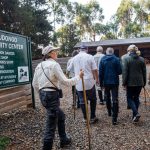
The journey starts with a pre-trekking briefing at the park headquarters. An experienced ranger guide takes visitors through the required rules and the expected code of conduct. Additionally, this process involves cross-checking your Uganda gorilla permits and organizing travelers into groups of eight.
Upon locating these magnificent mountain gorillas, you receive a maximum of one hour in their presence. You will observe them feed, play, care for their young, and roam through the forest. Naturally, this provides the perfect chance to take pictures and create everlasting moments.
Mgahinga Gorilla National Park
Mgahinga Gorilla National Park is the smallest national park in Uganda. It covers just 33.7 square kilometers. It gained UNESCO recognition in 2007 because it protects rare golden monkeys and mountain gorillas.
Mgahinga hosts over 100 individual gorillas but features only one habituated group: the Nyakagezi gorilla family. A silverback called Mark leads this family, assisted by a silverback named Ndugutse. Specifically, trekking this group is quite easy because they stay on the lower slopes to feed on bamboo shoots. You can find more details in our Mgahinga gorilla trekking guide.
Chimpanzee Trekking in Uganda’s Tropical Forests
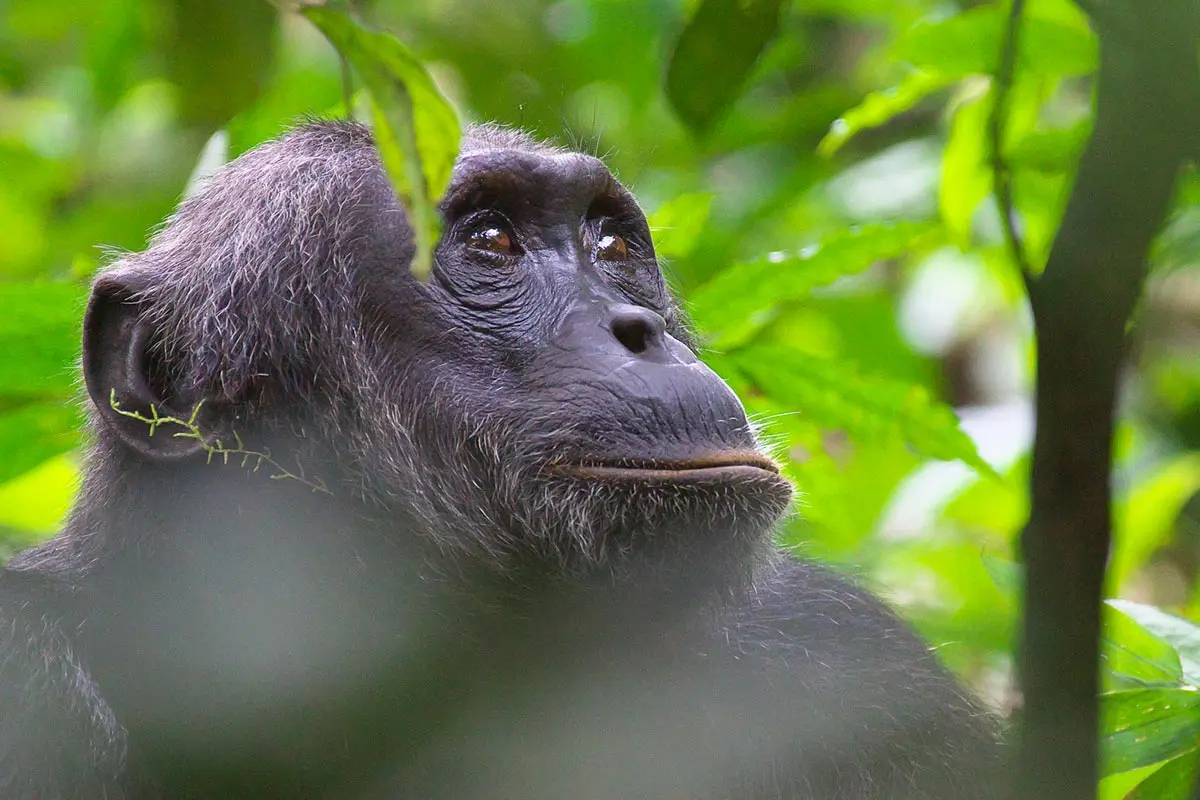
Chimpanzee trekking in Uganda is very rewarding. It leads you into the natural habitats of these playful primates. Encountering these chimpanzees allows for an amazing face-to-face interaction. Essentially, chimpanzee tracking involves moving through dense tropical forests to find their troops.
Chimpanzees are social primates that live in groups known as “troops.” A dominant male defends the group. Notably, trekking these chimpanzees is relatively easy because they make loud noises that you can hear from a distance.
Tracking the Troops
Just like gorilla trekking, chimpanzee tracking begins with a pre-tracking briefing. Rangers group visitors into sets of eight, explain the rules, and check permits. After trekking through the tropical forest for a few hours, visitors finally spot these primates.
Visitors spend one hour watching these chimpanzees feed, play, and rest. Uganda hosts the largest population of primates in East Africa, with over 5,000 individuals. Currently, chimpanzee trekking occurs mainly in:
-
Kibale National Park (The Primate Capital)
-
Kyambura Gorge (Queen Elizabeth National Park)
-
Budongo Forest
Combining Gorilla Trekking and Chimpanzee Trekking on a 4-Day Trip
Is it possible to combine both? The answer is a resounding yes. Rangers conduct gorilla trekking in the morning hours. Conversely, you can do chimpanzee trekking in both the morning and afternoon.
Since the gorilla encounter lasts one hour, visitors can finish a trek in the Buhoma sector of Bwindi and then travel to Queen Elizabeth National Park or Kibale for an afternoon chimpanzee trek.
The Buhoma sector sits close to Queen Elizabeth National Park and is only a few kilometers from Kibale. Therefore, this proximity makes it very possible to trek both mountain gorillas and chimpanzees on a seamless 4-day trip. Ultimately, this is the best way to experience Uganda wildlife photography safaris while maximizing your time in the “Pearl of Africa.”