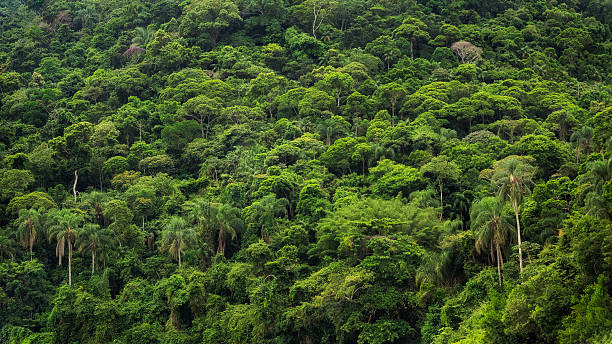
In the “Heart of Africa,” where the contours of the land are defined by rolling highlands and deep, mist-shrouded valleys, lies a world that seems to have been lost in time. Kibira National Park, situated at the very top of the Congo-Nile watershed in northern Burundi, is the nation’s second-largest protected area and arguably its most enchanting. While Ruvubu offers the classic savannah experience, Kibira offers something far more rare and atmospheric: a vast, untrammeled montane rainforest that stretches as far as the eye can see. Covering approximately 400 square kilometers, this emerald expanse is not merely a park; it is a critical lung for the region, a sanctuary for primates, and a sacred repository of cultural history.
The Geography of the Congo-Nile Divide
To understand Kibira, one must look at its position on the map. It sits astride the legendary Congo-Nile Ridge, a mountainous chain that acts as the continent’s hydrological divide. To the east, the waters flow toward the Nile and eventually the Mediterranean; to the west, they rush down to the Congo Basin and the Atlantic Ocean. This unique geographical position blesses Kibira with a remarkably high rainfall, nurturing the dense forest that carpets the mountains.
The park effectively forms the southern extension of Rwanda’s Nyungwe Forest, creating a continuous trans-frontier ecosystem that is vital for the migration of species and the genetic health of the region’s wildlife. The terrain is rugged and dramatic, characterized by steep slopes that plunge into deep valleys carved by fast-flowing streams. These waterways, crystal clear and cold, are the tributaries of some of Burundi’s most important rivers, including the Ruzibazi and the Mwaba, which eventually power hydroelectric dams that supply electricity to the country.
The elevation ranges from 1,600 to 2,600 meters above sea level. This altitude creates a perpetual spring-like climate in the higher reaches, where the air is cool, damp, and invigorating. It is a place where clouds frequently cling to the canopy, shrouding the forest in an ethereal mist that fuels the growth of an incredible diversity of flora.
The Flora of Kibira
Entering Kibira National Park feels like stepping into a vast, green cathedral. The forest is dominated by towering hardwoods, some reaching heights of over 50 meters. These ancient giants, draped in lianas and hanging mosses, create a dense canopy that allows only flecks of sunlight to dance upon the forest floor. The phenomenon of “canopy shyness” leaves intricate interlaced patterns of sky against the deep green of the leaves.
Beneath this main canopy lies a sub-canopy of shorter trees and a dense understory of ferns, orchids, and begonias. For botanists and plant lovers, Kibira is a paradise. It is estimated that the park contains over 250 species of trees and hundreds of plant species, many of which are endemic to the Albertine Rift. The forest floor is a sponge of organic matter, a thick layer of humus that retains water and regulates the flow of the rivers below.
In certain areas, particularly along the ridges, the forest opens up into patches of high-altitude bamboo, a vital food source for many of the park’s inhabitants. The interplay of light and shadow, the vibrant greens of the mosses, and the kaleidoscopic colors of wildflowers create a sensory experience that is overwhelming in its beauty. It is a landscape that feels primeval, a living reminder of the tropical jungles that once covered much of the continent.
The Realm of Primates
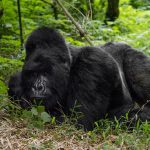
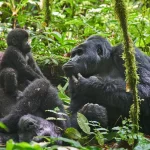
While the flora is breathtaking, it is the fauna that draws most adventurous travelers to Kibira. The park is the premier destination in Burundi for primate tracking. It is home to a significant population of chimpanzees (Pan troglodytes schweinfurthii), our closest living relatives. It is estimated that several hundred chimps reside within the park’s boundaries, though their elusive nature and the dense forest make them challenging to spot.
Tracking chimpanzees in Kibira is a raw, authentic experience. Unlike in some other East African parks where the primates have been habituated to large tourist groups for decades, the chimpanzees of Kibira are still shy and wild. The trek involves hiking through difficult, muddy terrain, guided by expert trackers who interpret the calls of the forest and the fresh signs on the forest floor. When a sighting finally occurs, it is a moment of pure, unadulterated thrill.
Beyond the chimpanzees, the park teems with other primates. Troops of black-and-white colobus monkeys are a common sight. With their striking black coats and flowing white tails that stream behind them like banners, they move effortlessly through the trees, leaping across gaps with impossible grace. These “Guerezas” are often heard before they are seen, their distinctive “rattling” calls echoing through the valley. The park also harbors L’Hoest’s monkeys (mountain monkeys), blue monkeys, and vervet monkeys. For the nocturnal explorer, the tree hyrax—a small, furry relative of the elephant—can often be heard calling from the trees at night, a sound that is as haunting as it is loud.
A Birdwatcher’s Utopia
Kibira National Park is classified as an Important Bird Area (IBA) by BirdLife International, owing to its location within the Albertine Rift Eco-region. This region is one of Africa’s most endemic-rich areas, and Kibira is a stronghold for many of these special birds. Over 200 species have been recorded within the park, making it a magnet for ornithologists.
The forest is alive with the symphony of bird calls. The Great Blue Turaco, a bird of spectacular plumage featuring a blue and yellow body and a towering crimson crest, is the unofficial mascot of the park. Its guttural calls are often heard resonating through the canopy. Other spectacular species include the Rwenzori Turaco, the Regal Sunbird, and the handsome Handsome Francolin.
Birders flock to Kibira for the chance to spot the Albertine Rift endemics, such as the Red-faced Woodland Warbler, the Archer’s Robin-Chat, and the Strange Weaver. The high-altitude swamps and clearings within the forest provide excellent viewing points to observe these species. The experience of birding in Kibira is not just about the list; it is about the quiet observation of life in the canopy, the flash of color in the gloom, and the thrill of finding a rare species in such a vast wilderness.
The Sacred Forest: History and Culture
Kibira National Park is unique because it is not just a nature reserve; it is a place of deep spiritual significance for the Burundian people. For centuries, the forest has been considered a sacred place. In traditional Burundian culture, the forest was the home of the Imanzi, the supreme beings, and later, it became a retreat for the royal rituals of the monarchy.
Even today, the cultural footprint on the park is visible. Certain areas within the forest remain sacred sites where local communities perform traditional rituals. Historically, the forest served as a refuge during times of conflict. During the colonial period, opponents of colonial rule would hide in the dense undergrowth, using the terrain to their advantage. More recently, during the tragic civil war of the 1990s and early 2000s, the dense forest provided shelter for rebel groups and refugees.
While this turbulent history made the park dangerous for many years, it also had the unintended consequence of protecting the forest from human settlement and agricultural encroachment for a long period. Today, the park stands as a symbol of resilience, bridging the gap between the ancient traditions of the past and the conservation goals of the future. Initiatives are now underway to integrate cultural tourism with nature walks, allowing visitors to learn about the legends and traditional uses of the forest plants from local guides.
The Visitor Experience in Kibira National Park
For the intrepid traveler, Kibira National Park offers an experience that is worlds away from the stereotypical crowded African safari. There are no herds of elephants or lions stalking across open plains here. Instead, the adventure is found in the details and the atmosphere.
The main access point to the park is via the town of Teza, which sits at a high altitude and offers stunning views over the forest canopy. The “Teza-Kibira” road is a spectacular drive in itself, winding through tea estates before plunging into the mist of the forest.
A visit to Kibira is best defined by the act of walking. Guided nature walks take visitors along narrow trails that wind through the dense vegetation. It is a sensory immersion: the smell of damp earth and rotting leaves; the touch of cool, humid air; the sound of unseen insects and distant monkey calls. It is a place for hikers and botanists, for those who find peace in the quiet majesty of the woods.
While chimpanzee tracking is the headline activity, simply hiking to the waterfalls hidden deep within the forest is a rewarding pursuit. These cascades, tumbling into dark, rocky pools, are the lifeblood of the ecosystem. Standing on a wooden footbridge suspended over a ravine, surrounded by the roar of the water and the green walls of the forest, one feels incredibly small, yet deeply connected to the natural world.
Accommodation options are rustic but charming. The park features camping sites for the adventurous, and simple guesthouses in the nearby towns of Teza and Kiganda. The lack of luxury lodges preserves the wild, untouched character of Kibira, appealing to those who prefer authenticity over comfort.
Final Thoughts
Kibira National Park is Burundi’s green heart. It protects the watersheds that hydrate the nation, it preserves a unique section of the Albertine Rift, and it provides a sanctuary for chimpanzees and countless other species. It is a place where the spiritual and the biological intertwine, where the trees hold the memories of kings and the secrets of rebels.
As Burundi continues to develop and stabilize, the park has the potential to become a world-class eco-tourism destination. Its proximity to the capital, Bujumbura (only about an hour and a half’s drive away), makes it an accessible escape for those looking to experience the mystery of the African rainforest. However, its future depends on sustainable management and the continued support of the local communities who live on its doorstep.
To visit Kibira is to step into the emerald lungs of the country, to breathe the cool, pure air of the mountains, and to witness a world that has survived against the odds. It is a reminder that even in a crowded world, wild places still exist – places where the forest is thick, the mist is ever-present, and the call of the chimpanzee echoes through the trees. It is, without a doubt, one of Africa’s hidden gems, waiting to be discovered by those willing to look beneath the canopy.