Birding and Wildlife at Kazinga Channel: Uganda’s Ultimate Boat Safari Experience
Birding and wildlife at Kazinga Channel offer one of the most rewarding experiences in Uganda’s Queen Elizabeth National Park. The channel is famous for its remarkable concentration of wildlife along the shoreline and its impressive variety of waterbirds, making a Kazinga Channel boat safari a highlight of many Uganda safari itineraries.
Stretching between Lake George and Lake Edward, the Kazinga Channel creates an important aquatic ecosystem within Queen Elizabeth National Park. Its calm waters attract large numbers of hippos, elephants, buffaloes, crocodiles, antelopes, and birds throughout the year.
For travelers interested in wildlife photography, bird watching, nature, and authentic African safari experiences, a boat cruise along the Kazinga Channel provides something that a traditional game drive cannot: the opportunity to observe wildlife from the water.
Where Is Kazinga Channel?
Kazinga Channel is located in western Uganda, within Queen Elizabeth National Park. The channel connects Lake George in the northeast with Lake Edward in the southwest and forms one of the park’s most important wildlife areas.
The channel and its surrounding wetlands provide water and feeding habitats for numerous species. Because animals frequently come to the shoreline to drink, bathe, feed, or rest, visitors can often see several species during a single boat trip.
The channel is accessed from the Mweya area of Queen Elizabeth National Park, making it relatively easy to combine a boat safari with game drives elsewhere in the park.
Why Is Kazinga Channel Famous?
Kazinga Channel is particularly famous for its extraordinary concentration of hippos. Large pods can often be seen gathered in the water, sometimes with dozens of individuals occupying the same area.
However, hippos are only part of the attraction.
The shoreline can also provide sightings of African elephants, buffaloes, Nile crocodiles, waterbuck, Uganda kob, warthogs, and numerous waterbirds.
The combination of permanent water, wetlands, open shoreline, and surrounding savannah makes Kazinga Channel an exceptional habitat for both wildlife and birds.
For birders, this is particularly valuable because the same boat excursion can produce sightings of waterbirds, raptors, kingfishers, herons, storks, and other species.
Birding at Kazinga Channel
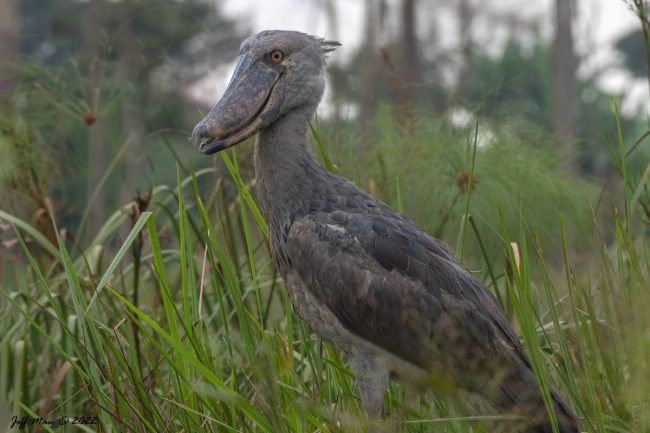
Kazinga Channel is one of the most interesting places for bird watching in Queen Elizabeth National Park.
The channel supports birds that depend on open water, wetlands, shoreline vegetation, and surrounding woodland. A slow-moving boat gives birders an excellent opportunity to observe birds along the banks without disturbing them as much as approaching on foot might.
Among the bird species that may be encountered are:
- African fish eagle
- African skimmer
- Pied kingfisher
- Malachite kingfisher
- Giant kingfisher
- Goliath heron
- Squacco heron
- Great egret
- Little egret
- African darter
- Long-tailed cormorant
- Yellow-billed stork
- Open-billed stork
- Marabou stork
- African jacana
- Hadada ibis
- Grey-crowned crane
- African spoonbill
The exact species and numbers seen vary depending on the season, weather, water conditions, and the location of individual birds.
African Fish Eagles
One of the most impressive birds to look for along Kazinga Channel is the African fish eagle.
Its distinctive call and striking appearance make it one of the memorable birds of Uganda’s waterways. Fish eagles can often be seen perched on trees overlooking the channel, scanning the water for potential prey.
For photographers, a perched fish eagle can provide an excellent opportunity for a close wildlife portrait, while a hunting bird can create an even more dramatic photograph.
Kingfishers
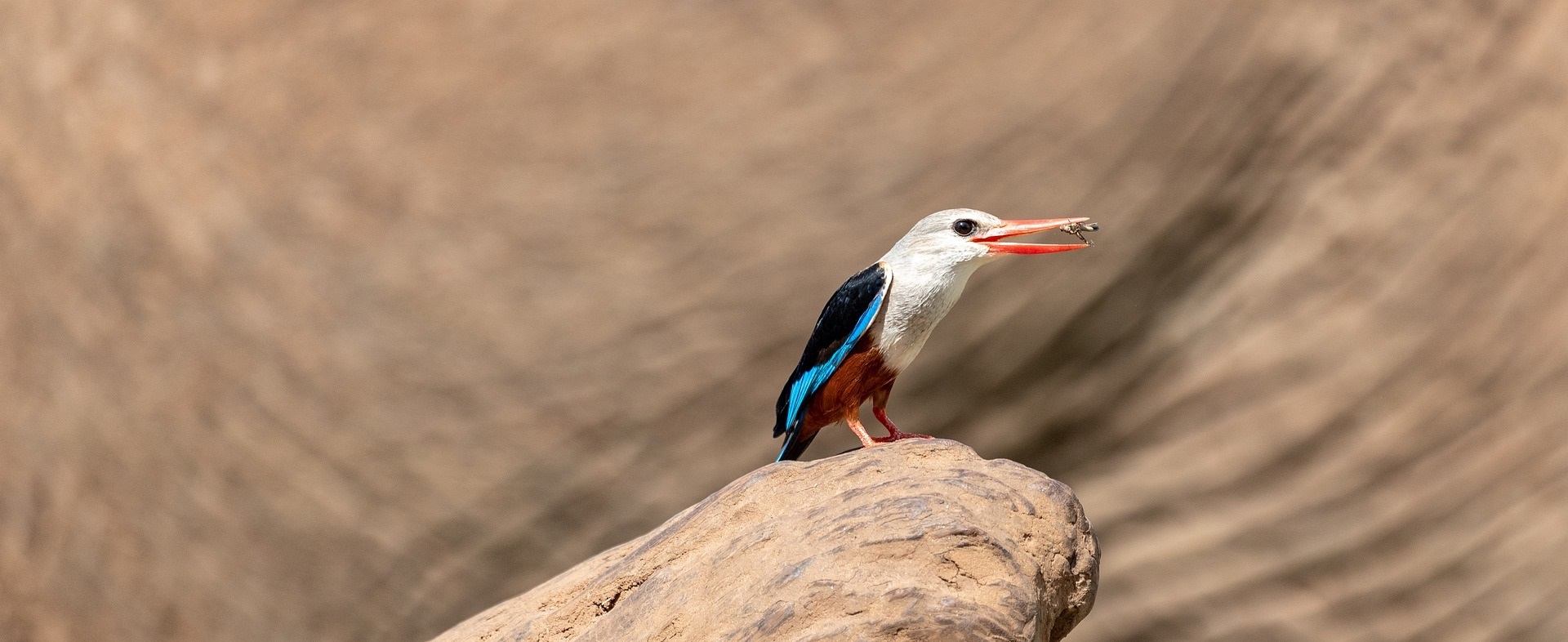
Kingfishers are another attraction for birdwatchers.
Pied kingfishers are particularly noticeable around the water, while other kingfisher species may be encountered along the channel and surrounding habitats.
Watching a kingfisher hover before diving into the water is one of the small but fascinating moments that make a Kazinga Channel boat safari memorable.
Herons, Egrets and Storks
The shallow edges and muddy areas around the channel attract numerous wading birds.
Herons and egrets can often be seen standing quietly along the shoreline, while storks search for food in shallow water or wet areas.
For birders building a Uganda birding checklist, these species add valuable diversity to the safari experience.
Wildlife at Kazinga Channel
While the birdlife is impressive, the wildlife concentration is what makes Kazinga Channel especially popular with safari travelers.
Hippos
Hippos are arguably the stars of the Kazinga Channel.
They spend much of the day in the water, where they keep their bodies cool and protected from the heat. During a boat safari, visitors can often see groups of hippos partially submerged, with their eyes, ears, nostrils, and backs visible above the surface.
When they open their enormous mouths or vocalize to one another, they provide unforgettable photographic and viewing opportunities.
African Elephants
Elephants frequently visit the channel to drink and bathe.
Watching a herd approach the water is an excellent wildlife experience. Young elephants may play in the shallows while adults remain nearby, creating opportunities to observe natural family behaviour.
The perspective from a boat is particularly interesting because visitors can watch elephants from the water without needing to drive directly toward them.
African Buffaloes
Large herds of African buffaloes may be seen grazing close to the channel.
Buffaloes often remain near water, especially when temperatures rise, and they can sometimes be observed sharing the shoreline with other wildlife.
Their dark bodies, large horns, and herd behaviour make them excellent subjects for wildlife photography.
Nile Crocodiles
Nile crocodiles are another important species to look for.
They may be found resting along the shoreline or partly submerged in the water. Their camouflage can make them surprisingly difficult to notice until the boat passes close enough to reveal them.
Antelopes and Other Mammals
The surrounding landscape supports a variety of other mammals.
Depending on the location and season, visitors may encounter Uganda kob, waterbuck, warthogs, and other antelope species.
Although the boat cruise focuses primarily on the channel ecosystem, combining it with a game drive gives travelers a much broader wildlife experience.
What Is a Kazinga Channel Boat Safari Like?
A typical Kazinga Channel boat safari is a relaxed wildlife experience.
Instead of travelling through the savannah in a safari vehicle, you move slowly along the water while looking toward the shoreline and open water.
The slower pace allows you to concentrate on individual animals and birds.
You may spend several minutes watching a group of hippos, then move further along the channel and encounter elephants drinking at the edge. A few minutes later, your guide may point out a fish eagle perched high above the water or a crocodile lying motionless along the bank.
This unpredictability is part of the attraction.
You are not simply travelling from one point to another. You are watching an ecosystem function naturally.
Kazinga Channel for Wildlife Photography
Kazinga Channel is an excellent destination for wildlife photographers.
The water provides an open foreground, while the shoreline often creates natural backgrounds for photographs.
Some of the best photographic opportunities include:
- Hippos emerging from the water
- Elephants drinking or bathing
- Buffaloes along the shoreline
- Nile crocodiles resting
- African fish eagles
- Kingfishers
- Herons and egrets
- Birds taking off from the water
- Wildlife reflections on calm water
A camera with a telephoto lens is useful, particularly for birds and animals that remain farther from the boat.
Early morning and late afternoon light can also provide attractive conditions for photography.
Best Time for Birding and Wildlife at Kazinga Channel
Kazinga Channel can be visited throughout the year, but different seasons offer different advantages.
The relatively dry periods are generally good for wildlife viewing because animals may concentrate around reliable water sources.
The wetter seasons can be particularly rewarding for birdwatchers because vegetation is more productive and bird activity can be excellent. Migratory birds may also add to the species diversity during the appropriate period.
Rather than choosing a safari date based on one factor alone, it is worth considering your main interests.
If your priority is large mammals, you may prefer a season with drier conditions.
If your primary interest is birding, photography, or experiencing a greener landscape, the wetter months can also be highly rewarding.
Morning or Afternoon Boat Cruise: Which Is Better?
Both morning and afternoon cruises can be rewarding.
A morning boat safari can offer pleasant temperatures, good photographic light, and active wildlife.
An afternoon cruise can provide beautiful light as the day progresses and may be especially enjoyable for travelers who have already completed a morning game drive.
Rather than focusing only on the time of day, the quality of the guide, weather, water conditions, and wildlife activity can have a major influence on the experience.
Combining Kazinga Channel With a Game Drive
One of the best ways to experience Queen Elizabeth National Park is to combine a Kazinga Channel boat safari with a game drive.
The two activities offer very different perspectives.
A game drive takes you through the savannah and woodland habitats where you can search for lions, leopards, elephants, Uganda kob, buffaloes, warthogs, and other wildlife.
The boat cruise focuses on the aquatic ecosystem and the animals and birds concentrated around the channel.
Combining both experiences therefore gives travelers a more complete understanding of Queen Elizabeth National Park.
Other Wildlife Experiences Near Kazinga Channel
A longer stay in Queen Elizabeth National Park allows travelers to explore several different ecosystems.
Kasenyi Plains
The Kasenyi Plains are well known for open savannah and large concentrations of Uganda kob. They are also an important area for searching for lions.
Mweya Peninsula
The Mweya area is strategically located between Lake Edward and the Kazinga Channel and is an important base for exploring the park.
Ishasha Sector
Further south, the Ishasha sector is famous for its tree-climbing lions and large herds of buffalo and elephants.
Maramagambo Forest
Maramagambo provides a contrasting forest environment and adds another dimension to a Queen Elizabeth National Park safari.
Exploring different habitats is especially valuable for birders because each habitat supports its own range of species.
How Many Days Do You Need for Kazinga Channel?
Kazinga Channel can be included in a short Uganda safari or a longer wildlife itinerary.
A traveler with limited time can visit the channel as part of a 2- or 3-day Queen Elizabeth National Park safari.
However, if you have more time, staying longer allows you to combine:
- Kazinga Channel boat safari
- Kasenyi Plains game drives
- Mweya Peninsula
- Ishasha sector
- Chimpanzee trekking in Kyambura Gorge
- Nature and birding experiences
Travelers interested in birding may also benefit from spending additional time exploring different habitats rather than relying on a single boat excursion.
What Should You Bring for a Kazinga Channel Boat Safari?
For a comfortable boat safari, consider bringing:
- Binoculars
- Camera and spare batteries
- Telephoto lens for wildlife photography
- Hat or cap
- Sunscreen
- Light clothing
- Sunglasses
- Drinking water
- Insect repellent
- Light rain jacket during wetter periods
Binoculars are particularly valuable for birders because some birds may remain high in trees or farther along the shoreline.
Why Kazinga Channel Is Important for Conservation
Kazinga Channel is more than a tourism attraction. It forms part of a wider ecosystem supporting wildlife, birds, wetlands, lakes, and local communities.
Responsible tourism can contribute to conservation by creating economic value from protecting natural habitats.
Visitors also play an important role by following park regulations, avoiding littering, respecting wildlife distances, and listening to instructions from guides and boat crews.
Protecting these habitats ensures that future generations can continue to experience Uganda’s remarkable wildlife.

Is Kazinga Channel Worth Visiting?
Yes, especially if your Uganda safari combines wildlife and birding.
The greatest strength of Kazinga Channel is its variety. In a single boat excursion, you may encounter hippos in the water, elephants along the shore, crocodiles resting nearby, buffaloes grazing on the banks, and dozens of bird species overhead.
Few safari experiences provide such a concentrated combination of aquatic wildlife and birdlife.
For photographers, birdwatchers, families, first-time safari travelers, and experienced wildlife enthusiasts, the channel offers a relaxed but highly rewarding addition to a Uganda safari.
Frequently Asked Questions About Birding and Wildlife at Kazinga Channel
What birds can I see at Kazinga Channel?
Bird species may include African fish eagles, kingfishers, herons, egrets, storks, African darters, cormorants, African jacanas, and other wetland and woodland species. The exact species vary with season and conditions.
What animals are found at Kazinga Channel?
The channel is particularly famous for hippos, elephants, buffaloes, and Nile crocodiles. Other mammals may include Uganda kob, waterbuck, and warthogs.
How do I explore Kazinga Channel?
The most popular way is through a guided boat safari. The cruise can be combined with game drives within Queen Elizabeth National Park.
Is Kazinga Channel good for bird watching?
Yes. Its combination of open water, wetlands, shoreline vegetation, and surrounding habitats makes it an excellent birding location.
Can I photograph wildlife on the Kazinga Channel boat safari?
Yes. The open water and shoreline provide many photographic opportunities. A telephoto lens and binoculars are useful for distant birds and wildlife.
Can Kazinga Channel be combined with gorilla trekking?
Yes. Kazinga Channel can easily be incorporated into a longer Uganda safari that includes gorilla trekking in Bwindi Impenetrable National Park, chimpanzee trekking in Kibale Forest, or other wildlife destinations.
Plan Your Birding and Wildlife Safari in Uganda
A Kazinga Channel boat safari is one of those experiences that demonstrates why Uganda is known as one of Africa’s most diverse safari destinations.
Here, wildlife and birdlife come together around one remarkable waterway. Hippos dominate the channel, elephants and buffaloes visit the shoreline, crocodiles lie quietly along the banks, and birds fill the surrounding trees and wetlands.
Whether you are planning a dedicated Uganda birding safari, a classic wildlife adventure, or a longer itinerary combining chimpanzee trekking and gorilla trekking with savannah wildlife, Kazinga Channel is an experience worth including.
At Epic Uganda Vacation we can help design a Uganda safari around your interests, whether your priority is birding, wildlife photography, primates, big game, or a combination of experiences.
Contact us to create a customized Uganda safari that includes Queen Elizabeth National Park and the Kazinga Channel.