Albertine Rift Species: Endemic Birds, Gorillas, Primates and Wildlife
The Albertine Rift is one of Africa’s most remarkable biodiversity regions. Stretching through parts of Uganda, Rwanda, Burundi, the Democratic Republic of Congo and Tanzania, this mountainous landscape contains some of the continent’s most important forests and wildlife habitats.
For wildlife travellers and birdwatchers, the Albertine Rift is particularly special because many species found here have extremely limited geographical ranges. Some occur only within the Albertine Rift, while others are restricted to a small number of forests and mountain ecosystems.
This includes remarkable wildlife such as mountain gorillas, Grauer’s gorillas, chimpanzees, forest elephants, L’Hoest’s monkeys and numerous Albertine Rift endemic birds.
For travellers exploring Uganda and Rwanda, the Albertine Rift offers an opportunity to go beyond traditional safari experiences and discover some of Africa’s most specialised forest wildlife.
What Is the Albertine Rift?
The Albertine Rift is the western branch of the East African Rift System.
It runs along the eastern side of the Democratic Republic of Congo and extends through parts of Uganda, Rwanda, Burundi and Tanzania. The region contains a remarkable variety of landscapes, including high mountains, montane forests, lowland forests, lakes, wetlands and valleys.
The combination of altitude, climate, isolated mountain ranges and different forest habitats has created exceptional biological diversity.
Over long periods of geological and climatic change, populations of plants and animals became isolated from one another. This isolation contributed to the evolution of many species with very small geographical ranges.
That is why the Albertine Rift is so important for biodiversity conservation.
Why Is the Albertine Rift Important for Wildlife?
The Albertine Rift is recognised as an exceptionally important region for biodiversity.
Its forests support a large number of species, including birds, mammals, reptiles, amphibians and plants that are rare, threatened or restricted to the region.
For birdwatchers, the area is particularly significant because of its concentration of Albertine Rift endemic and restricted-range bird species.
The importance of these forests extends beyond individual species. They also provide essential habitats, water catchments and ecological connections between different landscapes.
Unfortunately, many Albertine Rift habitats face pressure from agriculture, forest loss, human population growth and other forms of environmental change. BirdLife’s conservation work in the region highlights the continuing importance of protecting these habitats and the species that depend on them.
Albertine Rift Endemic Birds
Birds are among the most exciting reasons to explore the Albertine Rift.
The region is home to a distinctive collection of forest birds, including species that are endemic or highly restricted to the Albertine Rift mountains.
Some of the birds birders may target include:
- Albertine Owlet
- Rwenzori Turaco
- Handsome Francolin
- Red-throated Alethe
- Kivu Ground Thrush
- Grauer’s Broadbill
- Neumann’s Warbler
- Dusky Crimsonwing
- Yellow-eyed Black Flycatcher
- Collared Apalis
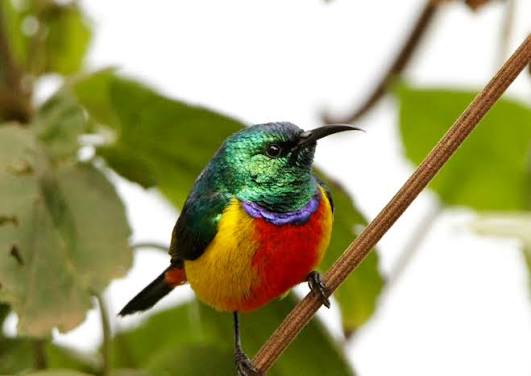
- Blue-headed Sunbird
- Regal Sunbird
- Shelley’s Crimsonwing
Not every species occurs at every birding site. Their distribution is closely linked to altitude, forest type and geographical location.
This is why a specialised birding safari can be very different from a general wildlife safari.
Great Blue Turaco and Albertine Rift Birding
One of the most spectacular birds associated with the forests of the region is the Great Blue Turaco.
Its large size, blue plumage and striking appearance make it a favourite among birdwatchers visiting Uganda’s western forests and wetlands.
The species can be encountered in areas around Kibale and other forested landscapes, although sightings are never guaranteed.
For visitors combining chimpanzee trekking with birding, places such as Kibale National Park and Bigodi Wetland Sanctuary provide an excellent opportunity to explore the wider biodiversity of the region.
Our Bigodi Wetland Sanctuary guide provides more information about birding and nature walks around Kibale.
Albertine Rift Birds in Uganda
Uganda is one of the best countries from which to explore Albertine Rift biodiversity.
The country’s western region contains several important forests and protected areas that form part of the Albertine Rift landscape.
Some of the most important destinations for birding and wildlife include:
Bwindi Impenetrable National Park
Bwindi is internationally famous for its mountain gorillas, but it is also an exceptional birding destination.
Its ancient montane forest supports numerous forest bird species, including several Albertine Rift endemics.
For birdwatchers, Bwindi offers the rare opportunity to combine gorilla trekking with specialised forest birding.
Explore our Bwindi Impenetrable National Park guide before planning your visit.
Mgahinga Gorilla National Park
Mgahinga lies within the Virunga volcanic landscape and forms part of the wider Albertine Rift ecosystem.
The park is important for mountain gorillas and golden monkeys, while its high-altitude forests provide habitat for a variety of montane bird species.
Its location also makes it particularly interesting for travellers combining Uganda with Rwanda’s Volcanoes National Park.
Kibale National Park
Kibale is best known as one of Africa’s premier destinations for chimpanzee trekking.
However, its forest ecosystem also supports an impressive variety of birds and other primates.
Birders can combine chimpanzee trekking with forest birding and a visit to nearby wetlands such as Bigodi.
Queen Elizabeth National Park
Queen Elizabeth National Park provides an important transition between forest and savannah ecosystems.
This makes it useful for travellers who want to combine forest species with classic African wildlife such as elephants, buffaloes, hippos, lions and other savannah animals.
The park can therefore form an important part of a wider western Uganda biodiversity itinerary.
Albertine Rift Mammals
Birds are not the only reason the Albertine Rift is important.
The region supports a remarkable variety of mammals, including several threatened and restricted-range species.
Mountain Gorillas
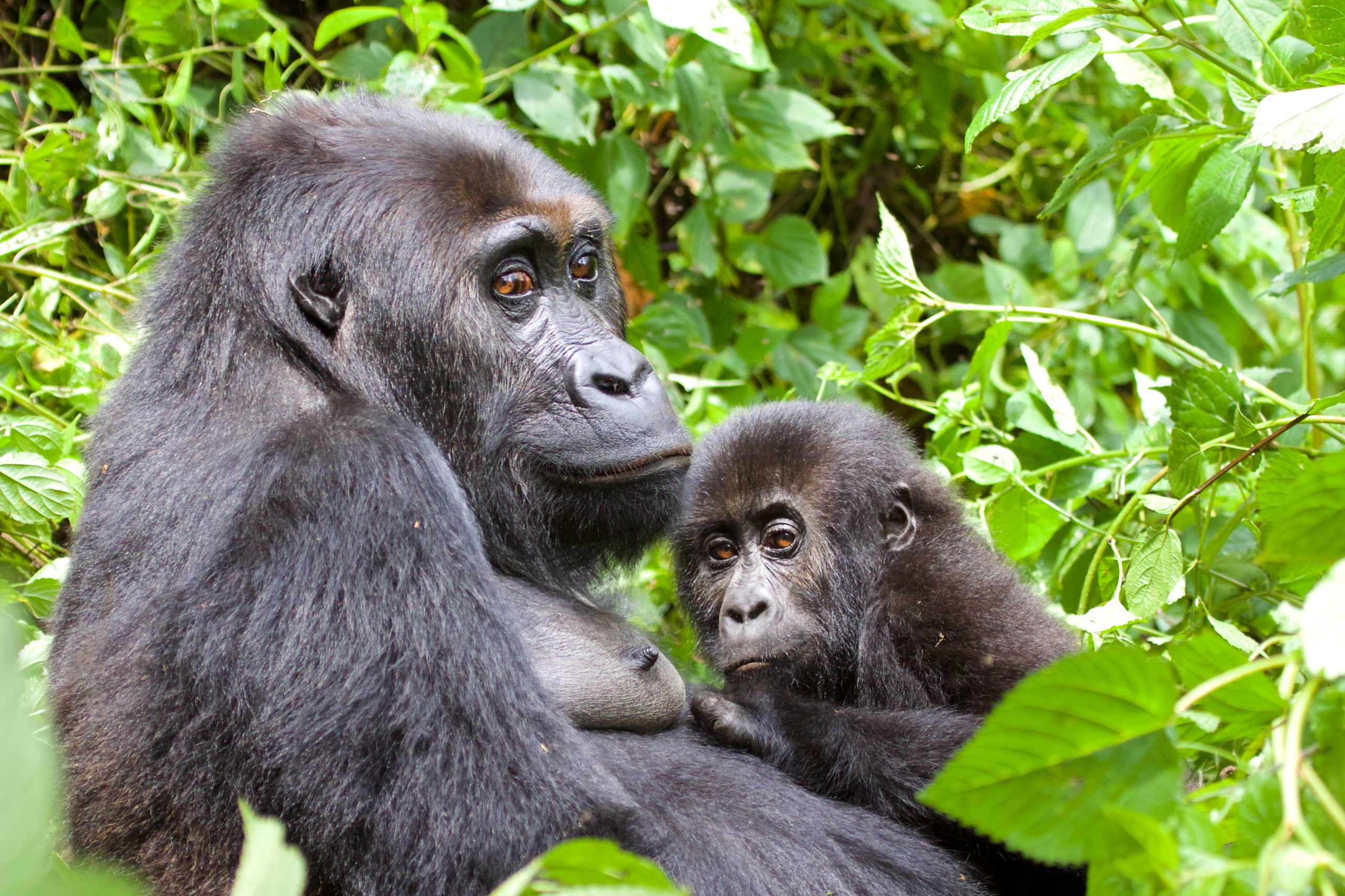
The mountain gorilla is perhaps the most famous animal associated with the Albertine Rift.
Mountain gorillas occur in the Virunga mountain region shared by Uganda, Rwanda and the Democratic Republic of Congo.
In Uganda, visitors can track them in Bwindi Impenetrable National Park and Mgahinga Gorilla National Park.
In Rwanda, gorilla trekking takes place in Volcanoes National Park.
Gorilla trekking is one of the most powerful wildlife experiences in East Africa because visitors enter the forest and observe habituated gorilla families in their natural habitat.
Grauer’s Gorilla
The Grauer’s gorilla, also known as the eastern lowland gorilla, is another important great ape of the Albertine Rift landscape.
It is primarily associated with forests in the eastern Democratic Republic of Congo.
Unlike mountain gorillas, Grauer’s gorillas are not the species visitors normally encounter on Uganda or Rwanda’s standard gorilla trekking circuits.
Nevertheless, they are an important part of the region’s great-ape conservation story.
Chimpanzees
Chimpanzees are another major attraction in the Albertine Rift region.
Uganda is particularly well known for chimpanzee trekking in Kibale National Park, while chimpanzees can also be found in other forest ecosystems.
Kibale’s chimpanzee experience can easily be combined with birding, primate viewing and visits to surrounding community and wetland areas.
Read our Kibale chimpanzee trekking guide for more information.
L’Hoest’s Monkey
The L’Hoest’s monkey is a striking forest primate associated with the Albertine Rift region.
It is particularly adapted to forest environments and can be encountered in parts of western Uganda and neighbouring countries.
Like many forest species, sightings depend on location, habitat and conditions.
Rwenzori Duiker and Other Forest Mammals
The forests and mountains of the Albertine Rift support several specialised antelope and other mammal species.
The Rwenzori duiker, for example, is associated with montane forest habitats in the region.
Other forest mammals include various monkeys, rodents, bats and small carnivores, many of which are rarely encountered by conventional safari visitors.
This is one reason specialist wildlife and biodiversity safaris can reveal a very different side of Uganda and Rwanda.
Albertine Rift Primates
The Albertine Rift is particularly rich in primates.
Depending on the destination, visitors may encounter:
- Mountain gorillas
- Chimpanzees
- L’Hoest’s monkeys
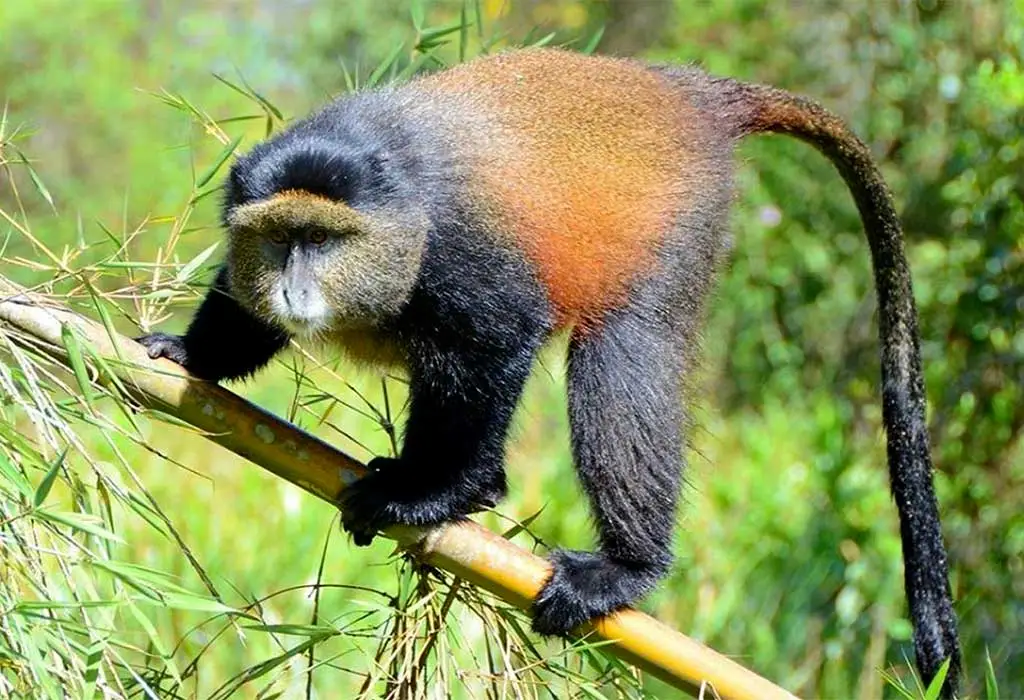
- Golden monkeys
- Red-tailed monkeys
- Black-and-white colobus monkeys
- Blue monkeys
- Olive baboons
The golden monkey is particularly associated with the Virunga volcanic region and is another major primate attraction in Rwanda and southwestern Uganda.
A safari combining gorilla trekking, golden monkey trekking and chimpanzee trekking therefore offers an impressive introduction to the primate diversity of the Albertine Rift.
Albertine Rift Species in Rwanda
Rwanda occupies an important part of the Albertine Rift and offers several opportunities to explore its biodiversity.
The country’s major wildlife destinations include:
- Volcanoes National Park – mountain gorillas, golden monkeys and montane forest birds
- Nyungwe National Park – chimpanzees, other primates and forest birds
- Akagera National Park – savannah wildlife and wetland species
Nyungwe is especially important for forest biodiversity and birding.
Rwanda’s bird diversity is substantial, with BirdLife currently recording hundreds of bird species in the country, including globally threatened species such as the Shoebill and Albertine Owlet.
This makes Rwanda an excellent destination for travellers interested in combining gorilla trekking with specialist birding and forest experiences.
Albertine Rift Species in Uganda
Uganda provides one of the most diverse ways to experience the Albertine Rift.
From the mountains of southwestern Uganda to the forests of the west and the savannah landscapes further north, travellers can move between very different ecosystems within one safari.
Important destinations include:
Bwindi Impenetrable National Park
Best known for mountain gorillas and exceptional forest birding.
Mgahinga Gorilla National Park
Known for mountain gorillas, golden monkeys and the Virunga volcanic landscape.
Kibale National Park
A major destination for chimpanzee trekking, primates and forest birding.
Queen Elizabeth National Park
Combines forest-edge biodiversity with classic savannah wildlife.
Semuliki National Park
An important lowland forest ecosystem with a distinctive mix of Central and East African species.
This diversity makes Uganda particularly attractive to travellers who want more than a conventional Big Five safari.
Why Albertine Rift Birding Is Special
A conventional safari often focuses on large mammals.
Albertine Rift birding offers something different.
Instead of searching only for elephants, lions or buffaloes, birders enter forests looking for species that may occupy a tiny geographical range.
The challenge is part of the attraction.
A skilled local birding guide can help identify birds by their calls, movements, habitat and behaviour. In dense forest environments, hearing a bird before seeing it is often part of the experience.
For serious birdwatchers, this makes the Albertine Rift one of the most rewarding regions to explore in Africa.
Best Places for an Albertine Rift Birding Safari
If your main goal is to see Albertine Rift endemic and restricted-range birds, consider combining several habitats rather than relying on a single forest.
A Uganda birding itinerary could include:
Entebbe → Mabamba Wetland → Kibale → Semuliki → Queen Elizabeth → Bwindi → Mgahinga
A broader Uganda-Rwanda itinerary could include:
Kigali → Volcanoes National Park → Bwindi → Queen Elizabeth → Kibale → Entebbe
The ideal route depends on your target species, available time and whether you also want to include gorilla or chimpanzee trekking.
Conservation of Albertine Rift Species
Many Albertine Rift species have small geographical ranges.
That makes habitat protection particularly important.
If a species occurs only in a few mountain forests, the loss or fragmentation of those forests can have serious consequences for its long-term survival.
Conservation therefore involves more than protecting individual animals. It also requires protecting forests, wetlands and ecological corridors while supporting communities living around these habitats.
BirdLife’s work in Uganda and Rwanda highlights the importance of protecting important biodiversity sites and involving local communities in conservation.
For travellers, choosing responsible tourism operators and locally beneficial tourism activities is one practical way to contribute to the conservation economy surrounding these ecosystems.
When Is the Best Time to See Albertine Rift Species?
The Albertine Rift can be visited throughout the year.
However, the best period depends on what you want to see.
For birding, many travellers prefer periods when forest trails are easier to navigate and bird activity is good. Migratory birds can also add another dimension to birding during certain months.
For gorilla and chimpanzee trekking, rainforest conditions should always be expected because these are natural forest environments.
There is no guarantee that a particular species will be seen on any given day. Experienced guides, however, can significantly improve your chances by knowing local habitats, calls and seasonal movements.
What Should You Pack for an Albertine Rift Safari?
Because Albertine Rift safaris often involve forest walking and birding, practical clothing is important.
Consider bringing:
- Waterproof hiking boots
- Lightweight rain jacket
- Long trousers
- Long-sleeved shirts
- Binoculars
- Camera with a suitable telephoto lens
- Small backpack
- Insect repellent
- Drinking water
- Field guide or bird identification app
- Hat
- Walking stick for forest hikes
For specialist birding trips, binoculars are particularly important.
Albertine Rift Species and Uganda Birding Safaris
The Albertine Rift should be a major consideration for anyone planning a serious birding safari in Uganda.
Rather than focusing on one particular species, a well-designed itinerary can combine several habitats and increase the diversity of birds and wildlife encountered.
At Epic Uganda Vacation, we can design birding and wildlife safaris around your target species, preferred destinations and available travel time.
Whether you are looking for Albertine Rift endemic birds, mountain gorillas, chimpanzees, golden monkeys or a broader Uganda wildlife experience, the itinerary can be tailored around your interests.
Our 22-Day Uganda Birding Safari is an example of how multiple habitats can be combined into one extended birding journey.
Frequently Asked Questions About Albertine Rift Species
What are Albertine Rift species?
Albertine Rift species are animals and plants that occur within the Albertine Rift region. Some are endemic to the region, while others have restricted ranges that extend beyond it.
What is the most famous animal in the Albertine Rift?
The mountain gorilla is arguably the most famous animal associated with the Albertine Rift. The region is also important for chimpanzees, golden monkeys, L’Hoest’s monkeys and many other mammals.
Which birds are endemic to the Albertine Rift?
The Albertine Rift has numerous endemic and restricted-range birds, including species such as the Rwenzori Turaco, Albertine Owlet, Handsome Francolin, Grauer’s Broadbill, Red-throated Alethe and Kivu Ground Thrush.
Where can I see Albertine Rift endemic birds?
Uganda and Rwanda are among the best-accessible countries for exploring Albertine Rift birdlife. Bwindi, Mgahinga, Kibale, Semuliki, Volcanoes and Nyungwe are particularly important destinations.
Is Bwindi part of the Albertine Rift?
Yes. Bwindi lies within the Albertine Rift region and is one of Uganda’s most important destinations for mountain gorillas and Albertine Rift forest birds.
Is Rwanda part of the Albertine Rift?
Yes. Rwanda contains an important portion of the Albertine Rift, including the volcanic forests of Volcanoes National Park and the forests of Nyungwe.
Can I combine birding with gorilla trekking?
Yes. Uganda and Rwanda are particularly well suited to combining specialist birding with gorilla trekking, chimpanzee trekking and other wildlife experiences.
Why is the Albertine Rift important for conservation?
The region contains exceptional biodiversity and many species with very restricted geographical ranges. Protecting its forests and other habitats is therefore essential for maintaining these species and the ecosystems they depend on.
Explore the Albertine Rift With Epic Uganda Vacation
The Albertine Rift is much more than a geographical region. It is a landscape of ancient forests, volcanic mountains, wetlands and extraordinary wildlife.
For birders, it offers some of Africa’s most sought-after forest birds. For primate enthusiasts, it provides opportunities to encounter gorillas, chimpanzees and golden monkeys. For wildlife travellers, it offers a chance to experience a side of East Africa that goes far beyond the traditional savannah safari.
Book this birding with experts today, contact local experts