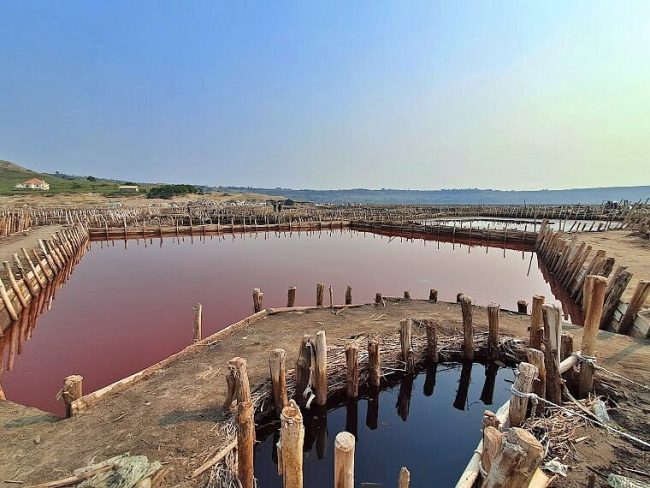
Lake Katwe, Uganda: Discover the Famous Salty Crater Lake in Queen Elizabeth National Park
Introduction: Discover Lake Katwe, Uganda’s Famous Salty Crater Lake
Uganda is home to some of Africa’s most fascinating natural attractions, and Lake Katwe is among the most extraordinary. Located in Kasese District within the region of Queen Elizabeth National Park in western Uganda, Lake Katwe is a highly saline crater lake famous for its traditional salt-mining industry.
Unlike freshwater lakes that support fish, hippos and other aquatic wildlife, Lake Katwe has extremely salty water that makes it difficult for most aquatic organisms to survive. However, what makes this lake particularly special is its importance to the local communities that have depended on salt harvesting for generations.
For centuries, men and women from the surrounding Katwe community have extracted different types of salt using traditional methods. Today, visitors can explore the lake, observe salt-mining activities and learn about the fascinating relationship between the natural environment and local livelihoods.
A visit to Lake Katwe offers much more than beautiful scenery. It provides an authentic cultural experience and an opportunity to understand one of Uganda’s oldest traditional industries.
If you are planning a safari to western Uganda, Epic Uganda Vacation recommends including Lake Katwe in your Queen Elizabeth National Park itinerary.
Where Is Lake Katwe Located in Uganda?
Lake Katwe is located in Kasese District in western Uganda, near the northern part of Queen Elizabeth National Park and close to the Mweya Peninsula.
The lake lies within the Katwe-Kikorongo volcanic field, an area characterised by ancient volcanic formations, explosion craters, crater lakes and beautiful landscapes.
It is situated near several important attractions, including:
Lake Edward.
Lake Munyanyange.
Lake Bunyampaka.
The Mweya Peninsula.
The Kasenyi Plains.
The Kazinga Channel.
Its location makes Lake Katwe an interesting stop for travellers exploring Queen Elizabeth National Park.
The lake can be reached by road from the Mweya area, while visitors travelling from Kampala can access the region through western Uganda.
Why Is Lake Katwe Salty?
One of the most interesting questions about Lake Katwe is why its water is so salty.
Lake Katwe is a hypersaline crater lake formed within an ancient volcanic landscape. Unlike many freshwater lakes, it has no natural outlet through which water can continuously flow away.
Water enters the lake through rainfall, surface runoff and underground mineral-rich sources. As the sun heats the lake, evaporation removes water while leaving dissolved minerals and salts behind.
Over a long period, this process has resulted in the accumulation of highly concentrated saline water.
The combination of volcanic geology, mineral-rich groundwater and evaporation has made Lake Katwe one of Uganda’s most distinctive natural features.
Its salty environment is also responsible for the traditional salt-harvesting industry that has supported surrounding communities for generations.
Lake Katwe Salt Mining: A Traditional Industry That Has Survived for Centuries
The most famous attraction at Lake Katwe is its traditional salt-mining industry.
For generations, local families have depended on salt extraction as an important source of income. The lake contains valuable mineral deposits, and local miners have developed traditional methods of extracting different salt products.
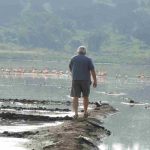
When you visit Lake Katwe, you will notice numerous salt pans and narrow pathways extending across the lake’s edges.
These salt pans are used to concentrate saline water through evaporation, allowing salt crystals to form under the heat of the sun.
Salt extraction involves several activities, depending on the type of salt being harvested.
1. Rock Salt Extraction
Rock salt is extracted from the lakebed. Miners enter the shallow saline water and use traditional tools to remove solid salt deposits.
The work is physically demanding and requires considerable experience.
2. Salt Crystal Harvesting
Salt crystals form when saline water evaporates in specially prepared salt pans.
Miners collect the crystals after sufficient evaporation has taken place. The harvested material is then processed and graded for different uses.
3. Salt Mud Collection
The lake also provides mineral-rich muddy deposits that are collected for uses including animal salt licks and other applications.
The different salt products demonstrate the economic importance of Lake Katwe to the surrounding communities.
The People Behind Lake Katwe’s Salt Industry
Lake Katwe is not simply a natural attraction. It is also an important source of livelihood for local communities.
For generations, families have established salt pans and developed traditional knowledge about salt production.
Men and women participate in different stages of the industry, from preparing salt pans to extracting, collecting and trading salt.
The industry supports local households and contributes to the economy of the Katwe community.
However, salt mining is physically demanding. Workers are exposed to concentrated saline water, strong sunlight and challenging working conditions.
Visiting the lake provides an opportunity to appreciate the determination and skills of the people who continue to depend on this traditional industry.
With a responsible local guide, visitors can learn about the history of salt production, the challenges faced by miners and the importance of protecting the lake’s natural resources.
What Makes Lake Katwe Different from Other Lakes in Uganda?
Uganda has many beautiful lakes, including Lake Victoria, Lake Bunyonyi, Lake Edward and Lake George.
However, Lake Katwe stands out because of its extremely high salt concentration and traditional mining activities.
Here are some of its distinctive characteristics:
Hypersaline water: The lake has an exceptionally high concentration of dissolved salts.
Volcanic origin: It occupies an ancient volcanic crater.
Traditional salt production: It supports a centuries-old industry.
Unique landscape: Salt pans, mineral deposits and volcanic scenery create a distinctive environment.
Cultural importance: The lake remains an important part of the history and livelihoods of the Katwe community.
Unlike freshwater lakes, Lake Katwe does not support ordinary fish populations because of its extreme salinity.
This makes it a fascinating destination for visitors interested in geology, natural history and cultural tourism.
Things to Do at Lake Katwe
A visit to Lake Katwe can be an exciting addition to your Uganda safari.
Here are some of the experiences you can enjoy.
1. Take a Guided Salt Mining Tour
A guided salt-mining tour is one of the best ways to explore Lake Katwe.
Local guides introduce visitors to traditional salt extraction techniques and explain how the industry has developed over generations.
You can observe the salt pans, see how miners work and learn about the different types of salt produced.
2. Learn About Local Culture and Traditions
The salt industry is closely connected to the history and daily lives of people living around Katwe.
A community visit provides opportunities to interact with local residents and understand their traditions, economic activities and challenges.
3. Enjoy Photography
Lake Katwe offers fascinating photographic opportunities.
The salt pans, mineral deposits, traditional mining structures and surrounding volcanic landscape create interesting subjects for photography.
Visitors interested in cultural and documentary photography will particularly enjoy the opportunity to capture the daily activities of salt miners, provided they seek permission before photographing individuals.
4. Explore the Volcanic Landscape
The Katwe-Kikorongo region is characterised by numerous volcanic craters and beautiful natural formations.
Travellers can enjoy scenic drives and explore the surrounding crater landscapes as part of a wider Queen Elizabeth National Park safari.
5. Visit Nearby Lake Munyanyange
Lake Munyanyange is another interesting attraction near Lake Katwe.
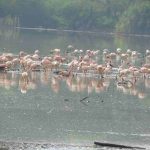
Unlike Lake Katwe, it is known for its seasonal birdlife, including lesser flamingos.
Birdwatching enthusiasts can combine the two lakes to experience the diversity of Uganda’s crater lake environments.
Birdwatching Around Lake Katwe
Although Lake Katwe itself is too salty to support many conventional aquatic organisms, the surrounding region offers interesting birdwatching opportunities.
One of the most notable birding locations nearby is Lake Munyanyange, which attracts migratory waterbirds, including lesser flamingos during suitable seasonal conditions.
The surrounding landscapes also provide habitats for various savannah and wetland bird species.
Birdwatchers visiting Queen Elizabeth National Park can combine a Lake Katwe visit with birding excursions around the Kazinga Channel, Lake Edward and other wetlands.
Remember that bird sightings depend on seasonal movements and environmental conditions.
Best Time to Visit Lake Katwe Uganda
Lake Katwe can be visited throughout the year, but weather conditions influence the salt-harvesting experience.
The drier months are generally more favourable for observing traditional salt production because evaporation helps concentrate the saline water and encourages salt formation.
The commonly recognised drier periods in western Uganda are:
June to August.
December to February.
The rainy seasons generally occur around March to May and September to November.
During periods of heavy rainfall, water levels can rise and affect salt pans and mining activities.
Recent reports have also highlighted flooding and disruptions to salt production at Lake Katwe, so visitors should confirm local conditions before travelling.
For the best experience, Epic Uganda Vacation recommends arranging your visit with a local guide who understands the current conditions around the lake.
How to Get to Lake Katwe
Lake Katwe is accessible by road in the Queen Elizabeth National Park region of western Uganda.
From Kampala
Travellers departing from Kampala can drive westwards through Mbarara and Bushenyi towards Kasese and Queen Elizabeth National Park.
The journey generally takes several hours, depending on traffic, road conditions and the selected route.
From Kasese Town
Lake Katwe can be reached from Kasese through the Katwe-Kabatoro area.
From Mweya Peninsula
Visitors staying at Mweya can arrange a road excursion to Lake Katwe as part of their Queen Elizabeth National Park itinerary.
Travellers can also fly into the region using available domestic charter flight services and continue by road.
Epic Uganda Vacation can organise private transportation, professional driver-guides and accommodation for your Uganda safari.
Other Attractions to Visit Near Lake Katwe
Lake Katwe is ideally positioned for exploring several attractions within Queen Elizabeth National Park.
Lake Bunyampaka
Lake Bunyampaka is another saline crater lake in the Katwe-Kikorongo region. It is associated with traditional salt production and offers beautiful volcanic scenery.
Lake Munyanyange
This crater lake is particularly interesting for birdwatchers because of its seasonal flamingo sightings and other waterbirds.
Kazinga Channel
The Kazinga Channel connects Lake Edward and Lake George. A boat cruise provides opportunities to see hippos, crocodiles, elephants, buffaloes and numerous bird species.
Kasenyi Plains
The Kasenyi Plains are among the best places in Queen Elizabeth National Park for wildlife viewing.
Visitors can encounter Uganda kob, elephants, buffaloes, warthogs and, with luck, lions.
Mweya Peninsula
Mweya is an important tourism centre within Queen Elizabeth National Park, offering beautiful views, accommodation and access to several safari activities.
Kyambura Gorge
Kyambura Gorge is famous for chimpanzee tracking and its beautiful forest ecosystem.
Combining these attractions creates an unforgettable Queen Elizabeth National Park safari.
Responsible Tourism at Lake Katwe
Lake Katwe is an important natural and economic resource. Responsible tourism can help support the surrounding community while encouraging the protection of its environment.
When visiting the lake, travellers should:
Use knowledgeable local guides.
Respect salt miners and their working areas.
Ask permission before taking photographs of people.
Avoid interfering with salt pans or mining equipment.
Follow safety instructions when walking around the lake.
Support legitimate community tourism activities.
Avoid leaving rubbish behind.
By visiting responsibly, tourists can contribute to the local economy and help preserve the cultural heritage associated with traditional salt mining.
Why Visit Lake Katwe with Epic Uganda Vacation?
At Epic Uganda Vacation, we believe that exploring Uganda should be about discovering its natural beauty, wildlife and cultural heritage.
Lake Katwe offers a unique experience that complements traditional wildlife safaris.
Our team can help you organise a personalised Queen Elizabeth National Park safari that includes:
Guided Lake Katwe salt-mining tours.
Traditional cultural experiences.
Visits to Lake Bunyampaka and Lake Munyanyange.
Wildlife game drives in the Kasenyi Plains.
Kazinga Channel boat cruises.
Chimpanzee tracking in Kyambura Gorge.
Comfortable safari accommodation.
Private safari transportation and experienced guides.
Whether you are planning a short Uganda holiday or an extended East African adventure, we can customise your itinerary to suit your interests and budget.
Frequently Asked Questions About Lake Katwe
1. Where is Lake Katwe found in Uganda?
Lake Katwe is located in Kasese District in western Uganda, within the Queen Elizabeth National Park region.
2. Why is Lake Katwe salty?
Lake Katwe is salty because it has no natural outlet, allowing dissolved minerals to accumulate as water evaporates. Its volcanic geology and mineral-rich groundwater also contribute to its salinity.
3. Can you swim in Lake Katwe?
Swimming is not recommended. The lake has extremely concentrated saline water, and its mining activities and environmental conditions make it unsuitable for recreational swimming.
4. Are there fish in Lake Katwe?
No ordinary fish populations are found in Lake Katwe because its extremely high salinity makes survival difficult for fish.
5. What is Lake Katwe famous for?
Lake Katwe is famous for its traditional salt-mining industry, highly saline crater waters, volcanic landscape and cultural importance to surrounding communities.
6. How old is the salt-mining industry at Lake Katwe?
Salt harvesting at Lake Katwe has been practised for centuries. Historical accounts and local traditions document its long-standing importance to the surrounding communities.
7. Can tourists visit the Lake Katwe salt mines?
Yes. Visitors can arrange guided community experiences to learn about traditional salt production and observe mining activities, subject to current access and local conditions.
8. What is the best time to visit Lake Katwe?
The drier months, particularly June to August and December to February, are generally favourable for observing salt-harvesting activities. However, current water levels and local operating conditions should always be checked.
9. How far is Lake Katwe from Queen Elizabeth National Park?
Lake Katwe is within the Queen Elizabeth National Park region, near the Mweya Peninsula and northern crater lake area.
10. Can I visit Lake Katwe on a Queen Elizabeth National Park safari?
Absolutely. Lake Katwe can be included in a customised Uganda safari alongside wildlife game drives, boat cruises, birdwatching and cultural experiences.
Conclusion: Discover the Extraordinary Salty Waters of Lake Katwe
Lake Katwe is one of Uganda’s most fascinating natural and cultural attractions.
Its highly saline crater waters, traditional salt-mining industry and remarkable volcanic landscape make it a destination unlike any other in the country.
Beyond its natural beauty, Lake Katwe tells an important story about the people whose livelihoods have depended on salt harvesting for generations.
A visit provides an opportunity to discover Uganda’s cultural heritage, appreciate traditional skills and explore another remarkable part of Queen Elizabeth National Park.
If you are planning a Uganda safari, do not miss the opportunity to explore Lake Katwe and its surrounding attractions.
Explore Lake Katwe with Epic Uganda Vacation!
Let us organise your Queen Elizabeth National Park adventure and introduce you to the extraordinary natural and cultural attractions of western Uganda.
Visit www.epicugandavacation.com and contact our team to start planning your unforgettable Uganda holiday.