Samburu National Reserve: Wildlife, the Samburu Special Five and Safari Guide
Samburu National Reserve is one of Kenya’s most distinctive wildlife destinations, offering extraordinary encounters with rare northern wildlife, large elephant herds, dramatic landscapes, and the rich cultural heritage of the Samburu people. Located in northern Kenya along the Ewaso Ng’iro River, this spectacular reserve provides a different safari experience from the famous Maasai Mara, Amboseli, and Lake Nakuru.
The reserve is particularly celebrated for the Samburu Special Five: Grevy’s zebra, reticulated giraffe, gerenuk, Beisa oryx, and Somali ostrich. These remarkable animals are adapted to the dry landscapes of northern Kenya and are among the main reasons wildlife enthusiasts visit the region.
For travellers planning a Kenya safari or a broader East African adventure, Samburu National Reserve offers excellent opportunities for game drives, birdwatching, wildlife photography, and cultural encounters.
At Epic Uganda Vacation Ltd, we help travellers discover the remarkable wildlife and landscapes of East Africa through tailor-made safari experiences. Samburu can be included in a wider itinerary combining Kenya’s iconic wildlife destinations with Uganda’s mountain gorilla trekking, chimpanzee tracking, and other unforgettable nature experiences.
Where Is Samburu National Reserve Located?
Samburu National Reserve is located in Samburu County in northern Kenya, approximately 300–350 kilometres from Nairobi by road, depending on the route and starting point.
The reserve covers approximately 165 square kilometres and lies on the northern bank of the Ewaso Ng’iro River. Its landscape features dry savannah, rocky hills, acacia woodland, open plains, and riverine vegetation.
The Ewaso Ng’iro River is essential to the reserve’s ecosystem, providing water for elephants, other mammals, and numerous bird species in an otherwise arid region.
Samburu borders or lies close to other important conservation areas, including Buffalo Springs National Reserve and Shaba National Reserve. Together, these destinations provide opportunities to explore a wider range of northern Kenya’s landscapes and wildlife habitats.
What Makes Samburu National Reserve Special?
Samburu stands out because of its dry-country wildlife, attractive river scenery, and relatively different safari atmosphere compared with Kenya’s southern savannah parks.
Its main attractions include:
- The famous Samburu Special Five.
- Large herds of African elephants.
- Opportunities to spot lions, leopards, and cheetahs.
- Excellent birdwatching across riverine and dryland habitats.
- Scenic game drives along the Ewaso Ng’iro River.
- Cultural experiences with the Samburu community.
- Access to nearby conservancies and neighbouring reserves.
The combination of rare wildlife and distinctive landscapes makes Samburu an excellent destination for repeat safari travellers and photographers looking for something beyond Kenya’s better-known parks.
The Samburu Special Five
The Samburu Special Five are five wildlife species strongly associated with northern Kenya’s dry environments. Seeing them is a major highlight of a safari in Samburu National Reserve.
1. Grevy’s Zebra
Grevy’s zebra is the largest living wild zebra species and is distinguished by its narrow black-and-white stripes, large rounded ears, and white belly.
Unlike plains zebras, Grevy’s zebras are adapted to relatively dry habitats and can travel considerable distances in search of food and water. They are endangered, making conservation efforts across northern Kenya especially important.
Samburu offers valuable opportunities to observe these striking animals grazing on open plains or moving through the reserve.
2. Reticulated Giraffe
The reticulated giraffe is one of the most visually distinctive giraffe species, recognised by its large, sharply defined polygonal patches separated by pale lines.
These giraffes browse on trees and shrubs, using their long necks and prehensile tongues to reach leaves that many other herbivores cannot access.
Northern Kenya is one of the most important regions for reticulated giraffes, and Samburu is a rewarding destination for observing and photographing them in their natural habitat.
3. Gerenuk
The gerenuk, sometimes called the giraffe gazelle, is a slender antelope with a long neck, large ears, and delicate legs.
It is famous for standing upright on its hind legs to reach leaves and shoots on taller shrubs. This unusual feeding behaviour makes it one of the most fascinating animals to encounter during a Samburu safari.
Gerenuks are browsers adapted to dry environments, and they can often obtain much of the moisture they need from their food.
4. Beisa Oryx
The Beisa oryx is a robust antelope adapted to arid and semi-arid landscapes. It has long, straight horns, distinctive facial markings, and a pale body with darker markings along its sides.
These animals are well adapted to hot conditions and can survive in environments where water is limited.
During a game drive, visitors may see Beisa oryx feeding in open areas or moving across the dry savannah in small groups.
5. Somali Ostrich
The Somali ostrich is a large, flightless bird found in parts of the Horn of Africa and northern Kenya. Males have distinctive blue-grey skin on the neck and thighs, while females are generally browner.
These birds inhabit open and semi-arid landscapes, where their long legs help them move efficiently across the terrain.
Spotting the Somali ostrich completes the Samburu Special Five experience, although sightings depend on the birds’ movements and the time spent exploring suitable habitats.
Wildlife in Samburu National Reserve
Beyond the Special Five, Samburu supports a diverse range of mammals and birdlife.
African Elephants
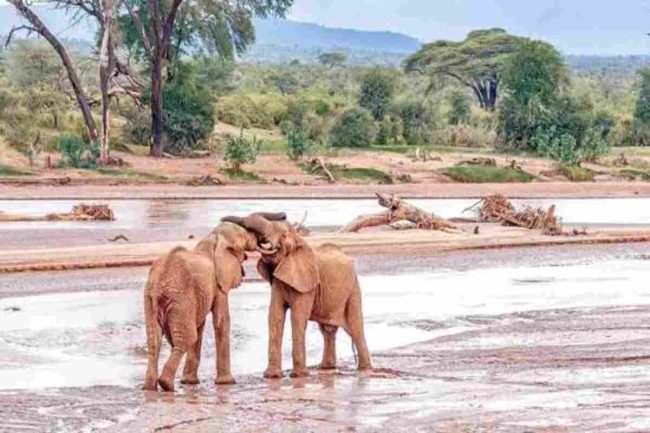
Elephants are among the reserve’s most memorable attractions. Herds frequently move through the landscape and gather near the Ewaso Ng’iro River to drink, bathe, and feed.
The riverine vegetation provides important habitat, while the surrounding dry country offers opportunities to observe elephants adapting to seasonal changes in water and food availability.
Samburu is also associated with long-term elephant research and conservation initiatives.
Lions
Lions inhabit Samburu’s grasslands and woodland areas. Visitors may encounter them resting in the shade, moving through the bush, or searching for prey.
Early morning and late afternoon game drives can provide rewarding opportunities to look for lions when conditions are cooler.
Leopards
Leopards are among the most sought-after sightings in Samburu. These elusive cats may be found in riverine woodland, rocky areas, and locations offering suitable cover.
Their spotted coats and secretive behaviour make them fascinating subjects for wildlife photography, although sightings are never guaranteed.
Cheetahs
Cheetahs inhabit open areas where their speed and hunting techniques give them an advantage. They may be seen scanning the grasslands for prey or resting in suitable cover.
A knowledgeable safari guide can help identify potential cheetah habitats during game drives.
Other Mammals
Additional wildlife may include impalas, greater and lesser kudus, warthogs, baboons, and other small mammals.
The species encountered will depend on the season, habitat, and wildlife movements during your visit.
Important: Samburu is not primarily a Big Five destination because it does not have an established resident rhino population within the reserve. Travellers whose main priority is seeing all five traditional African safari animals may wish to combine Samburu with a suitable rhino sanctuary elsewhere in Kenya.
Birdwatching in Samburu National Reserve
Samburu is also a rewarding destination for birdwatchers, with a rich variety of species associated with dry savannah, riverine woodland, and scrubland.
Birds you may encounter include:
- Vulturine guineafowl.
- Somali ostrich.
- Various hornbills.
- Secretarybirds in suitable open habitats.
- African fish eagles near the river.
- Weaver birds.
- Eagles and other birds of prey.
- Kingfishers and other river-associated birds.
The reserve’s changing habitats provide opportunities to observe both resident species and seasonal visitors. Birdwatching is particularly rewarding for visitors interested in the relationship between wildlife and the semi-arid environment.
Bring binoculars, a bird identification guide, and a camera with a suitable zoom lens to make the most of your visit.
Things to Do in Samburu National Reserve
1. Enjoy Wildlife Game Drives
Game drives are the main activity in Samburu National Reserve. Morning and afternoon excursions offer opportunities to explore different habitats while searching for elephants, the Samburu Special Five, and predators.
Early mornings are often cooler, while late afternoon provides beautiful light for photography.
2. Photograph the Samburu Special Five
Wildlife photography is one of the reserve’s biggest attractions. The distinctive markings of Grevy’s zebra, reticulated giraffe, and Beisa oryx provide excellent subjects.
The dry savannah, rocky hills, and riverine vegetation create contrasting backgrounds for photographs.
A camera with a telephoto lens and a pair of binoculars can make wildlife viewing more rewarding.
3. Observe Elephants Along the Ewaso Ng’iro River
The river is one of the most important features of the Samburu ecosystem. Depending on conditions, visitors may see elephants drinking, crossing shallow sections, or feeding among riverside vegetation.
These encounters provide opportunities to observe elephant social behaviour while appreciating the importance of water in northern Kenya.
4. Go Birdwatching
Birdwatching can be combined with regular game drives or arranged as a more specialised experience. Guides can help visitors identify species, understand their habitats, and spot birds that might otherwise go unnoticed.
5. Experience Samburu Culture
The Samburu people have a long-standing cultural connection with the landscapes of northern Kenya. An appropriately organised community visit may introduce travellers to traditional clothing, beadwork, pastoral traditions, local history, and contemporary community life.
Choose responsible experiences arranged with community consent, and follow guidance on photography, customs, and participation.
6. Explore Nearby Conservation Areas
Samburu can be combined with Buffalo Springs National Reserve, Shaba National Reserve, or nearby community conservancies.
Each destination has its own landscape, wildlife opportunities, management arrangements, and entrance requirements. Plan ahead to ensure your itinerary allows enough time for transfers and separate entry fees where applicable.
Best Time to Visit Samburu National Reserve
Samburu is a year-round safari destination, but seasonal conditions influence wildlife viewing, road access, and the overall travel experience.
June to October: The generally drier conditions often make wildlife easier to locate around remaining water sources. These months are popular for game drives and photography.
January to February: Another relatively dry period that can offer favourable wildlife-viewing conditions.
March to May: Rainfall can make the landscape greener, improve some birdwatching opportunities, and affect road conditions. Some tracks may become difficult to navigate.
November to December: Seasonal rains can create attractive scenery and support birdlife, although weather and road conditions vary.
For many visitors, June to October and January to February are strong choices for general wildlife viewing. However, animal sightings are never guaranteed, and the best travel dates depend on your priorities and itinerary.
Because Samburu can become hot during the day, early morning and late afternoon game drives are generally more comfortable than spending extended periods in the midday heat.
How to Get to Samburu National Reserve
By Road from Nairobi
Travelling by road is a popular way to reach Samburu. A typical route passes through Nanyuki and Isiolo before continuing towards Archer’s Post and the reserve.
The journey generally takes around six to seven hours, depending on traffic, road conditions, and stops along the way.
A suitable four-wheel-drive safari vehicle is recommended, particularly when travelling on rough roads or during wet conditions.
By Air
Travellers can also arrange scheduled or charter flights from Nairobi to airstrips serving the Samburu area.
Flights can significantly reduce travel time, making them a useful option for visitors with limited time or those planning a fly-in safari.
Confirm the operating schedule, destination airstrip, baggage allowance, and onward transfer arrangements with your airline or safari operator.
Combining Samburu with Other Kenya Destinations
Samburu is often included in a multi-day Kenya safari alongside destinations such as the Maasai Mara National Reserve, Lake Nakuru National Park, and Lake Naivasha.
The ideal route depends on your arrival airport, travel duration, wildlife interests, and accommodation preferences.
Samburu National Reserve Entry Fees
Samburu National Reserve is managed by the Samburu County Government, which sets its own entry tariffs. It is important not to assume that Kenya Wildlife Service fees for national parks automatically apply to this reserve.
Published 2026 fee information lists the following indicative rates for Samburu National Reserve:
| Visitor category | Indicative entry fee |
|---|---|
| Foreign non-resident adult | US$85 |
| Foreign non-resident child or eligible student | US$50 |
| Eligible East African resident adult | KSh 1,600 |
| Kenyan citizen adult | KSh 800 |
Vehicle entry, camping, filming, and other special activities may incur additional charges. Rates depend on eligibility and the applicable county tariff. <a href=”https://www.samburureserve.com/park-entry-fees.php“>See the published Samburu reserve fee guide</a>.
Before travelling: Confirm current rates, ticket validity, accepted payment methods, and eligibility directly with Samburu County or through your safari operator. Fees may change, and the neighbouring Buffalo Springs and Shaba reserves have separate administrative arrangements and tariffs. <Cite refs={[“turn621640search2″,”turn621640search3″,”turn621640search7”]}/>
Where to Stay in Samburu National Reserve
Samburu offers a selection of safari lodges, luxury tented camps, mid-range accommodation, and camping options. Many properties are located along or near the Ewaso Ng’iro River, providing convenient access to wildlife-viewing areas.
Luxury Safari Lodges and Camps
Luxury accommodation is suitable for travellers seeking spacious rooms or tents, attentive service, quality dining, and an immersive safari atmosphere.
Examples in the wider Samburu area include Sasaab Lodge, Elephant Bedroom Camp, and Saruni Samburu. Check each property’s precise location and current facilities before booking.
Mid-Range Accommodation
Mid-range lodges and tented camps offer a balance between comfort, safari convenience, and price. They can be a practical choice for couples, families, and small groups seeking a guided wildlife experience.
Budget Accommodation and Camping
Budget-conscious travellers can consider simpler camps, guesthouses, or camping options where available. Check the location carefully, as accommodation outside the reserve may involve additional driving and separate daily entry fees.
When comparing accommodation, look at meal plans, vehicle arrangements, included game drives, transfer costs, and whether reserve fees are included in the advertised price.
What to Pack for a Samburu Safari
Samburu is generally hot and dry, so lightweight clothing and sun protection are essential.
Recommended items include:
- Lightweight, neutral-coloured safari clothing.
- A wide-brimmed hat and sunglasses.
- Sunscreen and insect repellent.
- Comfortable walking shoes.
- A reusable water bottle.
- Binoculars and a camera with spare batteries.
- A small daypack.
- A light jacket for cooler mornings and evenings.
- Personal medication and basic travel essentials.
Drink water regularly and follow your guide’s advice on heat, wildlife safety, and appropriate behaviour during game drives.
Responsible Tourism and Wildlife Conservation
Samburu National Reserve is an important wildlife habitat and a source of tourism-related livelihoods for surrounding communities.
Responsible safari practices help protect the animals and preserve the experience for future visitors.
- Maintain a safe distance from wildlife.
- Never feed animals or attempt to attract them.
- Remain inside the safari vehicle unless your guide authorises a designated safe activity.
- Avoid littering and disturbing habitats.
- Follow speed limits and designated driving routes.
- Respect local customs and obtain permission before photographing people.
- Choose community visits that are respectful and benefit local participants.
Tourism can contribute to conservation through park revenue, employment, community initiatives, and support for wildlife research.
Combine Samburu National Reserve with a Uganda Safari
For travellers planning a wider East African adventure, Samburu can be combined with Uganda’s remarkable primate encounters and diverse wildlife destinations.
A tailor-made itinerary may include:
- Samburu National Reserve for the Special Five and elephants.
- Maasai Mara National Reserve for classic savannah wildlife.
- Lake Nakuru National Park for rhino conservation and birdwatching.
- Bwindi Impenetrable National Park for mountain gorilla trekking.
- Kibale Forest National Park for chimpanzee tracking.
- Queen Elizabeth National Park for wildlife game drives and boat safaris.
A combined Kenya and Uganda safari requires careful planning of international flights, border and entry requirements, accommodation, and gorilla trekking permits.
Epic Uganda Vacation Ltd can help you plan a personalised East African journey that brings together Kenya’s unique dryland wildlife and Uganda’s unforgettable primate experiences.
Frequently Asked Questions About Samburu National Reserve
1. What is Samburu National Reserve famous for?
Samburu is famous for the Samburu Special Five, large elephant herds, scenic landscapes, and opportunities to see lions, leopards, and cheetahs.
2. What are the Samburu Special Five?
The Samburu Special Five are Grevy’s zebra, reticulated giraffe, gerenuk, Beisa oryx, and Somali ostrich.
3. Can I see the Big Five in Samburu?
Samburu is not a traditional Big Five destination because rhinos are not an established resident attraction within the reserve. Visitors can look for elephants, lions, leopards, and buffaloes, although individual sightings vary. Consider adding another suitable Kenyan conservation area if seeing rhinos is a priority.
4. How many days should I spend in Samburu?
Two nights and three days provide a useful introduction to the reserve. Three nights or longer allow more time for game drives, photography, birdwatching, and cultural experiences.
5. What is the best time to visit Samburu?
June to October and January to February are generally favourable periods for wildlife viewing. Samburu can be visited throughout the year, but rainfall may affect roads and wildlife movements.
6. How much is the entrance fee for Samburu National Reserve?
Published 2026 rates list US$85 per foreign non-resident adult, with different rates for children, eligible residents, and citizens. Vehicle charges and other activities may be additional. Always verify the latest applicable tariff before travel.
7. Is Samburu National Reserve suitable for families?
Yes. Families can enjoy wildlife game drives and, where available, suitable cultural activities. Check accommodation age policies, vehicle arrangements, and the length of transfers when planning a family safari.
8. Can I combine Samburu with the Maasai Mara?
Yes. Both destinations can be included in a multi-day Kenya safari, with the route planned around travel time, flights or road transfers, and the number of nights available.
9. Is Samburu a national park or a national reserve?
Its official designation is Samburu National Reserve. It is managed by the Samburu County Government rather than being a Kenya Wildlife Service-managed national park.
Plan Your Samburu National Reserve Safari
Samburu National Reserve offers a distinctive Kenyan safari experience, combining rare dryland wildlife, impressive elephant encounters, scenic river landscapes, and opportunities to learn about Samburu culture.
Whether you are hoping to photograph the Samburu Special Five, explore northern Kenya’s wildlife habitats, or combine several destinations into a longer East African adventure, Samburu deserves a place on your itinerary.
Contact Epic Uganda Vacation Ltd to discuss a tailor-made East African safari combining Kenya’s wildlife highlights with Uganda’s gorilla trekking, chimpanzee tracking, and spectacular natural landscapes.