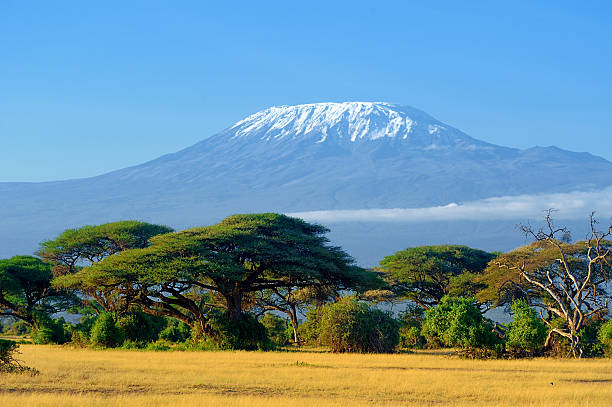
A Complete Guide to Mount Kilimanjaro: Standing tall at 5,895 meters (19,341 feet) above sea level, Mount Kilimanjaro is not only the highest peak in Africa but also the tallest free-standing mountain in the world. Located in Tanzania, near the border with Kenya, this dormant volcano commands the skyline, its snow-capped summit rising dramatically above the savannah of the surrounding plains. To climb Kilimanjaro is to journey through five distinct climatic zones in a matter of days, moving from tropical rainforest to arctic tundra. It is a trek accessible to anyone with a reasonable level of fitness, determination, and the right preparation. Yet, it remains a formidable challenge that demands respect.
This complete guide will walk you through everything you need to know about standing on the “Roof of Africa,” from choosing the right route to preparing for the final, grueling push to Uhuru Peak.
The Routes: Choosing Your Path to the Summit
One of the most common questions trekkers ask is: “Which route is best?” There are seven established routes up Kilimanjaro, each with a distinct character, difficulty level, and scenery. The choice you make will significantly impact your experience, and your chances of success.
Marangu Route (“The Coca-Cola Route”)
The Marangu Route is the oldest and most established path up the mountain. It is often jokingly called the “Coca-Cola” route because it is historically considered the easiest and can be done in relative comfort.
Marangu is the only route that offers hut accommodation. Instead of sleeping in tents, trekkers stay in A-frame huts with bunk beds and dining halls. The relative comfort of sleeping in a bed with a mattress is a major draw. It can be done in five days, though six is recommended for acclimatization. It is also the most direct route. Because it is the cheapest and shortest, it is often crowded. The scenery is considered less diverse than other routes, and the success rate is generally lower due to the rapid ascent profile (five days provides little time for the body to adjust to the altitude).
Machame Route (“The Whiskey Route”)
The Machame Route is arguably the most popular path on the mountain and a firm favorite for those seeking a balance of challenge and beauty. It is often dubbed the “Whiskey” route because it is tougher than the “Coca-Cola” route.
Machame is a camping route. Trekkers sleep in dome tents carried by porters. The trail approaches the mountain from the southwest and traverses the Shira Plateau. This route offers arguably the most stunning scenery, taking you through deep gorges and lush rainforests. The “climb high, sleep low” profile – particularly the day you climb the Barranco Wall – makes for excellent acclimatization. Consequently, the success rate on Machame is higher than on Marangu. It is physically steeper and more demanding than Marangu, particularly the scramble up the Barranco Wall. It can also be crowded, especially on summit night where it merges with other routes.
Lemosho Route (“The Scenic Route”)
For those seeking a premier experience with maximum scenic beauty and excellent acclimatization, the Lemosho Route is widely considered the gold standard. Approaching from the west, Lemosho is a longer route, typically taking 8 or 9 days. It begins in the lush rainforest on the western side of the mountain before crossing onto the Shira Plateau. Because of its length and remote start, Lemosho offers the best acclimatization profile, leading to the highest success rates among the standard routes. It is also less trafficked during the first few days, offering a true wilderness experience. The panoramic views of the western face of the mountain are spectacular. It is more expensive due to the extra days on the mountain (park fees are charged daily) and the logistics of starting in a remote location.
Rongai and the Northern Circuit
Rongai Route is the only route that approaches from the north, close to the Kenyan border. It is the drier side of the mountain, making it a good choice during the rainy season. It is easier and gentler than Machame but offers less scenic variety.
The Northern Circuit is a relatively new route that circles the northern slopes of the mountain. It is the longest route (up to 9 days), offering incredible solitude and near-perfect acclimatization. It is arguably the most “exclusive” route currently available.
How to Prepare for Kilimanjaro Hike
Climbing Kilimanjaro is a physical endurance challenge, but it is primarily a battle against altitude.
Fitness
You do not need to be an elite athlete to climb Kilimanjaro, but you do need to be in good physical condition. The trek involves 6 to 9 hours of hiking per day, often on steep, uneven terrain. A training regime should include long-distance hiking (ideally with a weighted backpack), cardio (running or cycling), and leg-strengthening exercises. Most importantly, train in the boots you will wear on the mountain. Blisters are a summit-killer.
Packing List
The weather on Kilimanjaro is notoriously unpredictable. You must be prepared for torrential rain in the rainforest and blistering sub-freezing winds at the summit. Layering is the key.
- Base Layer: Moisture-wicking synthetic or thermal fabrics. No cotton.
- Insulation Layer: Fleece jackets or a down jacket.
- Outer Shell: A high-quality waterproof and windproof hard-shell jacket and pants.
- Footwear: Hiking boots with good ankle support (worn in), gaiters to keep mud and scree out, and thermal socks.
- Gear: A duffel bag (carried by porters), a waterproof daypack for your essentials, a sleeping bag rated for -10°C to -20°C, trekking poles (essential for knees), and a headlamp for summit night.
What to Expect on the Mountain
The Crew and Camp Life
You will not be alone. The logistics of Kilimanjaro rely heavily on a massive crew. A typical team consists of a head guide, assistant guides, a cook, and a large team of porters. The ratio of support staff to climbers is often 3:1. The porters are the unsung heroes of the mountain, carrying heavy loads to ensure your comfort. They will set up camp and have hot meals waiting for you when you arrive. Respect for the crew and appropriate tipping are integral parts of the trek.
The Ecosystem Zones
One of the most fascinating aspects of the climb is the rapid change in vegetation.
- Cultivation Zone (800m–1,800m): Lush farmland growing coffee and bananas.
- Rainforest Zone (1,800m–2,800m): A humid, jungle-like zone with towering trees, monkeys, and exotic flowers. It is usually wet and muddy here.
- Heather/Moorland Zone (2,800m–4,000m): As you rise, the trees give way to giant heathers and lobelias. The landscape opens up into a rocky, alpine desert with dramatic views.
- Alpine Desert Zone (4,000m–5,000m): The environment becomes hostile and alien. Rocks, sand, and scree dominate. Temperatures fluctuate wildly. Water sources are scarce.
- Arctic Zone (5,000m–5,895m): Ice and snow. The air is thin, containing half the oxygen available at sea level.
Summit Night
Summit night is the hardest thing you will likely ever do physically. It usually starts around midnight. You don heavy down gear, strap on your headlamp, and start the slow, endless shuffle uphill in the pitch dark. The air is freezing, often -20°C (-4°F) or colder.
The goal is to reach Stella Point (5,756m) on the rim of the crater by sunrise. This is the point where the mental struggle is most intense. Every step is a battle, and exhaustion is overwhelming. But as the sun creeps over the horizon, illuminating the glaciers and the plains below, a surge of adrenaline takes over.
From Stella Point, it is another hour to the summit – Uhuru Peak. Reaching the sign, gasping for breath, with the glaciers of Kibo glowing in the morning sun, is a moment of pure, unadulterated euphoria. The world literally sits beneath your feet. You stand at the Roof of Africa.
Altitude Sickness
The biggest danger on Kilimanjaro is not wild animals or the cold; it is Acute Mountain Sickness (AMS). As you ascend, the air gets thinner, and your body struggles to get the oxygen it needs.
- Pole Pole: The golden rule of Kilimanjaro is the Swahili phrase Pole Pole (pronounced “Poh-leh Poh-leh”), meaning “Slowly, slowly.” The slower you walk, the better your body can acclimatize.
- Hydration: Drink 3 to 4 liters of water daily.
- Medication: Diamox (Acetazolamide) is often prescribed to help prevent AMS. Consult your doctor before the trip.
- Descending: If symptoms worsen (severe headache, vomiting, loss of coordination), the only cure is immediate descent.
When to Go
Kilimanjaro can be climbed year-round, but there are two distinct trekking seasons corresponding to the dry seasons:
January to March: Generally warmer and clearer, though there is potential for snow near the summit. This is a quieter time on the mountain.
June to October: The main dry season. Skies are usually clear, and the views are spectacular. This is the busiest time to climb.
Pack your bags now and conquer Kilimanjaro
Climbing Mount Kilimanjaro is an adventure that will stay with you for the rest of your life. It is a test of mental fortitude that transcends the physical challenge. Whether you choose the rugged beauty of Machame, the comfortable pace of Marangu, or the scenic splendor of Lemosho, the moment you stand on Uhuru Peak, watching the sunrise over the African continent, every ache and shiver will feel like a small price to pay. Pack your bags, respect the mountain, and prepare for the journey of a lifetime.