Airstrips in Maasai Mara National Reserve: The Complete Safari Travel Guide
Introduction: Understanding the Airstrips in Maasai Mara National Reserve
The Maasai Mara National Reserve is one of Africa’s most celebrated safari destinations, famous for its exceptional wildlife, expansive savannah landscapes, large lion populations, and seasonal Great Wildebeest Migration. Located in southwestern Kenya, the reserve attracts travelers seeking memorable wildlife encounters, luxury safari experiences, photography adventures, and opportunities to explore the African wilderness.
For many visitors, flying into the Maasai Mara is one of the most convenient ways to begin a safari. Instead of spending several hours traveling by road from Nairobi, travelers can take a scheduled bush flight or private charter to an airstrip serving their chosen camp or lodge.
The airstrips in Maasai Mara National Reserve and the surrounding Greater Mara ecosystem provide access to different safari areas, including the central plains, the Musiara region, the Mara Triangle, and neighboring wildlife conservancies.
However, not every airstrip serves the same area. Some are located inside or directly serve the national reserve, while others primarily serve private conservancies and community-owned wildlife areas outside its formal boundaries. Choosing the right landing point can reduce transfer time and help you make the most of your safari.
At Epic Uganda Vacation, we understand the importance of planning convenient travel connections when organizing an East African wildlife adventure. Whether you are visiting Kenya exclusively or combining the Maasai Mara with Uganda’s gorilla trekking and wildlife safaris, understanding the region’s airstrips can help you build a smoother itinerary.
This comprehensive guide explains the main Maasai Mara airstrips, the safari areas they serve, how to choose the right one, flight arrangements, baggage considerations, and practical tips for planning your trip.
Where Is Maasai Mara National Reserve Located?
The Maasai Mara National Reserve is situated in Narok County in southwestern Kenya, bordering Tanzania’s Serengeti ecosystem.
The reserve forms part of the wider Serengeti–Mara ecosystem, which supports large populations of wildlife and seasonal movements of wildebeest, zebras, and other grazing animals.
Travelers commonly reach the Maasai Mara from Nairobi by road or by domestic safari flight. Flights generally depart from Wilson Airport in Nairobi, although some itineraries offer connections from other destinations or private charter arrangements.
The reserve and its surrounding conservancies contain numerous small bush airstrips. These facilities are designed primarily for light aircraft and safari flights rather than large international passenger aircraft.
The most suitable airstrip depends on where you are staying and which part of the ecosystem you plan to explore.
Why Are There So Many Airstrips in the Maasai Mara?
The Maasai Mara covers a large area, and safari camps and lodges are distributed across different wildlife-viewing regions. The surrounding conservancies extend the broader safari landscape beyond the formal reserve boundaries.
Having several airstrips allows travelers to reach accommodation in different parts of the ecosystem without relying exclusively on long road transfers.
There are several important reasons for this network of airstrips.
1. Reduced travel time
Flying from Nairobi to the Maasai Mara generally takes less time than traveling the entire route by road. Many scheduled safari flights take approximately 40–60 minutes, depending on the routing and stops.
The exact flight duration varies by operator, departure point, destination, and whether the aircraft makes additional stops.
2. Access to remote safari camps
Some camps are located far from the main reserve gates or along remote sections of the Mara ecosystem.
A nearby airstrip can make these properties more accessible, especially for travelers on short safaris or those visiting multiple parks.
3. More time for wildlife viewing
By reducing overland travel time, a fly-in safari can allow visitors to spend more of their holiday exploring the plains, observing wildlife, and enjoying guided game drives.
Actual activities depend on the flight schedule, arrival time, camp transfer arrangements, and the safari package.
4. Convenient multi-destination itineraries
Airstrips in the Greater Mara region connect with other safari destinations through domestic flight networks and charter arrangements.
Depending on available schedules, travelers may be able to combine the Maasai Mara with destinations such as Amboseli, Samburu, Laikipia, or coastal Kenya.
International itineraries can also combine a Kenya safari with Uganda’s national parks and mountain gorilla trekking.
Main Airstrips in Maasai Mara National Reserve
The following airstrips are among the principal landing points used for safaris in the reserve and the wider Greater Mara ecosystem.
The distinction between reserve airstrips and conservancy airstrips is important. The names below are commonly used in safari planning, but operators may assign flights to different strips depending on the property, route, aircraft, and current operating conditions.
1. Keekorok Airstrip
General location: Eastern and southeastern parts of the Maasai Mara.
Keekorok Airstrip is one of the established bush airstrips serving the Maasai Mara. It is particularly useful for visitors staying around Keekorok and selected central or eastern safari properties.
Its location makes it a practical arrival point for travelers whose itineraries focus on the eastern side of the reserve.
The surrounding landscape includes open grasslands and wildlife habitats that support a variety of herbivores and predators.
Who should use Keekorok Airstrip?
- Travelers staying at Keekorok Lodge or other properties assigned to this airstrip.
- Visitors whose safari itinerary focuses on the eastern or southeastern Mara.
- Travelers combining a fly-in safari with game drives in the surrounding plains.
Always confirm the assigned landing strip with your accommodation provider rather than assuming that every lodge in the eastern Mara uses Keekorok.
2. Ol Kiombo Airstrip
General location: Central Maasai Mara, serving several camps in the central reserve and Talek-side areas.
Ol Kiombo Airstrip is an important access point for central Mara safari properties. It is frequently used by travelers staying at camps that focus on wildlife viewing across the central plains.
The central Mara offers opportunities to observe lions, elephants, giraffes, buffaloes, zebras, wildebeest, and other wildlife.
Ol Kiombo can be a convenient option for travelers who want to explore central game-drive areas, although the best landing point depends on the exact location of their camp.
Who should use Ol Kiombo Airstrip?
- Guests whose lodges or camps specify Ol Kiombo as their arrival point.
- Travelers exploring the central Mara and nearby Talek-side areas.
- Visitors planning a safari centered on the reserve’s central plains.
The airstrip is also known as Olkiombo in some airline schedules and travel documents.
3. Musiara Airstrip
General location: Northern Maasai Mara, around the Musiara area.
Musiara Airstrip serves safari camps in the northern Mara, including properties associated with the Governors’ Camps area.
This region is known for its grasslands, riverine habitats, and wildlife-viewing opportunities. The surrounding area can be particularly interesting for travelers exploring northern Mara wildlife habitats.
During the Great Wildebeest Migration season, the wider northern Mara region may offer opportunities to observe large herds moving through the ecosystem. However, migration activity changes with rainfall and grazing conditions.
Who should use Musiara Airstrip?
- Travelers staying at camps assigned to the Musiara arrival point.
- Visitors whose itineraries focus on the northern Mara.
- Wildlife enthusiasts who want to explore the surrounding northern game-drive areas.
Musiara and Governors are sometimes referenced together in travel information, but travelers should confirm the exact landing strip shown on their flight itinerary.
4. Mara Serena Airstrip
General location: Mara Triangle, western Maasai Mara.
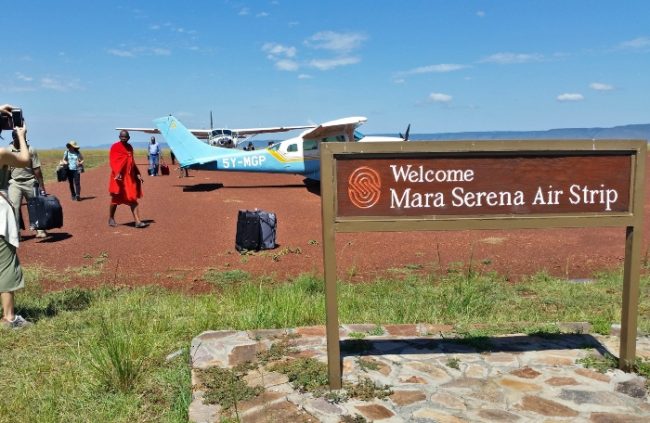
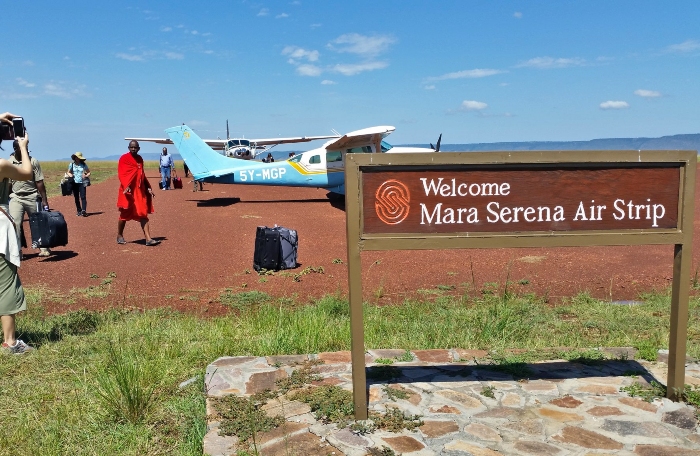
Mara Serena Airstrip serves Mara Serena Safari Lodge and provides access to the Mara Triangle, an important wildlife-viewing area in the western part of the Maasai Mara ecosystem.
The Mara Triangle is known for its open plains, resident wildlife, and seasonal migration activity. The Mara River also supports a rich ecosystem of hippos, crocodiles, birds, and other wildlife.
For visitors staying in this part of the Mara, the Serena airstrip can provide convenient access to accommodation and game-drive routes.
Who should use Mara Serena Airstrip?
- Travelers staying at Mara Serena Safari Lodge or other properties specifically assigned to this strip.
- Visitors exploring the Mara Triangle.
- Travelers planning migration-focused game drives in the western Mara.
Mara Serena Airstrip should not be confused with the Mara Serena Lodge itself or with every airstrip serving the western Mara. Always check your booking details.
5. Kichwa Tembo Airstrip
General location: Western Mara, near the Oloololo Escarpment and the Mara Triangle area.
Kichwa Tembo Airstrip is a well-known landing point serving safari accommodation in the western Greater Mara region.
It is associated with Kichwa Tembo Camp and other properties that use the airstrip for guest transfers.
The surrounding landscape includes the Oloololo Escarpment, open plains, and wildlife habitat along the western side of the Mara ecosystem.
Who should use Kichwa Tembo Airstrip?
- Travelers whose accommodation specifies Kichwa Tembo as the arrival point.
- Visitors staying at selected western Mara camps.
- Travelers who want to explore the wider Mara Triangle and Oloololo Escarpment region.
Some properties located nearby may use a different airstrip. For example, Angama Mara has its own associated airstrip, so guests should follow the landing instructions provided by their accommodation.
6. Angama Airstrip
General location: Oloololo Escarpment area, western Maasai Mara ecosystem.
Angama Airstrip is associated with Angama Mara, a luxury safari lodge situated high above the Mara landscape.
The lodge’s elevated location offers sweeping views over the surrounding plains, making it attractive to travelers seeking a combination of scenic accommodation and wildlife experiences.
Who should use Angama Airstrip?
Primarily travelers whose accommodation or flight booking specifies Angama as the arrival point.
Because airstrip allocations can vary by operator and itinerary, confirm the assigned destination with the lodge before booking your flight.
Important distinction
Keekorok, Ol Kiombo, Musiara, Mara Serena, and Kichwa Tembo are among the main airstrips commonly discussed in relation to access to the reserve. Angama and other airstrips may serve specific properties or nearby areas.
The wider Greater Mara ecosystem contains additional airstrips that primarily serve conservancies outside the formal national reserve.
Airstrips Serving the Greater Maasai Mara Conservancies
The Maasai Mara ecosystem extends beyond the national reserve into surrounding conservancies and community-managed wildlife areas.
These areas support wildlife dispersal, tourism, and conservation while providing access to safari camps that may offer experiences different from those available inside the reserve.
If your accommodation is located in a conservancy, its preferred airstrip may be outside the national reserve boundary.
7. Mara North Airstrip
Mara North Airstrip serves properties within or associated with Mara North Conservancy, north of the main reserve.
The conservancy is known for its safari camps, wildlife habitat, and community-linked conservation model.
Travelers staying in this area should confirm whether Mara North Airstrip is the designated landing point for their property.
8. Olare Orok Airstrip
Olare Orok Airstrip serves properties in the Olare Motorogi Conservancy and the surrounding Greater Mara region.
It is associated with selected luxury camps and safari accommodation in this conservancy.
Visitors staying in this area should confirm the assigned airstrip and any conservancy fees that may apply to their itinerary.
9. Ol Seki Airstrip
Ol Seki Airstrip serves accommodation in and around the Naboisho Conservancy and nearby areas of the Greater Mara ecosystem.
The wider region is popular with travelers seeking conservancy-based safari experiences.
Some conservancies offer activities such as guided walking safaris or night drives where permitted by their regulations. These activities are not automatically available within the national reserve and must be arranged through authorized operators.
10. Ngerende Airstrip
Ngerende Airstrip serves selected accommodation in the northern Greater Mara region, including properties associated with the Lemek area.
It can be useful for travelers staying at camps that are not conveniently served by the main reserve airstrips.
Because accommodation and flight allocations can overlap between regions, confirm the preferred landing point before purchasing tickets.
11. Siana Airstrip
Siana Airstrip serves selected properties in the eastern Greater Mara ecosystem, including areas associated with the Siana region.
Travelers staying in these areas should confirm whether the booked flight lands at Siana or another nearby airstrip.
12. Olderkesi Airstrip
Olderkesi Airstrip is associated with the Olderkesi Conservancy area south of the main reserve.
It can be relevant to travelers staying at selected camps in this part of the wider Mara ecosystem.
Confirm the airstrip with the property, especially when traveling during periods when road or air access arrangements may change.
Other landing points
The wider Mara ecosystem includes additional airstrips and private landing facilities associated with specific lodges, ranches, and conservancies.
Not every listed airstrip is inside Maasai Mara National Reserve. Some are outside the formal reserve boundary but still serve travelers visiting the broader Maasai Mara wildlife ecosystem.
This distinction matters when planning transfers, calculating park fees, and deciding which areas you will explore during your safari.
Maasai Mara Airstrips at a Glance
The following table summarizes the main airstrips and their general safari areas.
| Airstrip | General area served | Best starting point for |
|---|---|---|
| Keekorok | Eastern and southeastern Mara | Keekorok and assigned eastern Mara camps |
| Ol Kiombo | Central Mara | Central reserve and Talek-side camps |
| Musiara | Northern Mara | Musiara and Governors-area properties |
| Mara Serena | Mara Triangle | Mara Serena and assigned western Triangle camps |
| Kichwa Tembo | Western Mara | Kichwa Tembo and nearby assigned properties |
| Angama | Oloololo Escarpment | Angama Mara |
| Mara North | Mara North Conservancy | Assigned conservancy camps |
| Olare Orok | Olare Motorogi Conservancy | Assigned Olare Motorogi camps |
| Ol Seki | Naboisho and nearby areas | Assigned conservancy properties |
| Ngerende | Northern Greater Mara | Selected northern camps |
| Siana | Eastern Greater Mara | Selected eastern conservancy properties |
| Olderkesi | Southern Greater Mara | Selected southern conservancy properties |
This is a planning guide, not a definitive list of all airstrips or a guarantee that every property listed in a particular region uses that airstrip. Confirm the assigned landing point with your accommodation provider and airline.
Which Airstrip Is Best for Your Maasai Mara Safari?
There is no single best airstrip for every visitor. The right choice depends on where you will stay, which wildlife areas you want to explore, and the flight arrangements available for your dates.
Best airstrip for the central Mara
Ol Kiombo is a useful starting point for travelers whose accommodation is located in the central reserve or nearby Talek-side areas.
Keekorok may be more convenient for some eastern and southeastern properties.
Best airstrip for the northern Mara
Musiara is a key option for accommodation in the northern Mara, particularly properties associated with the Musiara and Governors’ Camps areas.
Best airstrip for the Mara Triangle
Mara Serena Airstrip is an important option for visitors staying at Mara Serena Safari Lodge and other properties assigned to this landing point.
Kichwa Tembo may be more suitable for travelers staying near the western Mara and Oloololo Escarpment.
Best airstrip for the Oloololo Escarpment
Angama Airstrip is associated with Angama Mara. Kichwa Tembo is another relevant landing point for certain western Mara properties.
The correct choice depends on the exact lodge and its transfer arrangements.
Best airstrip for conservancy safaris
Travelers staying in Mara North, Olare Motorogi, Naboisho, Siana, or Olderkesi should follow their property’s arrival instructions.
A conservancy airstrip may provide more convenient access than a landing point inside the national reserve, even if another strip appears closer on a general map.
How to Choose the Correct Maasai Mara Airstrip
Selecting the right airstrip before booking flights can prevent unnecessary transfers and reduce the risk of travel complications.
1. Book your accommodation first
Your lodge or camp should be the starting point for choosing an airstrip.
Accommodation providers know which landing points their guests normally use and how long transfers take under typical conditions.
2. Confirm the assigned landing point
Ask your accommodation provider:
- Which airstrip should I book for my arrival?
- Which airstrip should I use for departure?
- Is the transfer included in my safari package?
- Will the transfer be private or shared?
- How long does the transfer usually take?
- Are park or conservancy fees included?
Do not assume that a property always uses the nearest airstrip on a map. Road access, river crossings, reserve boundaries, and flight schedules can influence the actual arrangement.
3. Check the airline’s route
Not every airline serves every airstrip on every schedule.
Confirm that your selected flight operates to the airstrip assigned by your accommodation on your travel dates.
4. Check whether the flight makes additional stops
Some scheduled safari flights serve multiple destinations on a single route.
Your total flight time may therefore differ from the time required for a direct flight.
Ask the airline or safari operator to confirm the expected routing.
5. Coordinate arrival and departure transfers
Your accommodation should know your flight details so that a vehicle can be arranged to meet you.
If your itinerary includes multiple camps, ensure that the landing point and transfer arrangements for each property are clearly documented.
Flights to Maasai Mara: What Travelers Should Know
Most scheduled flights to the Maasai Mara depart from Wilson Airport in Nairobi, a major hub for domestic and regional safari flights.
Depending on the operator and itinerary, other departure points or connections may be available.
Flights from Nairobi
Flights from Wilson Airport to the Mara generally take around 40–60 minutes, although exact durations vary by destination, routing, weather, and intermediate stops.
Travelers should arrive at the departure airport according to the airline’s instructions and allow enough time for check-in and baggage procedures.
Scheduled flights versus private charters
Scheduled safari flights operate according to published routes and timetables. They are often suitable for travelers staying at established camps served by those routes.
Private charter flights may offer greater flexibility in departure times and routing, subject to aircraft availability, airstrip restrictions, permissions, and cost.
Charters can be useful for private groups, multi-destination itineraries, or accommodation that is difficult to reach on a suitable scheduled service.
However, private flights are usually more expensive than standard scheduled services.
Flights from other safari destinations
Depending on the airline and current schedule, travelers may be able to arrange connections from other destinations in Kenya.
Some itineraries combine the Maasai Mara with Amboseli, Samburu, Laikipia, or coastal destinations.
The availability of direct connections depends on the season, airline, route, and travel date. Confirm the actual flight itinerary before finalizing accommodation or transfers.
Baggage Allowances on Maasai Mara Bush Flights
Baggage rules on small safari aircraft are often stricter than those on international commercial flights.
Many safari flights impose weight limits and require soft-sided luggage because of the aircraft’s baggage compartment dimensions.
The permitted weight can vary by airline, aircraft, route, and booking conditions. Some services specify a total allowance that includes hand luggage.
Before departure:
- Confirm the exact baggage allowance with the airline.
- Use a soft-sided duffel bag if required.
- Check whether camera equipment counts toward the baggage allowance.
- Ask about excess baggage arrangements before arriving at the airport.
- Avoid packing unnecessary hard-sided suitcases.
- Follow instructions regarding restricted or hazardous items.
If your trip includes international flights and a safari bush flight, plan your luggage around the more restrictive segment.
Do not rely on a general baggage allowance quoted by another airline or tour operator.
What Happens When You Arrive at a Maasai Mara Airstrip?
Arriving at a bush airstrip is usually different from arriving at a large commercial airport.
Many Mara airstrips are relatively simple facilities with limited infrastructure. Depending on the location, passengers may disembark near the runway and meet a representative from their accommodation.
The usual arrival process includes the following steps.
Step 1: Disembark from the aircraft
Follow the pilot’s and ground staff’s instructions. Do not approach the aircraft until it is safe to do so.
Step 2: Meet your safari representative
Your driver or camp representative will generally meet you according to the agreed transfer arrangements.
They may confirm your name, accommodation, and onward destination.
Step 3: Transfer to your accommodation
The transfer may take a short drive or a longer journey, depending on the property’s location and road conditions.
In some cases, the drive provides opportunities to see wildlife, but it should not be assumed that a formal game drive is included in every transfer.
Step 4: Begin your safari activities
Your first activity depends on your arrival time and the package booked.
If you arrive early enough, you may have time for lunch and an afternoon game drive. Later arrivals may proceed directly to the lodge.
Confirm the day’s schedule with your safari operator before travel.
Are Maasai Mara Airstrips Open All Year?
Airstrip operations depend on local conditions, maintenance, airline schedules, and operational requirements.
Some bush airstrips may experience temporary closures or operational restrictions during maintenance or adverse weather.
Heavy rainfall can affect unsealed runways and access roads. Flight schedules may also change because of weather, safety considerations, or aircraft availability.
If you are traveling during a rainy period, ask your airline or accommodation provider whether any restrictions are expected.
Always confirm your departure time and landing point before traveling to the airport.
A flexible itinerary can be helpful when connecting safari flights with international departures.
Can You See the Great Wildebeest Migration From a Maasai Mara Airstrip?
An airstrip provides access to the wider wildlife ecosystem, but it is not itself a guaranteed wildlife-viewing location.
The Great Wildebeest Migration is a seasonal movement of wildebeest, zebras, and other grazing animals across the Serengeti–Mara ecosystem.
Large herds often enter the Maasai Mara between July and October, although timing and distribution vary according to rainfall and grazing conditions.
Airstrips such as Musiara, Ol Kiombo, Mara Serena, and Kichwa Tembo can provide access to areas where migration activity may occur, depending on the season and current herd locations.
If migration viewing is your main objective, choose accommodation based on recent information about the herds and the location of suitable game-drive areas.
A camp’s proximity to an airstrip does not automatically mean it is close to an active river-crossing point.
Travelers hoping to witness a Mara River crossing should allow several nights in a suitable area and remain flexible about where their guide takes them.
Maasai Mara Airstrips and the Mara River Crossing
The Mara River is an important feature of the Greater Mara ecosystem and a focal point during parts of the Great Wildebeest Migration.
During migration season, herds may gather along the river before attempting to cross. The timing and location of crossings are unpredictable.
Choosing the right airstrip can help you reach a suitable part of the Mara, but it cannot guarantee that you will see a crossing.
For a migration-focused safari:
- Choose your travel dates around the likely migration season.
- Ask your safari operator where the herds have recently been observed.
- Select accommodation with suitable access to relevant river sections.
- Confirm which airstrip serves that accommodation.
- Allow several nights for wildlife viewing.
- Keep the itinerary flexible enough to respond to changing herd movements.
This approach is more effective than choosing an airstrip solely because its name is associated with a famous migration area.
Driving to the Maasai Mara Instead of Flying
Flying is convenient, but traveling by road remains an option for many visitors.
The drive from Nairobi commonly takes several hours, with the exact duration depending on the route, destination, road conditions, traffic, and weather.
Advantages of flying
- Shorter travel time to the safari region.
- Convenient access to remote camps.
- More time available for safari activities.
- Useful for short holidays and multi-park itineraries.
Advantages of road travel
- Potentially lower transport costs for some groups.
- Greater flexibility for overland itineraries.
- Opportunities to experience the countryside along the route.
- Easier accommodation of certain luggage requirements, depending on the vehicle and operator.
Which option is better?
Flying is often attractive for travelers with limited time or accommodation in remote areas.
Road travel may be suitable for visitors with more time, a suitable safari vehicle, and a preference for overland journeys.
Some itineraries combine both options, using road transfers for certain legs and bush flights for others.
The best arrangement depends on your budget, schedule, and accommodation location.
How Much Does a Flight to Maasai Mara Cost?
The price of a flight to the Maasai Mara varies by airline, route, travel date, season, baggage allowance, and whether the booking is for a scheduled service or a private charter.
Scheduled flights generally cost less than hiring an entire aircraft, but fares can rise during busy travel periods.
Additional costs may include:
- Transfers between the airstrip and your accommodation.
- Park or conservancy entry fees.
- Excess baggage charges.
- Private charter supplements.
- Changes to flight arrangements.
- Transfers between camps in different areas.
For an accurate quotation, confirm the departure airport, arrival airstrip, dates, passenger numbers, baggage requirements, and accommodation details.
When comparing safari packages, check whether flights and ground transfers are included in the quoted price.
Common Mistakes to Avoid When Booking Maasai Mara Flights
Booking flights before confirming the airstrip
This can lead to unnecessary ground transfers or additional costs. Confirm the airstrip with your lodge first.
Assuming all Mara airstrips are inside the national reserve
Some airstrips serve private conservancies or community land outside the formal reserve boundary. This can affect entry fees, activity rules, and transfer arrangements.
Ignoring baggage restrictions
Small safari aircraft may have strict weight and luggage-dimension limits. Check these before packing.
Booking tight connections
Weather, operational changes, and delays can affect safari flights. Allow sufficient time between bush flights and international departures, following your airline’s advice.
Assuming the nearest airstrip is always the best
Roads, rivers, gates, and access arrangements can make a different airstrip more practical.
Expecting a migration sighting immediately after landing
The airstrip provides access to a safari region, not a guaranteed wildlife event. Allow enough time for game drives and follow your guide’s advice.
Frequently Asked Questions About Airstrips in Maasai Mara National Reserve
1. How many airstrips are in Maasai Mara National Reserve?
There are several principal airstrips associated with the national reserve, alongside additional landing points serving the wider Greater Mara ecosystem. The total depends on whether you count only airstrips inside the formal reserve or also include those serving surrounding conservancies and private properties.
2. What are the main airstrips in Maasai Mara National Reserve?
The principal airstrips commonly referenced for reserve access include Keekorok, Ol Kiombo, Musiara, Mara Serena, and Kichwa Tembo. Other landing points serve specific lodges and conservancies around the reserve.
3. Which airstrip is closest to my Maasai Mara lodge?
The correct airstrip depends on the exact property. Contact your lodge or safari operator before booking because the most convenient airstrip depends on both flight availability and the road transfer.
4. How long is the flight from Nairobi to Maasai Mara?
Many scheduled safari flights take approximately 40–60 minutes, depending on the destination and route. Flights with intermediate stops may take longer.
5. Which Nairobi airport do Maasai Mara flights use?
Most scheduled safari flights depart from Wilson Airport. Private charters and selected itineraries may use other airports, depending on the arrangement.
6. Can I fly directly from Maasai Mara to another Kenyan safari destination?
Direct connections may be available on selected routes and dates. Availability depends on airline schedules, aircraft routing, and the specific destinations. Confirm the actual itinerary with your airline or safari operator.
7. Do all Maasai Mara airstrips serve the same camps?
No. Each airstrip serves particular areas, properties, or conservancies. Confirm the assigned airstrip with your accommodation provider.
8. Are Maasai Mara airstrips suitable for large commercial aircraft?
Most safari airstrips are designed for smaller aircraft rather than large international passenger planes. Travelers generally arrive on domestic safari flights or private charters.
9. What luggage should I carry on a Maasai Mara bush flight?
Many safari flights require soft-sided luggage and impose strict weight limits. The exact allowance varies, so check the airline’s current baggage rules before departure.
10. Can I fly into Maasai Mara and return to Nairobi by road?
Yes. A safari can combine a fly-in arrival with a road transfer on departure, or the reverse, provided the transport arrangements are confirmed in advance.
11. Are airstrip transfers included in safari packages?
Some packages include transfers between the airstrip and accommodation, while others charge separately. Always confirm what is included in your quotation.
12. Can I combine a Maasai Mara fly-in safari with Uganda gorilla trekking?
Yes. A multi-country East African itinerary can combine the Maasai Mara with mountain gorilla trekking in Uganda, subject to flight connections, permit availability, and the time available for travel.
Conclusion: Plan Your Maasai Mara Fly-In Safari With Epic Uganda Vacation
The airstrips in Maasai Mara National Reserve and the surrounding Greater Mara ecosystem make this celebrated wildlife destination accessible to travelers from Nairobi and other safari destinations.
From Keekorok and Ol Kiombo to Musiara, Mara Serena, and Kichwa Tembo, each principal landing point serves a different part of the Mara landscape. Additional airstrips, including those associated with Angama, Mara North, Olare Orok, Ol Seki, Ngerende, Siana, and Olderkesi, serve specific accommodation areas and surrounding conservancies.
The most important step is to choose your accommodation first and then confirm the correct airstrip, flight schedule, baggage allowance, and ground-transfer arrangements.
A well-planned fly-in safari can save travel time and provide more opportunities to explore the Mara’s remarkable wildlife, dramatic landscapes, and seasonal Great Migration activity.
Ready to plan your East African safari?
Epic Uganda Vacation can help you explore the possibilities of a wider East African adventure that combines Kenya’s wildlife experiences with Uganda’s gorilla trekking, national parks, and scenic landscapes.
Contact Epic Uganda Vacation to discuss your travel dates, accommodation preferences, flight connections, and safari interests, and begin planning an unforgettable African journey.
SEO Implementation Recommendations
1. Internal linking strategy
Link this article to relevant pages on Epic Uganda Vacation’s website, where available:
- Kenya safari packages.
- Maasai Mara safari packages.
- Great Wildebeest Migration safaris.
- Mara River crossing guide.
- Oloololo Escarpment travel guide.
- Uganda safari packages.
- Uganda gorilla trekking safaris.
- East African multi-country itineraries.
- Contact and safari inquiry page.
Use descriptive anchor text that matches the context of each paragraph. Avoid forcing the same keyword into every internal link.
2. Image SEO strategy
Use original or properly licensed photographs that accurately represent the destinations and aircraft.
Recommended images include:
- A small safari aircraft landing at a Maasai Mara bush airstrip.
- An aircraft at Keekorok or another verified Mara airstrip.
- A bush flight arrival with a safari vehicle waiting nearby.
- The Mara Triangle viewed from above, using a properly licensed aerial photograph.
- A safari aircraft over the savannah, where photography permissions allow.
Suggested alt text:
Safari aircraft landing at a bush airstrip in Maasai Mara KenyaOl Kiombo Airstrip serving safari camps in Maasai MaraMusiara Airstrip providing access to the northern Maasai MaraMara Serena Airstrip serving the Mara TriangleKichwa Tembo Airstrip near the Oloololo Escarpment
Only use a specific airstrip name in alt text when the photograph genuinely shows that location.
3. Recommended supporting articles
Build a destination content cluster around this page with related articles about:
- Best time to visit Maasai Mara National Reserve.
- How to get to Maasai Mara from Nairobi.
- Maasai Mara gates and park entry points.
- Best safari camps in Maasai Mara.
- Mara Triangle safari guide.
- Oloololo Escarpment travel guide.
- Mara River crossing safari.
- Kenya versus Tanzania safari.
- How to combine Uganda gorilla trekking with a Kenya safari.
4. Technical SEO checklist
Before publishing, ensure the article has:
- A unique title tag and meta description.
- A clean, descriptive URL.
- One clear H1 heading and logical H2 and H3 headings.
- Relevant internal links to existing service pages.
- Compressed images and mobile-friendly formatting.
- A canonical URL pointing to the preferred page.
- Inclusion in the XML sitemap.
- Appropriate structured data where the page qualifies.
5. Editorial accuracy recommendation
Airstrip allocations, airline routes, baggage allowances, and operating conditions can change. Before publication, verify the current details with the relevant airline, lodge, or conservancy management authority.
Most importantly, distinguish between airstrips within the formal national reserve and those serving the surrounding Greater Mara ecosystem. This distinction will make the article more useful, accurate, and trustworthy for travelers.
SEO objective: Attract travelers researching Maasai Mara flight access, help them identify the right landing point for their accommodation, and guide qualified visitors toward relevant safari-planning services offered by Epic Uganda Vacation.