Ngorongoro vs. Serengeti: Key Differences Explained. For anyone planning a first-time safari to Tanzania, two names dominate the itinerary: the Ngorongoro Crater and the Serengeti National Park. They are the twin jewels of the Northern Circuit, often mentioned in the same breath and frequently visited on the same trip. Yet, despite their geographic proximity and shared ecosystem, they offer profoundly different experiences.
Choosing between them, or understanding how to combine them, is the secret to crafting the perfect East African adventure. While the Serengeti is the sprawling, endless stage for the world’s greatest wildlife drama, the Ngorongoro Crater is a concentrated, enclosed amphitheater of biodiversity. To help you navigate the choice, here is a detailed breakdown of the key differences between these two iconic destinations.
The Geography
The most fundamental difference lies in the landscape. The Serengeti is vast. Covering 14,750 square kilometers (5,700 square miles), it is an ocean of grassland that stretches to the horizon, punctuated by rocky outcrops known as kopjes and ribbons of riverine forests. Its sheer size creates a sense of wilderness and isolation; you can drive for hours and see nothing but plains and sky.
The Ngorongoro Crater, by contrast, is intimate. Technically a massive volcanic caldera (the world’s largest unbroken and unflooded one), it measures only about 260 square kilometers (100 square miles). It is a microcosm of East Africa, a “bowl” of wildlife enclosed by steep, verdant walls that rise 600 meters (2,000 feet) from the floor. While the Serengeti feels like an open frontier where nature rules without boundaries, the Crater feels like a secret garden, a distinct world unto itself.
Wildlife
Both destinations boast the “Big Five” (lion, leopard, elephant, buffalo, and rhino), but the nature of the viewing differs significantly.
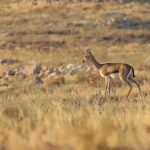
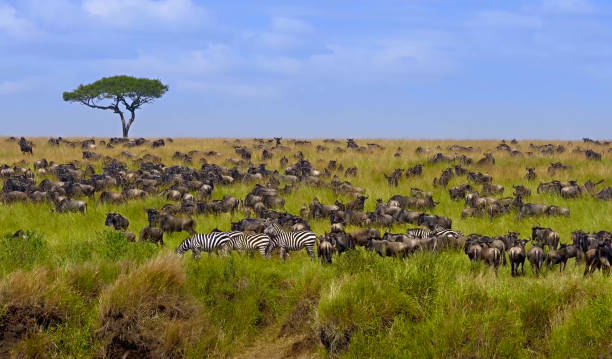
The Serengeti is famous for the sheer volume of animals. It is home to over two million wildebeest, zebras, and gazelles. Here, the wildlife is spread out, and spotting game is often about scanning vast distances and understanding predator-prey dynamics. It is a place of action: high-speed cheetah chases on the open plains and lion prides navigating the tall grass.
The Ngorongoro Crater is famous for density. It is said to have the highest density of wildlife in Africa. Because the animals are confined within the crater walls, you don’t have to search hard to find them. On a single morning drive in the Crater, you are virtually guaranteed to see lions, elephants, buffaloes, and hippos.
The most critical distinction for many wildlife enthusiasts is the rhino. The Serengeti is vast, and while it has a growing rhino population, seeing them is rare and usually requires venturing into specific remote zones. The Ngorongoro Crater, however, offers the best chance in Tanzania to see the endangered Black Rhino. A small, tightly protected population thrives on the crater floor, making sightings almost a daily occurrence for lucky visitors.
The Great Migration
The Great Migration is the heartbeat of this region, involving the movement of millions of wildebeest and zebras in a circular route in search of fresh grazing.
The Serengeti hosts the migration year-round. The herds are in the Southern Serengeti (Ndutu) for the calving season (January to March); they move through the Western Corridor for the rut (May to July); and they brave the rivers of the Northern Serengeti (August to October) before crossing into Kenya. The Serengeti is the migration. Being here offers the front-row seat to the dramatic river crossings, particularly at the Grumeti River in the west and the Mara River in the north.
The Ngorongoro Crater plays a supporting role in the migration. While the herds use the Ngorongoro Conservation Area (specifically the Ndutu plains on the boundary) for calving, they rarely enter the Crater floor itself during the main migration. When the herds are in the south, you can see them on the plains leading up to the Crater, but the floor itself is occupied mostly by resident herds that stay there year-round. If your primary goal is to witness a chaotic river crossing, the Serengeti is your only option.
The Safari Experience
In the Serengeti, the rules allow for some flexibility. While off-roading is generally restricted to protect the grasslands, guides are permitted to drive off-road in specific areas to get closer to a sighting (particularly in the private concessions bordering the park). This flexibility allows for incredible, unobstructed photographic opportunities. Furthermore, night drives and walking safaris are permitted in the private concessions located just outside the main park boundaries, offering a more holistic wilderness experience.
In the Ngorongoro Crater, the regulations are stricter. Once on the crater floor, off-roading is prohibited; all vehicles must stick to the established tracks. There is also a time limit for descent. While you can stay in the area for days, you are typically only allowed to descend into the Crater for a six-hour window (usually from 7:00 AM to 3:00 PM). This regulation helps manage the number of vehicles and reduces stress on the animals. Consequently, a safari in the Crater is a contained, high-intensity morning of game viewing, rather than the all-day, patient wilderness waiting of the Serengeti.
Crowds and Traffic
In the Serengeti, the vastness acts as a buffer. Even during the peak season, you can escape the crowds simply by driving an extra 20 minutes away from the main lodge clusters. If you avoid the central Seronera area during the peak migration months, the park can feel surprisingly empty.
In the Ngorongoro Crater, crowds are unavoidable. Because the animals are concentrated and the space is limited, sightings of popular animals, like a lion pride near a kill or a rhino near the road, can quickly attract a “traffic jam” of 20 to 30 Land Cruises. The Crater can sometimes feel like a zoo because of the sheer number of vehicles. To mitigate this, guides are increasingly using the southern descent routes and urging visitors to focus on the vast landscape rather than just the celebrity predators.
Landscape and Vegetation
The aesthetic of the two parks is starkly different. The Serengeti is quintessential “Africa” as portrayed in movies: golden, short-grass plains that stretch forever, dotted with flat-topped acacia trees and massive granite kopjes. The light here is famous for being photogenic, particularly at sunrise and sunset.
The Ngorongoro Crater offers more variety within a small space. The floor contains several distinct habitats: the Lerai Forest (a fever tree forest home to elephants and leopards), the Gorigor Swamp (hippo territory), the alkaline Lake Magadi (flamingos), and the open savannah. The drive down into the crater takes you through a lush, misty cloud forest on the rim before descending into the heat of the floor. It offers a more varied visual palette, from the bright pink of flamingos to the deep green of the fever tree forest.
Accommodation and Logistics
Where you sleep in these parks adds another layer to the difference.
In the Serengeti, accommodation is varied and often mobile. You can stay in permanent lodges, tented camps, or luxury mobile camps that move seasonally to follow the migration. Staying inside the Serengeti is essential for the full experience, allowing you to start game drives at dawn or stay out for a full day. The accommodation here is about immersion in the bush.
Around the Ngorongoro Crater, most lodges are perched on the rim, offering dizzying, vertigo-inducing views down into the bowl 2,000 feet below. Waking up on the rim is ethereal; you are often above the clouds, looking down into the mist. However, it can be very cold at night (temperatures often drop near freezing), and you have to drive 45 minutes down the winding road to reach the game viewing area. While there are a few campsites on the rim, the experience is generally more “hotel-like” than the rustic tented camps of the Serengeti.
The Human Element
Finally, it is important to note the human context. The Ngorongoro Conservation Area (NCA) is a multiple land-use area. Unlike the Serengeti, which is a strict National Park where human habitation is not allowed (except for tourism), the NCA is home to the Maasai people. As you drive to the Crater, you will pass Maasai bomas (homesteads) and see them herding cattle. The Maasai are permitted to water their cattle in the Crater, although they are not supposed to live or graze extensively on the floor. This cultural overlay adds a fascinating dimension to the Ngorongoro experience, reminding visitors that this landscape has been shared by humans and wildlife for millennia.
Conclusion
Ultimately, the debate between Ngorongoro and Serengeti is a false dichotomy; most itineraries include both. They are only a three-hour drive apart. The standard formula is to start with the Ngorongoro Crater, and then move on to the Serengeti for the vastness and the drama of the migration.
However, if you have limited time and must choose, consider your priorities. Choose the Ngorongoro Crater if you want to see a Black Rhino, if you want a high density of animals in a short amount of time, or if you are worried about “not seeing anything.” It is a fail-safe option.
Choose the Serengeti if you want the classic African horizon, if you want to see predator-prey interaction and the Great Migration, or if you crave a sense of true, untamed wilderness where you can drive for hours without seeing another soul. For the purist, the endless plains of the Serengeti are the soul of Tanzania, but for the first-timer, the Ngorongoro Crater is the perfect introduction.