Maasai Culture in the Ngorongoro Conservation Area. The Ngorongoro Conservation Area (NCA) in Tanzania is famous worldwide for its landscapes and wildlife. Yet behind every dramatic horizon, behind the crater walls and the sweeping grasslands, there is another story running in parallel: the story of the Maasai people. Maasai culture has long been intertwined with the region’s pastoral rhythms, seasonal migrations, and community traditions. Today, as visitors arrive for safaris and breathtaking views, many also seek to understand the people who have lived in this land for generations.
This article explores Maasai culture in the Ngorongoro Conservation Area with a focus on everyday life, social customs, traditional practices, and the ways heritage continues to adapt in a modern conservation setting. It’s not only a cultural portrait; it’s a look at how identity survives, and transforms, when land, wildlife, and rules must all coexist.
Ngorongoro’s Maasai
The Maasai are a semi-nomadic pastoralist community whose history in northern Tanzania stretches back centuries. In the broader Rift Valley region, they are strongly associated with cattle, which are central not only to livelihoods but also to social identity. In the Ngorongoro Conservation Area, Maasai life has historically followed a pattern shaped by seasons: moving herds to where grazing is available and water can be found.
Even when Maasai families stay in one location for longer periods, their worldview is still pastoral. Livestock are not simply economic assets; they are woven into family relationships, ceremonies, and community roles. The Maasai often speak of cattle in terms that reflect respect and responsibility: caring for animals becomes a practice of discipline, knowledge, and belonging.
In the NCA, pastoral life also unfolds alongside wildlife. That coexistence is one of the defining features of the region. Ngorongoro’s environment can hold both grazing and large migratory animal populations, though balancing these needs is increasingly complex due to conservation priorities, population pressures, and changing land-use policies.
Bomas, Homesteads, and Community Layout
One of the most visible aspects of Maasai culture in the Ngorongoro area is the boma, the traditional homestead. A boma typically consists of small enclosures arranged for practical reasons: housing livestock at night, living spaces for family members, and shared areas for daily tasks.
Many visitors notice the distinctive structure and feel of a boma. Even if details vary from family to family, the overall design is purposeful. Cattle protection is a priority, because livestock represent security. At the same time, bomas are also community hubs. Social life happens there: children gather, elders guide younger people, and women and men contribute to daily work in ways that support the entire household.
Bomas can also be a place where cultural knowledge is transmitted. Even without formal instruction, children learn by watching: how to tie a rope, how to read the weather, how to recognize animal tracks, and how to interpret community signals. Over time, that informal learning forms the foundation of Maasai identity.
Clothing and Beadwork
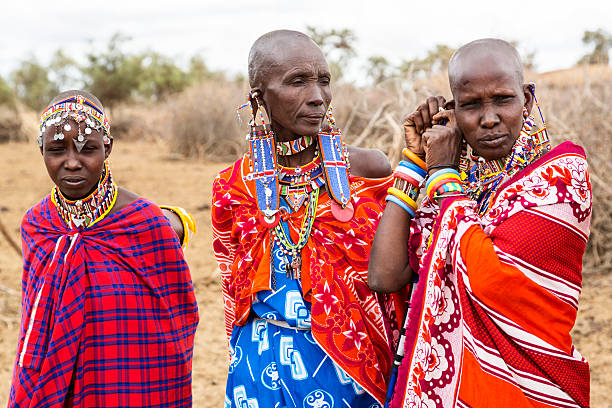
Maasai clothing is often described as iconic, but it’s more than aesthetics. Traditional attire, especially colorful shukas (shawls) and clothing elements, helps communicate identity and social status. Colors and patterns can reflect region, life stage, or personal symbolism.
Beadwork is perhaps the most recognized art form associated with the Maasai. Jewelry-making is carried out by skilled artisans, often women, and beadwork is used in many contexts: necklaces, earrings, waist ornaments, and decorative elements. The process is time-consuming and requires patience, technique, and creative decision-making.
In cultural terms, beadwork can serve as a visual language. Certain styles may be associated with age sets, marital status, or specific occasions. Even when modern influences appear, such as changes in materials, tourism demand, or color trends, beadwork remains a heritage practice that supports income for many households.
For visitors, it’s important to understand that buying items is not simply a transaction. It connects to livelihoods and cultural expression. When possible, it helps to support crafts in a respectful way, by learning about meanings, negotiating fairly, and appreciating that handmade work takes time and knowledge.
Age Sets, Leadership, and Social Organization
Maasai society traditionally organizes itself through age sets, groups of men who move through life stages around similar timeframes. This structure has historically shaped leadership and responsibility. Young men take on duties related to herding, security, and community support, while elder leaders guide the community through knowledge of customs, conflict resolution, and decision-making.
In many Maasai communities, elders hold significant authority not because of wealth, but because of experience and reputation. They are often responsible for mediating disputes and maintaining harmony. This is particularly important in pastoral settings, where misunderstandings can affect livestock health and household well-being.
Even as Maasai communities interact with modern institutions, schools, conservation authorities, and tourism, some of these social structures remain relevant. The age-set system, in particular, can influence how young people are trained for adulthood and how community roles are understood. In a place like Ngorongoro, where external rules and changing livelihoods are realities, the ability of social structures to adapt becomes crucial for cultural continuity.
Daily Life: Herding, Water, and Skills
Herding is often the heart of Maasai daily life. Grazing decisions require deep knowledge: understanding pasture quality, locating safe watering points, and anticipating weather patterns. Maasai herders learn to recognize signs in the environment, tracks, vegetation changes, and animal movements, that can indicate where grazing will be possible and where it may become risky.
Water access is especially important in the Ngorongoro region. In dry seasons, water sources become more valuable, and families must plan carefully. The practical knowledge involved in herding is also a cultural skill. It teaches patience, observation, and discipline, values that matter far beyond livestock management.
Alongside herding, many daily tasks involve household life: preparing food, maintaining shelters, and caring for children. In many households, women contribute significantly to work that supports family life, including food preparation and crafts. Men and women often have distinct roles, but the household economy depends on both.
Visitors who spend time in the region may see aspects of these tasks up close through community-led activities. However, it’s important to remember that “performances” for tourists can differ from real daily routines. The Maasai have everyday lives that continue regardless of visitors, and respecting that boundary is part of ethical tourism.
Community Life and Cultural Ceremonies
Ceremonies and cultural rites play an important role in maintaining Maasai identity. Some practices are linked to milestones such as coming-of-age, marriage, and transitions into new responsibilities. While specific rituals may vary by community and over time, they generally serve to reinforce social bonds and ensure that cultural expectations are passed to the next generation.
Music, dance, and group gatherings also contribute to community spirit. Traditional dances, sometimes seen during cultural showcases for visitors, reflect energy and unity. Yet again, it’s worth approaching such events with respect: they are not “entertainment first” in the way outsiders might assume. In Maasai culture, ceremonies are meaningful expressions tied to life stages and communal values.
For a visitor, the most authentic understanding often comes not from watching once, but from spending time with people who explain what each practice represents. A guided conversation with elders or community members can reveal the deeper context behind movements, songs, and symbolic actions.
Maasai and Conservation
The Ngorongoro Conservation Area is unique because it combines wildlife conservation with human presence. In many protected areas, human settlement is restricted. In Ngorongoro, however, Maasai pastoralism historically remains part of the landscape, and conservation policy attempts to manage both grazing needs and wildlife protection.
This coexistence is complicated. Grazing patterns can influence habitat, and wildlife corridors can conflict with livestock movement. Meanwhile, conservation regulations may limit certain land uses, affecting how families plan grazing and seasonal travel.
For many Maasai families, the biggest challenge is balancing cultural survival with conservation enforcement. That includes navigating restrictions on movement, livestock numbers, or settlement expansion. It may also involve adapting to new requirements for interacting with the environment under conservation authorities.
Yet there are also opportunities. Community-focused conservation initiatives and tourism partnerships can provide income and support local livelihoods. When done responsibly, these systems can encourage wildlife protection while offering Maasai communities resources to maintain traditional practices.
The key issue is fairness and shared benefits. Cultural heritage cannot be preserved only as a “tourist attraction.” It must remain a lived reality supported by policies that respect the community’s role in the landscape.
Conclusion
Maasai culture in the Ngorongoro Conservation Area is not frozen in time. It is a living, evolving identity shaped by pastoral traditions, social structures, and artistic expression, and also shaped by the realities of conservation policy and modern tourism.
When you stand near the crater rim or travel across wide open plains, it’s easy to imagine wildlife and landscape as the only stories worth telling. But the Maasai remind visitors that the land is more than a habitat; it’s also a home, a workplace, and a cultural foundation built on knowledge passed from one generation to the next.