The Southern Serengeti Safari Guide (Ndutu Area Explained): When travelers envision the Serengeti, their minds often drift toward the dry, golden savanna of the Central Serengeti or the dramatic river crossings of the North. However, for those in the know, the true magic of the ecosystem lies in the south, specifically in the Ndutu area. This region, straddling the southern boundary of the Serengeti National Park and the northwestern edge of the Ngorongoro Conservation Area, is the seasonal heartbeat of the Great Migration.
A safari to Ndutu is distinct from any other African experience. It is a landscape of profound serenity, lush greenery, and raw biological drama. It is here, on the short-grass plains, that the circle of life begins and ends every year. This guide explores the geography, wildlife, timing, and logistics of exploring the Southern Serengeti and the Ndutu area.
The Geography of Ndutu
The defining feature of Ndutu is its unique location. Situated roughly 80 kilometers southeast of the Seronera (Central Serengeti), Ndutu lies within a transition zone. To the south lies the Ngorongoro Conservation Area, and to the north, the Serengeti National Park.
Because it falls partly within the Ngorongoro Conservation Area, the rules here differ slightly from the rest of the Serengeti. Most notably, off-road driving is permitted in designated sections. For photographers and serious wildlife enthusiasts, this is a game-changer. Unlike the strict “stick to the roads” policy in the core Serengeti, guides in Ndutu can drive off the tracks to get closer to a cheetah stalking through the grass or a lion pride resting in the shade, allowing for a more immersive and uninterrupted viewing experience.
The landscape itself is characterized by vast, open plains punctuated by jagged granite kopjes (rocky outcrops) and scattered acacia woodlands. Two large salt lakes, Lake Ndutu and Lake Masek, dominate the region, turning pink with thousands of flamingos during the wet season. The soil here is volcanic, rich in minerals like calcium and phosphorus, which creates some of the most nutritious grass in the entire ecosystem.
The Calving Season
While Ndutu offers excellent year-round resident game, its claim to fame is the “Calving Season.” From December to March, the vast herds of the Great Migration return to the Southern Serengeti.
This is not the chaotic, dust-choked river crossing of the north. Instead, it is a time of creation. Nearly two million wildebeest, zebras, and gazelles congregate here to give birth. The synchronicity is an evolutionary marvel known as “predator swamping.” Over a period of six weeks, roughly 8,000 wildebeest are born every single day.
For a safari-goer, this creates the most intense predator-prey dynamics on the continent. The abundance of vulnerable, wobbly-legged calves draws in the highest concentration of predators in Africa. The Ndutu plains become a battlefield. Large clans of spotted hyenas, numbering up to 50 individuals, patrol the grasslands. Lions move into the woodlands to ambush, and cheetahs utilize the open terrain to run down young gazelles.
Seeing a hunt is almost guaranteed during this season, but it is not for the faint of heart. It is nature at its most visceral and unforgiving. However, amidst the drama, there is also incredible tenderness. Watching a wildebeest calf stand within minutes of birth and bond with its mother is a poignant reminder of nature’s resilience.
Beyond the Migration: Resident Wildlife
While the migration is the seasonal star, Ndutu boasts a permanent population of wildlife that makes it a viable destination even when the herds have moved north.
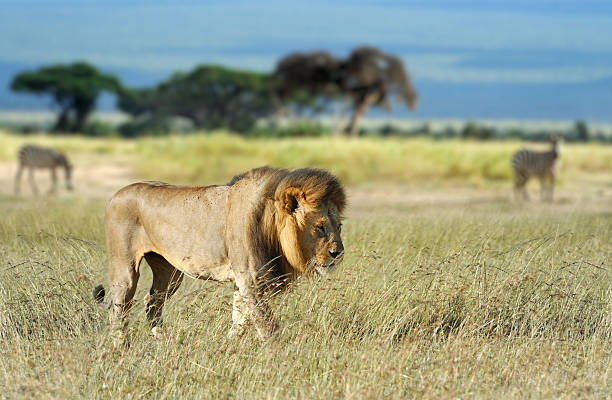
The Big Cats: Ndutu is arguably the best place in East Africa to see cheetahs. The open terrain allows them to utilize their incredible speed, and they are frequently seen during daylight hours, often resting on top of the small termite mounds or kopjes to scan for prey. The lions in this area are famous for their tree-climbing behavior. While lions in Tarangire are known for this, the large acacia and sausage trees in Ndutu also offer a cool refuge, and seeing a pride of lions draped across the branches is a highlight.
Other Species: The marshlands and soda lakes support a diverse array of herbivores. You will find large herds of giraffes, whose long necks silhouetted against the acacia trees are a classic Serengeti image. Elands, the world’s largest antelopes, are frequently seen here, often in the woodlands. Buffalo herds are also resident, as are waterbucks and impalas. The elusive leopard, though harder to spot, thrives in the denser woodland fringes around Lake Ndutu.
Birding and The Landscape
For ornithologists, the Southern Serengeti is a paradise. The rainy season (November to May) brings migratory birds from Europe and North Africa, swelling the population to over 500 species. The alkaline lakes attract massive flocks of Lesser and Greater Flamingos, creating a shimmering pink ribbon around the water’s edge. Raptors are also abundant, with majestic Bateleur eagles, Lappet-faced vultures, and Kori bustards dotting the skyline.
The aesthetic of Ndutu is unique. Unlike the golden yellows of the dry season, the landscape during the migration period is a vibrant, electric green. The sky is often dramatic, with towering cumulonimbus clouds building up in the afternoons before releasing short, spectacular rain showers. These showers provide the most incredible photographic lighting: a backdrop of stormy grey skies contrasting with the sun-drenched green plains and the dark silhouettes of wildlife.
What is the Best Time to Visit Ndutu?
December to March (The Green Season): This is the peak time for Ndutu. It is the height of the migration and the calving season. The landscape is beautiful, game viewing is prolific, and the skies are moody and photogenic. It does rain, but usually in short bursts that clear the air.
April to May (The Long Rains): This is when the Serengeti receives its heaviest rainfall. The camps in Ndutu often close down during April and May due to the impassable muddy roads. While the birding is excellent and the scenery is lush, travel is difficult.
June to October (The Dry Season): As the rains stop and the water holes dry up, the migration herds move north toward the Grumeti River and the Maasai Mara. Ndutu becomes much quieter. However, for those who prefer solitude and lower rates, the resident game viewing remains excellent. The landscape turns from green to gold, offering a different kind of beauty.
Accommodation in Ndutu
One of the charms of Ndutu is the accommodation style. Because the migration is mobile, the safari infrastructure here is largely semi-permanent or mobile tented camps.
Ndutu Safari Lodge is the historic heart of the area. Established decades ago, it sits directly on the shore of Lake Ndutu. It offers a rustic, old-world charm, with a thatched bar and lounge that has hosted generations of researchers, filmmakers, and royalty.
Surrounding the lodge are several luxury tented camps (such as Serengeti Under Canvas, Ndutu Kati Kati, or Lemala Ndutu) that set up during the migration season. These camps offer a high level of luxury while maintaining a close connection to nature. You fall asleep to the roar of lions and the whooping of hyenas, and you wake up to the possibility of a giraffe walking right past your tent. Staying in a mobile camp allows you to be right in the middle of the action, departing for game drives at dawn while others are still driving from the far south.
Practical Tips for the Ndutu Safari
Warm Clothing is Essential: The Southern Serengeti sits at a high altitude (approx. 1,600 meters or 5,200 feet). During the calving season (January to March), temperatures can drop dramatically at night, often reaching 5°C (40°F) or lower. The early morning game drives in an open vehicle are freezing. Bring a heavy fleece, a beanie, and gloves.
Be Patient with the Mud: If traveling in the green season, the black cotton soil can be treacherous. Vehicles often get stuck. However, this is part of the adventure. Your guide will likely have a shovel and the skills to get you out, but allow extra time in your schedule for potential delays.
Combine with Ngorongoro: Ndutu is often the gateway to the Ngorongoro Crater. It is only a two-hour drive from the crater rim. Most safari itineraries will combine three nights in Ndutu with one or two nights on the Crater rim. The transition from the flat, vast plains of Ndutu to the forested rim of the Crater provides a stunning contrast in landscapes.
Respect the Off-Roading Rules: While off-roading is permitted, guides are expected to be responsible. Stick with a reputable guide who respects the vegetation and does not harass the animals. The goal of off-roading is to gain a better vantage point, not to chase wildlife.
Conclusion
The Southern Serengeti and the Ndutu area offer a safari experience that is both intimate and immense. It is a place where the rhythm of the earth is visible in the movement of millions of animals. While the river crossings offer adrenaline, the Ndutu calving season offers the full spectrum of life: birth, growth, struggle, and survival.
Whether you are a professional photographer looking for that perfect shot of a cheetah in the golden light, or a first-time visitor hoping to see the Great Migration in relative solitude, Ndutu delivers. It is the seasonal nursery of the Serengeti, a lush and vibrant pocket of Africa that reminds us why the continent holds such a primal grip on the human imagination.