Kabirizi Gorilla Family: History, Silverback, Members and Location in Virunga National Park
The Kabirizi Gorilla Family is one of the historically significant mountain gorilla families of Virunga National Park in the Democratic Republic of Congo (DRC). Known for its powerful silverback leadership, fascinating family history and several generations of dominant males, the group provides an interesting insight into the social organisation of mountain gorillas.
Located in the Bukima area of Virunga’s Mikeno Sector, the family traces its origins to the Zunguruka gorilla group, which was habituated for tourism in 1994. Over the years, it experienced leadership changes, conflicts between silverbacks, population growth and family divisions.
One of the most remarkable developments in its history was the departure of silverback Bageni in January 2013, when he separated from his father Kabirizi and established an independent gorilla family. More recently, in August 2025, another significant division occurred when silverback Masibo broke away from the Kabirizi group.
For travellers, wildlife enthusiasts and primate researchers interested in mountain gorilla families in Africa, the Kabirizi family offers a fascinating story of leadership, competition, reproduction and conservation.
Where Is the Kabirizi Gorilla Family Located?
The Kabirizi Gorilla Family is associated with the Bukima area of Virunga National Park in eastern Democratic Republic of Congo.
Virunga National Park is situated within the Albertine Rift, a region famous for its remarkable biodiversity, volcanic landscapes, montane forests and endangered wildlife.
The park is part of the Virunga Massif, which extends across the borders of the Democratic Republic of Congo, Uganda and Rwanda. It protects an important population of endangered mountain gorillas alongside numerous other wildlife species.
The Kabirizi family traditionally ranges within the Mikeno Sector, an important mountain gorilla habitat characterised by dense vegetation, mountainous terrain and rich forest ecosystems.
Bukima is also an important base for gorilla monitoring activities in this part of Virunga National Park.
History of the Kabirizi Gorilla Family
The history of the Kabirizi Gorilla Family is closely connected to the Zunguruka and Ndungutse gorilla groups. Its development involved several silverbacks whose leadership shaped the family’s identity.
1. The Zunguruka Gorilla Group
The family’s historical origins can be traced to the Zunguruka group, which was habituated in the Bukima area in 1994.
Zunguruka was the dominant silverback at the time. His name is associated with walking in circles, a behaviour reportedly observed during his habituation.
As Zunguruka grew older, leadership passed to his son Ndungutse.
Ndungutse subsequently became the dominant silverback of the group, which was then known as the Ndungutse family.
2. The Death of Silverback Ndungutse
In 1997, Ndungutse was killed by bullets during crossfire between the Democratic Republic of Congo army and Rwandan rebels near the Bukima patrol post.
His death created uncertainty within the family because the group had lost its dominant male.
Following this incident, another silverback named Buhanga assumed leadership.
However, maintaining authority was not easy because Buhanga faced challenges from his brother Karateka.
3. The Rise of Silverback Kabirizi
Kabirizi was originally a solitary wild silverback who gradually became involved in interactions with established gorilla families.
He had previously challenged other males in attempts to acquire females and establish his own family.
Following the death of Ndungutse and subsequent disagreements within the group, the family experienced several leadership changes.
Buhanga eventually died following a violent encounter with Kabirizi in February 1998.
The group’s leadership subsequently changed again, with an adult female named Nsekuye briefly taking charge before silverback Munyaga took over.
Kabirizi later acquired females from the Munyaga group, consolidating his position and establishing the family that would eventually bear his name.
The group became known as the Kabirizi Gorilla Family in recognition of its dominant silverback.
4. The Formation of the Bageni Gorilla Family in 2013
One of the most significant events in Kabirizi’s history occurred on 27 January 2013.
His son, Bageni, had matured into a powerful silverback and began challenging his father’s authority.
Following repeated confrontations, Bageni separated from the Kabirizi group with approximately 20 individuals.
He subsequently established the Bageni Gorilla Family, which developed into an independent group within Virunga National Park.
The separation reduced the size of Kabirizi’s original family but created another important mountain gorilla group in the Mikeno Sector.
5. The Masibo Split in August 2025
The Kabirizi family experienced another major transformation in August 2025.
According to Virunga National Park’s monitoring report, silverback Masibo challenged the leadership of the ageing Kabirizi.
Masibo eventually separated from the family with several members, establishing a new independent group.
A subsequent monitoring exercise conducted between 20 and 23 October 2025 documented:
-
Kabirizi’s remaining family: 12 individuals, including three silverbacks.
-
Masibo’s newly established family: 14 individuals, including four silverbacks.
A brief reunion between the two groups occurred on 17 October 2025, but they separated again the following day, confirming the formation of two distinct families.
This development demonstrates how mountain gorilla families naturally evolve as younger silverbacks mature and compete for leadership.
Who Is Silverback Kabirizi?
The founding dominant male of the Kabirizi Gorilla Family
Silverback Kabirizi is the mountain gorilla after whom the family is named. He became the dominant male in 1998 after a series of confrontations and leadership changes involving other silverbacks in the Bukima area.
He is particularly notable for his longevity, experience and ability to maintain a large gorilla family despite repeated challenges from younger males.
Virunga’s historical records describe Kabirizi as a solitary silverback before he established his own family. Through interactions with neighbouring groups, he gradually acquired females and other members, eventually becoming one of the most recognisable silverbacks in the park.
As a dominant silverback, his responsibilities traditionally included:
-
Leading the family through its forest habitat.
-
Protecting females and younger gorillas.
-
Maintaining social stability within the group.
-
Defending the family against competing silverbacks.
-
Directing the group’s movements between feeding and resting areas.
His long leadership history illustrates the physical and social challenges experienced by dominant male mountain gorillas.
How Many Gorillas Are in the Kabirizi Family?
The number of gorillas in the Kabirizi family has changed considerably over the years.
The group reached approximately 36 individuals in 2012, making it one of the largest mountain gorilla families in Virunga National Park at the time.
After Bageni’s departure in 2013, the family gradually rebuilt its population through births and other changes in membership.
An International Gorilla Conservation Programme (IGCP) record dated February 2022 documented 24 members, distributed as follows:
| Category | Number |
|---|---|
| Silverbacks | 6 |
| Adult females | 7 |
| Blackbacks | 1 |
| Sub-adult females | 2 |
| Juveniles | 2 |
| Infants | 6 |
| Total | 24 |
However, these are historical figures. Following the August 2025 separation involving Masibo, Virunga National Park documented 12 members in Kabirizi’s remaining group during October 2025.
This illustrates why gorilla family population figures should always be considered alongside their reporting dates.
Understanding the Social Structure of the Kabirizi Family
Mountain gorillas live in organised social groups, commonly referred to as families or troops. These groups generally consist of a dominant silverback, adult females, younger males, juveniles and infants.
The Kabirizi family has experienced several changes in its social structure as individual gorillas matured and established new relationships.
Silverbacks
Silverbacks are mature male mountain gorillas distinguished by the silver-grey hair that develops across their backs.
They play important roles in family leadership, protection and reproduction.
Although one silverback may be dominant, other mature males can remain within the same group.
The presence of several silverbacks sometimes creates competition for authority, especially when younger males reach maturity.
Adult Females
Adult females are essential to the continuity of mountain gorilla families.
They contribute to population growth through reproduction and play important roles in caring for their infants.
Female gorillas may also transfer between families, particularly when opportunities arise to join another silverback.
Blackbacks
Blackbacks are younger adult males that have not yet developed the distinctive silver hair of mature silverbacks.
As they grow older, they may remain within their natal families, become solitary or eventually establish independent groups.
Juveniles and Infants
Young gorillas are important members of the family.
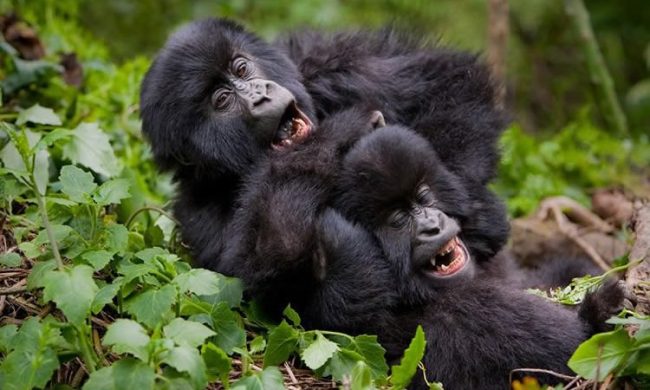
Infants spend most of their early lives close to their mothers, while juveniles become increasingly independent through play, exploration and interaction with other family members.
Why Do Mountain Gorilla Families Split?
The history of the Kabirizi family demonstrates that family divisions are a natural part of mountain gorilla social behaviour.
As young males mature, they may challenge the dominant silverback for leadership.
When a subordinate silverback becomes strong enough to establish an independent group, he may leave with some females and younger gorillas.
Several factors can contribute to family divisions:
-
Competition for leadership: Younger silverbacks may challenge older dominant males.
-
Reproductive opportunities: Mature males seek opportunities to establish their own breeding groups.
-
Social relationships: Female gorillas may follow particular males during family divisions.
-
Population growth: Larger families may experience increased competition and complex social relationships.
-
Natural changes: Births, deaths and migrations continually influence group composition.
The departures of Bageni in 2013 and Masibo in 2025 are important examples of these dynamics.
What Do Kabirizi Mountain Gorillas Eat?
Mountain gorillas are primarily herbivorous and feed on vegetation available within their forest habitats.
Their diet varies depending on the season, location and availability of different plant species.
Common food sources include:
-
Leaves and young shoots.
-
Stems and plant stems.
-
Wild fruits.
-
Roots.
-
Flowers.
-
Bamboo shoots where available.
-
Other soft vegetation.
Gorillas spend several hours each day feeding to obtain the energy and nutrients required to maintain their large bodies.
Their feeding behaviour also contributes to forest ecology through seed dispersal and interactions with vegetation.
Conservation of the Kabirizi Gorilla Family
The conservation of mountain gorillas in Virunga National Park requires continuous monitoring and protection.
The Kabirizi family has experienced several historical threats, including armed conflict, poaching, habitat pressures and competition between silverbacks.
Virunga’s conservation teams undertake different activities to protect the gorillas and their habitat.
Daily Gorilla Monitoring
Rangers and trackers monitor habituated gorilla families to document births, deaths, migrations, injuries and changes in group composition.
This monitoring helps conservation teams understand the behaviour of individual gorillas and identify potential threats.
Veterinary Protection
Mountain gorillas are susceptible to certain human diseases because of their biological similarities to humans.
Veterinary interventions help address injuries, infections and other health problems affecting individual gorillas.
Anti-Poaching Patrols
Anti-poaching activities help protect gorillas from snares, illegal hunting and other threats.
Although mountain gorillas are not usually targeted directly by hunters, snares intended for other wildlife can injure or kill them.
Community Conservation
Local communities play an important role in protecting mountain gorillas.
Conservation programmes promote environmental awareness, responsible tourism and community participation in wildlife protection.
These efforts are important because the long-term survival of mountain gorillas depends on protecting both their forest habitats and the communities surrounding protected areas.
Can Tourists Visit the Kabirizi Gorilla Family?
The Kabirizi family has historically been among the habituated mountain gorilla families associated with gorilla tourism in Virunga National Park.
However, habituation does not automatically mean that a gorilla family is currently available for tourist visits.
Virunga National Park has published visitor information indicating that mountain gorilla trekking is closed until further notice. Travellers should therefore confirm the park’s current operational status directly before making travel arrangements.
For those planning a mountain gorilla trekking experience in East Africa, Uganda and Rwanda offer alternative destinations, subject to current park and permit availability.
Where Can You See Mountain Gorillas in Uganda?
Uganda is one of the leading mountain gorilla trekking destinations in Africa, with two protected areas offering opportunities to encounter these endangered primates.
1. Bwindi Impenetrable National Park
Bwindi Impenetrable National Park is located in southwestern Uganda and protects a significant population of mountain gorillas.
The park is divided into four main trekking sectors:
Buhoma Sector
Located in northern Bwindi, Buhoma is one of Uganda’s established gorilla trekking areas. It offers several habituated gorilla families and a range of accommodation facilities.
Ruhija Sector
Ruhija is situated in eastern Bwindi and is known for its mountainous terrain, forest scenery and gorilla trekking opportunities.
Rushaga Sector
Rushaga is located in southern Bwindi and has several habituated gorilla families. It is also an important destination for visitors interested in the gorilla habituation experience, subject to permit availability.
Nkuringo Sector
Nkuringo lies in southwestern Bwindi and is known for its beautiful highland scenery, challenging trekking terrain and spectacular views.
2. Mgahinga Gorilla National Park
Mgahinga Gorilla National Park is located in southwestern Uganda within the Virunga Conservation Area.
The park is home to the Nyakagezi Gorilla Family, which is its historically established habituated mountain gorilla group.
Besides gorilla trekking, visitors can enjoy golden monkey tracking, volcano hiking and the Batwa cultural experience.
Best Time to Visit Uganda for Mountain Gorilla Trekking
Mountain gorilla trekking in Uganda takes place throughout the year.
However, some months generally offer more favourable weather conditions.
June to September
This is one of the popular periods for gorilla trekking because it generally experiences lower rainfall.
Forest trails can be easier to navigate, although conditions remain unpredictable in rainforest environments.
December to February
These months are also popular for gorilla trekking because they generally experience relatively drier conditions.
March to May and October to November
These periods usually receive more rainfall.
Nevertheless, gorilla trekking continues to take place, and the forest becomes particularly lush and green.
Travellers should prepare for wet conditions regardless of their travel dates.
What Should You Pack for Gorilla Trekking?
Whether visiting Bwindi or Mgahinga, preparing the right equipment makes a significant difference to the trekking experience.
Recommended items include:
-
Waterproof hiking boots with good grip.
-
Long-sleeved shirts and trousers.
-
Waterproof jacket.
-
Gardening gloves for handling vegetation.
-
A small backpack.
-
Drinking water.
-
Energy snacks.
-
Insect repellent.
-
Sunscreen.
-
Camera with an appropriate zoom lens.
-
Walking stick, which may be available at the trekking starting point.
A reasonable level of physical fitness is recommended because gorilla trekking involves walking through mountainous rainforest terrain.
Frequently Asked Questions About the Kabirizi Gorilla Family
1. Where is the Kabirizi Gorilla Family found?
The Kabirizi Gorilla Family is found in Virunga National Park in eastern Democratic Republic of Congo. Its traditional range is associated with the Bukima area of the Mikeno Sector.
2. Who is the leader of the Kabirizi Gorilla Family?
The family was established under silverback Kabirizi, who became its dominant male in 1998. Virunga’s October 2025 monitoring report documented him leading the remaining group following the separation of Masibo.
3. How many gorillas are in the Kabirizi family?
An October 2025 monitoring exercise documented 12 gorillas in Kabirizi’s remaining group. This followed a family split in August 2025.
4. When was the Kabirizi Gorilla Family habituated?
The family’s original lineage, known as the Zunguruka group, was habituated in the Bukima area in 1994.
5. Why is the Kabirizi Gorilla Family famous?
The family is recognised for its long history of silverback leadership, population growth and family divisions. Its separation into the Bageni and Masibo families is particularly significant.
6. Who is Bageni in the Kabirizi family?
Bageni is the son of silverback Kabirizi. He separated from his father’s group in January 2013 with approximately 20 individuals to establish the Bageni Gorilla Family.
7. Who is Masibo?
Masibo is a mature silverback who separated from the Kabirizi family in August 2025 after challenging the leadership of Kabirizi. He subsequently established an independent gorilla family.
8. Is the Kabirizi Gorilla Family found in Uganda?
No. The family is associated with Virunga National Park in the Democratic Republic of Congo. Uganda’s principal gorilla trekking destinations are Bwindi Impenetrable National Park and Mgahinga Gorilla National Park.
9. Can I book a gorilla trekking permit to see the Kabirizi family?
Travellers should first confirm whether Virunga National Park has reopened gorilla trekking. The park has published a closure notice, and visitors should not assume that permits are currently available.
10. What is the difference between the Kabirizi and Bageni gorilla families?
Both families share the same historical lineage. Bageni separated from Kabirizi in 2013 with approximately 20 gorillas to establish an independent group.
11. What happened to the Kabirizi family in 2025?
In August 2025, silverback Masibo separated from Kabirizi following leadership tensions. Monitoring in October 2025 confirmed two independent groups, with 12 gorillas remaining with Kabirizi and 14 joining Masibo.
Conclusion
The Kabirizi Gorilla Family has one of the most fascinating histories among the mountain gorilla groups of Virunga National Park. From its origins in the Zunguruka group to the rise of silverback Kabirizi, the formation of Bageni’s family and the more recent separation involving Masibo, its story illustrates the changing social relationships within mountain gorilla communities.
For wildlife enthusiasts and travellers researching mountain gorillas in Africa, learning about the Kabirizi family provides a deeper appreciation of gorilla behaviour and the importance of conservation.
Although the family is located in the Democratic Republic of Congo, travellers seeking mountain gorilla encounters can explore Uganda’s Bwindi Impenetrable National Park and Mgahinga Gorilla National Park.
Plan your Uganda gorilla trekking adventure with Epic Uganda Vacation and experience the remarkable mountain gorillas of southwestern Uganda.