Rwenzori Hill Babbler: A Birdwatching Guide to Uganda
Introduction to the Rwenzori Hill Babbler
The Rwenzori Hill Babbler is an interesting forest bird that birdwatchers can look for in the montane forests of western Uganda. Scientifically known as Sylvia atriceps, this relatively inconspicuous bird is associated with dense vegetation, where it moves quietly through the undergrowth and can be easier to hear than to see.
The species is one of the birds recorded in Rwenzori Mountains National Park, a remarkable birdwatching destination in western Uganda. The park’s varied vegetation zones, montane forests and high-altitude habitats support a rich bird community, attracting birdwatchers interested in forest species and birds of the Albertine Rift region.
Despite its common name, the Rwenzori Hill Babbler is not restricted to the Rwenzori Mountains. Its wider distribution includes parts of Central and West Africa. Its presence in the Rwenzori region nevertheless makes it an interesting species to look for during a guided birding excursion or nature walk.
Scientific Classification of the Rwenzori Hill Babbler
The Rwenzori Hill Babbler belongs to the order Passeriformes, which includes perching birds and songbirds. Its currently recognised scientific name is Sylvia atriceps.
Its classification is:
- Common name: Rwenzori Hill Babbler
- Scientific name: Sylvia atriceps
- Kingdom: Animalia
- Class: Aves
- Order: Passeriformes
- Family: Sylviidae
- Genus: Sylvia
- Species: Sylvia atriceps
Older bird literature and checklists may use names such as Pseudoalcippe atriceps or Illadopsis atriceps. These are historical scientific names associated with the species. Modern taxonomic references recognise Sylvia atriceps as the valid name.
The word “babbler” in its common name can be confusing because the bird is classified in the family Sylviidae rather than the traditional babbler families.
Physical Appearance and Identification
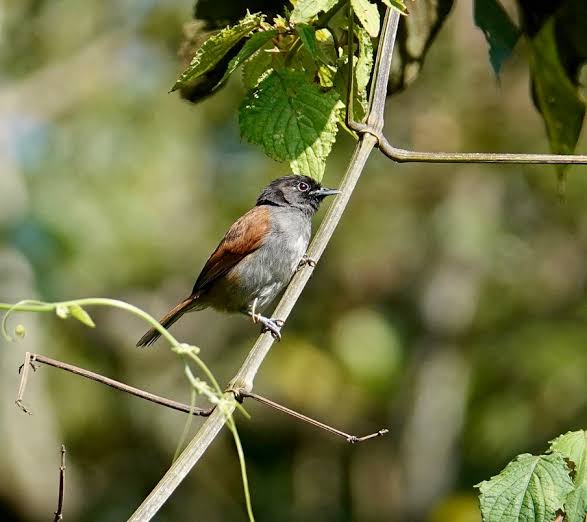
The Rwenzori Hill Babbler is a small, rather inconspicuous bird whose plumage helps it blend into the dense vegetation of its forest habitat.
Descriptions in historical ornithological literature highlight several distinguishing features:
- Head: A dark, blackish head that contrasts with the warmer colour of the back.
- Back: A chestnut-coloured back.
- Wings and tail: Dark brown plumage.
- Underparts: Slate-grey underparts that become much paler towards the abdomen.
- Body shape: A small, compact bird with an appearance that can remind observers of familiar hedge-dwelling songbirds.
Its subtle colouring and preference for dense cover make identification challenging, especially for inexperienced birdwatchers. A clear view may require patience, careful listening and assistance from a knowledgeable local bird guide.
Habitat of the Rwenzori Hill Babbler
The Rwenzori Hill Babbler is associated with forest and shrubland habitats. In the Rwenzori Mountains, birdwatchers should pay particular attention to montane forest and areas with dense undergrowth.
These habitats provide shelter, feeding opportunities and suitable places for the bird to move through the vegetation.
Montane Forests
Montane forests are important habitats for the species in the Rwenzori region. Their dense vegetation, shaded conditions and variety of plants provide a suitable environment for forest-dwelling birds.
The montane forest belt of Rwenzori Mountains National Park is particularly important for birdwatching, with many species recorded between approximately 1,800 and 2,500 metres above sea level.
Dense Undergrowth
The Rwenzori Hill Babbler is described as a skulking bird, meaning it often stays concealed in thick vegetation rather than remaining in exposed positions.
Birdwatchers should therefore watch forest edges, tangled vegetation and lower forest cover rather than concentrating only on the canopy.
Wider Geographic Range
The bird’s distribution extends beyond Uganda. Records and conservation assessments identify its range across parts of Nigeria, Cameroon, the Democratic Republic of Congo, Uganda and Rwanda, among other Central African locations.
Its name reflects its association with the Rwenzori region, but it should not be described as an exclusively Rwenzori-endemic species.
Behaviour and Feeding Habits
The Rwenzori Hill Babbler is generally regarded as a secretive forest bird. It often moves quietly through thick vegetation, making it difficult to observe for long periods.
Historical observations describe it as a bird that flits through dense, low cover. It may be heard calling from within vegetation before a birdwatcher gets a clear view.
Like other small insect-eating forest songbirds, it is associated with feeding opportunities among vegetation. Invertebrates are an important part of its diet, although detailed species-specific feeding observations should not be assumed without further evidence.
For birdwatchers, patience is essential. Remaining quiet, listening carefully and allowing time for movement in the undergrowth can improve the chances of seeing this bird.
Where to See the Rwenzori Hill Babbler in Uganda
Rwenzori Mountains National Park
Rwenzori Mountains National Park is one of the main places to include when searching for the Rwenzori Hill Babbler in Uganda.
Located along the Uganda-Democratic Republic of Congo border, the park protects a spectacular mountain ecosystem with montane forests, bamboo vegetation, heathland and alpine habitats.
Its montane forest zones are particularly productive for birdwatching. The Rwenzori Hill Babbler is among the bird species recorded in the park’s forest habitats.
Birding excursions can be arranged around suitable nature trails and forest sections, depending on the visitor’s interests, fitness and available time.
Other Forest Habitats in the Wider Region
The bird’s wider distribution includes forested areas beyond the Rwenzori Mountains. Its occurrence in other parts of Central and West Africa demonstrates that it is not confined to one mountain ecosystem.
For visitors planning a birding trip specifically to see this species, the Rwenzori region remains a worthwhile destination to explore, although sightings cannot be guaranteed.
Best Time to Look for the Rwenzori Hill Babbler
The Rwenzori Hill Babbler can be searched for throughout the year in suitable forest habitats. However, weather conditions can influence the comfort and accessibility of birdwatching excursions.
The Rwenzori Mountains experience changing weather, and rainfall can occur during different parts of the year.
Drier Periods
Drier conditions can make forest trails easier to navigate and may be more convenient for visitors combining birdwatching with mountain hikes and nature walks.
Rainier Periods
Rainier periods bring lush vegetation and can provide interesting birding conditions. However, wet trails, mist and reduced visibility may make observation more challenging.
Rather than relying on a guaranteed seasonal sighting, visitors should arrange their excursion around suitable weather, trail conditions and guidance from local birding specialists.
Birdwatching Tips for Finding the Rwenzori Hill Babbler
Finding this species can require more effort than observing larger and more conspicuous mountain birds. The following tips can improve your birdwatching experience:
- Use an experienced local bird guide: A guide familiar with Rwenzori forest birds can help identify calls and suitable habitats.
- Listen carefully: The bird may be detected by its sounds before it becomes visible.
- Watch the lower vegetation: Pay attention to dense shrubs, forest edges and tangled undergrowth.
- Move slowly: Avoid sudden movements and excessive noise that may disturb forest birds.
- Carry binoculars: Good binoculars are useful when observing birds moving between branches and vegetation.
- Bring a camera: A camera with a suitable telephoto lens can help document sightings without approaching too closely.
- Be patient: Allow enough time at suitable forest locations instead of rushing between birding stops.
Other Birds to Look for in Rwenzori Mountains National Park
A birdwatching trip in the Rwenzori Mountains can offer opportunities to observe many other fascinating species.
Depending on the habitat and elevation explored, birdwatchers may look for:
- Rwenzori Turaco
- Rwenzori Olive Thrush
- Red-throated Alethe
- Rwenzori Batis
- Handsome Francolin
- White-tailed Crested Flycatcher
- Golden-winged Sunbird
- Collared Apalis
- Bamboo Warbler
- Mountain Illadopsis
- Archers’ Robin-Chat
- Lagden’s Bush Shrike
- Olive-breasted Mountain Greenbul
- Abyssinian Ground Thrush
- Rwenzori Nightjar
The combination of forest birds, mountain species and Albertine Rift-associated birds makes the Rwenzori region an appealing destination for specialist birdwatchers and nature enthusiasts.
Rwenzori Hill Babbler and Conservation
The Rwenzori Hill Babbler is listed as Least Concern in the IUCN assessment available for the species. However, the assessment also records a decreasing population trend, while the number of mature individuals is unknown.
This highlights the importance of protecting forest habitats across the bird’s range.
Habitat degradation, forest clearance and other changes to natural vegetation can affect forest-dependent birds. Protecting montane forests and maintaining connected natural habitats are important for the long-term conservation of birdlife.
In Uganda, Rwenzori Mountains National Park protects important forest and mountain habitats. Responsible tourism can help support conservation by encouraging visitors to appreciate these ecosystems while following park regulations and respecting wildlife.
What to Pack for Rwenzori Birdwatching
The Rwenzori Mountains have changing weather conditions, and visitors should prepare for both cool temperatures and rainfall.
Useful items include:
- Binoculars
- Camera with a suitable zoom or telephoto lens
- Waterproof hiking boots
- Lightweight rain jacket
- Warm clothing
- Long-sleeved shirts and trousers
- Drinking water
- Snacks for longer nature walks
- Field guide to African birds
- Notebook or bird checklist
- Small backpack
For longer excursions, follow the advice of your guide and ensure that your equipment is appropriate for the planned trail.
Frequently Asked Questions About the Rwenzori Hill Babbler
1. What is the scientific name of the Rwenzori Hill Babbler?
The scientific name is Sylvia atriceps. Older references may use Pseudoalcippe atriceps or Illadopsis atriceps.
2. Where does the Rwenzori Hill Babbler live?
It occurs in parts of Central and West Africa, including Uganda, Rwanda, the Democratic Republic of Congo, Cameroon and Nigeria. It inhabits forest and shrubland environments.
3. Can I see the Rwenzori Hill Babbler in Uganda?
Yes. The species is recorded in Rwenzori Mountains National Park, where visitors can look for it during guided birdwatching walks in suitable forest habitats.
4. What does the Rwenzori Hill Babbler look like?
It is a small bird with a dark head, chestnut back, dark brown wings and tail, and slate-grey underparts that become paler towards the abdomen.
5. Is the Rwenzori Hill Babbler endemic to Uganda?
No. Although its name connects it with the Rwenzori Mountains, its geographic distribution extends into several other African countries.
6. What does the Rwenzori Hill Babbler eat?
It is associated with an insect-eating diet, with invertebrates forming an important part of its food. It searches for food among vegetation.
7. Is the Rwenzori Hill Babbler endangered?
The IUCN assessment available for the species classifies it as Least Concern. However, the assessment records a decreasing population trend, making continued habitat protection important.
8. What is the best way to find the Rwenzori Hill Babbler?
Join a guided birdwatching excursion in suitable montane forest habitats. Listen for bird calls, watch dense undergrowth and carry binoculars for better observation.
Explore the Rwenzori Mountains with Epic Uganda Vacation
The Rwenzori Mountains are an excellent destination for travellers interested in Uganda’s birdlife, mountain scenery, forest ecosystems and outdoor adventures.
A guided birdwatching trip can be combined with nature walks and other experiences in the Rwenzori region. Bird enthusiasts can search for the Rwenzori Hill Babbler alongside other forest and mountain species while learning about the area’s remarkable biodiversity.
Epic Uganda Vacation can help you plan a personalised Uganda birding safari that includes the Rwenzori Mountains and other important birdwatching destinations.
Contact Epic Uganda Vacation to discuss your birding interests and plan your visit to western Uganda.