Kagera Wetland Birding Safari: Discover Uganda’s Remarkable Wetland Birds
Discover the remarkable birdlife of Kagera Wetland in Uganda with Epic Uganda Vacation on a birdwatching safari through one of the Lake Victoria region’s ecologically important wetland landscapes. With extensive papyrus swamps, swamp forests, seasonally flooded grasslands, river channels, and lakeshore habitats, the wider Kagera wetland system offers rewarding opportunities for birdwatchers, wildlife photographers, and nature enthusiasts.
Located within the wider Kagera River basin, the wetland landscape connects habitats across Uganda, Tanzania, Rwanda, and Burundi. In Uganda, the Kagera wetland forms part of the internationally important Sango Bay–Musambwa Island–Kagera Wetland System, recognised under the Ramsar Convention for its biodiversity and importance to waterbirds.
For travellers looking to explore Uganda beyond its traditional national parks, a Kagera wetland birding safari offers an opportunity to discover specialised wetland birds, observe aquatic wildlife, and experience the natural beauty of the Lake Victoria basin.
Whether you are a keen birder searching for regional specialities or a nature lover planning a wider Uganda birding tour, Epic Uganda Vacation can help you explore this fascinating landscape.
Why Visit Kagera Wetland for Birdwatching?
Kagera Wetland supports a variety of bird species because it contains several interconnected habitats. Dense papyrus vegetation provides shelter for secretive marsh birds, while open water and flooded grasslands attract waterbirds and other species searching for food.
The wider landscape also plays an important role in maintaining fish populations, supporting local livelihoods, and connecting wetlands with Lake Victoria.
Highlights of birdwatching in the Kagera wetland landscape include:
-
- Searching for wetland specialists in papyrus swamps and marshes.
-
- Looking for the Grey Crowned Crane in suitable wetland habitats.
-
- Observing herons, egrets, ducks, and other waterbirds.
-
- Exploring the Kagera River mouth and nearby Lake Victoria shoreline.
-
- Searching for seasonal visitors, including migratory birds.
-
- Discovering the wider Sango Bay–Musambwa Island–Kagera conservation landscape.
The exact species encountered will depend on which part of the wetland you visit, the season, and current habitat conditions.
Birds to Look for on a Kagera Wetland Birding Safari
1. Grey Crowned Crane
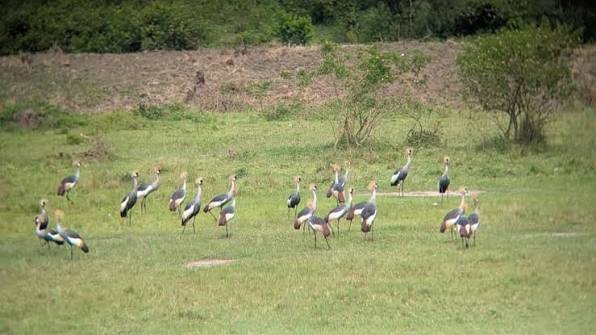
The Grey Crowned Crane is one of East Africa’s most recognisable birds, known for its golden crown of stiff feathers, contrasting plumage, and elegant courtship displays.
Suitable wetland grasslands and marshes within the wider Kagera landscape provide important habitat for this threatened species. The wetlands across the wider region are also the focus of community-led monitoring and conservation work.
Birdwatchers may look for cranes feeding in open areas, moving through shallow wetlands, or displaying in suitable grassland habitats. Sightings are not guaranteed, and access to sensitive breeding areas should always be guided by local conservation advice.
2. Papyrus Gonolek
The Papyrus Gonolek is a striking wetland bird associated with dense papyrus swamps. Its colourful plumage and distinctive vocalisations make it a favourite among specialist birdwatchers exploring East African wetlands.
Because it often remains hidden among thick vegetation, finding this species requires patience and careful listening.
Explore suitable papyrus margins with an experienced guide, taking care not to disturb birds or damage fragile wetland vegetation.
3. Papyrus Yellow Warbler
The Papyrus Yellow Warbler is another important species associated with papyrus wetlands in the Lake Victoria region.
Its specialised habitat requirements make healthy papyrus stands particularly important for its survival. Birdwatchers interested in conservation can learn how wetland management affects the species and other birds dependent on these habitats.
The likelihood of seeing this warbler depends on the precise location and quality of the habitat being explored, so recent local birding information is valuable.
4. Grey-headed Gull
The Grey-headed Gull is a major attraction within the wider Sango Bay–Musambwa Island–Kagera wetland system.
Large congregations have been documented across this internationally important wetland complex, with Musambwa Islands particularly famous for their breeding colony.
Although the gulls are most strongly associated with the islands and lake environment, exploring the wider wetland landscape helps visitors understand how the connected habitats support waterbird populations.
5. Great White Pelican
Great White Pelicans have been recorded roosting near the mouth of the Kagera River. This area offers an interesting opportunity for birdwatchers exploring the transition between river, wetland, and Lake Victoria.
Their large size and distinctive appearance make pelicans particularly rewarding to observe and photograph. Their presence varies, however, so sightings should be treated as a possibility rather than a guarantee.
6. Herons, Egrets, Ducks, and Other Waterbirds
Kagera Wetland provides habitat for a variety of waterbirds, including herons, egrets, ducks, and other species associated with shallow water, marshes, and flooded grasslands.
Depending on the location and season, birdwatchers may also encounter kingfishers, cormorants, weavers, and other birds that use the wetland for feeding, nesting, or shelter.
Exploring several habitat types is the best way to enjoy the diversity of this landscape.
Explore the Habitats of Kagera Wetland
One of the most rewarding aspects of birding in Kagera Wetland is the opportunity to explore different ecosystems within a connected landscape.
Papyrus swamps: Dense papyrus stands provide shelter and breeding habitat for specialised marsh birds, including species that can be difficult to observe in open terrain.
Swamp forests: Wetland forests support additional bird communities and contribute to the ecological diversity of the wider region.
Seasonally flooded grasslands: These open habitats attract waterbirds, cranes, and other species depending on water levels and seasonal conditions.
River channels and river mouth: The Kagera River connects the wider basin with Lake Victoria. Shallow waters and nearby vegetation provide habitat for aquatic wildlife and feeding birds.
Lake Victoria shoreline: The lakeshore adds opportunities to observe gulls, pelicans, cormorants, and other waterbirds using the open-water environment.
A guided excursion across suitable accessible habitats can provide a more complete picture of the region’s birdlife than visiting a single wetland location.
Best Time to Visit Kagera Wetland for Birding
Kagera Wetland can be explored at different times of the year, but seasonal rainfall influences water levels, vegetation, road conditions, and bird activity.
The drier months can make some routes easier to access, while wetter periods transform the landscape and create extensive flooded habitats. Migratory birds also influence the species recorded at different times of the year.
For birdwatchers targeting the Grey Crowned Crane, papyrus specialists, or particular migratory species, we recommend planning around your target list and checking recent local sightings before departure.
Because the Kagera wetland landscape extends across national borders, the best itinerary will also depend on which section you intend to visit and whether any cross-border travel is involved.
Epic Uganda Vacation can help you plan an excursion that takes account of your birding interests, available time, transport, and local access conditions.
What to Expect on a Kagera Wetland Birdwatching Tour
A Kagera wetland birding safari focuses on habitat exploration, careful observation, and learning about the ecological importance of the Lake Victoria basin.
Depending on your chosen route and local arrangements, your experience may include:
-
- Early-morning birdwatching in accessible wetland habitats.
-
- Guided exploration of papyrus edges, open grasslands, and riverine environments.
-
- Searching for cranes, herons, egrets, and specialised wetland birds.
-
- Bird photography and recording species on your personal checklist.
-
- Exploring the Kagera River mouth and nearby lakeshore where access permits.
-
- Learning about wetland conservation and the livelihoods of surrounding communities.
Bring binoculars, a camera, comfortable walking shoes, sun protection, insect repellent, and drinking water. Waterproof footwear may be useful in muddy areas, and a local guide can advise you on conditions before you set out.
Wetlands can be difficult to navigate, particularly after rainfall. Some locations may require local transport or specific access arrangements, so advance planning is recommended.
Combine Kagera Wetland with Sango Bay and Musambwa Islands
For a more comprehensive birdwatching holiday, consider combining the Kagera wetland landscape with other destinations within the wider Sango Bay–Musambwa Island–Kagera wetland system.
Sango Bay
Sango Bay offers papyrus swamps, swamp forests, flooded grasslands, and lakeshore habitats. It is particularly interesting for birdwatchers searching for the Blue Swallow during its non-breeding season and for other wetland-associated species.
Musambwa Islands
Musambwa Islands are famous for their significant Grey-headed Gull breeding colony and other waterbirds. A visit offers a contrasting experience focused on rocky islands and Lake Victoria birdlife, subject to local access and lake conditions.
Combining these locations can provide a varied itinerary that explores the interconnected habitats of southwestern Uganda and the international importance of the wetland system.
Other Ugandan birding destinations can also be incorporated depending on your target species and travel schedule.
Responsible Birdwatching and Wetland Conservation
Kagera Wetland is important not only for birds but also for fish, aquatic biodiversity, flood regulation, and local livelihoods. Wetland degradation, habitat conversion, pollution, and unsustainable resource use can affect the long-term health of the ecosystem.
Responsible birdwatching helps visitors appreciate the importance of protecting these habitats.
During your visit:
-
- Keep a respectful distance from birds and nesting sites.
-
- Avoid disturbing cranes and other sensitive species.
-
- Stay on appropriate routes and follow your guide’s instructions.
-
- Never leave rubbish in the wetland.
-
- Respect local communities and their use of natural resources.
-
- Support responsible local guiding and conservation initiatives where available.
By travelling responsibly, visitors can contribute to greater appreciation of Uganda’s wetlands and the need to conserve their biodiversity.
Book Your Kagera Wetland Birding Safari with Epic Uganda Vacation
Are you ready to explore the remarkable birdlife of the Kagera wetland landscape?
Epic Uganda Vacation can help you plan a personalised Kagera Wetland birding safari tailored to your interests, target species, travel dates, and preferred pace.
Whether you hope to observe Grey Crowned Cranes, search for papyrus specialists, photograph waterbirds along the river, or explore the wider Sango Bay–Musambwa Islands landscape, we can help you organise a memorable birdwatching experience.
Contact Epic Uganda Vacation to discuss your birding itinerary, local guiding arrangements, transport, accommodation, and opportunities to combine Kagera Wetland with other birding destinations in Uganda.
Discover Uganda’s remarkable wetlands, explore the birdlife of the Kagera River basin, and plan your next birding adventure with Epic Uganda Vacation.