Rushaga Gorilla Trekking Sector, Uganda: How to Get There, Things to Do and Complete Visitor Guide
Rushaga Gorilla Trekking Sector is one of the most rewarding destinations for mountain gorilla trekking in southwestern Uganda. Located in the southern part of Bwindi Impenetrable National Park, Rushaga attracts visitors from around the world who want to encounter endangered mountain gorillas in their natural forest habitat.
Beyond gorilla trekking, the Rushaga area offers opportunities to experience the landscapes and culture of southwestern Uganda. Visitors can explore nearby Lake Mutanda, enjoy community and cultural experiences, take nature walks, visit neighbouring attractions and combine their gorilla safari with wildlife viewing in other Ugandan national parks.
Getting to Rushaga requires some planning because it is situated in a mountainous region with winding roads. Travellers can reach the sector by road from Entebbe, Kampala, Kigali, Kabale or Kisoro. Domestic flights to Kisoro Airstrip can also reduce the time spent travelling by road.
This guide by Epic Uganda Vacation covers Rushaga’s location, how to get there, transport options, things to do, accommodation, the best time to visit and practical advice for planning a successful gorilla trekking safari.
Where Is Rushaga Gorilla Trekking Sector Located?
Rushaga is in the southern part of Bwindi Impenetrable National Park, in Kisoro District, southwestern Uganda. It lies within the highlands of the Albertine Rift, close to the Uganda–Rwanda and Uganda–Democratic Republic of Congo border regions.
The area is characterised by steep cultivated hills, forested valleys, small rural settlements and spectacular views towards the Virunga volcanic mountains. Its location makes Rushaga a useful base for travellers combining gorilla trekking with other experiences in southwestern Uganda.
Bwindi has four main gorilla trekking sectors:
-
Rushaga: Southern Bwindi, in Kisoro District.
-
Nkuringo: Southwestern Bwindi.
-
Buhoma: Northern Bwindi.
-
Ruhija: Eastern Bwindi.
Rushaga is particularly known for having several habituated gorilla families and for offering Uganda’s Gorilla Habituation Experience. The number of families available and their trekking arrangements can change, so visitors should confirm current options when booking.
An important planning point: Gorilla permits are allocated to a particular trekking sector. If your permit is for Rushaga, you should book accommodation and arrange transport around the Rushaga briefing location rather than assuming you can report at another Bwindi sector.
How to Get to Rushaga Gorilla Trekking Sector
Visitors can reach Rushaga by road from different parts of Uganda and Rwanda. Domestic flights to Kisoro Airstrip are another option for travellers who want to reduce the long road transfer from Entebbe.
1. Getting to Rushaga from Entebbe
Most international visitors arriving in Uganda land at Entebbe International Airport. From the airport, you can travel to Rushaga by private safari vehicle or take a domestic flight to Kisoro followed by a road transfer.
By road from Entebbe
The road journey generally takes about 9–11 hours, depending on traffic, stops, weather and the final location of your lodge.
A commonly used route is:
Entebbe → Kampala → Masaka → Mbarara → Ntungamo → Kabale → Muko → Rubuguri → Rushaga.
From Entebbe, you travel through Kampala and continue southwest via Masaka and Mbarara. After passing through Ntungamo, proceed towards Kabale. From the Kabale–Kisoro road, take the appropriate turn-off towards the Rushaga and Rubuguri area.
The final section involves winding highland roads, including unpaved stretches. A suitable 4×4 vehicle is recommended, especially during rainy weather.
By domestic flight
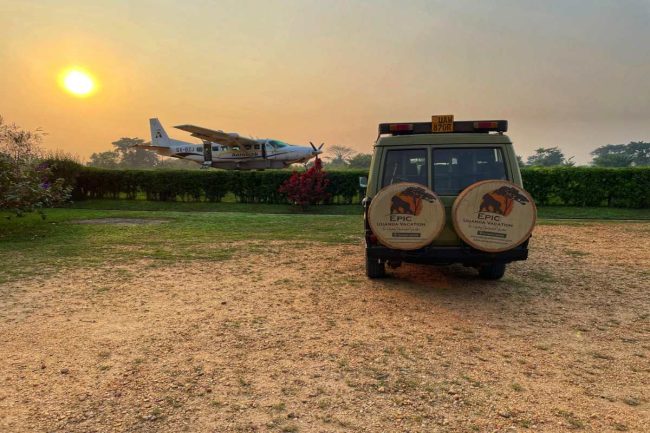
You can also fly from Entebbe to Kisoro Airstrip, subject to available flight schedules. From Kisoro, arrange a road transfer to your lodge or the Rushaga trekking centre. Allow approximately 1–2 hours for the road transfer, depending on the route and destination.
Confirm flight availability, baggage allowances and the transfer arrangements before paying for your trip.
2. Getting to Rushaga from Kampala
Travellers already in Kampala can drive directly to Rushaga. The journey generally takes about 8–10 hours, although traffic leaving Kampala and road conditions in southwestern Uganda can affect the timing.
The route follows:
Kampala → Masaka → Mbarara → Ntungamo → Kabale → Muko → Rubuguri → Rushaga.
The drive offers views of Uganda’s countryside, agricultural communities, rolling hills and the highland scenery around Kabale and Rubanda.
Because this is a long journey, consider breaking it with a stopover if you have sufficient time. However, if you have a morning gorilla trekking permit, plan to reach Rushaga and check into your accommodation the previous day.
3. Getting to Rushaga from Kigali, Rwanda
Rushaga is conveniently positioned for visitors who arrive in Rwanda and want to trek mountain gorillas in Uganda. Travelling from Kigali can be considerably shorter than driving from Entebbe or Kampala.
There are two main border routes to consider.
Route A: Kigali – Musanze – Cyanika – Kisoro – Rushaga
This is a practical route for visitors travelling from Kigali towards southern Bwindi.
The journey follows:
Kigali → Musanze → Cyanika Border → Kisoro → Rushaga.
After leaving Kigali, travel towards Musanze in northern Rwanda. Continue to the Cyanika border crossing, complete the immigration procedures and proceed into Uganda towards Kisoro. From Kisoro, continue towards Rushaga.
Allow approximately 4–5 hours, depending on border procedures, road conditions and the location of your accommodation.
Route B: Kigali – Katuna – Kabale – Rushaga
Another option is to cross into Uganda through the Katuna border.
The route follows:
Kigali → Katuna Border → Kabale → Muko → Rubuguri → Rushaga.
After crossing the border, continue towards Kabale and join the Kabale–Kisoro road. Take the appropriate turn-off towards Rushaga.
The best border crossing depends on your starting point, road conditions and travel arrangements. Before travelling, confirm visa requirements, border operating arrangements, vehicle documentation and cross-border insurance.
If you are hiring a safari vehicle in Rwanda, also confirm that the vehicle and operator are authorised to provide the cross-border transfer.
4. Getting to Rushaga from Kabale
Kabale is an important gateway to Bwindi and other destinations in southwestern Uganda.
From Kabale, travel along the Kabale–Kisoro road and take the turn-off towards Rushaga, commonly accessed through the Muko and Rubuguri area.
The journey generally takes around 2–2.5 hours, depending on road conditions and your destination.
Visitors travelling from Lake Bunyonyi can also connect through the Kabale area. If you are planning to trek gorillas the following morning, check the location of your lodge carefully and allow enough time for the transfer.
5. Getting to Rushaga from Kisoro
Kisoro is one of the most convenient towns from which to reach Rushaga. It is also the main service centre for visitors exploring the southern Bwindi and Mgahinga region.
The route generally follows:
Kisoro → Rushaga/Rubuguri.
Allow approximately 1–2 hours, depending on the road and the location of your accommodation. Although the distance may appear short on a map, winding roads and steep sections can make the journey slower than expected.
6. Flying to Rushaga: Which Airstrip Should You Use?
Kisoro Airstrip is generally the most convenient option for travellers flying to southern Bwindi.
Domestic and charter flights from Entebbe may be available, depending on the airline, season and schedule. Upon arrival, you continue by road to Rushaga.
Kihihi Airstrip is another airstrip used by visitors to Bwindi, but it is generally more convenient for the northern and western parts of the park. Travellers considering it for Rushaga should compare the additional road transfer before booking.
| Airstrip | Suitability for Rushaga |
|---|---|
| Kisoro Airstrip | Generally the most convenient option |
| Kihihi Airstrip | Usually less convenient because of the longer road transfer |
Flight schedules, baggage limits and aircraft operations can change. Confirm all arrangements with the airline or your safari operator.
How Long Does It Take to Get to Rushaga?
The following are approximate planning estimates. Actual travel times vary with traffic, weather, border procedures, stopovers and the exact location of your lodge.
| Starting point | Approximate journey time |
|---|---|
| Entebbe | 9–11 hours by road |
| Kampala | 8–10 hours by road |
| Kigali | 4–5 hours by road |
| Kabale | 2–2.5 hours |
| Kisoro | 1–2 hours |
| Kisoro Airstrip | 1–2 hours |
| Lake Bunyonyi | Allow around 2–3 hours |
| Queen Elizabeth National Park | Depends on the sector; allow a full transfer day |
These are estimates, not guaranteed journey times. For a gorilla trekking safari, it is best to arrive at your Rushaga accommodation the day before your permit date.
Things to Do in Rushaga and the Surrounding Area
Gorilla trekking is the main attraction in Rushaga, but there are several other activities worth including in your itinerary. Depending on how much time you have, you can explore the forest edge, meet local communities, visit nearby lakes or extend your journey to Mgahinga Gorilla National Park.
1. Mountain Gorilla Trekking in Rushaga
Mountain gorilla trekking is the main reason most visitors travel to Rushaga. The activity involves entering Bwindi’s forest with trained Uganda Wildlife Authority guides and trackers to locate one of the habituated mountain gorilla families.
The day begins with a morning briefing at the designated Rushaga trekking centre. Rangers explain the trekking rules, safety guidelines and conservation practices before visitors are allocated to groups.
You then follow experienced guides and trackers into the forest. The duration and difficulty of the trek depend on where the gorillas have moved and the terrain you need to cover.
Once the gorillas are located, standard trekking visitors are generally allowed up to one hour to observe them, subject to the applicable wildlife regulations.
During this time, you may see:
-
Adult silverbacks.
-
Female gorillas.
-
Young gorillas playing and climbing.
-
Mothers caring for their infants.
-
Gorillas feeding on vegetation.
-
Social interactions within the family.
The experience offers an opportunity to observe the behaviour of these endangered primates while learning about their conservation and the importance of protecting their forest habitat.
2. Gorilla Habituation Experience
Rushaga is particularly important because it offers Uganda’s Gorilla Habituation Experience.
Unlike standard gorilla trekking, which involves visiting an already habituated family, this experience allows a small number of visitors to accompany researchers, trackers and conservation personnel as they monitor a gorilla family undergoing habituation.
Participants learn about gorilla identification, behaviour, feeding patterns and the process of helping gorillas become accustomed to the controlled presence of people.
The experience can last several hours and involves a longer, potentially more demanding forest excursion. The permitted visitor numbers are limited, and a separate permit is required.
This activity is particularly suitable for travellers who want a more extended encounter and a deeper understanding of gorilla conservation. Confirm the current availability, permit conditions and price before booking.
3. Batwa Cultural Experience
A visit to the Batwa community is one of the most meaningful cultural activities to consider around Bwindi.
The Batwa are Indigenous forest-dwelling people whose traditional livelihoods were closely connected to the forest before Bwindi became a protected national park. A guided cultural experience introduces visitors to aspects of their history, traditional knowledge and cultural heritage.
Depending on the community programme available, visitors may learn about:
-
Traditional forest survival skills.
-
Hunting and gathering practices.
-
Medicinal plants and traditional knowledge.
-
Music, dance and storytelling.
-
The relationship between the Batwa and the forest.
-
The changes experienced by communities following the establishment of the national park.
Community visits should be arranged through recognised local guides or organised cultural programmes. Choose experiences that respect local people, support community livelihoods and allow residents to present their culture on their own terms.
4. Rubuguri Community Walks
Rubuguri is a rural settlement in the Rushaga area, and a guided village walk can provide a closer look at everyday life in the highlands of southwestern Uganda.
During a community walk, visitors may encounter local homesteads, small farms, trading centres and cultivated hillsides. Depending on the guide and arrangements, the experience may include interactions with local residents and demonstrations of everyday activities.
It is an opportunity to learn about the Bakiga communities, their agricultural practices, local food and traditions.
Some community walking programmes around Rushaga include the Rubuguri Origins Trail and other locally organised routes. Ask your lodge or tour operator which walks are operating during your visit.
5. Nature Walks and Hiking
The Rushaga landscape is characterised by steep hills, forest edges and beautiful highland scenery. Guided nature walks provide an alternative for visitors who want to explore the area without undertaking another gorilla trek.
Depending on the trail and local arrangements, walks may take you through rural landscapes, forest-edge environments and viewpoints overlooking the surrounding hills.
A guide can help explain the local vegetation, farming practices, birdlife and the relationship between the communities and the protected forest.
Some visitors also choose longer hiking experiences in the wider Bwindi region. Trail availability, duration and access should be confirmed locally before setting out.
6. Birdwatching Around Rushaga
Bwindi Impenetrable National Park is an important birding destination, particularly for visitors interested in Albertine Rift species.
The forest and surrounding habitats support a wide range of forest birds. Birdwatching can be arranged with a knowledgeable local guide, either as a dedicated excursion or as an additional activity during your stay.
Look out for opportunities to observe forest species, listen to bird calls and learn about the ecological importance of Bwindi.
For the best experience, carry binoculars and arrange your excursion with a guide familiar with the local birdlife. Bird sightings are never guaranteed and depend on season, weather and the particular trail visited.
7. Visit Lake Mutanda
Lake Mutanda is one of the most beautiful attractions near Rushaga. Located close to Kisoro, the lake is surrounded by rolling green hills and offers impressive views towards the Virunga volcanic mountains.
It is a rewarding place to visit before or after gorilla trekking, particularly if you want a quieter experience after spending time in the forest.
Activities at Lake Mutanda may include:
-
Canoeing in a traditional dugout canoe.
-
Guided boat excursions.
-
Photography and sightseeing.
-
Birdwatching.
-
Relaxing at a lakeside lodge.
-
Enjoying views of the surrounding volcanoes.
Lake Mutanda is also a good option for travellers who want to spend an additional night in southwestern Uganda rather than immediately returning to Kampala or Entebbe.
8. Explore Mgahinga Gorilla National Park
Mgahinga Gorilla National Park is another important protected area in southwestern Uganda. It forms part of the Virunga Conservation Area and is known for its volcanic landscapes, mountain gorillas and golden monkeys.
Although Mgahinga is a separate national park from Bwindi, it can be combined with a Rushaga safari when you have enough time.
Popular activities include:
-
Mountain gorilla trekking.
-
Golden monkey tracking.
-
Hiking the Virunga volcanoes.
-
Guided nature walks.
-
Batwa cultural experiences.
-
Birdwatching.
Golden monkey tracking is particularly attractive to visitors interested in primates beyond mountain gorillas. The activity takes place in the bamboo forest habitat of the Virunga volcanic region.
Volcano hiking opportunities include Mount Gahinga, Mount Muhabura and Mount Sabinyo. These are demanding excursions that require proper preparation and authorised guides.
Allow additional time for Mgahinga activities rather than trying to fit them into the same day as your gorilla trek.
9. Visit Lake Bunyonyi
Lake Bunyonyi is a scenic highland lake in southwestern Uganda, known for its numerous islands, terraced hills and peaceful atmosphere.
It is a popular addition to a gorilla trekking safari because it provides a relaxing contrast to the physically demanding forest experience.
Things to do at Lake Bunyonyi include:
-
Canoeing and boat rides.
-
Visiting some of the lake’s islands.
-
Birdwatching.
-
Photography.
-
Scenic walks.
-
Relaxing at lakeside accommodation.
Visitors can stay at Lake Bunyonyi before or after travelling to Rushaga. However, check the transfer time carefully if you are planning to attend an early morning gorilla briefing.
10. Coffee Experiences and Local Farming Visits
Agriculture is an important part of life in the communities surrounding Bwindi. Depending on the local experiences available, visitors can arrange a guided visit to learn about small-scale farming and coffee production.
A community guide may introduce you to the process of growing, harvesting, drying and preparing coffee. You can also learn about other crops cultivated in the highlands and how farming supports local households.
These experiences offer a useful opportunity to understand the relationship between tourism, livelihoods and conservation around Bwindi.
11. Photography and Scenic Sightseeing
The Rushaga region is an excellent destination for travellers interested in landscape photography.
Its steep hills, forest boundaries, rural settlements and distant volcanic views create varied photographic opportunities.
Some of the most rewarding subjects include:
-
The green hills and cultivated terraces.
-
Forested slopes of Bwindi.
-
Rural homesteads and village scenes.
-
Lake Mutanda and the Virunga landscape.
-
Mountain scenery around Kisoro and Rubanda.
Always seek permission before photographing people, homes or private property.
Where to Stay in Rushaga Gorilla Trekking Sector
Rushaga has accommodation options ranging from luxury safari lodges to mid-range lodges, budget guesthouses and community-based accommodation. Your choice should depend on your budget, preferred comfort level and proximity to the gorilla trekking briefing centre.
Luxury accommodation
Luxury lodges are suitable for visitors looking for spacious rooms, personalised hospitality, scenic surroundings and additional services. Some properties offer private cottages, fireplaces, restaurants, gardens and views of the surrounding forest and hills.
Mid-range accommodation
Mid-range lodges provide a balance between comfort and affordability. They are a popular choice for couples, families and small groups who want comfortable accommodation without the cost of a luxury safari property.
Budget accommodation
Budget guesthouses and camps are available around Rushaga and nearby communities. They are suitable for travellers who prioritise the trekking experience and want to manage their overall safari expenditure.
What to consider when choosing accommodation
Before confirming your lodge, check:
-
Its actual driving distance from the Rushaga briefing centre.
-
Whether transfers to the trekking headquarters are provided.
-
Whether breakfast can be served early on trekking day.
-
Whether packed lunches can be arranged.
-
Whether the lodge offers hot showers and suitable facilities.
-
Whether it has secure parking for your safari vehicle.
Some accommodation properties marketed as being near Bwindi are actually located in other sectors or around Lake Mutanda and Kisoro. Always confirm that your lodge is convenient for your Rushaga permit.
Best Time to Visit Rushaga Gorilla Trekking Sector
Rushaga is open to visitors throughout the year, and gorilla trekking can be arranged in both the dry and rainy seasons. Mountain gorillas remain in the forest throughout the year, so the experience is not limited to particular months.
However, weather conditions influence road access, forest trails and the physical difficulty of trekking.
June to September
This is generally one of the drier periods in southwestern Uganda. It is popular with international travellers because forest trails and access roads may be easier to navigate.
Accommodation and gorilla permits can be in high demand, so early planning is recommended.
December to February
These months are another relatively dry period. They are suitable for combining gorilla trekking with other outdoor activities around Kisoro, Lake Mutanda and Mgahinga.
March to May
This period generally receives heavier rainfall. Forest trails can become slippery, and some rural access roads may be muddy.
The rainy season does not mean gorilla trekking stops, but visitors should prepare for wet conditions and potentially more demanding hikes.
October to November
Rainfall may increase during this period, although conditions vary from year to year. It can still be a rewarding time to visit Rushaga, provided you are prepared for changing weather.
Which season should you choose? If you prefer generally drier conditions, consider June to September or December to February. If your travel dates are flexible, compare permit availability, accommodation rates and the overall itinerary before deciding.
How to Book a Gorilla Trekking Permit for Rushaga
Before travelling to Rushaga, you must secure a valid gorilla trekking permit through the Uganda Wildlife Authority or an appropriately authorised tour operator.
When making your reservation, specify that you want to trek in the Rushaga sector. Do not assume that a general Bwindi permit automatically allows you to report at any of the park’s four sectors.
The basic booking process involves:
-
Choose your preferred gorilla trekking date.
-
Specify Rushaga as your preferred trekking sector.
-
Check permit availability for your travel date.
-
Provide the required passport and traveller information.
-
Confirm the applicable permit category and price.
-
Complete the required payment.
-
Obtain confirmation of your permit and trekking arrangements.
-
Book accommodation near the Rushaga briefing centre.
If you are interested in the Gorilla Habituation Experience, make this clear when requesting availability because it requires a separate permit.
Book well in advance, particularly if you are travelling during the busy seasons or need several permits for a group.
What to Pack for a Rushaga Gorilla Trekking Safari
Bwindi is a tropical mountain rainforest, and weather conditions can change quickly. Even when the surrounding area is sunny, rain may occur inside the forest.
Pack the following essentials:
| Item | Why you need it |
|---|---|
| Waterproof hiking boots | Help provide grip on muddy and uneven trails |
| Long-sleeved shirts | Protect your arms from vegetation and insects |
| Long hiking trousers | Provide protection while walking through the forest |
| Waterproof jacket | Useful during unexpected rainfall |
| Gardening gloves | Help protect your hands when holding vegetation |
| Small backpack | Carries personal belongings and drinking water |
| Drinking water | Keeps you hydrated during the trek |
| Snacks | Useful for a long forest excursion |
| Insect repellent | Helps protect against biting insects |
| Hat or cap | Provides protection from the sun |
| Camera | Allows you to capture permitted photographs |
| Binoculars | Useful for birdwatching and wildlife observation |
| Personal medication | Important for individual medical needs |
| Cash | Useful for personal expenses and porter services |
For gorilla trekking, avoid bright clothing if possible and follow the ranger’s instructions regarding colours, photography and conduct around the gorillas.
How Physically Demanding Is Gorilla Trekking in Rushaga?
Gorilla trekking in Rushaga can range from moderately challenging to strenuous. The terrain includes steep slopes, thick vegetation, muddy trails and uneven ground.
The length of the trek depends on where the assigned gorilla family is located on that particular day. Some visitors may find the gorillas relatively close to the forest edge, while others may walk for several hours.
Your physical preparation should include:
-
Regular walking before your safari.
-
Practising on uneven or hilly terrain.
-
Wearing comfortable, broken-in hiking boots.
-
Carrying sufficient drinking water.
-
Informing the ranger about any fitness concerns.
-
Hiring a porter if you need assistance with your backpack or during the trek.
A porter can make a meaningful difference while also providing income to local community members.
Suggested Rushaga Gorilla Trekking Safari Itinerary
If you have several days available, you can combine Rushaga with other destinations in southwestern Uganda.
3 Days: Rushaga Gorilla Trekking Safari
Day 1: Entebbe or Kampala to Rushaga
Depart Entebbe or Kampala and travel southwest through Uganda’s countryside towards Bwindi Impenetrable National Park. Enjoy scenic views along the way and proceed to your accommodation near Rushaga.
Day 2: Gorilla Trekking in Rushaga
After an early breakfast, transfer to the Rushaga briefing centre. Attend the Uganda Wildlife Authority briefing before entering the forest with experienced guides and trackers to search for a mountain gorilla family.
After the trek, return to your lodge for relaxation.
Day 3: Rushaga to Entebbe or Kampala
After breakfast, begin your return journey to Entebbe or Kampala. Depending on your arrangements, you may make suitable stopovers along the way.
4 Days: Rushaga, Lake Mutanda and Mgahinga
Day 1: Transfer to Rushaga
Travel from Entebbe, Kampala or Kigali to Rushaga and check into your accommodation.
Day 2: Gorilla Trekking in Rushaga
Enjoy your guided mountain gorilla trekking experience in Bwindi.
Day 3: Lake Mutanda and Mgahinga
Visit Lake Mutanda for a scenic excursion. Depending on your interests and advance arrangements, continue to Mgahinga Gorilla National Park for an additional activity such as golden monkey tracking or a guided nature experience.
Day 4: Return Journey
After breakfast, begin your journey back to Entebbe, Kampala or Kigali.
Note: The Mgahinga activity requires separate arrangements and may need additional time. The itinerary should be adjusted according to activity availability and your departure schedule.
Important Travel Tips When Visiting Rushaga
For a smooth gorilla trekking safari, keep the following recommendations in mind:
-
Book your permit early: Gorilla permits are limited, and your preferred date may not always be available.
-
Confirm your trekking sector: Make sure your permit is specifically allocated to Rushaga.
-
Arrive one day early: Avoid travelling long distances on the morning of your trek.
-
Choose suitable accommodation: Stay close enough to the Rushaga briefing centre to make the early transfer manageable.
-
Use a reliable 4×4 vehicle: The final approach involves mountainous and sometimes rough roads.
-
Prepare for rain: Carry waterproof clothing even when travelling during the drier months.
-
Hire a porter if necessary: Porters can assist with luggage and support local livelihoods.
-
Respect the gorillas: Follow all instructions from Uganda Wildlife Authority guides and maintain the required distance.
-
Carry identification: Bring the passport or identification document used during permit booking.
-
Allow extra time: Avoid tight connections between domestic flights, road transfers and trekking activities.
Book Your Rushaga Gorilla Trekking Safari with Epic Uganda Vacation
Rushaga offers much more than a mountain gorilla encounter. It is a destination where visitors can experience Uganda’s rainforest, discover the cultures of communities living around Bwindi, enjoy the beautiful landscapes of southwestern Uganda and explore nearby attractions such as Lake Mutanda and Mgahinga Gorilla National Park.
At Epic Uganda Vacation, we organise personalised Uganda gorilla trekking safaris designed around your preferred travel dates, budget and interests.
Whether you are travelling from Entebbe, Kampala or Kigali, our team can help arrange the transport, accommodation and trekking logistics needed for your Rushaga visit.
Our safari arrangements can include:
-
Gorilla trekking permit booking assistance.
-
Gorilla habituation experience arrangements.
-
Private 4×4 safari vehicle and professional driver-guide.
-
Airport and hotel transfers.
-
Luxury, mid-range and budget accommodation arrangements.
-
Guided community and cultural experiences.
-
Lake Mutanda excursions.
-
Golden monkey tracking and other Mgahinga activities.
-
Combined gorilla trekking and wildlife safaris.
You can also combine Rushaga with Queen Elizabeth National Park, Kibale National Park, Lake Bunyonyi and other destinations across Uganda.
Start planning your Rushaga gorilla trekking safari with Epic Uganda Vacation.
Website: https://www.epicugandavacation.com
Frequently Asked Questions About Rushaga Gorilla Trekking Sector
1. Where is Rushaga Gorilla Trekking Sector located?
Rushaga is located in the southern part of Bwindi Impenetrable National Park, in Kisoro District, southwestern Uganda.
2. What is Rushaga famous for?
Rushaga is best known for mountain gorilla trekking and the Gorilla Habituation Experience. It also offers access to community walks, cultural experiences, birdwatching and scenic attractions around southwestern Uganda.
3. How do I get to Rushaga from Kampala?
You can travel by road from Kampala through Masaka, Mbarara, Ntungamo and Kabale, continuing towards Muko, Rubuguri and Rushaga. The journey generally takes about 8–10 hours.
4. How do I get to Rushaga from Kigali?
Travel from Kigali through Musanze and the Cyanika border crossing towards Kisoro and Rushaga. Alternatively, use the Katuna border and continue through Kabale. Allow approximately 4–5 hours, depending on the route and border procedures.
5. Can I fly to Rushaga?
There is no airport at the Rushaga trekking headquarters. You can fly from Entebbe to Kisoro Airstrip and complete the remaining journey by road.
6. Which airstrip is closest to Rushaga?
Kisoro Airstrip is generally the most convenient option for travellers flying to the southern part of Bwindi.
7. What activities can I do in Rushaga besides gorilla trekking?
Other activities include the Gorilla Habituation Experience, Batwa cultural visits, guided community walks, nature walks, birdwatching and excursions to Lake Mutanda.
8. Can I do golden monkey tracking from Rushaga?
Yes. You can arrange golden monkey tracking in nearby Mgahinga Gorilla National Park. It is a separate activity and requires its own arrangements and applicable fees.
9. Can I visit Lake Mutanda after gorilla trekking?
Yes. Lake Mutanda is a popular addition to a Rushaga safari. You can enjoy canoeing, boat excursions, photography and scenic relaxation.
10. Is Rushaga suitable for first-time gorilla trekkers?
Yes. Rushaga is suitable for first-time visitors, although the difficulty of the trek depends on the location of the assigned gorilla family and the terrain. Good preparation and an experienced guide are important.
11. How many days should I spend in Rushaga?
A three-day itinerary is a practical starting point for visitors travelling by road from Entebbe or Kampala. Four or more days allow time to include Lake Mutanda, Mgahinga or additional community experiences.
12. Is Rushaga open throughout the year?
Yes. Gorilla trekking operates throughout the year, subject to permit availability and park arrangements. Weather conditions vary between seasons and can affect trekking difficulty.